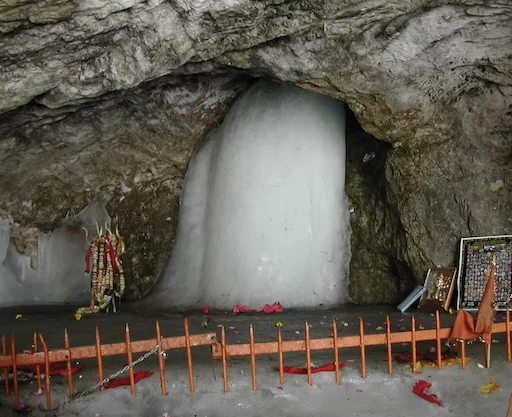
Holy Cave (Amarnath Cave), Anantnag, Jammu and Kashmir, India

Holly Cave | Amarnath Cave , Baltal
Visitors come to undertake the Amarnath Yatra pilgrimage, view the naturally formed ice Shiva Lingam, and experience one of Hinduism’s most important and challenging spiritual journeys. The site is accessible only during a limited summer season due to extreme weather conditions and high-altitude terrain.

Quick Facts About Holly Cave | Amarnath Cave

Holy Cave (Amarnath Cave) Quick Facts

Entry Fee No entry fee (Yatra registration required)
Timings Open only during annual Amarnath Yatra season (usually June–August); restricted beyond season due to heavy snowfall
Altitude (m) Approximately 3,888 m above sea level
Ideal Visit Duration 1–2 days (depending on trekking route: Pahalgam or Baltal)
Best Time of Day Morning hours for darshan and safer mountain conditions
Crowd Level Very high during Yatra season; controlled and regulated by authorities
Distance from City Centre (km) Approximately 90 km from Srinagar to base routes (Baltal/Pahalgam)
Walking Difficulty Difficult; high-altitude trek with steep and icy terrain
Parking Available Yes, at base camps (Pahalgam, Baltal, and Nunwan) with shuttle arrangements
Last Mile Access No direct road access; requires trekking, pony, or helicopter services up to designated points
Suitable for Kids No; high altitude and difficult trek make it unsuitable for children
Suitable for Seniors Limited; only for physically fit pilgrims with medical clearance
Wheelchair Friendly No; rugged Himalayan trekking route is not accessible

Why Visit Amarnath Cave Jammu & Kashmir

Visitors come to Amarnath Cave to undertake one of India’s most important pilgrimages dedicated to Lord Shiva and witness the naturally formed ice Shiva Lingam inside the sacred cave.

The atmosphere is deeply spiritual and physically challenging, with high-altitude trekking routes, controlled pilgrimage access, and a strong sense of devotion among pilgrims along the journey.

What makes Amarnath Cave distinct is its naturally forming ice lingam that changes size with seasons, its extreme Himalayan setting at high altitude, and its significance as one of the most revered Shaivite pilgrimage sites in Hindu tradition.

History of Amarnath Cave (Holy Cave)

Amarnath Cave, located in the Himalayas of Jammu and Kashmir, is one of the most sacred pilgrimage sites in Hinduism and is dedicated to Lord Shiva. The cave is situated at an altitude of over 3,800 meters and is renowned for the naturally formed ice Shiva Lingam that appears seasonally inside the shrine.

According to Hindu mythology, this is the cave where Lord Shiva revealed the secret of immortality (Amar Katha) to Goddess Parvati. It is believed that even other divine beings were excluded from this sacred revelation, making the site highly significant in Shaivite tradition.

The Amarnath Yatra, an annual pilgrimage to the cave, has been undertaken for centuries and continues to be one of the most important religious journeys in India. Today, the cave remains a powerful symbol of faith, devotion, and Himalayan spiritual heritage.

Best Time to Visit Holy Cave (Amarnath Cave)

Amarnath Cave (Holy Cave) is best visited during the annual pilgrimage season from late June to August when the shrine is officially open, and weather conditions allow controlled trekking routes through the Himalayas of Jammu & Kashmir.

  • Ideal months: Late June to August is the only operational period for the Amarnath Yatra, as the shrine remains open for a limited time each year.
  • Weather conditions during the best season: Cold alpine weather, high-altitude conditions, and unpredictable mountain climate prevail. Snow patches, icy winds, and rapidly changing weather are common even during the pilgrimage season.
  • Periods to avoid: September to May remains closed for pilgrims due to heavy snowfall, extreme cold, and unsafe trekking conditions. Even during the Yatra season, travel is strictly regulated, and permits, health fitness, and weather clearances are mandatory.

How to Reach Holy Cave (Amarnath Cave)

  • Nearest Airport: Sheikh ul-Alam International Airport, Srinagar, located approximately 90 km from the base routes (Pahalgam/Baltal access points), is the nearest airport. From there, visitors must continue the journey by road to the designated base camps.
  • Nearest Railway Station: Jammu Tawi Railway Station, about 290 km away, is the nearest major railway station with wide connectivity across India. From Jammu, the journey continues by road to Srinagar and then to Pahalgam or Baltal.
  • Road Access and Last-Mile Connectivity: The Amarnath Holy Cave is located at an altitude of about 3,888 meters in the Himalayas and is accessible only by trekking routes from Pahalgam (longer route) or Baltal (shorter route). Visitors reach the base camps by road via Srinagar, and from there the onward journey is completed on foot, ponies, or helicopter services up to designated points. The final approach involves a high-altitude trek through steep and icy terrain, and access is open only during the annual pilgrimage season under strict administrative control and weather conditions.

What to Expect When You Visit Holy Cave (Amarnath Cave)

  • Environment and Surroundings: The Amarnath Cave, also known as the Holy Cave, is a sacred Hindu pilgrimage site located in the Himalayas of Jammu & Kashmir. Visitors can expect a high-altitude glacial environment with snow-covered peaks, rugged mountain terrain, and a naturally formed ice Shivling that changes size with the seasons.
  • Facilities and Amenities: Due to its remote and high-altitude location, facilities are very limited. Basic arrangements such as medical camps, langar (community food services), temporary shelters, and security posts are set up along the pilgrimage route during the Yatra season. Permanent infrastructure is not available inside the cave area.
  • Accessibility and Movement: Access is only permitted during the annual Amarnath Yatra period and requires official registration and permissions. Pilgrims typically reach the cave via trekking routes from Pahalgam or Baltal, or through helicopter services up to designated points, followed by a trek. The journey involves steep climbs, narrow mountain paths, and challenging terrain.
  • Visitor Conditions: The pilgrimage is highly dependent on weather conditions, with cold temperatures, thin air, and possible snow or rain even in summer months. Physical fitness and acclimatization are important due to high altitude. Movement is regulated by security forces, and weather or landslides can affect travel schedules. Pilgrims are expected to follow strict safety and registration guidelines.

Important Visitor Information for Amarnath Cave

  • Amarnath Cave experiences extremely high pilgrim footfall during the annual Amarnath Yatra season (June to August), with strict regulated entry based on official permits and quotas.
  • Early morning hours are generally preferred for darshan due to weather stability, lower congestion, and safer trekking conditions along the pilgrimage route.
  • High-altitude weather is highly unpredictable, with freezing temperatures, snowfall, and sudden storms possible even during the summer pilgrimage season.
  • Warm layered clothing, waterproof gear, and sturdy trekking footwear are essential due to extreme cold and challenging Himalayan terrain.
  • Visitors must carry valid registration permits, follow government and security instructions, adhere to medical fitness requirements, and strictly follow designated trekking routes for safety.

Photography and Viewpoints at Amarnath Cave

  • The approach trek viewpoints offer the most dramatic photography opportunities, where snow-clad Himalayan peaks, glaciers, and rugged mountain terrain create a powerful high-altitude landscape.
  • Early morning during clear weather provides the best visibility, with golden light over snowfields and mist rising through the valleys along the pilgrimage route.
  • The cave entrance area (from permitted distance) is a significant spiritual viewpoint, where pilgrims gather for darshan of the naturally formed ice Shivling.
  • The surrounding glacier and ice formations create unique compositions, especially during peak summer pilgrimage months when the cave remains accessible.
  • Wide-angle photography along the Baltal and Pahalgam routes captures dramatic river valleys, snow bridges, waterfalls, and alpine scenery.
  • Photography inside or very close to the sacred cave is strictly regulated for security and religious reasons, and visitors must follow official instructions.
  • Weather conditions change rapidly at high altitude, and clear days during the pilgrimage season offer the best opportunities for landscape photography.

Near By Attraction

Frequently Asked Questions About Holly Cave | Amarnath Cave

Amarnath Cave is famous for the naturally formed ice Shiva Lingam and the annual Amarnath Yatra. It is one of the most sacred Hindu pilgrimage sites and attracts thousands of pilgrims during the limited summer pilgrimage season.
Amarnath Cave is located in the Himalayas of Jammu and Kashmir near Baltal and Pahalgam routes at an altitude of about 3888 meters above sea level.
There is no entry fee to visit Amarnath Cave, but pilgrims must complete official Yatra registration and obtain the required permissions before traveling.
The cave is generally open only during the annual Amarnath Yatra between late June and August, depending on weather and government schedules.
Travelers reach the base camps by road from Srinagar and continue through the Pahalgam or Baltal trekking routes. Helicopter services are also available up to designated points.
The trek is physically demanding because of high altitude, steep mountain trails, cold weather, and changing climatic conditions.
The high altitude and difficult trekking route make Amarnath Cave unsuitable for young children.
Only physically fit senior citizens with medical clearance should attempt the pilgrimage because of the challenging terrain and altitude.
Late June to August during the official Yatra season is the only suitable time to visit the holy cave.
Carry warm layered clothing, waterproof gear, trekking shoes, medicines, identification documents, and Yatra registration papers.
Photography is allowed in permitted outdoor areas, but restrictions apply near and inside the sacred cave for security and religious reasons.
Yes, helicopter services operate during the Yatra season to designated landing points, reducing the trekking distance.
Most pilgrims require one to two days depending on the selected route, weather, and travel arrangements.
Yes, parking facilities are available at major base camps including Baltal, Pahalgam, and Nunwan.
Temporary medical camps, food services, shelters, security checkpoints, and emergency support are available during the pilgrimage season.

Loved this place ? Let’s Plan Your Jammu and Kashmir Trip

Get customized Jammu and Kashmir tour planning designed around seasonal weather patterns, valley travel routes, snow conditions, and realistic hill road timing. Whether you are visiting for scenic landscapes, serene lakes, spiritual journeys, meadow stays

⚡ Quick Response | 💰 Free consultation | 🕒 24×7 expert support

×

Plan Your Trip