Quick Facts About Pin Valley National Park
| Entry Fee | Free |
| Timings | 06:00 - 18:00 |
| Altitude (m) | 6000 |
| Ideal Visit Duration (hrs) | 4 |
| Best Time of Day | Morning |
| Crowd Level | Low |
| Distance from Kaza (km) | 40 |
| Walking Difficulty | Hard |
| Parking Available | Yes |
| Last Mile Access | Trek |
| Suitable for Kids | Yes |
| Suitable for Seniors | No |
| Wheelchair Friendly | No |
Why Visit Pin Valley National Park
Pin Valley National Park is one of India’s most pristine high-altitude wildlife reserves, offering travelers a rare chance to explore untouched Himalayan ecosystems in the cold desert of Spiti. It is an ideal destination for nature lovers, trekkers, photographers, and wildlife enthusiasts seeking sightings of rare species such as the snow leopard, Himalayan ibex, Tibetan gazelle, and red fox in a remote and dramatic landscape.
Atmosphere
The atmosphere in Pin Valley National Park is raw, silent, and deeply immersive. Vast open valleys, towering snow-capped peaks, alpine meadows, and crystal-clear skies create a sense of isolation and tranquility rarely found elsewhere. The absence of crowds and modern development allows visitors to experience the true wilderness of the Trans-Himalayan region.
What Makes It Special
What makes Pin Valley National Park truly special is its role as a critical habitat for endangered Himalayan wildlife, especially the elusive snow leopard, along with its unique cold-desert ecosystem that supports rare flora and fauna adapted to extreme altitudes. The park’s combination of biodiversity conservation, remote trekking routes, and dramatic landscapes makes it one of the most ecologically significant and visually striking protected areas in Himachal Pradesh.
History
Pin Valley National Park was officially established in 1987 to protect the fragile cold-desert ecosystem of Spiti and conserve endangered Trans-Himalayan wildlife, including the snow leopard and Himalayan ibex. The region has long been inhabited by high-altitude pastoral communities who practiced sustainable grazing and farming, shaping a balanced relationship between humans and nature. The park today plays a vital role in biodiversity conservation, scientific research, and eco-sensitive tourism in the western Himalayas.
Best Time to Visit
The best time to visit Pin Valley National Park is from June to September, when the region becomes accessible after winter snowfall and weather conditions are suitable for wildlife exploration, trekking, and scenic drives. During these months, clear skies and stable temperatures allow visitors to experience the park’s unique cold-desert landscapes and alpine biodiversity at their best.
- June–July: Fresh mountain air, snow still visible on higher peaks, and good chances of wildlife sightings.
- August: Lush alpine meadows, blooming wildflowers, and pleasant daytime temperatures.
- September: Crisp weather, golden landscapes, fewer visitors, and excellent visibility.
- October–May: Heavy snowfall and extreme cold restrict access; travel generally not advisable.
How to Reach
- By Road from Kaza: Pin Valley National Park is about 40 km from Kaza and is reached via Attargo village and the Pin Valley road toward Mudh. Taxis and private vehicles are the most convenient options.
- By Road from Manali: Travel via Manali – Rohtang Pass – Kunzum Pass – Losar – Kaza, then continue toward Attargo and Mudh. This scenic route remains open roughly from June to October, subject to snowfall.
- By Road from Shimla: Drive via Shimla – Rampur – Reckong Peo – Nako – Tabo – Kaza, followed by the Pin Valley road toward the park.
- Nearest Airport: Bhuntar Airport (Kullu), approximately 245 km away, followed by a long mountain drive.
- Nearest Railway Station: Kalka Railway Station is the nearest broad-gauge railhead, followed by road travel to Shimla and onward to Spiti Valley.
- Last Mile Access: Motorable road up to Mudh Village and nearby settlements; trekking required for deeper exploration inside the park.
What to Expect When You Visit
- Vast untouched cold-desert landscapes with towering Himalayan peaks, alpine meadows, and deep river valleys.
- Opportunities to spot rare wildlife such as Himalayan ibex, red fox, blue sheep, and, with luck, the elusive snow leopard.
- Peaceful, crowd-free environment ideal for nature walks, trekking, photography, and wildlife observation.
- High-altitude climate with strong sun and cool winds, making layered clothing and sun protection essential.
- Remote terrain with limited facilities, so visitors should carry sufficient water, snacks, and travel essentials.
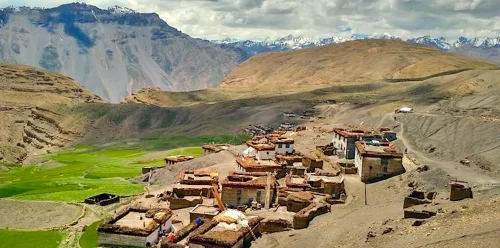
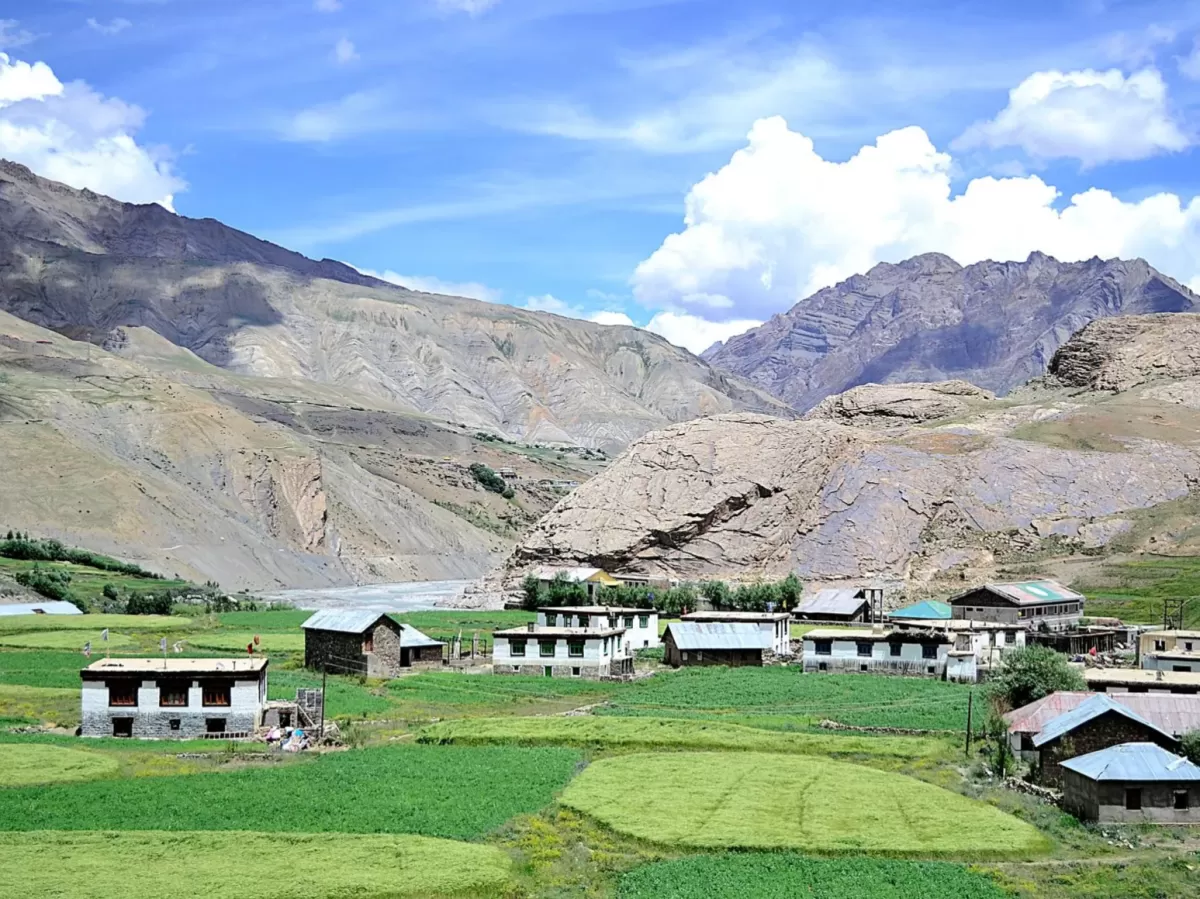
- Authentic exposure to high-altitude village life near Mudh and surrounding settlements within the park region.
Important Visitor Information
- Crowd & Weather Notes: Pin Valley National Park remains largely uncrowded year-round. Weather can change rapidly with strong winds, intense sunlight, and sudden temperature drops due to high altitude.
- Peak / Quiet Hours: Late morning to early afternoon offers the best light and slightly warmer conditions, while early mornings and evenings are colder and quieter.
- Dress Code: Wear warm layered clothing, windproof jackets, sturdy trekking shoes, sunglasses, and sunscreen due to high-altitude exposure.
- Safety Notes: Acclimatize in Kaza before visiting, stay hydrated, avoid strenuous activity initially, and carry basic medical supplies. Follow local guidance when trekking and respect wildlife habitats.
Photography and Viewpoint
- Capture expansive cold-desert landscapes framed by towering Himalayan peaks and winding rivers in Pin Valley.
- Early morning and late afternoon provide soft, golden light ideal for wildlife, alpine meadows, and panoramic shots.
- Clear days offer unobstructed visibility of distant snow-capped mountains, deep valleys, and high-altitude settlements.
- Viewpoints near Mudh Village and along trekking trails provide elevated perspectives perfect for wide-angle and landscape photography.
- Wildlife photography opportunities include Himalayan ibex, snow leopard (rare), blue sheep, red fox, and high-altitude bird species.
- Windy conditions are common at this altitude, so secure cameras and use straps while photographing from exposed viewpoints.