Quick Facts About Kibber Village
| Entry Fee | Free |
| Timings | 00:00 - 23:59 |
| Altitude (m) | 4270 |
| Ideal Visit Duration (hrs) | 2 |
| Best Time of Day | Morning |
| Crowd Level | Moderate |
| Distance from Kaza (km) | 18 |
| Walking Difficulty | Moderate |
| Parking Available | Yes |
| Last Mile Access | Road |
| Suitable for Kids | Yes |
| Suitable for Seniors | Yes |
| Wheelchair Friendly | No |
Why Visit Kibber Village
Kibber Village offers travelers a rare opportunity to experience life in one of the world’s highest motorable settlements, surrounded by dramatic Himalayan landscapes and vast open valleys. It is an ideal destination for those seeking authentic village culture, stunning mountain scenery, and access to nearby attractions such as Key Monastery, Chicham Bridge, and the Kibber Wildlife Sanctuary.
Atmosphere
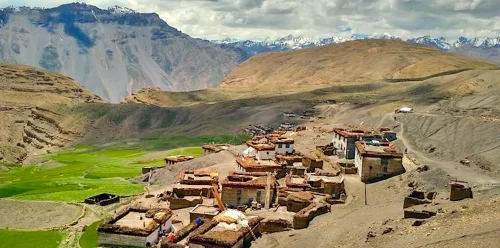
The atmosphere in Kibber Village is peaceful, remote, and deeply immersive. Crisp mountain air, traditional stone houses, fluttering prayer flags, and warm local hospitality create a calm high-altitude Himalayan setting that feels untouched by modern crowds.
What Makes It Special
What makes Kibber Village truly special is its extreme altitude, year-round road access, and proximity to one of India’s highest wildlife reserves, home to rare species like the snow leopard and Himalayan ibex. Its dramatic terrain, traditional lifestyle, and breathtaking panoramic views make it one of Spiti Valley’s most iconic villages.
History
Kibber Village has been inhabited for centuries as a high-altitude pastoral and trading settlement in Spiti Valley, sustaining itself through agriculture, livestock rearing, and trans-Himalayan trade routes. Its strategic location near mountain passes historically connected Spiti with Ladakh and Tibet, shaping the village’s resilient lifestyle. Today, Kibber remains one of the highest permanently inhabited villages with road access, preserving its traditional stone architecture and mountain way of life while gradually welcoming responsible tourism.
Best Time to Visit
The best time to visit Kibber Village is from May to October, when Spiti Valley roads are open and weather conditions are suitable for high-altitude travel and village exploration. During these months, visitors enjoy clear skies, accessible trails, and comfortable daytime temperatures, making it ideal for sightseeing, photography, and nature walks.
- May–June: Cool weather, snow still visible on nearby peaks, and excellent landscape photography conditions.
- July–August: Stable road access, green valley patches, and ideal conditions for village walks and wildlife spotting.
- September–October: Crisp air, golden mountain hues, fewer crowds, and superb visibility.
- November–April: Harsh winters with heavy snowfall and extreme cold; travel generally not recommended.
How to Reach
- By Road from Kaza: Kibber Village is located about 18 km from Kaza and can be reached by taxi, bike, or private vehicle via a scenic mountain road.
- By Road from Manali: Travel via Manali – Rohtang Pass – Kunzum Pass – Losar – Kaza, then continue toward Kibber. This route remains open roughly from June to October, depending on snow conditions.
- By Road from Shimla: Drive via Shimla – Rampur – Reckong Peo – Nako – Tabo – Kaza, followed by a short drive to Kibber Village.
- Nearest Airport: Bhuntar Airport (Kullu), approximately 245 km away, followed by a long mountain drive via Manali or Shimla routes.
- Nearest Railway Station: Kalka Railway Station is the nearest broad-gauge railhead, followed by road travel to Shimla and onward to Spiti Valley.
- Last Mile Access: Direct motorable road access to the village with parking near the settlement area.
What to Expect When You Visit
- Authentic experience of life in one of the world’s highest motorable villages surrounded by vast Himalayan landscapes.
- Stunning panoramic views of barren mountains, open valleys, and distant snow-capped peaks.
- Opportunity to interact with friendly locals and observe traditional Spitian village life.
- Cool high-altitude climate year-round, making layered clothing essential even in summer.
- Peaceful, uncrowded environment ideal for photography, nature walks, and quiet exploration.
- Limited commercial facilities, so visitors should carry water, snacks, and basic essentials.
Important Visitor Information
- Crowd & Weather Notes: Kibber Village remains largely uncrowded, with slightly higher visitor flow during June–September. Weather can change quickly with strong winds and sudden temperature drops due to high altitude.
- Peak / Quiet Hours: Late morning to early afternoon sees most visitors, while early mornings and evenings are quieter and ideal for photography and village walks.
- Dress Code: Wear warm layered clothing, windproof jackets, comfortable walking shoes, sunglasses, and sunscreen due to intense sun exposure and cold winds.
- Safety Notes: Walk carefully on uneven village paths and stone steps. Acclimatize in Kaza before visiting, stay hydrated, and avoid strenuous activity if experiencing altitude discomfort.
Photography and Viewpoint
- Capture sweeping panoramic views of Kibber Village set against vast barren mountains and the dramatic Spiti Valley landscape.
- Early morning and late afternoon offer soft natural light, ideal for village architecture, mountain textures, and long valley shadows.
- Clear days provide excellent visibility of surrounding peaks, grazing fields, and winding high-altitude roads.
- Natural viewpoints around the village edges and nearby trails offer elevated perspectives for wide-angle landscape photography.
- Local life scenes, prayer flags, stone houses, and livestock movements provide strong cultural and documentary photo opportunities.
- Windy conditions are common, so secure cameras and use straps while shooting at exposed viewpoints.