
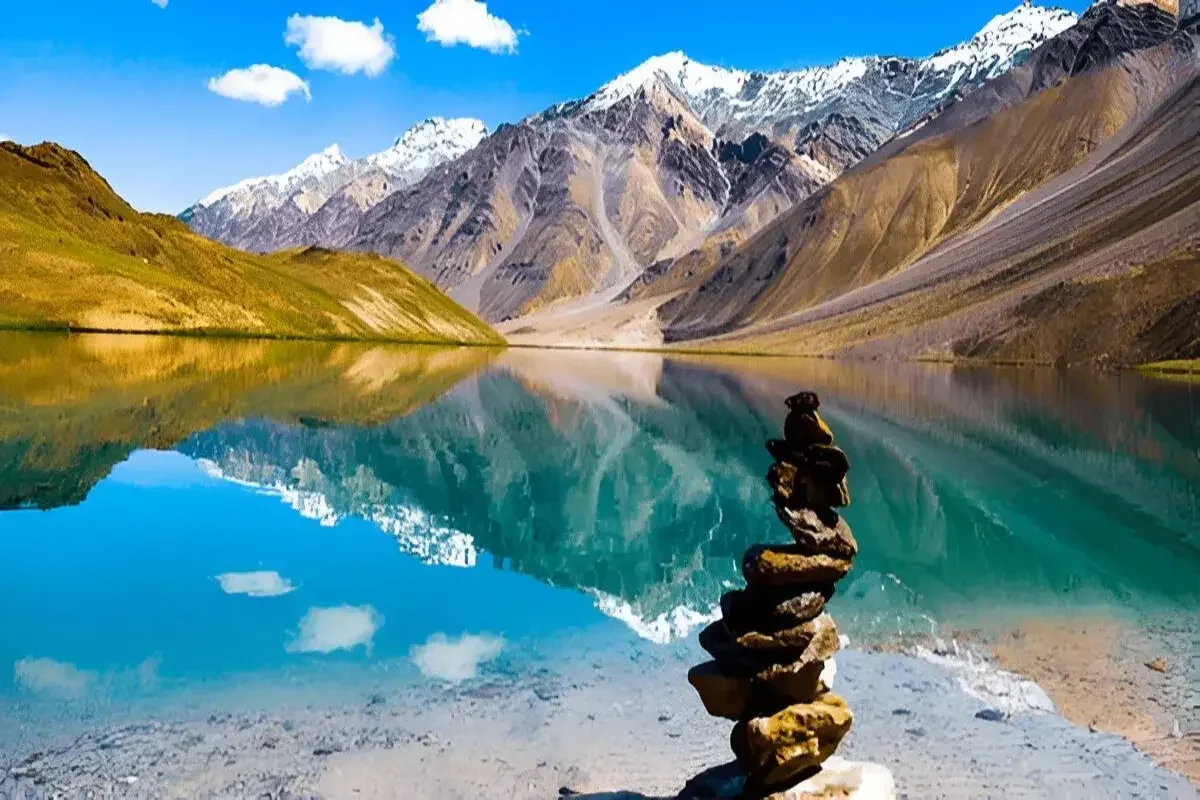
Quick Facts About Chandratal Lake
Chandratal Lake Quick Facts
| Entry Fee | No official entry fee |
| Timings | Accessible only during summer season (approx. June to September); open for daytime visits only due to high-altitude conditions |
| Altitude (m) | Approximately 4,300 m |
| Ideal Visit Duration | 2–3 hours (including trek from parking point) |
| Best Time of Day | Morning to early afternoon for clear weather and safer return |
| Crowd Level | Low to moderate (increases during peak summer travel season) |
| Distance from City Centre (km) | Approximately 120 km from Kaza; around 140 km from Manali (via Kunzum Pass route) |
| Walking Difficulty | Moderate; includes a high-altitude trek of about 2–3 km from the nearest parking point |
| Parking Available | Yes, designated parking available near road head/campsites |
| Last Mile Access | Requires a 2–3 km trek from the nearest motorable point (no direct road access to the lake) |
| Suitable for Kids | Not recommended for very young children due to altitude and trek |
| Suitable for Seniors | Only for fit seniors accustomed to high-altitude trekking |
| Wheelchair Friendly | No |
Why Visit Chandratal Lake
Visitors come to Chandratal Lake to experience a high-altitude Himalayan lake in the Spiti Valley, known for its clear blue waters and its access via scenic mountain roads and trekking routes during the open season.
The on-ground atmosphere is remote and raw, with thin air, cold winds, and silence broken only by the wind and occasional movement of trekkers or campers, creating a true high-altitude wilderness feel.
What makes Chandratal Lake distinct is its crescent-shaped shoreline set against stark brown mountains, where changing light conditions throughout the day dramatically shift the color of the water and surrounding landscape.
History of Chandratal Lake
Chandratal Lake, located in the Spiti region of Himachal Pradesh, is a high-altitude alpine lake formed by glacial and geological processes over time in the Himalayas. It is a natural lake with no recorded man-made origin or constructed historical development.
The lake derives its name from its crescent shape, and it has been known locally for generations among pastoral communities and travelers crossing the Spiti and Lahaul valleys. Historically, it has served as a seasonal stop for nomadic herders and traders navigating high mountain routes.
While not associated with a specific historical event, Chandratal Lake holds cultural importance in local beliefs and oral traditions of the region. It is also regarded as a spiritually significant natural site by visitors who undertake trekking journeys through the Spiti Valley.
Best Time to Visit Chandratal Lake
Chandratal Lake is a high-altitude destination in the Spiti region that remains open to visitors only during a short summer window when the snow clears and road access becomes possible, offering the most stable and scenic travel conditions of the year.
- Ideal Months: Mid-June to early October, with peak experience in July to September.
- Best Season Conditions: Clear skies, fully open access via Kunzum Pass route, and striking blue lake views surrounded by cold but manageable daytime temperatures.
- Periods to Avoid: November to mid-June due to heavy snowfall, frozen lake conditions, and complete road closures in the region; late monsoon days may occasionally cause travel delays on connecting mountain routes.
How to Reach Chandratal Lake
- By Air: The nearest airport is Bhuntar Airport (Kullu–Manali), located around 180–220 km from Chandratal Lake. From the airport, travellers must continue via Manali and further towards the Spiti Valley route. Flight services are limited and can be affected by mountain weather conditions.
- By Train: The nearest major railway station is Joginder Nagar Railway Station, but it is not well connected for long-distance travel. Most visitors use Chandigarh Railway Station (around 400+ km) or Pathankot Junction as primary railheads, followed by road travel to Manali and onward to Spiti Valley.
- By Road: Access to Chandratal Lake is seasonal and typically open only between June and October due to heavy snowfall in winter. The common route is via Manali–Rohtang/Atal Tunnel–Gramphu–Kunzum Pass–Batal. From Batal, the lake is reached either by a 12–14 km trek or limited seasonal shuttle/rough road access up to the parking point (subject to local regulations). Road conditions are highly challenging with high-altitude terrain, unpredictable weather, and no medical facilities nearby, so careful planning is essential.
What to Expect When You Visit Chandratal Lake
- Chandratal Lake is located at high altitude in the Spiti region, surrounded by barren mountains, rocky terrain, and alpine desert landscapes with no permanent habitation nearby.
- Visitors should expect extremely basic on-ground conditions, with no built tourist infrastructure directly at the lake and limited facilities only at distant camping zones.
- Access typically involves a long mountain drive followed by a short trek from the parking or drop-off point, with uneven paths and thin air making movement physically demanding.
- Weather conditions can change quickly, with strong sunlight during the day and very cold temperatures even in summer nights; sudden wind or rain is also possible.
- Visitor presence is controlled and relatively limited, especially during peak season, but can increase during summer months when roads are open.
- Mobile network connectivity is generally unavailable, and emergency services are far away, so self-preparedness is essential for all visitors.
- The lake area is environmentally sensitive, so littering, loud activity, and off-track movement are discouraged and often restricted by local guidelines.
- Camping is not permitted directly at the lake shore, and visitors are required to stay in designated camping zones at a safe distance.
Safety Tips and Important Visitor Information for Dharamshala War Memorial
- Dharamshala War Memorial is generally less crowded on weekday mornings, while evenings and weekends may see higher footfall from local visitors and tourists.
- The memorial area is open-air with landscaped gardens, so visits are best planned during clear weather, as rain can make walking paths slippery.
- Visitors should maintain respectful behavior as the site is dedicated to fallen soldiers and holds significant national importance.
- The complex includes paved walkways, but caution is advised while walking during wet conditions or low visibility hours in the evening.
- Modest, comfortable clothing and walking shoes are recommended for ease of movement within the memorial grounds.
Photography and Viewpoints at Chandratal Lake
- The classic crescent-shaped shoreline viewpoint from the ridge above the lake offers the most complete composition, capturing the turquoise water against the stark Spiti landscape.
- The descent trail from the parking and camping drop-off point provides layered perspectives where the lake gradually reveals itself between mountain ridges.
- Mid-morning to early afternoon is best for capturing the lake’s natural turquoise tone and mirror-like reflections, especially when wind conditions are calm.
- Night photography is notable here due to extremely low light pollution, allowing clear views of star fields and the Milky Way over the lake on cloudless nights.
- Direct access to the shoreline is restricted in some sections to protect the fragile high-altitude ecosystem, limiting tripod placement and close-water compositions.
- During peak travel season (June to September), occasional trekking groups can create crowding at the main viewpoint near the descent path, affecting clean framing.
