Quick Facts About Sharad Baug Palace
Quick Facts About Sharad Baug Palace, Bhuj
| Entry Fee | Free to view from outside (entry inside may require permission; confirm locally) |
|---|---|
| Timings | Open daily for external viewing (internal access timings may vary) |
| Altitude (m) | Approx. 85 m |
| Ideal Visit Duration | 30 minutes – 1 hour (longer if internal access is arranged) |
| Best Time of Day | Morning or late afternoon |
| Crowd Level | Low (relatively quiet; busier during special events) |
| Distance from City Centre (km) | Approx. 2 – 3 km from Bhuj city centre |
| Walking Difficulty | Easy (short walk around palace grounds) |
| Parking Available | Limited parking near palace entrance |
| Last Mile Access | Private vehicle, taxi, or auto-rickshaw recommended |
| Suitable for Kids | Yes (safe for short visits around the palace) |
| Suitable for Seniors | Yes (gentle walking; mostly flat grounds) |
| Wheelchair Friendly | Partially (external grounds accessible; internal areas may have steps) |
Why Visit Sharad Baug Palace, Bhuj
Sharad Baug Palace in Bhuj is a historic royal residence attracting visitors interested in architecture and the city’s regal heritage. Tourists come here to explore the palace grounds, admire the traditional design elements, and learn about the lifestyle of the local rulers. It is a notable stop for travelers exploring Bhuj’s cultural and historical landmarks.
The atmosphere at Sharad Baug Palace is tranquil and elegant, with spacious courtyards, gardens, and architectural detailing that provide a sense of royal charm. Visitors can walk through the palace area, observe decorative elements, and enjoy a calm and scenic environment. The site is generally lightly visited, allowing for a relaxed exploration.
What makes Sharad Baug Palace special is its combination of historical significance, architectural beauty, and serene surroundings. The preserved design and royal ambiance offer travelers a glimpse into Bhuj’s princely past. For visitors, it provides both cultural insight and a picturesque setting that complements other heritage attractions in the city.
History of Sharad Baug Palace, Bhuj
Sharad Baug Palace in Bhuj, Gujarat, is a historic royal residence associated with the erstwhile rulers of the Kutch princely state. The palace reflects the architectural style, lifestyle, and cultural heritage of the Kutch royalty during the 19th and early 20th centuries.
The palace complex was traditionally used as a seasonal residence and venue for royal ceremonies, gatherings, and administrative functions. Its design features elaborate courtyards, decorative facades, and traditional craftsmanship, highlighting the aesthetic sensibilities of the Kutch royal family.
Today, Sharad Baug Palace is recognized as a heritage landmark in Bhuj. Visitors come to explore its architecture, historical significance, and the glimpse it provides into the lifestyle and legacy of Kutch’s former princely rulers.
Best Time to Visit Sharad Baug Palace, Bhuj
Sharad Baug Palace in Bhuj is best visited during the cooler months when the weather is comfortable for exploring the palace grounds, gardens, and heritage architecture. Pleasant conditions enhance walking, photography, and enjoying the historic ambiance of the palace.
- Ideal Months: October to February (best for heritage sightseeing, garden walks, and photography).
- Weather During Best Season: Mild daytime temperatures with low humidity, making it ideal for exploring palace courtyards, gardens, and capturing photographs comfortably.
- Periods to Avoid: April to June due to intense summer heat, which can make walking and outdoor exploration tiring, and July to September during monsoon when rains may affect accessibility.
How to Reach Sharad Baug Palace, Bhuj
- Nearest Airport: The nearest airport is Bhuj Airport, located around 5–6 km from Sharad Baug Palace. From the airport, tourists can hire a taxi or auto-rickshaw to reach the palace.
- Nearest Railway Station: The nearest railway station is Bhuj Railway Station, approximately 3–4 km from the palace. It is well-connected to major cities like Ahmedabad, Rajkot, and Vadodara.
- Road Access & Last-Mile Connectivity: Sharad Baug Palace is located within Bhuj city and is accessible via well-maintained local roads. Private vehicles, taxis, and auto-rickshaws provide smooth last-mile connectivity. Walking a short distance from parking areas may be required to reach the palace entrance.
- Travel Conditions to Note: The area can be busy during weekends, holidays, and local events. Early morning visits are recommended for a peaceful experience. Roads are generally in good condition, and mobile connectivity is stable within Bhuj city.
What to Expect When You Visit Sharad Baug Palace, Bhuj
- Historic royal palace environment: Expect a heritage palace showcasing traditional Kutch architecture, grand courtyards, and decorative interiors that reflect the lifestyle of former rulers.
- Quiet and contemplative atmosphere: The palace is generally peaceful, allowing visitors to admire the architecture, take photographs, and explore the grounds without heavy crowds.
- Walking and exploration: Visitors walk through courtyards, gardens, and select interior rooms. Comfortable footwear is recommended due to stone floors and some uneven surfaces.
- Facilities and amenities: Basic amenities may include seating areas, drinking water, and small shaded spots. Food stalls and larger facilities are generally outside the palace premises.
- Photography opportunities: The palace’s architectural details, gardens, and courtyards provide excellent photography spots. Early morning or late afternoon light enhances photo quality.
- Accessibility considerations: Steps, narrow corridors, and uneven surfaces may limit access for seniors, children, or wheelchair users.
- Visitor behavior: Quiet and respectful conduct is expected. Visitors typically spend time observing architecture, photographing details, and strolling through gardens.
- Crowd conditions: The palace sees moderate visitor traffic, with weekends and holidays attracting slightly more tourists. Weekdays are generally quieter.
- Historical and cultural significance: Sharad Baug Palace provides insight into Kutch royal heritage, architecture, and lifestyle, often appreciated through guided tours or information boards.
- Visit duration: Most tourists spend 45 minutes to 1.5 hours exploring the palace, gardens, and photography spots depending on interest and pace of exploration.
Important Visitor Information for Sharad Baug Palace, Bhuj
- Crowd & Weather Notes: Sharad Baug Palace in Bhuj is a heritage site attracting tourists, history enthusiasts, and photographers. Winter months (October to February) provide the most comfortable climate for exploring the palace grounds. Summers can be hot, while monsoon rains may make outdoor areas and gardens slippery.
- Peak Visiting Hours: The palace sees the highest number of visitors during late morning to early afternoon (10:00 AM to 1:00 PM) and late afternoon (4:00 PM to 6:00 PM), particularly on weekends, public holidays, and during cultural events.
- Quiet Visiting Hours: Early mornings soon after opening and weekday afternoons are generally quieter, ideal for photography, leisurely walks, and exploring the palace architecture without crowds.
- Dress Code (If Applicable): There is no formal dress code. Comfortable casual clothing and walking shoes are recommended, especially for navigating gardens, courtyards, and interior areas.
- Safety & Practical Cautions: Some areas may have uneven flooring or steps. Walk carefully and supervise children closely. Photography is allowed, but avoid restricted areas and fragile architectural features. Carry water during summer visits and exercise caution on wet surfaces during monsoon.
Photography and Viewpoints at Sharad Baug Palace, Bhuj
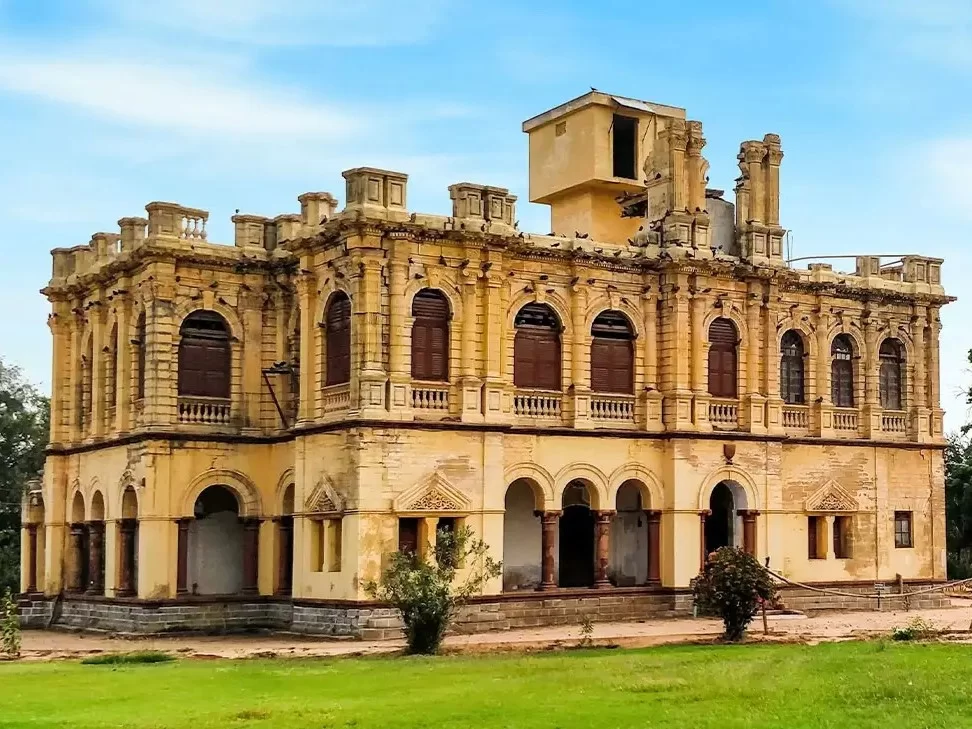
- Best viewpoint for the palace exterior: The main entrance and front gardens provide a symmetrical view of Sharad Baug Palace, capturing the façade, domes, and landscaped grounds in a wide-angle frame.
- Most photogenic spot: Side pathways and elevated terraces allow photographers to include intricate architectural details, arches, and decorative elements, adding depth and perspective to the composition.
- Best time of day for natural lighting: Early morning (7 AM to 9 AM) provides soft, diffused sunlight that illuminates the palace façade evenly, highlighting textures and reducing harsh shadows.
- Golden hour advantage: Late afternoon (4 PM to 6 PM) casts warm light on the domes, walls, and gardens, enhancing textures and producing dramatic, visually appealing shots.
- Midday lighting conditions: Between 11 AM and 3 PM, bright sunlight can flatten architectural details and create glare on lighter stone surfaces, making morning or late afternoon preferable for photography.
- Best photography subjects: Domes, arches, balconies, gardens, fountains, and decorative carvings are ideal for both wide-angle and detailed close-up shots.
- Interior photography restrictions: Photography inside palace rooms or halls may be restricted. Visitors should follow staff instructions and avoid using flash in sensitive areas.
- Crowd factors affecting photography: The palace may see more visitors during weekends and holidays, which can limit unobstructed shots of gardens, terraces, and entrances.
- Best crowd-free photography window: Weekday mornings provide the calmest environment for capturing both exterior architecture and accessible interior spaces without visitors in the frame.
- Drone and professional shoot rules: Drone photography and commercial filming require prior permission from palace authorities, ensuring minimal disturbance to visitors and preservation of heritage structures.