Quick Facts About Kirti Mandir , Porbandar
Quick Facts About Kirti Mandir, Porbandar
| Entry Fee | Free |
|---|---|
| Timings | Open daily (generally 9:00 AM – 1:00 PM and 3:00 PM – 6:00 PM; timings may vary on holidays) |
| Altitude (m) | Approx. 5 m |
| Ideal Visit Duration | 45 minutes – 1.5 hours |
| Best Time of Day | Late morning or afternoon |
| Crowd Level | Moderate (higher on weekends and during tourist season) |
| Distance from City Centre (km) | Approx. 2 – 3 km (from Porbandar city centre) |
| Walking Difficulty | Easy (short indoor walking and stairs in some sections) |
| Parking Available | Limited parking available nearby |
| Last Mile Access | Auto-rickshaw, taxi, and private vehicle access available |
| Suitable for Kids | Yes (educational and cultural place visit) |
| Suitable for Seniors | Yes (comfortable visit, but stairs may be present) |
| Wheelchair Friendly | Partially (entry area is manageable, but full accessibility depends on internal layout) |
Why Visit Kirti Mandir, Porbandar
Kirti Mandir in Porbandar is a major heritage and national-interest attraction because it is the birthplace memorial of Mahatma Gandhi. Visitors come here to see the preserved ancestral home of the Gandhi family and to understand the early environment connected to Gandhi’s life. It is one of the most important places to visit in Porbandar for travelers interested in Indian history, freedom movement sites, and meaningful cultural landmarks.
Atmosphere
The atmosphere at Kirti Mandir feels calm, respectful, and reflective, with visitors moving quietly through the memorial spaces. The interiors have a museum-like setting with displays and preserved rooms, creating an educational environment rather than a casual tourist vibe. The area remains peaceful on most days, while national holidays and Gandhi-related occasions bring a higher number of visitors.
What Makes it Special
What makes Kirti Mandir special is its direct association with Mahatma Gandhi’s birthplace, making it one of Gujarat’s most historically significant memorial sites. The architecture of the memorial, along with the preserved Gandhi family house and exhibits, gives visitors an authentic connection to an important chapter of Indian history. For travelers, it stands out as a rare place where cultural heritage and national legacy can be experienced in a very personal and grounded way.
History of Kirti Mandir, Porbandar
Kirti Mandir in Porbandar is a historically important memorial site built to honor Mahatma Gandhi and his wife Kasturba Gandhi. It is located at the birthplace of Mahatma Gandhi, making it one of the most significant heritage landmarks connected to India’s freedom movement in Gujarat.
The memorial was constructed as a tribute to Gandhi’s life and legacy, and it preserves the ancestral home of the Gandhi family. Kirti Mandir is designed with traditional architectural elements and includes inscriptions, photographs, and exhibits that reflect Gandhi’s early life, values, and his connection to Porbandar.
Over time, Kirti Mandir became an important pilgrimage destination for those interested in India’s independence history. Today, it stands as a major cultural and national heritage site in Porbandar, attracting visitors who come to explore the birthplace of the Father of the Nation and understand his roots in coastal Gujarat.
Best Time to Visit Kirti Mandir
Kirti Mandir in Porbandar is best visited during the cooler months when the weather is comfortable for exploring the memorial complex and nearby heritage areas. Since visitors often combine Kirti Mandir with Sudama Temple and Porbandar seafront sightseeing, winter and post-monsoon season offers the most pleasant overall experience.
- Ideal Months: October to March (best season for heritage sightseeing and relaxed exploration).
- Weather During Best Season: Pleasant coastal temperatures with clear skies, making it ideal for visiting the memorial, walking around the premises, and enjoying nearby sea-facing viewpoints.
- Periods to Avoid: April to June due to peak summer heat in Porbandar, which can make outdoor movement and nearby sightseeing uncomfortable during daytime.
How to Reach Kirti Mandir, Porbandar
- Nearest Airport: The nearest airport is Porbandar Airport, located around 4–6 km from Kirti Mandir. The airport has limited flight operations, so travellers from major cities may also use Rajkot International Airport and continue by road to Porbandar.
- Nearest Railway Station: The nearest railway station is Porbandar Railway Station, located around 2–4 km from Kirti Mandir. It has regular connectivity with key Gujarat cities like Ahmedabad and Rajkot through direct train routes.
- Road Access & Last-Mile Connectivity: Kirti Mandir is situated in the central area of Porbandar city and is well-connected by local roads. Tourists can easily reach it via auto-rickshaws, taxis, and private vehicles. Since it is a well-known landmark, navigation is simple and last-mile connectivity is smooth from all major parts of the city.
- Travel Conditions to Note: The area around Kirti Mandir can get busy during weekends, school group visits, and public holidays. Parking is available nearby but may be limited during peak visiting hours. Visiting in the morning is recommended for a quieter and more comfortable experience.
What to Expect When You Visit Kirti Mandir
- Historic memorial and heritage setting: Expect a calm memorial-style environment built in a traditional architectural style, with a focus on history and cultural significance rather than a typical temple-only experience.
- Peaceful atmosphere with devotional touch: The surroundings are usually quiet and respectful, as visitors come here to pay tribute and spend time in a spiritually calm space.
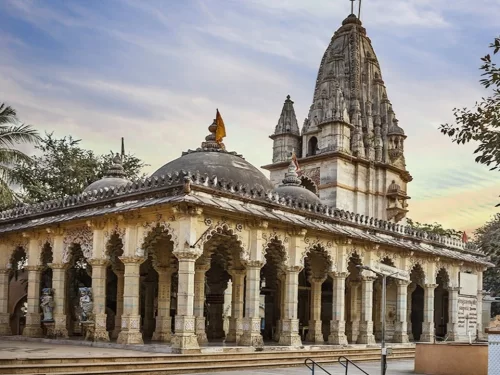
- Marble interiors and detailed carvings: Visitors typically notice carved pillars, decorative ceilings, and marble work. The site feels elegant but not overly commercial or crowded.
- Indoor exploration with short walking: The visit involves walking through interior halls and memorial sections. The layout is easy to cover, but you may need time to observe the artwork and inscriptions properly.
- Limited modern tourist facilities: Do not expect food courts or large amenities inside. Facilities are usually basic, and visitors mostly depend on nearby city shops for snacks and water.
- Visitor crowd conditions: Kirti Mandir is generally not heavily crowded on regular weekdays. It can become busy during weekends, school visits, and important national or religious days.
- Photography expectations: Photography is usually possible in outer sections and corridors, but some inner areas may have restrictions. Flash photography may be discouraged due to heritage preservation.
- Accessibility and movement: The area is mostly easy to walk, but steps and traditional entrances may create minor difficulty for wheelchair users or seniors.
- Typical visitor behavior: Most visitors explore quietly, read inscriptions, take photos, and spend time understanding the historical importance rather than rushing through.
- Visit duration: Most visitors spend around 30 minutes to 1 hour, depending on interest in history, architecture, and cultural details.
Important Visitor Information for Kirti Mandir, Porbandar
- Crowd & Weather Notes: Kirti Mandir is one of Porbandar’s most important heritage and memorial attractions, as it is associated with Mahatma Gandhi’s birthplace area. It receives steady tourist footfall throughout the year, with higher crowds during winter season (October to February), weekends, and national holidays. Summers can be hot and humid, but the indoor memorial sections remain manageable for short visits.
- Peak Visiting Hours: The busiest time is usually late morning to early afternoon (10:30 AM to 2:00 PM), especially when tourist groups and school visits arrive. Crowds also increase during Gandhi Jayanti and other national observance days.
- Quiet Visiting Hours: The best quiet visiting time is early morning soon after opening and weekday afternoons, when group crowds are lower and the memorial premises feel peaceful.
- Dress Code (If Applicable): There is no strict dress code, but visitors are expected to dress decently and maintain respectful behaviour, as Kirti Mandir is a memorial space connected to Mahatma Gandhi’s life and legacy.
- Safety & Practical Cautions: Photography may be restricted in certain interior areas, so confirm rules before taking pictures. Since the area includes narrow corridors and heritage-style rooms, move carefully in crowded periods. Keep personal belongings secure during peak tourist hours, and avoid loud behaviour as the premises are meant for quiet reflection.
Photography and Viewpoints at Kirti Mandir, Porbandar
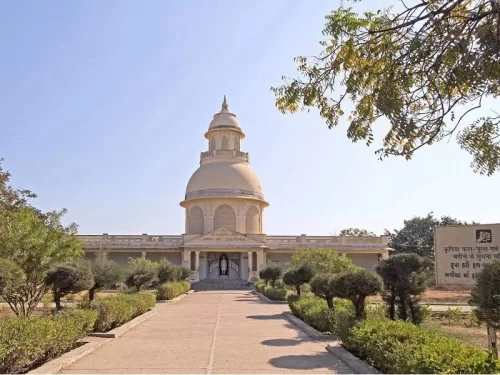
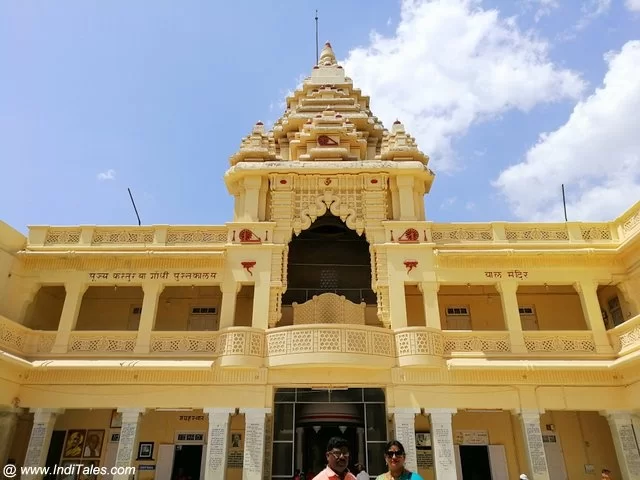
- Best viewpoint for the main façade: The most iconic photograph of Kirti Mandir is best taken from the front entrance approach, where the complete memorial structure and its symmetrical design can be captured clearly.
- Most photogenic exterior angle: Wide-angle shots look best from a slight side-corner position in the courtyard, allowing you to include the temple-like memorial architecture along with its clean stone detailing.
- Best time of day for natural lighting: Morning (8 AM to 10 AM) is ideal for photography, as the soft light highlights the carvings and keeps the white stone surface from appearing overexposed.
- Golden hour photography advantage: Late afternoon (4:30 PM to 6 PM) creates warm tones and stronger shadows, making the architectural lines and stone textures appear more dramatic in photographs.
- Midday lighting conditions: Between 11 AM and 3 PM, harsh sunlight can cause strong glare on the stone surface, reducing detail in photos, especially when shooting straight from the front.
- Interior photography considerations: Inside Kirti Mandir, lighting is relatively low, and photography may be restricted in certain memorial rooms displaying portraits, exhibits, and Gandhi-related information panels.
- Photography restrictions to note: Flash photography is generally discouraged indoors, and some sections may not allow photos at all due to preservation of displays and respectful memorial rules.
- Best photography subjects: The memorial’s carved stone panels, inscriptions, domed roof structure, and heritage-style pillars are the best elements for detailed architectural photography.
- Crowd factors affecting photography: The site becomes moderately crowded during weekends, holidays, and Gandhi Jayanti-related visits, which may affect clean shots near the entrance and main interior halls.
- Best crowd-free photography window: Weekday mornings are the best time for quiet photography, allowing clearer frames of the memorial exterior and courtyard without people in the background.