Quick Facts About Dwarkadhish Temple
Quick Facts About Dwarkadhish Temple, Dwarka
| Entry Fee | Free |
|---|---|
| Timings | Open daily (usually 4:00 AM – 1:00 PM and 4:00 PM – 9:00 PM; timings may vary during festivals) |
| Altitude (m) | Approx. 5 m (sea level) |
| Ideal Visit Duration | 1 – 2 hours |
| Best Time of Day | Morning or evening (during aarti for best spiritual experience) |
| Crowd Level | High (especially on weekends, holidays, and festival days) |
| Distance from City Centre (km) | Located in central Dwarka city |
| Walking Difficulty | Easy (short walking within temple premises) |
| Parking Available | Limited parking near the temple |
| Last Mile Access | Auto-rickshaw, taxi, and private vehicle access available |
| Suitable for Kids | Yes (safe for family visits) |
| Suitable for Seniors | Yes (easy walking and seating available) |
| Wheelchair Friendly | Partially (main temple area accessible; some steps may be present) |
Why Visit Dwarkadhish Temple, Dwarka
Dwarkadhish Temple in Dwarka is one of India’s most revered Hindu temples, dedicated to Lord Krishna as the “King of Dwarka.” Visitors come here to offer prayers, participate in rituals, and experience the temple’s spiritual energy. It is a central pilgrimage site for devotees and an essential destination for travelers exploring Dwarka’s religious and cultural heritage.
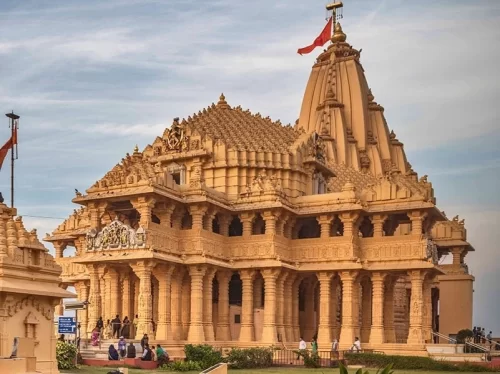
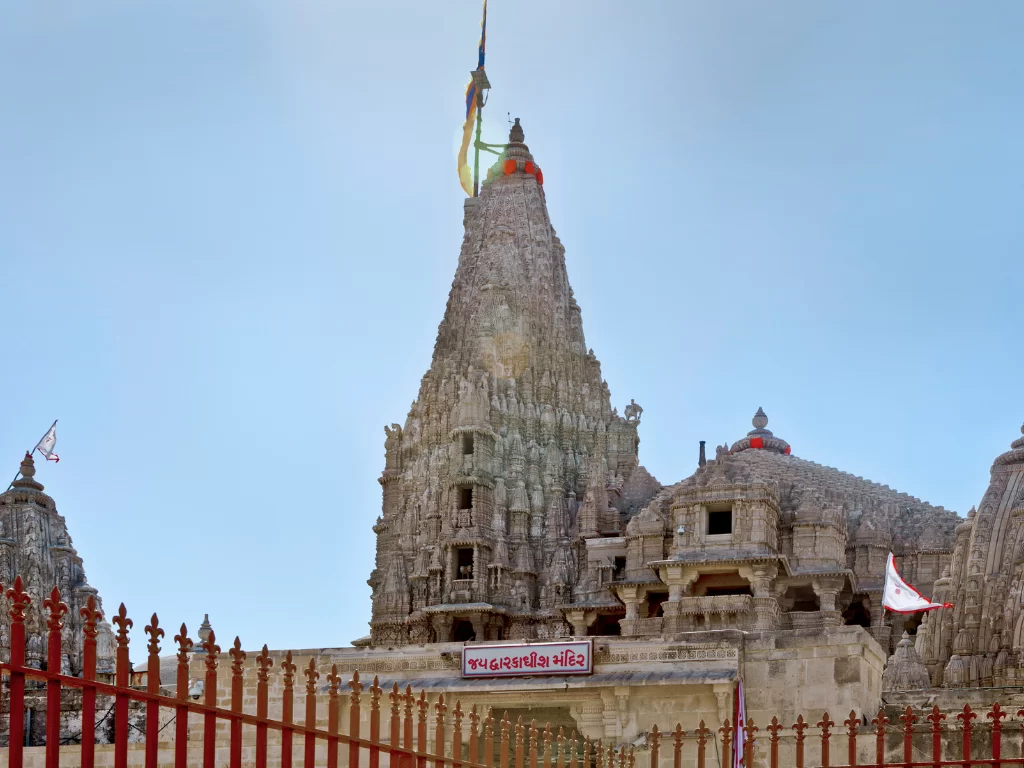
The atmosphere at Dwarkadhish Temple is vibrant and devotional, with a continuous flow of chants, bells, and offerings creating an immersive spiritual environment. The temple complex, with its towering spire and intricately carved interiors, provides a lively yet reverent setting. Festivals and aarti times bring a heightened energy, while early mornings offer a quieter, reflective experience.
What makes Dwarkadhish Temple special is its historical and religious significance as a key Krishna pilgrimage site, combined with its impressive architecture and coastal location. The temple’s devotion-filled environment, cultural importance, and proximity to other sacred sites make it a unique and unforgettable destination. For travelers, it represents the spiritual heart of Dwarka.
History of Dwarkadhish Temple, Dwarka
Dwarkadhish Temple in Dwarka, Gujarat, is one of the most revered Hindu temples dedicated to Lord Krishna, also known as Dwarkadhish or the King of Dwarka. The temple has ancient origins, with references in Puranic texts and historical records, establishing it as a central spiritual site for centuries.
The temple has been reconstructed and renovated multiple times over the centuries, reflecting traditional Hindu architectural styles with intricately carved pillars, spires, and sanctums. It has historically served as a key pilgrimage center, drawing devotees from across India and abroad to celebrate festivals like Janmashtami.
Today, Dwarkadhish Temple remains the primary religious and cultural landmark in Dwarka. Pilgrims and tourists visit to offer prayers, participate in rituals, and experience the rich spiritual heritage of one of Gujarat’s most significant Vaishnavite sites.
Best Time to Visit Dwarkadhish Temple, Dwarka
Dwarkadhish Temple is best visited during the cooler months when the weather is comfortable for darshan, walking through the temple complex, and attending rituals. Pleasant conditions make the spiritual experience more enjoyable and allow visitors to explore nearby ghats and streets without discomfort.
- Ideal Months: October to February (best for temple visits, darshan, and sightseeing in Dwarka).
- Weather During Best Season: Mild temperatures with gentle coastal breezes, ideal for attending aarti, exploring the temple premises, and spending time in surrounding areas comfortably.
- Periods to Avoid: April to June due to intense summer heat, which can make outdoor temple visits exhausting, and July to September during monsoon when heavy rains may affect accessibility and comfort.
How to Reach Dwarkadhish Temple, Dwarka
- Nearest Airport: The nearest airport is Porbandar Airport, located around 130–135 km from Dwarka. From the airport, tourists can hire a taxi or private car via NH 51 to reach Dwarka city and the temple.
- Nearest Railway Station: The nearest railway station is Dwarka Railway Station, approximately 1–2 km from Dwarkadhish Temple. It is well-connected to Ahmedabad, Rajkot, and Porbandar.
- Road Access & Last-Mile Connectivity: The temple is located in the heart of Dwarka city and is accessible via NH 51 and city roads. Visitors can use private vehicles, taxis, auto-rickshaws, or walk from nearby parking areas for last-mile access.
- Travel Conditions to Note: The temple area becomes very crowded during festivals, weekends, and peak pilgrimage season. Early morning visits are recommended for a peaceful experience. Parking is limited near the temple, so using local transport or walking from nearby zones is advisable.
What to Expect When You Visit Dwarkadhish Temple, Dwarka
- Grand historic temple environment: Expect a large and iconic Hindu temple dedicated to Lord Krishna, featuring towering spires, intricately carved pillars, and a richly decorated sanctum.
- Devotional and vibrant atmosphere: The temple is highly active with daily rituals, aarti, bhajans, and crowds of devotees, creating an immersive spiritual experience.
- Walking and temple navigation: Visitors explore multiple courtyards, steps, and corridors to reach the main sanctum. Comfortable footwear is recommended, and be prepared for crowd movement in narrow areas.
- Facilities and amenities: Basic amenities include drinking water, seating areas, restrooms, and nearby shops for prasad and offerings. Larger dining or refreshment facilities are usually outside the temple complex.
- Accessibility considerations: The temple has steps and uneven surfaces. Wheelchair access is limited in some areas, and seniors or children may need assistance navigating crowded or steep sections.
- Photography guidelines: Photography may be restricted inside the sanctum and during aarti. Courtyards and outer temple areas typically allow casual photography with respect.
- Visitor behavior: Quiet and respectful conduct is expected. Devotees participate in darshan, prayers, and rituals, while tourists focus on sightseeing and photography.
- Crowd conditions: The temple experiences heavy crowds during festivals, weekends, and early mornings or evenings for aarti. Midday hours on weekdays are relatively less crowded.
- Religious and cultural significance: Dwarkadhish Temple is a major pilgrimage site in India, attracting devotees from across the country and offering insights into Krishna worship and local traditions.
- Visit duration: Most visitors spend 1 to 2 hours exploring the temple complex, participating in rituals, and admiring the architectural details and spiritual ambiance.
Important Visitor Information for Dwarkadhish Temple, Dwarka
- Crowd & Weather Notes: Dwarkadhish Temple is one of the most visited and significant temples in Dwarka, attracting thousands of devotees and tourists daily. Winter months (October to February) offer the most comfortable climate for visiting. Summers can be very hot and humid, while monsoon rains may make the temple steps and surrounding areas slippery.
- Peak Visiting Hours: The temple is busiest during morning and evening darshan hours (5:00 AM to 11:00 AM and 4:00 PM to 8:00 PM), especially on weekends, public holidays, and major festivals such as Janmashtami and Holi.
- Quiet Visiting Hours: Weekday mid-mornings and early afternoons are generally quieter, providing a more peaceful experience for worship, rituals, and exploring the temple premises.
- Dress Code (If Applicable): Modest and traditional clothing is required. Visitors should cover shoulders and knees, and footwear must be removed before entering the temple premises.
- Safety & Practical Cautions: During peak hours, maintain caution in crowded areas and keep belongings secure. Supervise children closely and walk carefully on polished floors and steps. Photography may be restricted in sanctum areas, so confirm temple rules before taking pictures.
Photography and Viewpoints at Dwarkadhish Temple, Dwarka
- Best viewpoint for the temple exterior: The main entrance and the central courtyard provide a full view of the temple façade, capturing its ornate spires, domes, and surrounding steps in a wide-angle frame.
- Most photogenic spot: Elevated corners, side pathways, and approach stairways allow photographers to include intricate carvings, temple spires, and the bustling courtyard, adding depth and context to the images.
- Best time of day for natural lighting: Early morning (6 AM to 9 AM) offers soft, diffused sunlight that enhances architectural details without harsh shadows, ideal for exterior photography.
- Golden hour advantage: Late afternoon (4 PM to 6 PM) casts warm light across the spires, domes, and courtyard, producing dramatic shadows and vibrant colors for striking photographs.
- Midday lighting conditions: Between 11 AM and 3 PM, bright overhead sunlight can flatten carvings and create glare on light-colored stone, making early morning or late afternoon preferable.
- Best photography subjects: Temple spires, carved pillars, entrance arches, inner courtyards, and decorative motifs are ideal for both wide-angle and detailed close-up shots.
- Interior photography restrictions: Photography inside the sanctum and main halls is generally restricted, especially during aarti and devotional ceremonies. Flash is prohibited to maintain sanctity.
- Crowd factors affecting photography: The temple is crowded during weekends, festivals, and evening aarti times, which can limit clean framing around entrances and inner courtyards.
- Best crowd-free photography window: Weekday mornings are optimal for capturing the temple exterior and permitted interior areas without interference from devotees.
- Drone and professional shoot rules: Drone photography and commercial filming require prior permission from temple authorities, ensuring respect for religious practices and visitor privacy.