Quick Facts About The Adalaj Stepwell
Quick Facts About The Adalaj Stepwell, Adalaj
| Entry Fee | Paid (nominal fee; confirm at entrance) |
|---|---|
| Timings | Open daily (usually 9:00 AM – 6:00 PM) |
| Altitude (m) | Approx. 40 m |
| Ideal Visit Duration | 30 minutes – 1 hour |
| Best Time of Day | Morning or late afternoon |
| Crowd Level | Moderate (busier on weekends and holidays) |
| Distance from City Centre (km) | Approx. 18 km from Ahmedabad city centre |
| Walking Difficulty | Easy to Moderate (some steps inside the stepwell) |
| Parking Available | Limited parking near the stepwell |
| Last Mile Access | Private vehicle, taxi, or auto-rickshaw access available |
| Suitable for Kids | Yes (supervised visits recommended due to steps) |
| Suitable for Seniors | Partially (steps may be challenging) |
| Wheelchair Friendly | No (steep steps and uneven surfaces) |
Why Visit The Adalaj Stepwell, Ahmedabad
The Adalaj Stepwell in Ahmedabad is a historic architectural marvel attracting visitors interested in medieval engineering, art, and heritage. Tourists come here to explore the intricately carved steps, pillars, and balconies of the five-story stepwell, which served as both a water reservoir and a resting place for travelers. It is a must-visit landmark for those exploring Gujarat’s rich cultural history.
The atmosphere at The Adalaj Stepwell is calm and contemplative, with cool shaded areas, ornate stone carvings, and peaceful surroundings creating a reflective environment. Visitors can descend the steps, observe the detailed sculptures, and admire the interplay of light and shadow within the stepwell. The site is generally quiet, allowing for immersive exploration and photography.
What makes The Adalaj Stepwell special is its blend of functional engineering and elaborate artistry, reflecting the ingenuity of medieval Gujarat. The intricate carvings, historical significance, and architectural symmetry offer travelers a unique and visually captivating experience. For visitors, it provides both cultural insight and a striking heritage attraction near Ahmedabad.
History of Adalaj Stepwell, Adalaj
Adalaj Stepwell, located in Adalaj near Gandhinagar, Gujarat, is a historic five-story stepwell constructed in 1499 CE by Queen Rudabai, wife of the Vaghela ruler, Veer Singh. It was built to provide water storage, irrigation, and a cool resting place for travelers in the semi-arid region.
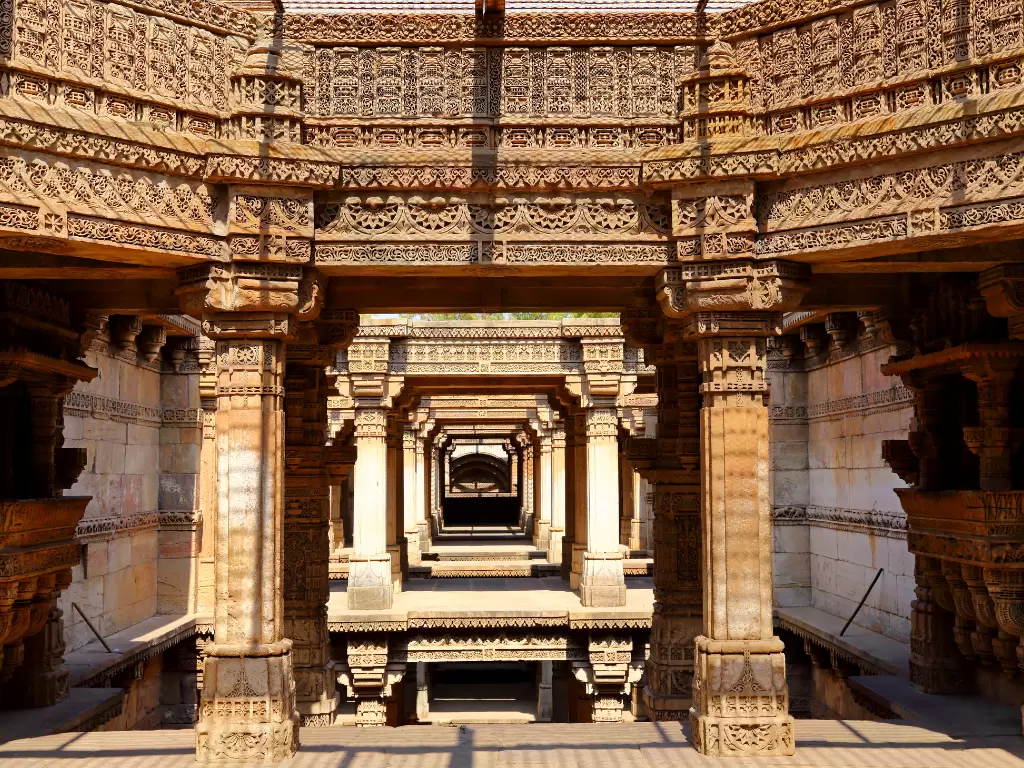
The stepwell is renowned for its intricate Indo-Islamic architecture, featuring carved pillars, sculpted motifs, and ornate walls. Over centuries, it has served both functional and social purposes, acting as a water reservoir and a gathering place for locals and travelers alike.
Today, Adalaj Stepwell is a major heritage and tourist landmark. Visitors come to admire its architectural brilliance, explore its historical significance, and experience the cultural legacy of Gujarat’s medieval stepwells.
Best Time to Visit The Adalaj Stepwell, Ahmedabad
The Adalaj Stepwell is best visited during the cooler months when the weather is comfortable for exploring the intricate architecture, walking along the stepwell terraces, and photographing the carvings. Pleasant conditions make sightseeing and heritage exploration more enjoyable.
- Ideal Months: October to February (best for heritage visits, walking, and photography).
- Weather During Best Season: Mild daytime temperatures with low humidity, ideal for exploring the stepwell, observing intricate carvings, and capturing photographs comfortably.
- Periods to Avoid: April to June due to intense summer heat, which can make outdoor exploration tiring, and July to September during monsoon when occasional heavy rains may affect accessibility and comfort.
How to Reach The Adalaj Stepwell, Adalaj
- Nearest Airport: The nearest airport is Sardar Vallabhbhai Patel International Airport, Ahmedabad, located around 18–20 km from The Adalaj Stepwell. From the airport, tourists can hire a taxi or private car via SG Highway or NH 147 to reach the site.
- Nearest Railway Station: The nearest railway station is Ahmedabad Junction Railway Station, approximately 20–22 km from the stepwell. It is well-connected to major cities like Mumbai, Delhi, Jaipur, and Vadodara.
- Road Access & Last-Mile Connectivity: The stepwell is accessible via SG Highway and well-maintained local roads. Private vehicles, taxis, and auto-rickshaws provide convenient last-mile connectivity. Parking is available near the entrance for visitors.
- Travel Conditions to Note: The area can get crowded during weekends, public holidays, and festival seasons. Early morning visits are recommended for a peaceful experience and optimal photography. Roads are generally in good condition, and mobile connectivity is stable.
What to Expect When You Visit The Adalaj Stepwell, Ahmedabad
- Historic stepwell environment: Expect a 15th-century intricately carved stepwell featuring multiple levels, ornate pillars, arches, and traditional Gujarati architectural details.
- Quiet and contemplative atmosphere: The stepwell is generally peaceful, allowing visitors to explore, photograph, and admire the craftsmanship without large crowds.
- Walking and descent considerations: Visitors descend steep stone steps to reach lower levels of the stepwell. Comfortable footwear is recommended, and caution is advised on uneven or worn surfaces.
- Facilities and amenities: Basic amenities include a few benches and shaded areas. Restrooms and food options are available outside the stepwell complex.
- Photography opportunities: The geometric patterns, carved walls, and cascading steps provide excellent photography spots, particularly in natural daylight.
- Accessibility considerations: Steps and narrow passages make access challenging for seniors, children, or wheelchair users.
- Visitor behavior: Quiet and respectful conduct is expected. Visitors usually spend time exploring architecture, reading informational plaques, and taking photographs.
- Crowd conditions: Weekdays are generally less crowded, while weekends and school trips may bring moderate footfall.
- Historical and cultural significance: Adalaj Stepwell is an important heritage site in Gujarat, exemplifying Indo-Islamic architecture and traditional water management techniques.
- Visit duration: Most visitors spend 30 minutes to 1 hour exploring the stepwell, observing carvings, and photographing the architectural details.
Important Visitor Information for The Adalaj Stepwell, Adalaj
- Crowd & Weather Notes: The Adalaj Stepwell is a historic architectural and tourist site near Ahmedabad, attracting tourists, photographers, and history enthusiasts year-round. Winter months (October to February) are the most comfortable for visiting. Summers can be hot, while monsoon rains may make stone steps and surrounding areas slippery.
- Peak Visiting Hours: The stepwell is busiest during late morning to early afternoon (10:00 AM to 1:00 PM) and late afternoon (4:00 PM to 6:00 PM), particularly on weekends, public holidays, and during guided tours or school visits.
- Quiet Visiting Hours: Early mornings (9:00 AM to 10:30 AM) and weekday afternoons are generally quieter, ideal for photography, exploring the intricate carvings, and appreciating the architecture without crowds.
- Dress Code (If Applicable): There is no formal dress code. Comfortable casual clothing and walking shoes are recommended for navigating stone steps and lower levels of the stepwell.
- Safety & Practical Cautions: Visitors should walk carefully on uneven stone surfaces and steep steps. Supervise children closely. Photography is allowed, but avoid touching delicate carvings. Carry water and sun protection during summer visits, and exercise caution on wet surfaces during monsoon.
Photography and Viewpoints at Adalaj Stepwell, Ahmedabad
- Best viewpoint for wide stepwell shots: The main entrance and top platform provide a panoramic view of Adalaj Stepwell, capturing the descending steps, carved pillars, and intricate architectural details in a wide-angle frame.
- Most photogenic spot: Intermediate landings and side corridors allow photographers to frame the geometric step patterns, stone carvings, and balconies, adding depth and perspective to compositions.
- Best time of day for natural lighting: Early morning (7 AM to 9 AM) offers soft, diffused sunlight that highlights carvings and stone textures without harsh shadows, ideal for exterior photography.
- Golden hour advantage: Late afternoon (4 PM to 6 PM) casts warm light across the stepwell, enhancing shadows and textures for visually striking photographs.
- Midday lighting conditions: Between 11 AM and 3 PM, bright sunlight can produce harsh contrasts and flatten intricate carvings, making early morning or late afternoon preferable.
- Best photography subjects: Descending stone steps, carved pillars, geometric patterns, balconies, and water reservoirs are ideal for both wide-angle and detailed close-up shots.
- Photography restrictions: Flash photography may be restricted inside darker galleries to protect stone surfaces. Visitors should avoid stepping on fragile areas for safety.
- Crowd factors affecting photography: Weekends, holidays, and peak tourist hours may increase visitor numbers, limiting unobstructed views of steps and corridors.
- Best crowd-free photography window: Weekday mornings provide the calmest environment for capturing both exterior and interior views without visitors in the frame.
- Drone and professional shoot rules: Drone photography and commercial filming require prior permission from local authorities to ensure safety, heritage preservation, and minimal disturbance to visitors.