Quick Facts About 72 Jinalaya
Quick Facts About 72 Jinalaya, Mandvi
| Entry Fee | Free |
|---|---|
| Timings | Open daily (typically morning to evening; exact timings may vary) |
| Altitude (m) | Approx. 15 m |
| Ideal Visit Duration | 30 minutes – 1 hour |
| Best Time of Day | Morning or late afternoon |
| Crowd Level | Low to Moderate (higher during festivals and special occasions) |
| Distance from City Centre (km) | Approx. 2 – 3 km (from Mandvi town centre) |
| Walking Difficulty | Easy (short walking paths within temple complex) |
| Parking Available | Limited parking available nearby |
| Last Mile Access | Auto-rickshaw, taxi, and private vehicle access available |
| Suitable for Kids | Yes (safe for family visits, peaceful environment) |
| Suitable for Seniors | Yes (easy walking and seating available) |
| Wheelchair Friendly | Partially (main entrance accessible; some areas may have steps) |
Why Visit 72 Jinalaya, Mandvi
72 Jinalaya in Mandvi is a significant Jain pilgrimage site where visitors come to explore a cluster of intricately carved temples dedicated to Jain Tirthankaras. Tourists and devotees alike visit to admire the architecture, experience the spiritual ambiance, and learn about Jain religious traditions in a historic setting.
The atmosphere at 72 Jinalaya is serene and contemplative, with quiet courtyards, stone-carved halls, and an overall sense of devotion. Visitors can move through the complex at their own pace, observing the detailed sculptures and participating in rituals. The calm environment allows for reflection, photography, and immersive exploration of the religious heritage.
What makes 72 Jinalaya special is the dense concentration of finely sculpted Jain temples in one location, reflecting the region’s rich religious and architectural history. The artistry and devotion captured in each shrine provide travelers with a rare insight into Jain culture. For visitors to Mandvi, it offers a unique spiritual and cultural experience beyond the usual tourist attractions.
History of 72 Jinalaya, Mandvi
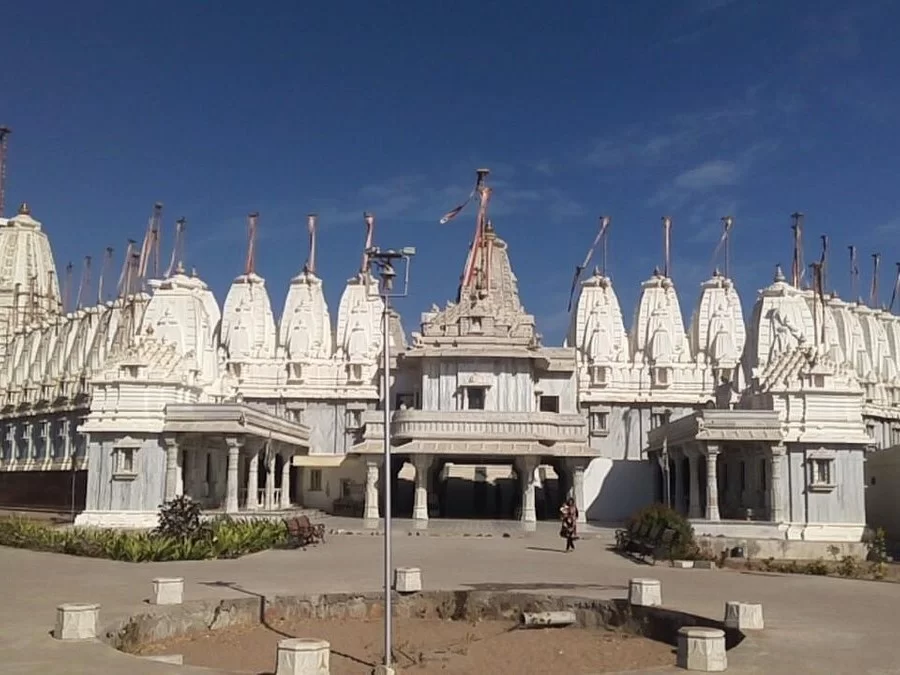
72 Jinalaya in Mandvi, Gujarat, is a historic Jain temple complex comprising 72 small shrines dedicated to various Tirthankaras. The site reflects the long-standing presence of Jainism in the region and showcases the community’s devotion, architectural skill, and cultural heritage.
The temple complex is believed to have been developed over several centuries, with intricate stone carvings, idols, and traditional Jain architectural motifs. It served as a center for religious gatherings, festivals, and spiritual education for the Jain community in Mandvi and nearby areas.
Today, 72 Jinalaya is an important religious and heritage landmark in Mandvi, attracting devotees and tourists interested in Jain culture, temple architecture, and the historical continuity of Jain worship in Gujarat.
Best Time to Visit 72 Jinalaya, Mandvi
72 Jinalaya in Mandvi is best visited during the cooler months when the weather is comfortable for exploring the temple complex and its intricate architecture. Pleasant conditions enhance the experience of walking around the premises and observing the detailed carvings without discomfort from heat or humidity.
- Ideal Months: October to February (best season for comfortable visits and photography).
- Weather During Best Season: Mild temperatures with clear skies, making it ideal for temple exploration and spending time in the courtyard areas.
- Periods to Avoid: April to June due to peak summer heat in Mandvi, which can make outdoor walking around the temple tiring.
How to Reach 72 Jinalaya, Mandvi
- Nearest Airport: The nearest airport is Kandla Airport (Devi Ahilya Bai Holkar Airport – Kandla), located around 150–160 km from Mandvi. From the airport, tourists can hire a taxi or private car to reach 72 Jinalaya.
- Nearest Railway Station: The nearest railway station is Bhuj Railway Station, located approximately 60–65 km from 72 Jinalaya. The station is connected to major cities in Gujarat, including Ahmedabad and Rajkot. From Bhuj, taxis or private vehicles are the best options to reach Mandvi and the temple.
- Road Access & Last-Mile Connectivity: 72 Jinalaya is accessible via the Bhuj–Mandvi highway (SH 6) and local Mandvi town roads. The last-mile stretch involves small village or town streets, so private vehicles, taxis, or auto-rickshaws are recommended for easy access. Public transport is minimal.
- Travel Conditions to Note: Roads are generally in good condition but can be narrow in village sections. During monsoon, some parts may experience minor waterlogging. Early morning visits are ideal to avoid local traffic and for a peaceful experience.
What to Expect When You Visit 72 Jinalaya, Mandvi
- Historic Jain temple complex: Expect a serene and sacred environment with multiple small shrines and intricately carved idols, reflecting traditional Jain architecture and religious practices.
- Quiet and devotional atmosphere: The temple premises are peaceful, with minimal crowds. Visitors often come for darshan, meditation, and to observe rituals quietly.
- Compact layout and easy walking: The complex is relatively small, allowing visitors to explore most sections on foot without much difficulty. Pathways may be narrow in certain areas between shrines.
- Footwear removal and dress code: Shoes must be removed before entering the temple halls. Modest clothing is expected to respect the religious setting.
- Limited tourist facilities: Expect basic amenities such as drinking water and small seating areas. There are no restaurants or large modern facilities within the complex.
- Photography restrictions: Photography may be restricted inside sanctum areas. Visitors can usually take photos in outer courtyards or open spaces with prior permission.
- Accessibility considerations: Most areas are accessible on foot, but some sections may have steps or raised platforms, which can be challenging for seniors or visitors with mobility issues.
- Visitor behavior: Devotees typically maintain silence and show respect. Most tourists spend time observing carvings, reading inscriptions, and appreciating temple architecture.
- Special occasions and festivals: The temple sees higher footfall during Jain festivals or religious events, which may affect quiet exploration and require waiting for darshan.
- Visit duration: Most visitors spend 30 to 60 minutes exploring the temple, depending on interest in architecture, rituals, and photography.
Important Visitor Information for 72 Jinalaya, Mandvi
- Crowd & Weather Notes: 72 Jinalaya is a historic Jain temple complex in Mandvi that generally experiences low to moderate visitor traffic, except during major Jain festivals when devotees gather in larger numbers. Winter months (October to February) provide the most comfortable weather for exploring the temples. Summers can be hot, and monsoon rains may make temple courtyards slippery.
- Peak Visiting Hours: The temple sees higher visitor activity during morning and evening prayer times, especially on weekends, holidays, and during festival periods when devotees come for darshan.
- Quiet Visiting Hours: Weekday mid-mornings and early afternoons are usually the quietest times, ideal for peaceful darshan, photography, and observing the temple architecture without crowds.
- Dress Code (If Applicable): Modest clothing is required. Visitors should cover shoulders and knees and avoid revealing attire. Footwear must be removed before entering the temple premises.
- Safety & Practical Cautions: The temple has stone floors and steps which can be slippery, especially during rains. Maintain silence and respect sacred areas. Photography may be restricted in certain inner sanctum areas, so confirm rules before taking pictures. Supervise children closely around steps and open courtyard areas.
Photography and Viewpoints at 72 Jinalaya, Mandvi
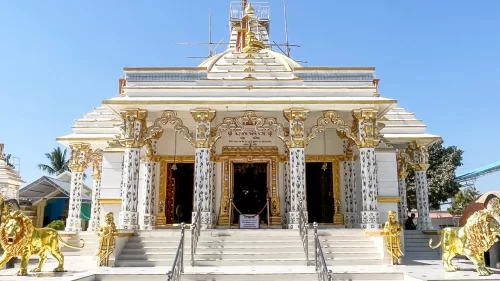
- Best viewpoint for the temple exterior: The main entrance area provides the clearest and most symmetrical view of the Jinalaya complex, ideal for capturing the full façade and architectural layout in one frame.
- Most photogenic angle: Side angles from the courtyard or adjacent open spaces help highlight the temple’s intricate carvings, domes, and spire details, adding depth to the composition.
- Best time of day for natural lighting: Early morning (7 AM to 9 AM) offers soft, diffused sunlight that illuminates the temple carvings evenly without harsh shadows, perfect for detailed exterior shots.
- Golden hour advantage: Late afternoon (4 PM to 6 PM) casts warm light across the stonework, enhancing textures and providing dramatic shadow patterns for architectural photography.
- Midday lighting conditions: Between 11 AM and 3 PM, direct sunlight can create overexposed areas on lighter stone surfaces, reducing visible detail in photos unless shaded angles are used.
- Best architectural details for close-up shots: Capture carved pillars, ornate ceilings, and sculpted reliefs. The domes and spires are particularly striking when shot from lower angles looking upward.
- Interior photography restrictions: Photography inside sanctum areas may be restricted to maintain decorum. Visitors should check signage and follow temple rules before taking photos indoors.
- Crowd factors affecting photography: The temple may have moderate visitor flow during weekends and local festivals, which can make clean framing difficult near the main halls and courtyards.
- Best crowd-free photography window: Weekday mornings are ideal for quiet photography, allowing unobstructed shots of both exterior and permitted interior areas.
- Drone and professional photography rules: Drone photography or professional shoots require prior permission from temple authorities. Respect religious norms and visitor privacy when planning photo sessions.