


Mobile Network and Internet in Srinagar During Winter
Understand mobile network and internet access in Srinagar during winter, including connectivity expectations, possible weather-related disruptions and practical preparation for travellers.
+91 9910402252
admin@chalbanjare.com


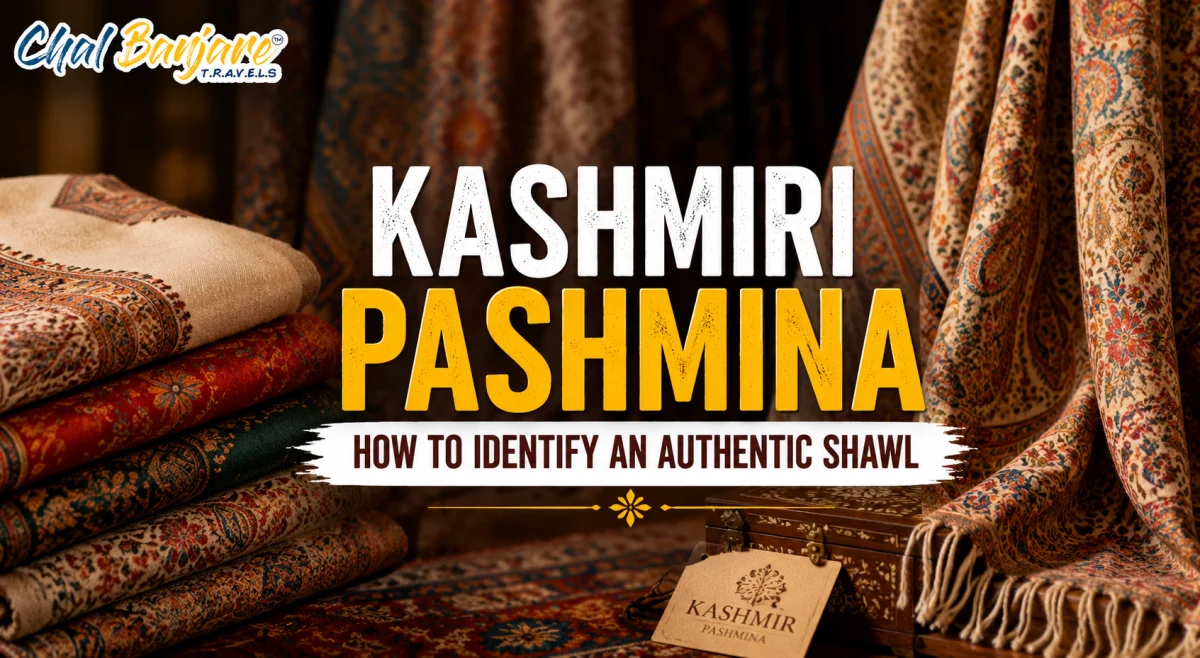
Authentic Kashmiri Pashmina shawls are known for their softness, craftsmanship, warmth, and traditional weaving techniques, but identifying genuine products requires understanding quality, materials, and artisan details.
Kashmiri Pashmina shawls have been closely connected with the cultural identity, artistic heritage, and traditional textile economy of Kashmir for centuries. These shawls became admired because they combined exceptionally fine fibre with skilled hand spinning, careful weaving, and delicate finishing. Over generations, artisan families developed specialised knowledge that allowed them to transform fragile wool into elegant textiles known for warmth, softness, and refined appearance.
The history of Pashmina in Kashmir is strongly linked with royal patronage, court culture, traditional trade routes, and the growth of organised weaving communities. Finely woven shawls were once worn by nobles, gifted during important occasions, and traded across regions far beyond the Kashmir Valley. Their reputation gradually expanded because each shawl reflected both valuable raw material and extraordinary manual skill.
Pashmina weaving also became an important source of livelihood for spinners, weavers, embroiderers, washers, finishers, designers, and traders. A single shawl could pass through several skilled hands before reaching its final form. This collective production process helped preserve local knowledge while creating employment within communities associated with traditional textile work.
Authentic Kashmiri Pashmina is not valued only as winter clothing. It represents patience, heritage, and artistic expression. Plain woven shawls demonstrate the beauty of fine fibre and balanced weaving, while embroidered pieces may require additional months of detailed needlework. These differences allow travellers to explore a wide range of products while understanding the craftsmanship behind each one.
Learning about the history of Pashmina before shopping helps visitors recognise why genuine shawls deserve careful inspection and thoughtful purchasing. It also creates greater respect for artisans who continue protecting a demanding craft despite competition from cheaper machine-made and blended alternatives.
The importance of Kashmiri Pashmina extends far beyond its appearance or warmth. Every authentic shawl carries generations of knowledge, regional identity, and specialised workmanship. Travellers who understand this background are better prepared to distinguish meaningful handmade textiles from ordinary products sold only under the Pashmina name.
Authentic Kashmiri Pashmina is valued worldwide because it combines rare natural fibre, refined handwork, lightweight comfort, and timeless elegance. Genuine shawls can provide remarkable warmth without feeling bulky, making them suitable for formal wear, winter use, travel, gifting, and long-term personal collections. This combination of practicality and luxury has helped Pashmina maintain international recognition.
The fibre used for genuine Pashmina is extremely fine and requires careful handling throughout production. Spinning delicate fibre into usable yarn demands experience because rough processing can damage its softness and strength. Once the yarn is prepared, skilled weavers must maintain even tension and balanced construction so the finished shawl remains smooth, comfortable, and durable.
Handmade Pashmina shawls are also valued because production cannot be rushed. The time required depends on fibre preparation, spinning, weaving, washing, finishing, design complexity, and embroidery. A plain shawl may take considerable effort, while heavily embroidered pieces can require months or longer depending on the intricacy of the work.
Collectors and informed buyers often appreciate subtle characteristics such as natural drape, softness, warmth, weave quality, and individual artisan variation. These qualities are difficult to reproduce fully through mass production. Handmade shawls may show minor irregularities, but such variations can reflect human craftsmanship rather than poor quality when the overall weaving remains balanced and well finished.
Worldwide demand has also increased the number of blended, synthetic, and machine-made products marketed using similar names. This makes buyer awareness especially important. The value of genuine Pashmina depends not only on reputation but also on verified material quality, skilled craftsmanship, reliable sourcing, and transparent seller information.
Authentic Pashmina remains globally respected because it brings together material rarity, technical skill, cultural heritage, and lasting usability. Its value cannot be judged by appearance alone. A genuine shawl earns its reputation through the complete journey from fine fibre preparation to careful weaving and final artisan finishing.
Genuine and imitation shawls can sometimes appear similar when viewed quickly, especially in shops where many products are displayed together. However, they may differ greatly in fibre composition, warmth, weight, texture, weaving method, durability, and price. Understanding these differences helps travellers avoid paying premium prices for products that do not contain authentic Pashmina fibre.
Genuine Pashmina usually feels soft, warm, light, and comfortable rather than slippery or excessively glossy. Synthetic alternatives may feel unusually smooth, cold at first touch, or heavily finished. Some imitation products use acrylic, viscose, polyester, ordinary wool, or mixed fibres to recreate the appearance of a fine shawl at a lower cost.
Blended shawls are not automatically poor products, but they should be described and priced honestly. A blend containing silk, wool, or another fibre may offer attractive drape, strength, or affordability. The problem arises when a blended or synthetic shawl is sold as pure Pashmina without clear disclosure. Travellers should therefore ask specific questions about material composition instead of relying only on product names.
Weaving and finishing also provide useful clues. Handmade shawls may show subtle irregularities in the weave, edges, or embroidery because they are produced manually. Machine-made products often look highly uniform and may have repeated patterns with identical finishing throughout. However, irregularity alone does not prove authenticity, so buyers should evaluate several characteristics together.
Price, seller reputation, documentation, fibre information, craftsmanship, and physical feel should all be considered before purchasing. No single quick test can guarantee authenticity in every case. A careful combination of inspection, questioning, comparison, and trusted sourcing provides a far safer buying approach.
The main difference between genuine and imitation shawls lies in the complete combination of fibre, craftsmanship, comfort, and transparency. Travellers should not reject affordable blends when they are labelled honestly, but they should avoid paying authentic Pashmina prices without receiving clear information and dependable quality assurance.
The creation of a traditional Kashmiri Pashmina shawl begins long before the weaving stage. Fine raw fibre must first be collected, cleaned, separated from coarser hair, and carefully prepared for spinning. Because the fibre is delicate, every stage requires controlled handling to preserve softness while removing impurities that could affect the appearance and comfort of the finished shawl.
After preparation, the fibre is spun into fine yarn. Traditional hand spinning is a highly skilled process because the yarn must remain sufficiently thin while maintaining enough strength for weaving. Uneven handling can cause breakage, weak sections, or inconsistent texture, so experienced spinners work slowly and carefully to create yarn suitable for high-quality shawls.
The spun yarn is then prepared for the loom through processes involving winding, arranging, and setting the warp and weft. The weaver must maintain correct tension throughout production. Excessive tension can affect softness and drape, while loose or irregular tension may weaken the structure. Balanced weaving helps produce a shawl that feels smooth, light, and comfortable when worn.
Once weaving is completed, the shawl may undergo washing, stretching, trimming, inspection, and finishing. Plain shawls require careful final preparation to reveal the natural softness and even appearance of the fabric. Embroidered shawls move through additional stages where artisans apply decorative patterns using specialised needlework traditions.
The complete process demonstrates why genuine handmade Pashmina cannot be produced instantly. From raw fibre preparation to the final inspection, every stage influences quality. Travellers who understand this journey can better appreciate the difference between authentic artisan work and products manufactured rapidly using ordinary yarn or synthetic materials.
A traditional Pashmina shawl is created through many connected stages rather than a single weaving process. The quality of the final product depends on how carefully the fibre is handled from the beginning. Even excellent weaving cannot fully correct problems caused by poor fibre preparation or unsuitable yarn.
Kashmiri artisans form the foundation of authentic Pashmina production. Their work includes fibre preparation, spinning, weaving, embroidery, washing, finishing, designing, and quality checking. Different families and workshops may specialise in particular stages, meaning that one shawl can represent the combined knowledge of several highly skilled craftspeople.
Traditional weaving requires close control over yarn tension, spacing, alignment, and fabric balance. The weaver must respond constantly to the behaviour of the fine yarn because delicate strands can break or shift during production. Repairing these interruptions without affecting the overall appearance requires experience and patience developed through years of practice.
Artisans also influence the character of a shawl through weave density, border finishing, decorative planning, and surface treatment. Plain Pashmina may appear simple, but producing an evenly woven fabric with a graceful drape requires exceptional discipline. Decorative shawls demand additional coordination between weaving and embroidery so that patterns remain balanced across the finished textile.
Embroidery traditions add another layer of artistry. Depending on the style, craftspeople may create floral vines, paisley forms, Chinar-inspired patterns, geometric arrangements, or detailed all-over designs. The density and complexity of this work significantly affect production time and value. Fine embroidery should appear neat and controlled without damaging the delicate base fabric.
Supporting genuine artisans helps preserve more than a commercial product. It protects traditional vocabulary, techniques, design knowledge, and livelihoods that could otherwise decline under pressure from machine production. Buying from transparent sellers who can explain artisan involvement gives travellers a stronger connection with the shawl they choose.
Kashmiri artisans do not simply assemble a textile. They interpret fibre, manage delicate materials, solve technical problems, and preserve visual traditions within every shawl. Their knowledge is the reason authentic Pashmina remains distinct from ordinary woollen products produced through standardised industrial methods.
The time required to create a handmade Pashmina shawl depends on fibre preparation, yarn quality, shawl size, weave density, design complexity, embroidery coverage, and finishing standards. Even a plain shawl demands careful work because the fine yarn must be prepared and woven without damaging its natural softness or creating weak sections.
Hand spinning alone can be slow because the spinner must produce fine and reasonably consistent yarn from delicate fibre. The process cannot be accelerated carelessly without increasing breakage or unevenness. Weaving also requires steady concentration, particularly when the artisan is working with a lightweight yarn that responds quickly to changes in tension.
Embroidered shawls usually require far more time than plain woven pieces. A simple border may add a moderate amount of work, while dense floral or all-over embroidery can require months depending on the design and the number of artisans involved. Highly detailed pieces command higher prices because they contain substantially more manual labour.
Skill is equally important as time. A shawl does not become valuable merely because production was slow. The finished textile should display good drape, balanced weaving, neat edges, controlled embroidery, comfortable texture, and appropriate strength. Experienced artisans combine speed, precision, and judgement developed through repeated practice.
Travellers should therefore be cautious when sellers offer heavily embroidered or supposedly handmade Pashmina at prices that appear unrealistically low. Genuine manual work involves labour costs at every stage. Understanding this helps buyers evaluate whether a quoted price is reasonably aligned with the material and craftsmanship being presented.
Handmade Pashmina represents both time and expertise. The value comes from careful decisions made throughout production, not merely from the number of days involved. Buyers should assess fibre quality, weaving, finishing, design execution, and seller transparency together when judging whether a shawl genuinely reflects traditional craftsmanship.
Authentic Pashmina is widely appreciated because it combines exceptional softness, noticeable warmth, and very low weight within the same textile. A genuine shawl should feel comfortable against the skin without the heavy or coarse sensation commonly associated with thicker woollen fabrics. This balance makes Pashmina suitable for winter use, formal occasions, travel, and long periods of wear.
Softness should feel natural rather than artificially slippery. Genuine fine fibres generally create a smooth and gentle surface, but the shawl may still show a subtle natural texture because it is woven from animal fibre. Products that feel excessively glossy, unusually slick, or cold may contain synthetic materials or strong finishing treatments intended to imitate the appearance of premium fabric.
Warmth is another important quality, although it should not be judged only by thickness. Authentic Pashmina can provide impressive insulation despite appearing thin and lightweight. The fine fibres trap warmth efficiently while allowing the fabric to remain flexible and breathable. This is one reason genuine shawls are valued more highly than ordinary heavy winter wraps.
The lightweight nature of Pashmina also affects its drape. A good shawl should fall gracefully around the shoulders without feeling stiff or bulky. It should fold easily, respond naturally to movement, and remain comfortable when wrapped in multiple styles. Excessive stiffness may indicate dense machine weaving, synthetic content, or heavy chemical finishing.
Travellers should compare several shawls rather than judging material quality from a single touch. Differences in weave, embroidery, finishing, and blending can influence how a shawl feels. Comparing products side by side helps buyers understand the qualities associated with genuine fine fibre and recognise alternatives more confidently.
Softness, warmth, and lightweight comfort should be evaluated together rather than separately. A shawl that feels soft but lacks warmth, or appears light but feels synthetic, may not provide the qualities expected from genuine Pashmina. Balanced performance across all three characteristics offers a more reliable indication of material quality.
Genuine Pashmina fibres usually feel soft, warm, breathable, and slightly natural rather than perfectly smooth. When held against the skin, the fabric should feel comfortable without creating immediate irritation or a cold synthetic sensation. The exact feel can vary depending on weaving density, finishing, embroidery, and whether the shawl has been blended with another fibre.
Ordinary wool often feels thicker, heavier, and more textured than Pashmina. It may provide good warmth but usually lacks the same lightweight drape and refined softness. Woollen alternatives can still be useful and attractive, but they should not be represented or priced as pure Pashmina when the material composition is different.
Silk blends may feel smoother, shinier, and more fluid. These shawls can be elegant and comfortable, but the presence of silk changes the texture and appearance. Buyers should ask whether the product is pure Pashmina or a Pashmina silk blend because both may be sold in similar styles while carrying different values.
Synthetic fibres such as acrylic, polyester, or viscose may imitate softness at first touch. However, they often feel cooler, more slippery, or more uniform than natural fibre. Some synthetic shawls may also generate static, retain a stronger artificial sheen, or feel less breathable during extended wear.
Travellers should remember that touch alone cannot confirm authenticity with complete certainty. Experienced sellers, clear material information, documentation, careful comparison, and visible craftsmanship should support the physical assessment. Combining these checks creates a more dependable understanding than relying on a single sensory impression.
Genuine Pashmina tends to feel refined without appearing artificial. Its softness is supported by warmth, breathability, and graceful movement. Alternatives may reproduce one or two of these characteristics, but they often differ when buyers compare texture, weight, shine, drape, and comfort together.
Before purchasing a Pashmina shawl, travellers should examine material quality, weaving, finishing, edges, embroidery, weight, warmth, drape, and seller transparency. No single feature is enough to establish authenticity, so buyers should evaluate the complete product instead of relying only on softness or appearance.
The weave should look balanced without obvious loose sections, accidental holes, pulled threads, or weak areas. Minor irregularities may appear in handmade work, but these should not affect the structure or durability of the shawl. Edges should be finished neatly, and the fabric should maintain a consistent shape when unfolded.
Embroidery should be inspected from both the front and reverse sides. Fine artisan work generally appears controlled, well planned, and securely attached to the base fabric. Buyers should check whether dense embroidery has made the shawl stiff, heavy, or uneven because excessive decorative work can sometimes hide a lower-quality base material.
Material information should be clearly explained by the seller. Travellers should ask whether the shawl is pure Pashmina, blended, machine woven, hand woven, hand embroidered, or machine embroidered. Honest sellers should be able to describe the product without using confusing or contradictory claims.
Price should also match the stated quality. Genuine fine fibre, hand spinning, careful weaving, and detailed embroidery require significant labour, so unrealistically low prices deserve caution. Comparing several stores helps buyers understand reasonable differences between plain shawls, blended products, embroidered pieces, and collector-quality craftsmanship.
A good Pashmina purchase should satisfy both physical inspection and seller verification. Buyers should feel confident about the material, workmanship, price, and product description before paying. Careful evaluation reduces the risk of confusion while helping travellers choose a shawl that remains comfortable, durable, and meaningful for years.
Pashmina fibre originates from fine undercoat wool produced by goats adapted to the cold high-altitude regions of the Himalayas. These animals develop a soft insulating layer beneath their outer hair to survive harsh winters, strong winds, and low temperatures. This naturally fine undercoat becomes the raw material traditionally associated with authentic Pashmina textiles.
The fibre is collected seasonally when the animals naturally begin shedding their winter undercoat. It must then be separated from the coarser outer hair before spinning. This sorting and cleaning process is important because remaining coarse fibres can reduce softness, comfort, and uniformity in the finished shawl.
After collection, the raw material passes through several careful preparation stages. Dust, impurities, and coarse strands are removed while preserving the delicate fine fibre. The cleaned material is then prepared for spinning into yarn suitable for traditional weaving. Rough mechanical handling can damage the fibre, which is why skilled processing remains important.
The limited seasonal availability and demanding collection process contribute to the value of genuine Pashmina. Unlike ordinary commercial wool produced in large volumes, fine Himalayan fibre requires specific climatic conditions, careful sorting, and specialised handling before it can be transformed into a high-quality shawl.
Travellers should understand that regional origin alone does not confirm the authenticity of a finished product. The fibre must still be properly processed, honestly described, and woven with suitable craftsmanship. Buyers should therefore consider origin together with material documentation, seller reputation, and final textile quality.
The special character of Pashmina begins with the environment in which the fibre is produced. High-altitude conditions create the fine insulating undercoat, but skilled human handling determines whether that raw material becomes a refined shawl. Authenticity therefore depends on both natural origin and responsible craftsmanship.
One of the defining characteristics of Pashmina is the exceptional fineness of its individual fibres. Finer fibres generally bend more easily against the skin, creating a softer and less prickly sensation than coarser wool. This physical difference contributes strongly to the lightweight comfort and refined texture associated with high-quality shawls.
Fibre thickness also influences warmth and drape. Fine fibres can be spun into delicate yarn that creates a thin fabric while still trapping insulating air. This allows genuine Pashmina to provide warmth without the bulk commonly found in heavier woollen garments. The finished shawl can therefore remain elegant, flexible, and practical.
Softness should not be confused with an artificially polished surface. Chemical finishing and synthetic blends can make a fabric feel smooth temporarily, but this does not necessarily indicate fine natural fibre. Genuine softness is usually accompanied by warmth, breathability, and a natural matte or gently lustrous appearance rather than an excessively shiny finish.
The quality of spinning also affects how softness is experienced. Even fine fibre can produce an uneven or weak textile if spun poorly. Skilled spinning creates yarn that is sufficiently consistent for weaving while preserving the delicate character of the material. This balance requires experience because excessively tight spinning may reduce softness and flexibility.
Buyers cannot usually measure fibre thickness while shopping, so they must rely on a combination of touch, weight, drape, documentation, and trusted seller information. Comparing several shawls provides a practical way to recognise how finer material differs from thicker wool, blends, and synthetic alternatives.
Fibre fineness gives Pashmina much of its distinctive softness, warmth, and lightness, but the final experience also depends on spinning and weaving quality. Buyers should therefore judge the shawl as a complete textile rather than assuming that any soft fabric automatically contains authentic fine Pashmina fibre.
Genuine Pashmina feels different from regular wool mainly because its fibres are finer, lighter, and more flexible. Ordinary wool often contains thicker fibres that create a heavier, firmer, or slightly prickly surface. Pashmina generally feels gentler against the skin while maintaining enough warmth for cold conditions.
The difference becomes clearer when similar-sized products are compared. A regular wool shawl may feel noticeably heavier or bulkier, while Pashmina tends to fold more compactly and drape more fluidly. This lightweight behaviour is one of the reasons travellers value it for both daily use and formal occasions.
Regular wool can still be warm, durable, and practical, but it usually lacks the same refined softness and elegant movement. It may be more suitable for heavy winter wear, blankets, sweaters, or products requiring stronger structure. Pashmina is often chosen when the buyer wants warmth combined with a delicate appearance and comfortable layering.
Blends can narrow the difference by combining Pashmina with silk, wool, or synthetic fibres. Such products may be attractive and useful, but they should be labelled accurately because blending changes weight, shine, warmth, strength, and price. Travellers should ask for clear material composition rather than judging only by the seller's description.
Careful comparison is more reliable than relying on dramatic demonstrations or simplified claims. Buyers should feel the fabric against the skin, compare weight, observe drape, inspect weaving, and confirm material details before deciding whether a shawl genuinely offers the qualities associated with Pashmina.
Pashmina does not simply feel like a softer version of ordinary wool. Its fine fibre creates a distinct combination of lightness, warmth, flexibility, and graceful drape. Understanding these differences helps buyers appreciate genuine material qualities while avoiding confusion between premium Pashmina, regular wool, and blended alternatives.
Understanding how a Pashmina shawl is produced is one of the most effective ways to recognise authentic craftsmanship while shopping in Kashmir. Handmade and machine-made shawls may appear similar when viewed from a distance, yet the techniques used to create them differ significantly. Traditional handmade production relies on experienced artisans who carefully prepare yarn, operate handlooms, and complete every stage with close attention to detail. Machine-made production, on the other hand, focuses on speed, consistency, and large-scale manufacturing.
Traditional weaving begins only after delicate yarn has been carefully prepared. The artisan manually controls the movement of warp and weft threads while continuously adjusting tension throughout the weaving process. Every decision is based on experience because fine Pashmina yarn reacts differently from thicker commercial fibres. Maintaining an even weave without damaging the delicate yarn requires concentration and patience.
Machine production replaces much of this manual control with automated systems capable of producing large quantities of fabric within a shorter time. These methods create consistent patterns and dimensions, making machine-made shawls widely available at different price levels. While such products may be practical for everyday use, they generally do not involve the same level of individual craftsmanship associated with traditional Kashmiri hand weaving.
Travellers should understand that machine-made products are not automatically poor quality. Many are durable, attractive, and affordable. The important distinction is that they should be represented honestly. A buyer searching for authentic handmade Kashmiri Pashmina should receive accurate information about how the shawl was produced rather than assuming that every product labelled as Pashmina has been woven by hand.
Learning the differences between traditional and modern production methods helps travellers evaluate products more confidently while appreciating the remarkable skill required to preserve Kashmir's centuries-old weaving traditions.
Traditional and modern production methods both have their place in the textile industry, but they represent very different approaches to craftsmanship. Travellers seeking authentic handmade Pashmina should focus on transparency, artisan involvement, and weaving quality rather than relying solely on product labels or visual appearance.
Craftsmanship is one of the primary reasons authentic handmade Pashmina shawls are valued more highly than mass-produced alternatives. Skilled artisans spend years learning how to handle delicate fibre, prepare balanced yarn, maintain even weaving, and finish shawls carefully without compromising softness or strength. Every stage requires judgement developed through practical experience rather than automated manufacturing.
High-quality craftsmanship influences many aspects of the finished shawl, including drape, comfort, durability, weave consistency, edge finishing, and overall appearance. A carefully woven shawl should feel balanced throughout its surface, with no obvious weak sections or poorly aligned weaving. Even simple plain shawls demonstrate the artisan's ability to maintain consistent quality across the entire fabric.
Decorative embroidery further highlights craftsmanship because the artisan must work without damaging the delicate woven base. Fine needlework should appear neat, balanced, and securely attached while allowing the shawl to retain its flexibility and natural movement. Uneven embroidery, excessive stiffness, or loose decorative threads may reduce the overall quality of the finished product.
The value of handmade Pashmina is therefore determined by much more than the fibre itself. Time, technical skill, careful finishing, design execution, and responsible production all contribute to the final product. Buyers should view craftsmanship as an important investment in long-term quality rather than focusing only on immediate appearance or price.
Understanding how craftsmanship affects value allows travellers to appreciate why authentic handmade Pashmina commands greater respect while helping them recognise products that genuinely reflect Kashmir's traditional weaving excellence.
Excellent craftsmanship cannot be replaced by decorative labels or attractive packaging. A well-made Pashmina reflects consistent weaving, careful finishing, and experienced artisan work. These qualities help create a shawl that remains comfortable, durable, and visually elegant for many years.
Travellers often wonder how to recognise whether a Pashmina shawl has been woven by hand. While no single visual feature can guarantee authenticity, several characteristics together may indicate traditional craftsmanship. Handmade weaving often produces subtle individual variations because every movement of the loom is controlled manually rather than through automated machinery.
Close inspection may reveal slight differences in thread alignment, edge finishing, or weave consistency that naturally occur during careful manual production. These variations should remain small and should never weaken the structure of the shawl. In contrast, machine-made fabrics often display extremely uniform construction with repeated patterns that appear identical throughout the textile.
The overall feel of a handmade shawl is also important. It should drape naturally, fold smoothly, and maintain comfortable flexibility without appearing stiff or excessively rigid. Fine handmade weaving generally creates a balanced fabric that responds gracefully to movement while preserving warmth and softness.
Travellers should also ask sellers whether the shawl has been hand woven, hand embroidered, or machine produced. Reliable sellers should explain the production process clearly rather than avoiding specific questions. When possible, purchasing from artisan workshops, recognised handicraft stores, or trusted cooperatives provides additional confidence regarding production methods.
Combining visual inspection with transparent seller information allows buyers to make better-informed decisions. Rather than relying on dramatic demonstrations or simplified tests, travellers should evaluate weaving quality, material details, craftsmanship, and documentation together before purchasing.
Handmade weaving leaves behind evidence of skilled human craftsmanship rather than machine precision. Travellers who combine careful observation with reliable seller information are more likely to recognise authentic handmade Pashmina while avoiding confusion created by misleading descriptions or imitation products.
The weaving pattern and finishing quality of a Pashmina shawl reveal valuable information about the attention given during production. Authentic handmade shawls should display balanced weaving, neat finishing, and carefully executed decorative details. Whether the design is plain, embroidered, or patterned, the overall appearance should feel harmonious rather than rushed or uneven.
Patterns created through weaving or embroidery should remain proportionate across the shawl without noticeable distortion. Floral motifs, paisley designs, Chinar-inspired artwork, and traditional Kashmiri decorative themes often require careful planning before weaving or embroidery begins. Well-executed patterns demonstrate both artistic ability and technical control throughout the production process.
Finishing quality is equally important because it influences durability and appearance. Edges should be completed neatly, loose threads should be minimal, and decorative work should appear securely integrated with the base fabric. The shawl should unfold smoothly without twisting or showing obvious construction problems that may indicate poor workmanship.
Travellers should compare several products within the same shop as well as across different stores. Side-by-side comparison often makes differences in weaving precision, finishing, and overall presentation much easier to recognise. Careful observation helps buyers distinguish artisan work from lower-quality mass-produced alternatives without relying solely on sales descriptions.
Evaluating patterns, finishing, and overall presentation provides a practical way to judge craftsmanship before considering higher-value purchases. A beautifully finished shawl reflects respect for both the material and the traditions that shaped its creation.
Beautiful weaving deserves equally careful finishing. A high-quality Pashmina shawl should demonstrate consistency from one end to the other, allowing travellers to appreciate not only the softness of the material but also the discipline and precision invested by skilled Kashmiri artisans.
Detailed artisan work distinguishes authentic handmade Pashmina from products created primarily for rapid commercial production. Every stage of traditional weaving requires careful judgement, from maintaining even thread tension to completing edges and decorative details without affecting the delicate structure of the fabric. These small decisions collectively determine the final quality of the shawl.
Artisan skill becomes particularly visible in embroidered Pashmina. Needlework should follow planned patterns with consistent spacing, clean execution, and balanced placement across the fabric. Dense embroidery must remain secure without making the shawl feel unnecessarily stiff or reducing its graceful drape. Achieving this balance requires both technical expertise and artistic understanding.
Plain woven shawls also demonstrate craftsmanship even without elaborate decoration. Maintaining uniform weaving across lightweight fabric is technically demanding because fine yarn responds quickly to changes in tension. Experienced artisans constantly adjust their work to preserve softness, strength, and visual consistency throughout the weaving process.
Travellers should remember that excellent craftsmanship often appears subtle rather than dramatic. Neat finishing, balanced construction, comfortable drape, and carefully controlled weaving are signs of quality that become more meaningful than decorative complexity alone. A simple but beautifully woven shawl may represent greater craftsmanship than a heavily decorated product with poor construction.
Recognising detailed artisan work encourages responsible purchasing while supporting traditional weaving communities that continue preserving Kashmir's textile heritage through patience, experience, and exceptional manual skill.
Detailed artisan work is often recognised through consistency rather than perfection. Small elements such as controlled weaving, secure embroidery, and careful finishing demonstrate the experience behind authentic handmade Pashmina while giving buyers greater confidence in long-term quality.
Before purchasing a Pashmina shawl, travellers should inspect its stitching, weave consistency, edges, and overall appearance from multiple angles. The fabric should remain balanced across its full length without visible weak areas, loose sections, or irregular construction that could affect comfort or durability. A careful inspection requires only a few extra minutes but can prevent disappointment later.
Where embroidery or stitched decoration is present, the reverse side should also be examined. Secure stitching, controlled thread placement, and neat finishing generally indicate greater attention to detail. Loose threads, uneven tension, or unfinished sections may suggest lower production quality or rushed workmanship.
Weaving consistency should remain reasonably even throughout the shawl. Handmade textiles may display slight natural variations, but these should not interfere with the overall structure. The fabric should drape comfortably, fold without resistance, and maintain a pleasing appearance whether worn over the shoulders or unfolded for inspection.
Overall appearance should be judged as a complete combination of colour, texture, weave, finishing, embroidery, and presentation rather than focusing on a single feature. Buyers should also compare products under good lighting whenever possible because artificial lighting may hide differences in texture, weaving, or colour.
Thoughtful inspection encourages confident purchasing decisions while helping travellers recognise the workmanship that defines authentic Kashmiri Pashmina. Combining physical examination with reliable seller information provides the strongest foundation for selecting a genuine, well-crafted shawl.
A careful visual inspection allows travellers to appreciate the complete quality of a Pashmina shawl rather than relying on marketing claims alone. Balanced weaving, neat stitching, and refined finishing together create a product that reflects authentic craftsmanship and lasting value.
Touch is one of the first qualities travellers notice while examining a Pashmina shawl, but it should be used carefully rather than treated as complete proof of authenticity. Genuine Pashmina generally feels soft, warm, light, and naturally comfortable against the skin. Its surface should feel refined without appearing excessively polished, slippery, or artificially smooth.
When touched gently, an authentic shawl usually responds with a soft and slightly natural texture rather than the cold, glassy sensation sometimes found in synthetic fabrics. Fine animal fibres create warmth almost immediately when held in the hand, while artificial materials may initially feel cooler or unusually uniform. However, finishing treatments and blended fibres can sometimes imitate softness, so touch alone is never enough.
Travellers can place a small section of the shawl against the neck, wrist, or inner forearm, where the skin is more sensitive. Genuine fine fibre should feel comfortable and gentle without obvious irritation. Ordinary coarse wool may feel heavier or slightly prickly, while synthetic alternatives can feel smooth but less breathable during continued contact.
The fabric should also move naturally when lifted or folded. Authentic Pashmina generally feels flexible and responsive, allowing it to drape softly around the shoulders without remaining stiff. A shawl that feels rigid, heavily coated, or unusually dense may contain other fibres or strong finishing agents.
Comparing several shawls in the same shop is more useful than touching only one product. Side-by-side comparison helps travellers recognise differences in softness, warmth, weight, and texture while developing a better understanding of how genuine fine fibre behaves.
Authentic Pashmina usually feels soft and warm without appearing artificial. The most reliable touch assessment considers comfort, breathability, flexibility, and natural texture together. Buyers should support this physical impression with weaving inspection, seller information, documentation, and careful product comparison.
Softness, weight, and texture help travellers compare Pashmina with regular wool, silk blends, acrylic, polyester, viscose, and other commonly available shawl materials. Genuine Pashmina is generally recognised for combining gentle softness with very low weight and noticeable warmth, creating a distinctive balance that heavier or synthetic fabrics often do not reproduce completely.
Softness should feel comfortable rather than unnaturally slick. Silk blends may feel smoother and show more shine, while synthetic fabrics can feel polished because of fibre structure or chemical finishing. Regular wool may provide good warmth but often feels thicker, heavier, or more textured against the skin.
Weight should be compared between shawls of similar size and construction. A heavily embroidered Pashmina shawl will naturally weigh more than a plain one, so travellers should not use weight as an isolated test. The density of weaving, decorative threads, borders, and added materials can all influence how heavy the finished product feels.
Texture also varies according to spinning, weaving, washing, and finishing methods. Handmade Pashmina may display a subtle natural character rather than a perfectly uniform surface. Small variations can reflect manual work, but roughness, weak patches, loose threads, or inconsistent finishing may indicate poor quality rather than authenticity.
Travellers should examine how the shawl behaves while worn. A good-quality piece should settle comfortably around the shoulders, retain warmth, and move easily without clinging awkwardly or creating excessive stiffness. This practical wearing test can reveal more than touching a folded product briefly.
Softness, weight, and texture are closely connected, but each can be influenced by weaving style, embroidery, blending, and finishing. Travellers should therefore compare the complete wearing experience rather than expecting every genuine Pashmina shawl to feel identical.
Synthetic shawls can sometimes imitate the appearance and initial softness of Pashmina, especially when they are displayed attractively or treated with surface finishes. Acrylic, polyester, and viscose products may look smooth, colourful, and lightweight, but they often behave differently from genuine natural fibre when examined closely and worn for a longer period.
Genuine Pashmina generally provides natural warmth without excessive bulk. Synthetic alternatives may feel cool at first touch and can become less comfortable when worn for extended periods because they may trap heat differently or offer lower breathability. Some artificial fibres also create static electricity, cling to clothing, or produce a noticeably uniform surface.
The shine of the fabric can provide another clue. Natural Pashmina usually has a soft, understated appearance, while synthetic material may display a stronger or more artificial sheen. However, lighting and finishing treatments can affect appearance, so shine should be considered alongside weight, warmth, texture, and seller information.
Synthetic shawls may also recover differently after gentle folding or compression. Some remain stiff or spring back quickly, while Pashmina tends to drape softly and settle naturally. Travellers should handle the fabric carefully and avoid pulling, stretching, or damaging products during comparison.
Affordable synthetic shawls can still be suitable for everyday use, gifting, or travellers with limited budgets. The concern arises only when such products are described and priced as pure Pashmina. Honest labelling allows buyers to choose according to their needs without confusion.
Genuine and synthetic shawls can both be useful, but they should never be confused. Travellers should focus on honest material descriptions, realistic pricing, and complete physical comparison. This approach helps buyers select products that match their expectations while avoiding imitation Pashmina sold under misleading claims.
Authentic Kashmiri Pashmina shawls usually cost more than ordinary woollen, synthetic, or blended shawls because their production involves limited fine fibre, specialised preparation, skilled spinning, careful weaving, and detailed finishing. The price reflects the complete creation process rather than only the appearance or size of the finished textile.
Fine Pashmina fibre requires careful collection and separation from coarser hair before it can be spun. This process produces a limited quantity of usable material and demands controlled handling to preserve softness. Poor preparation can reduce quality, so suitable raw fibre naturally carries a higher value than commonly available commercial wool.
Traditional spinning and weaving add further labour costs. Fine yarn can break easily, and artisans must maintain balanced tension throughout production. A plain handwoven shawl may look simple, but creating an even lightweight fabric with smooth drape and dependable strength requires considerable experience and attention.
Embroidery can increase the price substantially depending on coverage, thread quality, design complexity, and working time. A shawl with a simple border requires less labour than one covered with detailed floral, paisley, or traditional needlework. Some elaborate pieces may represent months of work by experienced artisans.
Reliable certification, careful washing, finishing, quality checking, packaging, shop operations, and seller margins may also contribute to the final retail price. Travellers should therefore compare products based on material and workmanship rather than expecting every shawl of a similar size to cost the same.
The higher price of genuine Pashmina is supported by rare material, specialised knowledge, and extended manual labour. Travellers should not assume that every expensive shawl is authentic, but they should understand that genuinely handmade quality cannot normally be offered at the same price as mass-produced synthetic or ordinary wool products.
The cost of a Kashmiri Pashmina shawl depends on several connected factors, including fibre purity, yarn quality, weaving method, shawl dimensions, embroidery, design originality, finishing, documentation, and seller reputation. Understanding these elements helps travellers compare products fairly instead of judging value from colour or appearance alone.
Pure Pashmina generally carries a different value from blends containing silk, regular wool, viscose, or synthetic fibres. Blends may offer additional shine, strength, affordability, or easier maintenance, but their price should reflect the actual composition. Buyers should request clear material information before comparing one shawl with another.
Handwoven shawls usually require greater labour than machine-made alternatives. The quality of the weave also matters because balanced tension, neat edges, smooth drape, and consistent construction indicate stronger craftsmanship. A poorly finished handmade product should not automatically receive a premium merely because it was produced manually.
Embroidery is another major cost factor. Plain shawls are usually priced according to fibre, weaving, size, and finishing, while embroidered pieces include additional artisan work. Narrow borders, scattered motifs, dense panels, and full-surface designs require different levels of time and skill, creating considerable price variation.
Product size and weight should also be considered carefully. A stole, scarf, standard shawl, oversized wrap, and decorative collector piece require different quantities of material and labour. Buyers should compare products within similar categories to avoid drawing inaccurate conclusions about pricing.
Pashmina pricing becomes easier to understand when buyers separate material value from craftsmanship, embroidery, dimensions, and retail presentation. A careful comparison should involve products with similar composition and production methods rather than placing every shawl within one general price category.
Unrealistically low prices are among the strongest warning signs when a shawl is described as pure, handmade, and heavily embroidered Pashmina. Fine fibre and skilled labour create unavoidable production costs, so a product claiming premium material and months of artisan work should not normally be priced like an ordinary synthetic souvenir.
Travellers should be cautious when sellers offer very large reductions without clearly explaining the original price, fibre composition, or production method. Discount percentages can create urgency, but they do not prove value. The final amount should be compared with the shawl's actual material, weave, embroidery, finishing, and supporting documentation.
Low-priced products may contain regular wool, acrylic, viscose, polyester, silk blends, or mixed fibres. These shawls can still be attractive and useful when described honestly, but they should not be purchased as pure Pashmina. Buyers should ask direct questions instead of assuming that every soft Kashmir shawl belongs to the same material category.
High prices also require careful verification because price alone does not prove authenticity. Some imitation products may be presented at premium rates to create an impression of exclusivity. Buyers should therefore inspect craftsmanship, request written material details, compare several sellers, and avoid making decisions under pressure.
A realistic price should correspond with the product's complete description. Plain shawls, embroidered wraps, collector pieces, blends, machine-made products, and handmade shawls naturally occupy different price levels. Transparent sellers should be able to explain these differences without relying on vague claims.
Price should function as a supporting indicator rather than final proof. Extremely low or unusually high amounts both deserve careful investigation. Travellers can reduce the risk of imitation products by combining realistic price expectations with material verification, craftsmanship inspection, proper billing, and reliable seller information.
Choosing the right seller is one of the most important steps when purchasing authentic Kashmiri Pashmina. Travellers should prioritise established handicraft stores, artisan workshops, recognised cooperatives, and long-running local businesses that can clearly explain fibre composition, weaving methods, embroidery work, pricing, and product origin. Transparent sellers usually provide more dependable information than outlets relying mainly on aggressive sales claims.
Artisan stores can offer a more meaningful shopping experience because visitors may learn how shawls are spun, woven, embroidered, washed, and finished. Some sellers can also explain the difference between plain Pashmina, embroidered pieces, silk blends, machine-made shawls, and lower-cost alternatives. This knowledge helps buyers compare products based on actual quality rather than appearance alone.
Markets in Kashmir offer a wide range of products, but travellers should remain selective. Popular commercial areas may contain both genuine craftsmanship and ordinary mass-produced merchandise. Visiting several stores, asking consistent questions, and comparing similar shawls allows buyers to identify which sellers provide clear answers and realistic product descriptions.
Reliable local sellers should allow reasonable inspection without creating pressure. Buyers should be able to examine the shawl under good lighting, feel the fabric, check weaving from both sides, inspect labels, and request a written bill. Sellers who discourage basic questions or insist on immediate payment should be approached cautiously.
Purchasing from trusted sellers supports local livelihoods while reducing the risk of imitation products. The goal is not simply to find the cheapest shawl, but to choose a seller whose explanation, documentation, and product quality remain consistent throughout the buying process.
Trusted sellers provide more than a product. They offer transparency, product knowledge, documentation, and confidence throughout the purchase. Travellers who select shops carefully are more likely to receive a shawl that genuinely matches its stated material, craftsmanship, and price.
Srinagar is the main shopping centre for travellers searching for Kashmiri Pashmina because it offers a wide range of handicraft shops, artisan outlets, traditional markets, and specialised textile sellers. Areas around Lal Chowk, Residency Road, and established commercial streets contain numerous options, making comparison easier for visitors with limited time.
Shopping areas near Dal Lake also offer shawls, carpets, handicrafts, and souvenirs, but travellers should compare quality and prices carefully. The atmosphere can be enjoyable, especially during evening walks or Shikara experiences, yet convenience should not replace proper verification when purchasing expensive Pashmina.
Traditional neighbourhoods and artisan workshops can provide greater insight into how shawls are made. Travellers may find smaller outlets connected with weaving, embroidery, or family-run businesses where sellers explain production methods more patiently. These visits can be especially useful for buyers interested in craftsmanship rather than only finished retail presentation.
Other destinations such as Pahalgam and Gulmarg also sell shawls, winter clothing, and local handicrafts. These locations are convenient for souvenir shopping, but the selection may be smaller than Srinagar. Premium purchases are generally easier to compare in places where multiple specialised sellers operate within the same area.
Travellers should plan enough time for market visits and avoid completing an important purchase immediately before departure. Visiting early in the trip allows buyers to compare products, return to a trusted seller, organise packaging, and resolve documentation questions without unnecessary pressure.
Srinagar offers the widest variety and the strongest opportunity for comparison, while smaller destinations provide convenient souvenir shopping. Travellers should choose locations according to the value of the intended purchase, available time, and need for detailed seller information.
Quality assurance begins with clear and consistent communication. A trustworthy seller should explain whether the shawl is pure Pashmina, blended, hand woven, machine woven, hand embroidered, or machine embroidered. These details should remain consistent across the label, verbal explanation, invoice, and final packaged product.
Travellers should ask for a detailed bill that includes product description, material composition, price, date, and seller information. For expensive shawls, buyers may also request certification details, care instructions, exchange conditions, and written confirmation of specific claims. Documentation becomes especially important when the item is intended as a long-term investment or valuable gift.
Transparent sellers generally allow customers to compare several products and explain why prices differ. They should be able to discuss fibre quality, weaving style, embroidery coverage, size, finishing, and production time without relying on vague statements. A clear explanation helps buyers understand whether a higher price reflects genuine material and labour.
Quality assurance also includes packaging and delivery. Buyers should inspect the exact shawl being packed, confirm that labels remain attached, and ensure that the item is protected from moisture, dust, and damage. When delivery is arranged, contact details and shipping information should be recorded clearly.
Travellers should avoid sellers who refuse written descriptions, change product claims during discussion, or create urgency without allowing inspection. Confidence should come from consistent evidence rather than pressure, emotional persuasion, or dramatic demonstrations.
A transparent seller helps the buyer understand exactly what is being purchased. Clear documentation, consistent explanations, careful packaging, and respectful service provide stronger quality assurance than any single touch test, label, or verbal promise.
Buying a Pashmina shawl only because it is inexpensive is one of the most common mistakes made by travellers. Genuine fine fibre, skilled spinning, hand weaving, finishing, and embroidery involve significant labour, so premium claims combined with unusually low prices should always be examined carefully. Price alone does not prove authenticity, but it can reveal whether the seller's description appears realistic.
Low-priced shawls may contain regular wool, acrylic, viscose, polyester, silk blends, or other mixed fibres. These products can still be attractive and practical when described honestly, but they should not be presented as pure handmade Pashmina. Buyers should ask for exact material composition rather than assuming that every soft shawl sold in Kashmir is authentic.
Large discounts can also influence rushed decisions. Travellers should focus on the final price and product quality instead of the percentage reduction shown on a tag. A supposed discount has little value when the original amount cannot be verified or when the shawl's material and production method remain unclear.
Buyers should compare similar products across several sellers before deciding what represents reasonable value. A plain shawl, embroidered wrap, machine-made blend, and handwoven collector piece should not be judged within the same price category because each involves different materials, labour, and production time.
A sensible budget helps travellers avoid both unrealistic bargains and unnecessary overspending. The best purchase is one where the material, craftsmanship, documentation, and price support the same product description clearly.
Low prices can be attractive, but they should never replace careful verification. Travellers should choose a shawl because its quality, composition, and workmanship justify the amount being paid, not simply because the seller presents it as an exceptional bargain.
Another common mistake is assuming that every soft shawl is genuine Pashmina. Kashmir markets sell many attractive textiles made from wool, cashmere-style fibres, silk blends, acrylic, viscose, polyester, and mixed materials. These fabrics can resemble Pashmina in colour, design, softness, or drape, especially when viewed quickly.
Regular wool usually feels heavier and may have a more noticeable texture, while silk blends often appear smoother and shinier. Synthetic fabrics can feel soft initially but may be cooler, more slippery, less breathable, or more uniform. Each material offers different benefits, so buyers should focus on honest identification rather than treating alternatives as inferior automatically.
Blended shawls may combine Pashmina with silk or wool to change strength, appearance, warmth, or affordability. Such products can be elegant and useful, but their price should reflect the actual composition. A blend should never be sold as pure Pashmina without clear disclosure.
Travellers should ask specific questions about fibre content, hand weaving, machine production, embroidery, and finishing. Broad phrases such as Kashmir shawl, luxury wool, premium soft fabric, or traditional style do not provide enough information to confirm authenticity.
Comparing several materials side by side helps buyers understand differences in weight, warmth, texture, shine, drape, and comfort. This practical approach is more reliable than depending on product names alone.
Pashmina and similar fabrics can all serve different needs, but their identities and prices should remain clear. Travellers who understand these distinctions can select suitable products confidently without paying authentic Pashmina rates for ordinary wool, synthetic textiles, or undisclosed blends.
Purchasing without inspecting the shawl and confirming seller details can create problems after leaving the market. Buyers should examine the weave, edges, embroidery, dimensions, colour, drape, and overall condition before payment. Small faults are easier to discuss in the shop than after returning home.
The front and reverse sides should both be checked, particularly when embroidery is present. Loose threads, uneven stitching, weak areas, pulled fibres, or accidental holes may reduce durability. Handmade products can show subtle natural variation, but structural defects should not be accepted simply because the shawl is described as artisan made.
Seller information should include a clear business name, contact details, product description, price, and billing record. For high-value purchases, travellers should also confirm certification, exchange conditions, care instructions, packaging, and delivery arrangements. Verbal promises should be supported in writing whenever possible.
Buyers should verify that the exact shawl inspected is the one being packed. When several similar pieces are displayed, confusion can occur during billing or packaging. Photographing the selected item or checking it again before leaving provides additional reassurance without requiring any damaging test.
Travellers should avoid stores where sellers refuse basic questions, change claims repeatedly, or discourage inspection. A genuine purchase should remain understandable from beginning to end, with the product, seller explanation, label, invoice, and price all supporting one another.
Careful inspection and dependable seller information protect travellers from avoidable confusion. A few additional minutes spent checking the shawl, documentation, and packaging can make the difference between a confident purchase and a disappointing experience after the Kashmir trip ends.
Purchasing an authentic Kashmiri Pashmina shawl becomes much easier when travellers evaluate the complete product rather than relying on a single test or sales claim. Genuine material, skilled weaving, careful finishing, balanced embroidery, transparent seller information, and realistic pricing should all support one another. When these elements remain consistent, buyers can make decisions with greater confidence.
Material quality should always receive careful attention. The shawl should feel naturally soft, lightweight, warm, and comfortable without appearing excessively glossy or artificially smooth. Buyers should compare several products, inspect the weave closely, examine both sides when embroidery is present, and ask direct questions regarding fibre composition and production methods.
Craftsmanship provides another valuable indicator of authenticity. Well-balanced weaving, neat edges, controlled embroidery, graceful drape, and careful finishing demonstrate the experience of skilled artisans. Handmade work may display subtle natural variations, but these should never weaken the structure or reduce overall quality.
Travellers should combine physical inspection with written documentation and transparent communication. Bills, certification where available, care instructions, and detailed seller explanations create additional confidence while reducing the likelihood of misunderstanding after the purchase has been completed.
Authentic Pashmina represents much more than a winter accessory. It reflects centuries of Kashmiri weaving traditions, specialised artisan skills, and fine natural fibre. Careful evaluation allows buyers to recognise this value while selecting a shawl that offers lasting comfort and cultural significance.
Authenticity is best confirmed through a combination of careful observation, informed questions, reliable documentation, and trusted sellers. Buyers who follow a balanced approach are more likely to return home with a genuine Kashmiri Pashmina that reflects exceptional craftsmanship and lasting value.
Reliable shopping begins with selecting sellers who value transparency, product knowledge, and customer confidence. Established handicraft stores, recognised artisan outlets, cooperatives, and experienced local businesses generally provide clearer information regarding material composition, weaving techniques, embroidery, pricing, and product care than sellers relying only on promotional language.
Travellers should compare similar shawls across several trusted shops before making a final decision. This comparison helps buyers understand reasonable price differences while recognising variations in fibre quality, weaving, finishing, and decorative work. Important purchases should never feel rushed, especially when valuable handmade textiles are involved.
Reliable sellers should willingly answer questions about whether a shawl is pure Pashmina, blended, hand woven, or machine made. They should also provide proper invoices, explain certification when applicable, discuss care recommendations, and allow buyers to inspect the exact shawl before packaging. Honest communication strengthens confidence throughout the purchasing process.
Visitors should avoid depending entirely on dramatic demonstrations, unrealistic discounts, or emotional sales techniques. Consistent information supported by documentation and physical product quality offers a much stronger basis for decision-making than theatrical authenticity claims or pressure to purchase immediately.
Choosing dependable sellers benefits both travellers and Kashmiri artisans. It supports businesses that preserve traditional craftsmanship while helping visitors invest in products that genuinely represent the cultural heritage of the region.
Reliable sources provide confidence long after the shopping trip ends. Honest product descriptions, proper documentation, and consistent craftsmanship allow travellers to enjoy their Pashmina knowing that it reflects genuine quality and responsible purchasing practices.
Before completing a purchase, travellers should perform one final review of the shawl, seller information, documentation, and price. Confirm that the fibre composition has been explained clearly, inspect the weave and embroidery carefully, compare the product with similar shawls, and ensure that the invoice accurately reflects the seller's description. These simple steps reduce uncertainty while protecting valuable purchases.
The selected shawl should be examined once more before packaging. Buyers should verify colour, size, weave, edges, embroidery, labels, and overall condition. If certification or additional documentation is included, it should match the specific product being purchased rather than referring to a different item or general product category.
Travellers should also confirm packaging quality, transportation arrangements, and care instructions before leaving the shop. Valuable shawls deserve suitable protection during travel, particularly when flights, long road journeys, or extended storage are involved. Retaining invoices and seller contact information provides additional reassurance after returning home.
Shopping should remain an enjoyable cultural experience rather than a hurried transaction. Allowing enough time for comparison, thoughtful discussion, and careful inspection creates greater confidence while reducing the likelihood of mistakes caused by excitement or limited time before departure.
A genuine Kashmiri Pashmina shawl combines heritage, craftsmanship, comfort, and timeless elegance. Following a practical checklist allows travellers to appreciate these qualities fully while selecting a shawl that will remain a treasured part of their wardrobe for many years.
A final checklist transforms an important purchase into a confident decision. By combining careful inspection, transparent documentation, realistic pricing, and reliable sellers, travellers can select authentic Kashmiri Pashmina that preserves both exceptional craftsmanship and meaningful memories from their journey through Kashmir.


Get customized Jammu and Kashmir tour planning designed around seasonal weather patterns, valley travel routes, snow conditions, and realistic hill road timing. Whether you are visiting for scenic landscapes, serene lakes, spiritual journeys, meadow stays
⚡ Quick Response | 💰 Free consultation | 🕒 24×7 expert support

