


Best Snow Activities to Try in Himachal Pradesh
Explore snow activities to try in Himachal Pradesh, from skiing and snowboarding to sledging and other winter experiences across popular mountain destinations.
+91 9910402252
admin@chalbanjare.com


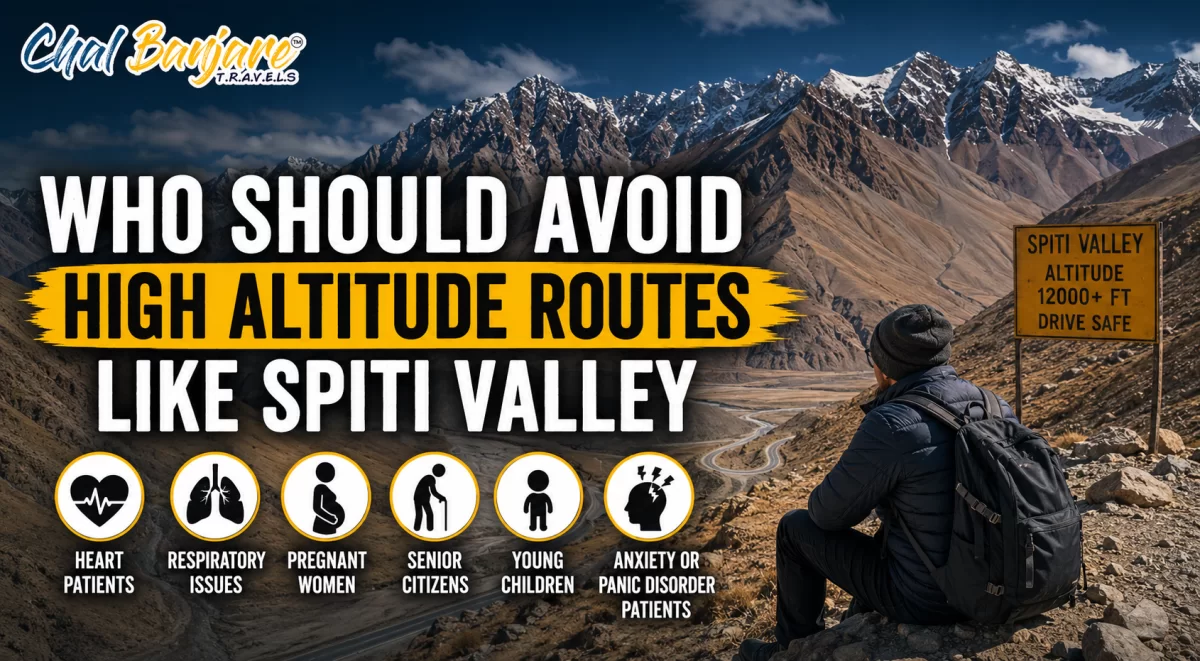
High-altitude Himalayan routes like Spiti Valley offer breathtaking landscapes and unforgettable road trip experiences, but extreme altitude, remote terrain, and long mountain journeys can make these routes unsuitable for certain travelers.
Spiti Valley lies at elevations generally ranging between approximately 3,000 and over 4,500 metres above sea level, where oxygen levels are considerably lower than those found in the plains. At these elevations, the body must work harder to supply oxygen to muscles and vital organs. While healthy travellers often adjust gradually through proper acclimatisation, people living with serious heart disease, chronic respiratory disorders, or other significant cardiovascular conditions may experience greater difficulty adapting to these environmental changes.
Reduced oxygen availability can increase strain on the heart and lungs during even light physical activities such as walking uphill, climbing steps, or carrying luggage. Cold temperatures, dry mountain air, and long hours of travel may further increase physical stress. Individuals with severe asthma, chronic obstructive pulmonary disease, uncontrolled hypertension, heart failure, recent cardiac procedures, or other significant medical conditions should recognise that high-altitude travel presents additional challenges compared with lower-altitude destinations.
Travellers with significant medical conditions should avoid underestimating the effects of altitude. Careful planning and honest assessment of personal health are essential before considering a journey through the high Himalayas.
Unlike many hill stations that remain relatively accessible, Spiti Valley involves long mountain drives through isolated terrain where elevations increase steadily over several hours. Routes from both Shimla and Manali include prolonged travel across high mountain roads, remote villages, and passes where medical facilities become increasingly limited. The combination of altitude, road travel, and changing weather creates conditions that deserve careful consideration, particularly for travellers managing chronic health conditions.
Many sightseeing locations, monasteries, villages, and viewpoints involve walking across uneven ground, climbing steps, or moving around at elevations where breathing naturally becomes more demanding. Even travellers who normally remain active at lower elevations may notice increased fatigue while exploring Spiti. Understanding these realities before departure helps visitors make informed decisions about whether the destination matches their current health status.
Understanding the physical demands of Spiti allows travellers to make safer choices while reducing the likelihood of health-related difficulties during their journey.
Anyone living with significant heart or respiratory conditions should seek advice from their treating physician before planning a Spiti Valley trip. A medical professional familiar with the traveller's health history can evaluate whether high-altitude travel is appropriate and recommend any precautions, medication adjustments, or travel limitations that may be necessary. Individual circumstances vary considerably, making professional medical advice especially valuable for remote Himalayan travel.
Travellers who receive medical clearance should carry sufficient prescription medicines for the entire trip, maintain adequate hydration, avoid unnecessary physical exertion during the first few days, and immediately report worsening symptoms to local healthcare providers if required. Choosing a gradual approach to altitude gain and allowing additional rest days further improves comfort throughout the journey.
Thoughtful preparation allows travellers to make informed decisions about visiting Spiti Valley. When medical advice suggests postponing or avoiding high-altitude travel, following that guidance remains the safest choice.
Many senior travellers successfully visit Spiti Valley after careful preparation, but those with limited stamina or reduced mobility should recognise that the region presents challenges not commonly encountered at lower-altitude destinations. Long driving hours, high elevations, rough mountain roads, and changing weather can increase physical fatigue, even when daily sightseeing appears relatively moderate. Reduced oxygen levels may also make routine walking feel more demanding than expected.
Several monasteries, villages, viewpoints, and cultural attractions require climbing steps, walking on uneven stone paths, or navigating natural surfaces that may not be suitable for visitors with significant mobility limitations. While many locations can still be enjoyed at a relaxed pace, realistic planning helps avoid unnecessary physical strain throughout the journey.
Travelling at an unhurried pace allows senior visitors to enjoy Spiti's remarkable landscapes while reducing unnecessary fatigue during daily sightseeing.
Road conditions remain an important consideration for elderly travellers. Although many sections have improved in recent years, mountain roads still include narrow stretches, uneven surfaces, steep gradients, and occasional rough patches, particularly after adverse weather. Long travel days between villages may require remaining seated inside vehicles for several hours before reaching accommodation.
Medical facilities are available in selected towns, but advanced healthcare options become limited across many remote parts of Spiti Valley. Accommodation is generally comfortable but often simpler than large urban hotels, and lifts or barrier-free access are uncommon in many guesthouses and homestays. These practical realities should be considered before planning the itinerary.
Understanding these travel conditions beforehand helps visitors prepare realistically while ensuring that expectations match the nature of this remote Himalayan destination.
Senior travellers planning to visit Spiti Valley benefit greatly from slower itineraries that include shorter driving distances, additional overnight stays, and sufficient acclimatisation time. Rather than attempting to visit every attraction, focusing on selected villages and allowing time to rest between journeys creates a far more comfortable experience. Proper hydration, warm clothing, nutritious meals, and regular breaks also contribute to better overall comfort at altitude.
Travelling with family members or experienced drivers familiar with Himalayan roads provides additional reassurance throughout the journey. Selecting accommodation with convenient access, avoiding rushed sightseeing schedules, and remaining flexible if weather changes occur all help create a safer and more enjoyable mountain holiday.
With realistic planning and adequate preparation, many elderly travellers can enjoy Spiti Valley comfortably. Choosing a relaxed pace and respecting personal physical limits allows visitors to appreciate the region's landscapes, monasteries, and villages while travelling safely.
Spiti Valley is one of India's highest inhabited regions, and its altitude, dry climate, and long mountain journeys require careful consideration when travelling with infants and very young children. Young children cannot always describe symptoms of discomfort clearly, making it more difficult for parents to recognise how altitude, temperature changes, or fatigue may be affecting them. Reduced oxygen levels that are manageable for healthy adults may be more challenging for babies and toddlers who are still adapting physically during travel.
Temperatures can change significantly between daytime and nighttime, while strong sunlight during the day is often followed by very cold evenings. Dry mountain air may also contribute to dehydration or discomfort if adequate fluids are not maintained. Families should recognise that Spiti is fundamentally different from lower-altitude holiday destinations and requires slower travel with greater attention to children's comfort throughout the journey.
Parents should continuously monitor children's comfort, appetite, energy levels, and overall behaviour throughout the journey. Flexible travel plans are much more suitable than tightly packed sightseeing schedules when travelling with very young family members.
Medical facilities in Spiti Valley are available in selected towns, but advanced healthcare remains limited across many remote villages. Families travelling with infants should carefully consider the distance between settlements, the availability of medical support, and the long driving hours required to reach different attractions. Road journeys frequently involve several hours between destinations, making spontaneous changes more difficult than in urban or low-altitude regions.
Children may also become tired from continuous mountain travel because roads include winding sections, changing elevations, and occasional rough stretches. Feeding schedules, sleep routines, and comfort breaks may be disrupted during long drives. Parents should therefore plan realistic daily distances rather than attempting to cover numerous destinations within a limited timeframe.
Understanding these practical realities allows families to decide whether Spiti Valley matches their children's current age and travel needs before beginning the journey.
Families considering Spiti Valley should honestly assess whether every child is physically comfortable with long road journeys and high-altitude environments. Consulting a paediatrician before departure is advisable, particularly for infants, children with existing medical conditions, or those who have not previously travelled to high elevations. Medical advice should always take priority when deciding whether such a journey is appropriate.
Parents who decide to travel should allow additional acclimatisation time, choose comfortable accommodation, avoid overloading daily itineraries, and remain prepared to modify travel plans if children appear uncomfortable. Carrying medicines, baby food, warm clothing, extra drinking water, and essential supplies is especially important because shopping options become limited in remote areas.
Well-prepared families who travel at a relaxed pace are better positioned to enjoy Spiti Valley responsibly. Children's health, comfort, and safety should always remain the highest priority throughout the journey.
Spiti Valley is one of India's most remote Himalayan regions, and reaching it requires travelling across mountain roads that differ significantly from highways in the plains. Although many road sections have improved, travellers should still expect narrow roads, steep gradients, occasional rough patches, water crossings during certain seasons, and long stretches with very little traffic. These characteristics are part of the natural geography rather than temporary inconveniences.
The journey itself forms an important part of the Spiti experience, with routes passing through high mountain passes, deep valleys, remote villages, and dramatic landscapes. However, travellers who prefer smooth highways, short travel times, or predictable driving conditions may find these routes physically and mentally demanding. Long hours inside vehicles are common throughout the itinerary.
Travellers who enjoy adventurous road journeys generally appreciate Spiti's remarkable scenery, while those uncomfortable with extended mountain driving should carefully evaluate whether the destination suits their travel preferences.
One of the defining characteristics of Spiti Valley is its remoteness. Fuel stations, restaurants, repair facilities, and reliable mobile connectivity are available only in selected locations, making advance planning essential before beginning longer road sections. Unlike urban travel, travellers cannot assume that services will be available at frequent intervals throughout the route.
Mobile network coverage varies considerably between villages, and internet connectivity may be slow or unavailable in several areas. Cash availability, vehicle repairs, and shopping opportunities are also more limited than in larger towns. These conditions are entirely normal for remote Himalayan travel and should be expected when planning the journey.
Preparing for these logistical realities allows travellers to focus on enjoying the journey rather than worrying about unexpected shortages or service limitations during remote sections of the route.
Successful travel through Spiti Valley depends largely on preparation rather than speed. Visitors should monitor weather forecasts, understand seasonal road conditions, begin journeys early each day, and allow additional time for unexpected delays caused by weather or road maintenance. Flexible itineraries provide greater comfort than tightly scheduled travel plans, particularly in mountain environments where conditions may change quickly.
Carrying warm clothing, drinking water, snacks, essential medicines, vehicle documents, emergency contact information, and a fully serviced vehicle contributes significantly to safer travel. Visitors travelling by self-drive vehicle should also ensure they are comfortable driving on mountain roads or consider hiring experienced local drivers familiar with Himalayan conditions.
Travellers who prepare carefully generally find Spiti's road journeys rewarding despite their challenges. Understanding the realities of remote Himalayan travel allows visitors to experience the region safely while appreciating its spectacular landscapes and unique mountain environment.
Spiti Valley is renowned for its spectacular Himalayan landscapes, centuries-old monasteries, remote villages, and high-altitude desert scenery rather than luxury tourism. Unlike popular hill stations or metropolitan holiday destinations, the region has developed around small communities where tourism infrastructure remains intentionally modest. Visitors come to experience the natural beauty, cultural heritage, and peaceful mountain environment instead of luxury hospitality or high-end entertainment.
Although a growing number of comfortable hotels and boutique properties are available in towns such as Kaza, luxury resorts with extensive recreational facilities, premium wellness services, fine dining options, or international-standard hospitality remain limited. Most accommodations prioritise warmth, cleanliness, and practicality over luxury amenities because of the valley's remote location and challenging climatic conditions.
Travellers seeking authentic mountain experiences usually appreciate Spiti's simplicity, while those expecting luxury-focused holidays should understand the destination's character before planning their visit.
Accommodation throughout Spiti generally consists of guesthouses, family-run homestays, small hotels, and modest mountain lodges. These properties provide essential comforts such as clean rooms, warm bedding, local meals, and welcoming hospitality, but facilities may be more basic than visitors are accustomed to in large cities or established resort destinations. Heating arrangements, internet connectivity, and room services can vary depending on location and season.
Road infrastructure also reflects the valley's remote Himalayan geography. Long travel distances, seasonal road closures, simple cafés, limited shopping, and restricted fuel availability are normal aspects of travelling through Spiti. Rather than expecting convenience at every stage, visitors should prepare for a slower pace where the destination's natural environment remains the primary attraction.
Visitors who embrace Spiti's simple lifestyle often discover that the destination's greatest luxury lies in its peaceful landscapes, traditional culture, and remarkable Himalayan scenery rather than elaborate facilities.
The most rewarding Spiti journeys begin with realistic expectations. Travellers should approach the valley as a remote Himalayan region where natural beauty, cultural experiences, monasteries, village life, and dramatic landscapes are the main highlights. Comfort is certainly available, but the experience differs significantly from luxury tourism destinations offering premium resorts, nightlife, shopping districts, or extensive recreational amenities.
Preparing mentally for slower travel, simpler accommodation, limited connectivity, and changing weather allows visitors to appreciate what makes Spiti unique. Those who value peaceful surroundings, meaningful cultural interactions, and extraordinary mountain landscapes generally leave with memorable experiences despite the region's modest tourism infrastructure.
Visitors who understand Spiti's remote nature before arrival are more likely to enjoy every aspect of the journey. The destination rewards travellers seeking authenticity, tranquillity, and spectacular Himalayan scenery rather than luxury-focused tourism.
Spiti Valley is located at elevations where reduced oxygen levels can affect travellers differently depending on individual health, previous high-altitude experience, speed of ascent, and overall physical condition. Even healthy individuals may experience temporary discomfort while adjusting to the environment because the body requires time to adapt naturally to thinner air. Travellers who already know they are particularly sensitive to altitude should approach the journey with additional caution.
Higher elevations can make everyday activities such as climbing stairs, carrying luggage, or walking uphill feel considerably more demanding than at lower altitudes. Dry air, cold temperatures, and long travel days may also contribute to overall fatigue. Understanding these environmental conditions before departure helps visitors prepare realistically while reducing unnecessary physical strain during the trip.
Recognising that altitude affects every traveller differently allows visitors to make sensible decisions regarding pace, rest, and daily activities throughout their Spiti journey.
Acclimatisation is one of the most important aspects of travelling safely in high-altitude regions such as Spiti Valley. Giving the body sufficient time to adjust gradually to increasing elevations reduces physical stress and allows travellers to enjoy sightseeing more comfortably. Rushing directly to higher villages without adequate rest may increase the likelihood of altitude-related discomfort, particularly for visitors who have not previously travelled in similar environments.
Many travellers choose routes that gain elevation gradually, allowing overnight stays at intermediate locations before reaching higher parts of the valley. Taking it easy during the first day, remaining well hydrated, avoiding unnecessary physical exertion, and allowing additional rest all contribute to a more comfortable high-altitude experience.
Taking sufficient time to acclimatise allows many travellers to enjoy Spiti more comfortably while reducing unnecessary physical stress during their visit.
Visitors sensitive to altitude should design itineraries that include shorter travel days, additional overnight stays, and adequate recovery time between major elevation changes. Consulting a healthcare professional before departure is advisable for travellers with previous altitude-related difficulties or significant underlying medical conditions. Individual medical advice should always guide travel decisions where health concerns exist.
Carrying essential medicines, drinking sufficient water, avoiding alcohol during early acclimatisation, eating balanced meals, dressing warmly, and remaining attentive to personal wellbeing all contribute to safer high-altitude travel. Travellers should avoid ignoring persistent symptoms and should seek medical attention promptly if their condition worsens while in the mountains.
Thoughtful planning allows many travellers to experience Spiti Valley responsibly while respecting the challenges of high-altitude travel. Careful preparation, gradual acclimatisation, and attention to personal health remain the foundations of a safe Himalayan journey.
Spiti Valley experiences a cold, dry, high-altitude desert climate that is very different from the weather found across most parts of India. Even during the main travel season, mornings and evenings can remain quite cold, while winter temperatures fall well below freezing across much of the valley. The combination of high elevation, strong sunshine during the day, and low humidity creates weather conditions that many first-time visitors may not expect.
The dry mountain air can cause chapped lips, dry skin, throat discomfort, and faster dehydration if travellers do not drink sufficient water. Temperature differences between sunny afternoons and cold nights can also be significant, requiring visitors to adjust clothing throughout the day. Anyone who is particularly uncomfortable in cold environments should consider whether these conditions match their travel preferences before planning a Spiti journey.
Understanding Spiti's climate before travelling helps visitors prepare appropriate clothing and expectations, making the overall journey significantly more comfortable.
Weather conditions in Spiti Valley can change quickly, particularly while travelling across mountain passes or between villages at different elevations. Bright sunshine may suddenly give way to cold winds or cloudy conditions, while temperatures can fall rapidly after sunset. Travellers should therefore prepare for multiple weather conditions during the same day instead of relying on a single type of clothing.
Visitors planning road trips through Spiti should also remain aware that weather can influence road conditions, travel times, and visibility, particularly during the shoulder seasons. Checking local forecasts before beginning daily journeys allows travellers to adjust their plans when necessary while avoiding unnecessary exposure to harsh conditions.
Remaining prepared for changing mountain weather allows visitors to enjoy sightseeing more comfortably while reducing unnecessary discomfort during the journey.
Appropriate clothing is one of the most important aspects of comfortable travel in Spiti Valley. Layered clothing works better than a single heavy jacket because temperatures vary throughout the day. Warm inner layers, insulated jackets, gloves, woollen caps, comfortable trekking shoes, and wind-resistant outer clothing all help maintain comfort while exploring villages, monasteries, and viewpoints.
Travellers should also carry moisturiser, lip balm, sunscreen, sunglasses, reusable water bottles, and personal medicines to manage the effects of strong sunlight, dry air, and high-altitude conditions. Packing thoughtfully before departure reduces the need to search for specialised items in remote villages where shopping options remain limited.
Travellers who prepare carefully for Spiti's climate generally enjoy the journey far more comfortably. Suitable clothing and practical essentials allow visitors to appreciate the valley's spectacular landscapes without unnecessary weather-related discomfort.
Travelling through Spiti Valley involves extended journeys along winding mountain roads featuring continuous bends, steep gradients, and changing elevations. Whether approaching from Shimla or Manali, visitors spend many hours travelling through Himalayan terrain where road conditions differ significantly from highways in the plains. Travellers who are highly sensitive to motion sickness should recognise that these long mountain drives may become physically uncomfortable without appropriate preparation.
The combination of narrow roads, sharp turns, changing road surfaces, and extended travel durations can increase the likelihood of nausea or dizziness for susceptible individuals. Since several destinations are separated by considerable distances, daily driving often remains an essential part of exploring the valley. Understanding these conditions beforehand allows visitors to prepare accordingly.
Travellers who experience severe motion sickness should consider whether they are comfortable with prolonged mountain driving before choosing Spiti Valley as a destination.
Unlike destinations where attractions are located close together, sightseeing in Spiti often requires travelling several hours between villages, monasteries, lakes, and viewpoints. Even though the scenery remains spectacular throughout the drive, continuous road travel may become tiring for visitors who are sensitive to vehicle movement. Fatigue can gradually increase when long travel days are combined with high-altitude conditions and changing weather.
Visitors should therefore avoid tightly packed itineraries that require driving from early morning until evening every day. Allowing additional overnight stays and shorter travel distances between destinations improves comfort considerably while providing more time to enjoy the landscapes rather than rushing through them.
Reducing unnecessary travel pressure allows visitors to appreciate Spiti more comfortably while minimising fatigue caused by consecutive long-distance mountain drives.
Travellers prone to motion sickness benefit from planning frequent breaks during long journeys, maintaining good hydration, and travelling at a comfortable pace. Consulting a healthcare professional regarding appropriate medication before departure may also be advisable for those with a history of severe travel-related nausea. Individual medical advice should always guide the use of medicines before mountain journeys.
Choosing experienced drivers familiar with Himalayan roads, sitting where vehicle movement feels most comfortable, avoiding heavy meals immediately before long drives, and beginning travel early in the day can all contribute to a more pleasant experience. Remaining flexible if additional rest becomes necessary further improves overall comfort throughout the journey.
With thoughtful preparation and realistic travel planning, many visitors sensitive to motion sickness can still enjoy Spiti Valley comfortably. A slower pace, regular rest, and careful route planning make the experience considerably more enjoyable.
Spiti Valley is not a destination that can be comfortably explored in just a few days. The valley covers a large geographical area with significant distances between villages, monasteries, lakes, viewpoints, and mountain passes. Reaching Spiti itself requires long journeys from either Shimla or Manali, making transportation a major part of the overall travel experience. Visitors attempting to complete the trip within a very limited timeframe often spend more time inside vehicles than enjoying the destination.
Unlike city breaks where multiple attractions are located close together, Spiti rewards travellers who allow sufficient time for gradual exploration. The landscapes, monasteries, local villages, and high-altitude environment are best appreciated at a relaxed pace rather than through rushed sightseeing. Short itineraries may also reduce opportunities to experience local culture, scenic walks, and peaceful moments that define the valley's unique appeal.
Travellers with only a few available days may find that another Himalayan destination better matches their schedule. Spiti is best experienced when sufficient time is available for both travel and exploration.
One of Spiti Valley's defining characteristics is the considerable distance separating its major attractions. Villages such as Kaza, Kibber, Langza, Hikkim, Komic, Tabo, Dhankar, Pin Valley, and numerous monasteries are connected by mountain roads where average driving speeds remain relatively low. Although the actual distances may not appear extremely long on maps, travel times are extended because of road conditions, elevation, and terrain.
Visitors should therefore avoid planning unrealistic daily schedules that involve covering numerous destinations within limited daylight hours. Long periods inside vehicles can become physically tiring, particularly when combined with high altitude. Allowing time to stop at viewpoints, interact with local communities, and appreciate the scenery creates a far more rewarding experience than rushing between locations.
Understanding realistic travel times allows visitors to build comfortable itineraries while appreciating the journey rather than feeling pressured to reach multiple destinations quickly.
A comfortable Spiti Valley itinerary should include enough time not only for sightseeing but also for gradual acclimatisation, rest, and flexible travel. High-altitude destinations are best enjoyed when visitors avoid rushing immediately after arrival. Additional overnight stays allow the body to adjust naturally while providing opportunities to experience local villages, monasteries, landscapes, and cultural traditions more meaningfully.
Travellers should also allow flexibility for changing mountain weather, road conditions, and unexpected delays. Rather than attempting to visit every attraction during one short trip, focusing on fewer destinations often results in a safer, more enjoyable, and less physically demanding journey. Quality of experience generally outweighs the number of places covered.
Spiti Valley rewards travellers who allow sufficient time for exploration. A longer, slower itinerary provides a much richer experience while reducing physical fatigue associated with high-altitude travel.
Spiti Valley is often the first high-altitude destination many travellers consider visiting, but its remote location and demanding travel conditions make preparation particularly important. Unlike lower-altitude hill stations, Spiti requires visitors to understand the effects of altitude, changing weather, long driving hours, and limited facilities before beginning the journey. Travellers who arrive well prepared usually enjoy the experience far more comfortably than those relying on last-minute planning.
Preparation includes researching the route, understanding travel distances, selecting appropriate clothing, arranging accommodation in advance, and allowing enough time for acclimatisation. Learning about local weather patterns, road conditions, and seasonal accessibility also helps visitors make informed travel decisions while reducing unnecessary surprises during the trip.
Good preparation transforms Spiti from a challenging journey into a comfortable and rewarding Himalayan experience. The more informed travellers are before departure, the more confidently they can explore the valley.
First-time mountain travellers are often surprised by how different Himalayan road travel is from driving in the plains. Narrow roads, steep climbs, sharp bends, changing weather, and long distances require patience and careful planning. Visitors should also recognise that services such as fuel stations, repair facilities, mobile connectivity, and shopping become less frequent as they move deeper into Spiti Valley.
Packing suitable clothing, carrying drinking water, personal medicines, power banks, identity documents, and emergency contact details helps travellers remain comfortable throughout the journey. Checking road conditions and weather forecasts before beginning each day's travel further improves safety and reduces unnecessary delays caused by changing mountain conditions.
Preparing for practical travel conditions allows visitors to focus on enjoying Spiti's spectacular landscapes rather than dealing with avoidable logistical challenges during the journey.
The most successful first visits to Spiti Valley begin with realistic expectations about the destination. Visitors should understand that the valley offers remote villages, dramatic mountain scenery, ancient monasteries, simple accommodation, and peaceful landscapes rather than luxury tourism or fast-paced sightseeing. Travelling slowly and appreciating the environment allows newcomers to experience the true character of the region.
Choosing experienced drivers or reputable tour operators, avoiding overpacked itineraries, respecting local customs, and allowing flexibility for weather changes all contribute to a smoother first Himalayan journey. Viewing the trip as an opportunity to experience nature, culture, and mountain life rather than simply completing a checklist of attractions results in a more meaningful and enjoyable adventure.
With careful preparation and thoughtful planning, first-time mountain travellers can safely experience the remarkable landscapes of Spiti Valley. Understanding the destination before arrival creates a far more comfortable and memorable Himalayan adventure.
Spiti Valley can be an outstanding destination for travellers who understand the realities of high-altitude mountain travel and prepare accordingly. Visitors who are in generally good health, comfortable with long road journeys, and willing to travel at a relaxed pace often find the valley to be one of the most rewarding regions in the Indian Himalayas. The destination appeals particularly to nature lovers, photographers, road trip enthusiasts, cultural travellers, and people seeking peaceful mountain experiences rather than fast-paced holidays.
Travellers who enjoy remote landscapes, traditional Himalayan villages, ancient monasteries, dramatic valleys, and open mountain scenery usually adapt well to Spiti's travel style. Patience, flexibility, and realistic expectations are important because the journey involves changing weather, basic facilities in some areas, and significant distances between destinations. Those who appreciate these characteristics often consider Spiti one of India's most memorable travel experiences.
Spiti rewards travellers who arrive with realistic expectations and adequate preparation. Understanding the destination before departure allows visitors to experience its unique landscapes comfortably and responsibly.
Although Spiti Valley does not require extreme athletic ability for general sightseeing, a reasonable level of fitness helps visitors manage long drives, occasional uphill walks, high-altitude conditions, and changing weather. Simple activities such as climbing monastery steps, walking through villages, or exploring viewpoints become easier when travellers arrive physically prepared and allow sufficient time for acclimatisation.
Planning gradual altitude gain, staying hydrated, sleeping adequately, eating balanced meals, and avoiding unnecessary physical exertion during the initial days all contribute to a more comfortable journey. Visitors should also remain flexible if weather or road conditions require changes to the itinerary, recognising that safety should always take priority over completing every planned activity.
Good planning, combined with sensible pacing, allows most healthy travellers to enjoy Spiti Valley comfortably while reducing unnecessary physical strain during the journey.
One of Spiti Valley's greatest attractions is its combination of dramatic landscapes and living Himalayan culture. Travellers who approach the destination respectfully can enjoy ancient monasteries, traditional villages, local festivals, mountain agriculture, wildlife, and remarkable natural scenery while supporting sustainable tourism across the region. Responsible travel also helps preserve the valley's fragile environment and unique cultural identity.
Visitors should minimise waste, respect local customs, avoid disturbing wildlife, support locally owned accommodation where possible, and follow guidance from local authorities regarding weather and road conditions. These simple practices contribute to the long-term protection of Spiti while allowing future visitors to experience the valley in the same authentic condition.
Prepared travellers who value nature, culture, and responsible exploration are well positioned to enjoy everything Spiti Valley offers. Respect for both the environment and local communities creates a richer and more meaningful Himalayan experience.
Every traveller experiences high-altitude destinations differently, making personal health, travel preferences, and previous mountain experience important considerations when planning a Spiti Valley itinerary. Healthy visitors who are comfortable with long road journeys and changing mountain conditions generally adapt well when sufficient acclimatisation is included. Those with medical concerns, limited mobility, or discomfort at altitude should assess their individual circumstances carefully before confirming travel plans.
Selecting realistic daily distances, allowing extra overnight stays, and avoiding unnecessary rushing greatly improve comfort throughout the journey. Rather than attempting to visit every attraction, travellers often enjoy Spiti more by focusing on fewer destinations while spending additional time appreciating villages, monasteries, and landscapes along the way.
Matching the itinerary to personal comfort levels creates a more enjoyable experience while reducing unnecessary fatigue during high-altitude travel.
Successful journeys through Spiti Valley depend on thorough preparation before departure. Travellers should confirm accommodation, monitor seasonal road conditions, check weather forecasts regularly, and understand the route they intend to follow. Whether entering from Shimla or Manali, planning daily travel around realistic driving times helps reduce stress while providing flexibility if weather conditions change unexpectedly.
Packing layered clothing, waterproof outerwear, sturdy footwear, reusable water bottles, sunglasses, sunscreen, moisturiser, personal medicines, and identification documents helps visitors remain comfortable throughout the journey. Fuel planning, vehicle servicing, and carrying sufficient cash where required are also practical considerations because facilities become less frequent in remote areas.
Good preparation allows visitors to focus on enjoying Spiti's landscapes rather than dealing with avoidable travel difficulties. Careful planning contributes significantly to a safe and rewarding mountain journey.
Before beginning the journey, travellers should review a practical checklist covering health, transport, accommodation, clothing, and emergency preparation. Carrying sufficient medicines, maintaining hydration, dressing appropriately for changing weather, and allowing time for acclimatisation are fundamental aspects of safe travel in the high Himalayas. Visitors should also respect local communities, drive responsibly, and remain aware of changing mountain conditions throughout the trip.
Most importantly, travellers should remember that Spiti Valley rewards patience rather than speed. Enjoying the landscapes, monasteries, villages, and cultural experiences at a relaxed pace creates a far more meaningful journey than attempting to cover every attraction within a limited schedule. Responsible travel benefits both visitors and the fragile Himalayan environment.
Spiti Valley remains one of the Himalayas' most extraordinary destinations for travellers who prepare carefully and travel responsibly. By respecting altitude, weather, local communities, and the remote mountain environment, visitors can enjoy a safe, memorable, and deeply rewarding journey through this remarkable region.


Get customized Himachal Pradesh tour planning designed around season, road conditions, hill travel pacing, and comfort preferences. Whether you are visiting for snow experiences, mountain landscapes, temple towns, adventure activities, or relaxed valley s
⚡ Quick Response | 💰 Free consultation | 🕒 24×7 expert support

