


Best Snow Activities to Try in Himachal Pradesh
Explore snow activities to try in Himachal Pradesh, from skiing and snowboarding to sledging and other winter experiences across popular mountain destinations.
+91 9910402252
admin@chalbanjare.com


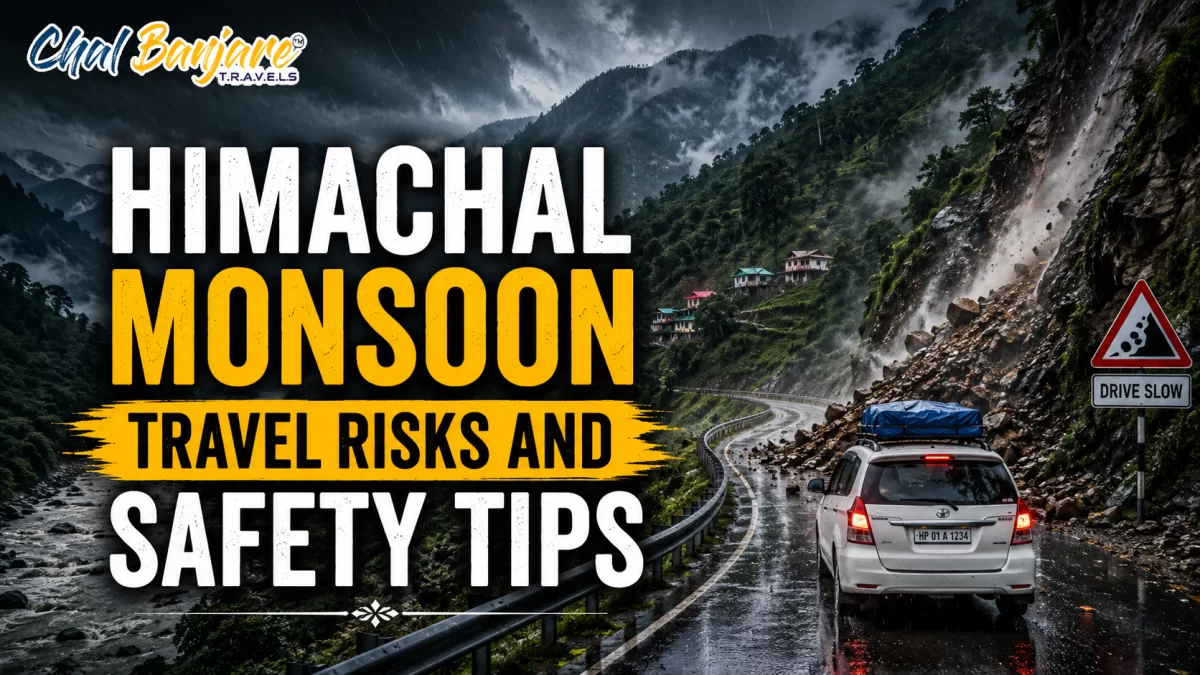
Himachal Pradesh becomes lush and scenic during monsoon season, but heavy rainfall, landslides, slippery roads, and unpredictable weather can create serious travel challenges across mountain regions.
The monsoon season in Himachal Pradesh generally extends from late June through September, although rainfall intensity varies considerably between regions. Lower and mid-altitude destinations such as Shimla, Manali, Dharamshala, Dalhousie, Chamba, Kullu, and Kangra receive considerably more rainfall than high-altitude cold desert areas like Spiti Valley. Weather patterns during this period can change rapidly, with clear mornings followed by heavy afternoon showers, dense fog, or prolonged rainfall.
Unlike travel during spring or autumn, monsoon conditions require visitors to remain flexible because rainfall influences road conditions, visibility, sightseeing opportunities, and outdoor activities. Mountain weather is naturally unpredictable, and travellers should expect frequent changes rather than assuming forecasts will remain constant throughout the day. Understanding these seasonal characteristics helps visitors prepare realistically before beginning their Himachal journey.
Travellers who understand Himachal's monsoon weather patterns can adjust their expectations more effectively while enjoying the region safely despite changing mountain conditions.
Rainfall influences nearly every aspect of travel across Himachal Pradesh. Mountain roads may experience slower traffic because of wet surfaces, fog, or temporary maintenance work, while certain valleys become particularly scenic as waterfalls, rivers, and forests receive seasonal rainfall. At the same time, heavy rain can occasionally affect accessibility to remote attractions or reduce visibility at popular viewpoints.
Outdoor sightseeing often requires greater flexibility during monsoon months. Visitors may need to adjust departure times, postpone specific activities, or select alternative attractions depending on weather conditions. While many destinations remain open throughout the season, travellers should recognise that nature determines the pace of travel in the mountains during periods of continuous rainfall.
Viewing monsoon as a dynamic travel season rather than expecting fixed schedules allows visitors to appreciate Himachal's changing landscapes while adapting comfortably to weather-related adjustments.
Successful monsoon travel depends largely on staying informed throughout the journey. Travellers should monitor weather forecasts before departure, review road condition updates each morning, and seek guidance from accommodation providers or local authorities regarding current travel conditions. Conditions can vary significantly between neighbouring valleys, making local information particularly valuable during the rainy season.
Flexible itineraries allow visitors to postpone long drives, reschedule outdoor activities, or spend additional time at destinations if weather temporarily affects road accessibility. Carrying suitable rainwear, waterproof luggage protection, extra travel time, and emergency supplies further improves overall comfort while travelling through Himachal during the monsoon.
Good planning and reliable weather information help travellers enjoy Himachal's monsoon landscapes safely while minimising inconvenience caused by changing mountain conditions.
Heavy monsoon rainfall increases the possibility of landslides across several mountain roads in Himachal Pradesh. Steep slopes, deep valleys, and ongoing natural erosion make certain stretches more susceptible to temporary road blockages during prolonged rainfall. Routes leading towards Kinnaur, Spiti, Chamba, Pangi Valley, Kullu, Manali, and other mountainous regions occasionally experience landslides or falling rocks, particularly after continuous heavy rain.
Although road maintenance teams work to restore access whenever conditions permit, travellers should recognise that mountain roads cannot always operate according to fixed schedules during severe weather. Understanding the geographical nature of these routes helps visitors plan more realistic travel itineraries while avoiding unnecessary risks.
Recognising that landslides are natural mountain events allows travellers to prepare responsibly while respecting weather-related travel advisories throughout Himachal Pradesh.
Continuous rainfall gradually saturates mountain slopes, increasing the possibility of loose soil, small rockfalls, or larger landslides in vulnerable locations. These conditions may develop without warning, particularly after several consecutive days of heavy rain. Travellers should remain alert while driving through narrow valleys, steep mountain sections, or recently repaired roads where natural erosion continues to influence the terrain.
Visitors should never stop vehicles beneath unstable cliff faces or attempt to cross freshly affected landslide areas unless instructed by local authorities. Following official guidance and remaining patient during temporary closures helps ensure personal safety while allowing road maintenance teams to complete necessary work.
Awareness of natural mountain hazards encourages safer travel decisions while reducing unnecessary exposure to weather-related risks during the monsoon season.
Travellers planning road trips during the monsoon should begin each travel day by checking current road conditions and weather forecasts. Starting early in the morning often provides additional daylight and greater flexibility if temporary delays occur. Visitors should also avoid planning tightly packed itineraries because mountain travel may require unexpected waiting periods due to maintenance work or changing weather.
Carrying drinking water, snacks, fuel where appropriate, warm clothing, mobile charging equipment, and emergency contact information helps travellers remain comfortable during unforeseen delays. Allowing additional overnight stays and maintaining flexible accommodation bookings further improves travel safety throughout Himachal's mountain regions.
Careful planning allows travellers to respond calmly to changing mountain conditions. Flexibility, patience, and regular access to reliable information remain the foundations of safe monsoon road travel throughout Himachal Pradesh.
Driving through Himachal Pradesh during the monsoon requires considerably more caution than travelling in dry weather. Continuous rainfall leaves mountain roads wet for extended periods, reducing tyre grip and increasing braking distances. Heavy rain, dense clouds, mist, and fog can also reduce visibility, making it more difficult to judge bends, approaching vehicles, pedestrians, and roadside obstacles. These conditions are especially noticeable on narrow mountain roads where safe overtaking opportunities are already limited.
Popular routes connecting Shimla, Manali, Dharamshala, Dalhousie, Kullu, Chamba, Kinnaur, and Spiti may all experience weather-related driving challenges during the rainy season. Travellers unfamiliar with mountain roads should recognise that even experienced drivers often reduce their speed significantly during monsoon conditions. Reaching the destination safely is always more important than maintaining a planned schedule.
Understanding how rainfall affects mountain driving helps visitors prepare mentally for slower travel while reducing unnecessary risks throughout their Himachal road journey.
Mountain roads in Himachal naturally include numerous hairpin bends, steep gradients, narrow bridges, and changing road surfaces. During the monsoon, these features become more demanding because water may collect on the road, loose gravel can wash onto driving lanes, and small potholes may become difficult to identify beneath standing water. Drivers should remain alert throughout the journey rather than assuming road conditions remain consistent.
Steep uphill and downhill sections require careful speed management, particularly during prolonged rainfall. Vehicles carrying luggage or multiple passengers may require greater stopping distances, while continuous descents demand proper braking techniques to maintain control. Maintaining safe following distances from other vehicles becomes even more important on wet mountain roads.
Careful observation and smooth driving techniques greatly improve safety while travelling across Himachal's mountain roads during the rainy season.
Safe monsoon driving depends on patience, preparation, and sensible decision-making. Drivers should avoid unnecessary speeding, aggressive overtaking, or sudden steering movements that may reduce vehicle stability on wet roads. Headlights should be used appropriately during periods of reduced visibility, while frequent rest breaks help maintain concentration during long mountain journeys.
Travellers who are inexperienced with mountain driving may wish to hire experienced local drivers familiar with Himachal's road conditions. Monitoring weather updates, checking road advisories before departure, and postponing travel if severe weather warnings are issued are practical decisions that prioritise safety over rigid travel schedules.
Responsible driving habits allow travellers to enjoy Himachal's scenic roads while reducing risks associated with monsoon weather. Calm, patient driving remains the safest approach throughout the rainy season.
Monsoon rainfall can cause rivers, streams, and mountain drains across Himachal Pradesh to rise rapidly, particularly during periods of intense or prolonged rain. Valleys surrounding rivers such as the Beas, Parvati, Sutlej, Ravi, Chenab, and their tributaries may experience sudden increases in water flow that change local conditions within a short period. Areas that appear calm during the morning may become significantly different later in the day if heavy rainfall occurs upstream.
Travellers visiting riverside cafés, camping areas, picnic locations, waterfalls, or scenic viewpoints should remain aware that mountain rivers respond quickly to rainfall. Respecting local warnings and avoiding unnecessary access to riverbanks during adverse weather conditions contributes significantly to overall travel safety.
Understanding how mountain rivers behave during the monsoon helps visitors appreciate their beauty while maintaining a safe distance during changing weather conditions.
One of the defining characteristics of Himalayan rivers during the rainy season is the speed at which water conditions can change. Heavy rainfall in higher catchment areas may increase river flow even if little rain is falling at the visitor's current location. Strong currents, floating debris, and rapidly changing water levels can create dangerous conditions near riverbanks, bridges, and stream crossings.
Travellers should avoid entering rivers, attempting to cross fast-flowing streams, or approaching areas where water is rising unexpectedly. Photography should also be undertaken from safe locations rather than unstable rocks or river edges. Remaining alert to environmental changes is particularly important during continuous rainfall.
Respecting natural water conditions during the monsoon significantly reduces unnecessary risks while allowing travellers to enjoy Himachal's spectacular valleys responsibly.
Visitors should always follow instructions issued by local authorities, police, disaster management teams, or accommodation providers regarding river access during periods of heavy rainfall. Barricades, warning boards, or temporary restrictions are generally introduced to protect public safety and should never be ignored. If local residents advise avoiding a particular riverbank or stream crossing, travellers should follow that guidance without hesitation.
Planning alternative sightseeing activities during severe weather allows visitors to continue enjoying their holiday while avoiding unnecessary exposure to flood-prone locations. Patience and flexibility remain important aspects of responsible monsoon travel throughout Himachal Pradesh.
Following local safety instructions ensures that travellers can enjoy Himachal's mountain landscapes responsibly while minimising risks associated with flash floods and overflowing rivers during the monsoon season.
Monsoon travel in Himachal Pradesh often requires greater flexibility because weather conditions can influence transportation throughout the day. Heavy rainfall, dense fog, temporary landslides, road maintenance work, overflowing drains, and reduced visibility may occasionally result in slower traffic or temporary road closures. Mountain highways connecting destinations such as Shimla, Manali, Dharamshala, Dalhousie, Kinnaur, Chamba, and Spiti can all experience weather-related delays depending on local conditions.
Unlike travel during dry seasons, monsoon journeys cannot always follow fixed schedules. Road clearance operations, safety inspections, or temporary traffic regulation may increase overall travel time even after rainfall has stopped. Travellers should therefore expect that mountain travel during this season may take longer than estimated on navigation systems or standard route maps.
Accepting that occasional delays are a normal part of mountain travel during the rainy season allows visitors to travel more comfortably while avoiding unnecessary stress.
Travellers should always include additional travel time when planning journeys through Himachal Pradesh during the monsoon. Even relatively short routes may require considerably longer than expected because of weather conditions, slower vehicle movement, or temporary traffic management. Long-distance journeys should never be planned with tightly scheduled arrival times, particularly when hotel check-ins, onward transportation, or guided activities are involved.
Starting road trips early in the morning often provides greater flexibility because weather conditions may become more challenging later in the day. Allowing additional breaks also helps drivers remain alert during prolonged mountain journeys, especially when continuous rain requires greater concentration behind the wheel.
Building additional time into every travel day allows visitors to adapt calmly to changing mountain conditions while maintaining a more enjoyable overall travel experience.
Flexible itineraries are one of the greatest advantages during monsoon travel. Instead of planning every hour in advance, visitors should allow opportunities to rearrange sightseeing, extend overnight stays if necessary, or substitute indoor attractions when outdoor conditions become unsuitable. Such flexibility helps reduce disappointment while ensuring the journey remains enjoyable despite unpredictable weather.
Travellers should also keep accommodation providers informed if arrival times change because of weather-related delays. Carrying snacks, drinking water, charging devices, rain protection, and essential medicines further improves comfort during unexpected waiting periods. A well-prepared itinerary focuses on safety and adaptability rather than attempting to follow rigid travel schedules.
Flexible planning enables travellers to enjoy Himachal Pradesh even when weather conditions require itinerary changes. Adaptability is one of the most valuable skills for successful monsoon travel in the mountains.
Although Spiti Valley receives considerably less rainfall than many other parts of Himachal Pradesh because it lies within a cold desert rain-shadow region, the approach roads leading towards the valley can still experience significant monsoon-related challenges. Routes through Kinnaur, the Shimla–Kaza highway, and the Manali–Kaza road may be affected by landslides, falling rocks, water crossings, and temporary road closures following periods of heavy rainfall in surrounding mountain regions.
Remote Himalayan destinations naturally involve longer travel distances, fewer settlements, and limited roadside services. Even where rainfall itself remains relatively low inside Spiti, reaching the region safely depends on road conditions across neighbouring mountain districts. Travellers should therefore consider the complete route rather than focusing only on the weather at their final destination.
Understanding regional weather differences helps travellers prepare realistic itineraries while recognising that road accessibility depends on the entire Himalayan route rather than one destination alone.
Remote Himalayan regions offer spectacular scenery but comparatively limited infrastructure. Fuel stations, repair workshops, medical facilities, mobile connectivity, accommodation, and shopping opportunities are available only at selected locations. During the monsoon, temporary road disruptions may further increase travel times between these facilities, making advance preparation particularly important.
Travellers should ensure that vehicles are well serviced, fuel tanks are filled whenever possible, and essential supplies such as drinking water, food, medicines, power banks, warm clothing, and emergency equipment are carried throughout the journey. Those relying on public transportation should also confirm current schedules because weather conditions may occasionally influence service timings.
Thoughtful preparation greatly improves both comfort and safety while travelling through Himachal's remote Himalayan regions during the rainy season.
Visitors planning remote Himalayan road trips during the monsoon should prioritise preparation over speed. Monitoring weather forecasts, reviewing official road condition updates, maintaining flexible accommodation plans, and allowing additional travel days provide valuable flexibility if unexpected weather affects the journey. Travellers should also inform family members about planned routes when visiting areas with limited communication facilities.
Hiring experienced mountain drivers, travelling during daylight hours, avoiding unnecessary night driving, and respecting local travel advisories all contribute to safer exploration. Proper preparation allows visitors to appreciate the exceptional landscapes of Spiti and neighbouring Himalayan regions while reducing avoidable travel risks associated with the monsoon season.
Well-prepared travellers are better positioned to enjoy Spiti and other remote Himalayan destinations safely during the monsoon. Patience, preparation, and flexibility remain the keys to successful mountain travel.
The monsoon transforms Himachal Pradesh into a lush green landscape, making forests, valleys, waterfalls, and mountain trails exceptionally scenic. However, the same rainfall that enhances natural beauty also creates additional challenges for trekkers and outdoor enthusiasts. Wet trails, muddy paths, loose stones, overflowing streams, dense fog, and rapidly changing weather increase the level of caution required during outdoor activities. Even relatively easy walking routes can become considerably more demanding after continuous rainfall.
Popular trekking regions around Triund, Kareri Lake, Hampta Pass approach areas, Tirthan Valley, Jibhi, Barot, Parvati Valley, Kheerganga, and several forest trails may experience changing conditions throughout the day. Travellers should understand that mountain weather can change quickly, requiring flexible planning rather than fixed schedules. Safety should always remain the priority over completing a planned trek.
Understanding seasonal trail conditions allows trekkers to make informed decisions while appreciating Himachal's monsoon landscapes responsibly and safely.
Before beginning any trek or outdoor excursion, travellers should verify current trail conditions through local guides, accommodation providers, forest authorities, or experienced trekking operators. Routes that remain accessible during dry months may require temporary restrictions if heavy rainfall causes erosion, overflowing streams, or unstable slopes. Conditions may also vary significantly between neighbouring valleys depending on local rainfall patterns.
Visitors should avoid relying solely on previous travel experiences or older route information because monsoon weather changes trail conditions frequently. Carrying suitable footwear with reliable grip, waterproof clothing, trekking poles where appropriate, and sufficient drinking water further improves comfort throughout the hike. Starting early in the day also provides additional time should weather conditions change later.
Proper preparation before every trek significantly improves safety while allowing visitors to enjoy Himachal's forests and mountain landscapes with greater confidence.
Choosing suitable trekking routes during the monsoon requires honest assessment of personal fitness, mountain experience, and current weather conditions. Beginners should consider shorter, well-established trails instead of attempting remote or technically demanding routes during periods of heavy rainfall. Experienced trekkers should also remain flexible and postpone hikes if weather conditions become unsafe.
Travelling with companions, informing others about planned routes, carrying navigation tools, emergency supplies, and respecting local advice all contribute to responsible trekking practices. Monsoon trekking should focus on enjoying nature safely rather than attempting to complete difficult routes despite unfavourable conditions.
Responsible trekking during the monsoon allows visitors to experience Himachal's remarkable landscapes while minimising avoidable risks associated with changing mountain weather.
Travelling during the monsoon exposes visitors to changing temperatures, increased humidity in lower valleys, cool mountain evenings, and frequent rainfall. These conditions may contribute to common travel concerns such as colds, sore throats, dehydration, fatigue, minor digestive discomfort, or skin irritation if appropriate precautions are not taken. Wet clothing, prolonged exposure to rain, and sudden temperature changes between indoor and outdoor environments can also reduce overall travel comfort.
Although Himachal's higher elevations generally remain cooler than the plains, visitors should recognise that weather conditions vary considerably between destinations. Preparing for both rain and cooler temperatures helps travellers remain comfortable throughout long road journeys and outdoor sightseeing activities.
Simple preventive measures greatly improve comfort throughout the journey while reducing common weather-related travel discomfort during the monsoon season.
Good personal hygiene becomes particularly important during extended travel in rainy weather. Travellers should carry hand sanitiser, tissues, reusable water bottles, waterproof storage bags, personal medicines, insect repellent where appropriate, and other basic travel essentials. Drinking safe water, consuming freshly prepared meals, and maintaining cleanliness throughout the journey contribute significantly to overall wellbeing.
Waterproof packing also helps protect important documents, electronic devices, clothing, and medicines from unexpected rainfall. Visitors travelling through remote regions should carry sufficient supplies because shopping opportunities may be limited between destinations.
Well-organised travel supplies make monsoon journeys considerably more comfortable while reducing inconvenience caused by frequent rainfall and changing weather.
Mountain weather can change several times during a single day, particularly while travelling between valleys at different elevations. Travellers should therefore remain prepared for sunshine, rain, cool winds, fog, and occasional temperature drops without assuming conditions will remain constant. Layered clothing provides greater flexibility than heavy outerwear because it can be adjusted according to changing weather.
Maintaining regular meal times, staying hydrated, taking sufficient rest, and avoiding unnecessary physical strain during long road trips all contribute to a healthier travel experience. Visitors should also allow additional breaks while driving through the mountains to reduce fatigue and remain alert throughout the journey.
Looking after personal health during monsoon travel allows visitors to enjoy Himachal's landscapes more comfortably while adapting confidently to changing mountain weather throughout the journey.
A well-maintained vehicle is one of the most important requirements for safe monsoon travel in Himachal Pradesh. Mountain roads demand considerably more from vehicles than highways in the plains, and rainy weather increases these demands further. Before beginning a road trip, travellers should ensure that the vehicle has been serviced recently and that all essential systems are functioning correctly. This is particularly important for journeys covering routes through Shimla, Manali, Kinnaur, Spiti, Chamba, Dharamshala, Dalhousie, Tirthan Valley, and other mountainous regions where repair facilities may be widely spaced.
Visitors travelling in personal vehicles should inspect fluid levels, battery condition, windscreen wipers, cooling systems, and tyre pressure before departure. Those hiring taxis or self-drive vehicles should also spend a few minutes checking the vehicle's overall condition rather than assuming everything has already been inspected. Good preparation significantly reduces the likelihood of avoidable mechanical problems during long mountain journeys.
Vehicle preparation is an important investment in travel safety. A properly maintained vehicle allows travellers to focus on enjoying Himachal's mountain scenery with greater confidence throughout the monsoon season.
Tyres, brakes, headlights, fog lamps, indicators, and braking systems become even more important during monsoon driving because wet roads reduce traction and visibility. Tyres with adequate tread provide better grip on rain-soaked mountain roads, while efficient brakes help drivers maintain control during downhill sections and emergency situations. Lights should also be fully operational because rain, mist, and fog frequently reduce visibility throughout the day.
Drivers should avoid beginning mountain journeys if they have concerns regarding tyre wear, braking performance, steering response, or electrical systems. Addressing these issues before departure is always safer than attempting repairs after reaching remote mountain routes where service facilities may be limited.
Regular maintenance improves both vehicle performance and driver confidence during rainy mountain journeys. Well-maintained safety systems are essential for responsible monsoon travel across Himachal.
Travellers driving through Himachal during the monsoon should carry practical emergency supplies in addition to standard travel luggage. Spare tyres, vehicle toolkits, torches, mobile charging cables, drinking water, snacks, rainwear, basic first-aid supplies, tow ropes where appropriate, and emergency contact information can all prove valuable if unexpected delays occur because of weather or road conditions.
Visitors planning long journeys through remote areas should also ensure fuel levels remain sufficient between towns and avoid waiting until the last opportunity to refuel. Proper preparation allows travellers to remain comfortable and self-sufficient if weather temporarily affects normal travel schedules. Being prepared is particularly valuable when visiting destinations with limited roadside facilities.
Emergency preparedness contributes significantly to safe mountain travel. Travellers who prepare thoroughly are better equipped to handle changing monsoon conditions while enjoying Himachal's spectacular road journeys responsibly.
While the monsoon affects most parts of Himachal Pradesh to varying degrees, some destinations generally remain more accessible than remote mountain regions during the rainy season. Towns with better road connectivity, established tourism infrastructure, and regular transportation services often provide more convenient travel experiences when weather conditions become unpredictable. Accessibility, however, still depends on current rainfall and local road conditions, making regular weather updates essential.
Travellers seeking relatively comfortable monsoon holidays often prefer destinations where accommodation, medical facilities, transport services, and emergency assistance are more readily available. Regardless of destination choice, visitors should recognise that mountain weather can change quickly and should remain flexible throughout the journey.
Selecting destinations with dependable infrastructure provides greater flexibility during the rainy season while allowing visitors to enjoy Himachal's landscapes with fewer logistical concerns.
Travellers with limited mountain driving experience or families travelling with children and senior citizens may find it more comfortable to choose destinations that require shorter road journeys and have comparatively better year-round accessibility. Lower and mid-altitude hill stations generally offer a wider range of accommodation, transportation, dining, and medical facilities, making them practical choices during periods of changing weather.
Road conditions should still be reviewed before departure because rainfall intensity varies between districts. Visitors should avoid assuming that one destination is always unaffected simply because it lies at a lower elevation. Real-time weather information and local guidance remain the most reliable sources for planning safe travel during the monsoon season.
Choosing accessible destinations allows visitors to experience Himachal comfortably while reducing the challenges associated with long remote mountain journeys during the monsoon.
The safest monsoon itineraries are those planned around current weather conditions rather than fixed expectations. Visitors should monitor forecasts regularly, check road updates before every major journey, and remain prepared to adjust travel plans if heavy rainfall affects accessibility. Local hotel staff, transport providers, tourism offices, and district authorities often provide valuable information regarding current conditions that may not appear in general forecasts.
Travellers should avoid rushing between destinations simply to follow an itinerary if weather conditions become unfavourable. Spending additional time at one destination is often a safer and more enjoyable option than travelling through severe rainfall. Flexibility, preparation, and patience remain the foundations of successful monsoon travel throughout Himachal Pradesh.
Well-planned monsoon travel allows visitors to experience Himachal's green landscapes safely while adapting confidently to changing mountain conditions. Careful destination selection and informed decision-making help create a rewarding rainy-season holiday.
Planning a successful Himachal Pradesh trip during the monsoon begins with selecting destinations that match current weather conditions rather than relying solely on a fixed itinerary. Rainfall intensity varies considerably across the state, with lower and mid-altitude regions generally receiving more precipitation than the cold desert areas of Spiti Valley. However, even destinations receiving relatively less rainfall may still be affected by road conditions along the approach routes. Reviewing regional weather forecasts and road accessibility before departure helps travellers choose destinations that are both enjoyable and practical during the rainy season.
Visitors should also consider the type of holiday they wish to experience. Scenic hill stations, peaceful valleys, cultural attractions, cafés, local markets, and nature viewpoints often remain enjoyable during moderate rainfall, while high-risk activities such as difficult treks, river crossings, or remote road trips may require postponement if weather conditions deteriorate. Building flexibility into destination choices allows travellers to continue exploring safely without feeling restricted by changing weather.
Travellers who plan according to real-time conditions rather than rigid schedules usually enjoy a smoother and more rewarding monsoon holiday. Flexible destination selection remains one of the most valuable travel strategies during Himachal's rainy season.
Well-organised transport and accommodation arrangements contribute significantly to safe monsoon travel. Booking hotels in advance, confirming cancellation policies, checking vehicle condition, monitoring weather forecasts, and reviewing road advisories before departure all help reduce uncertainty throughout the journey. Visitors travelling by private vehicle should ensure that tyres, brakes, lights, wipers, and emergency equipment are fully prepared before entering mountain roads.
Accommodation should ideally be reserved with enough flexibility to accommodate weather-related delays if necessary. Travellers should also keep emergency contact numbers, digital booking confirmations, offline maps, identity documents, power banks, waterproof luggage protection, and sufficient cash where appropriate. These practical preparations improve comfort while allowing visitors to respond confidently to changing mountain conditions.
Advance preparation allows travellers to concentrate on enjoying Himachal's landscapes instead of dealing with avoidable logistical challenges. Careful organisation creates a safer and more relaxed monsoon travel experience.
Before leaving for Himachal Pradesh during the monsoon, travellers should complete a practical checklist covering transportation, accommodation, weather preparation, health, and emergency planning. Packing waterproof jackets, quick-drying clothing, trekking shoes with good grip, first-aid supplies, medicines, reusable water bottles, flashlights, chargers, and waterproof bags helps visitors remain comfortable throughout changing weather conditions. Reviewing daily forecasts and respecting local advisories are equally important throughout the journey.
Visitors should also avoid rushing between destinations, drive cautiously on mountain roads, remain alert near rivers and waterfalls, and postpone outdoor activities if conditions become unsafe. Monsoon travel is most enjoyable when approached with patience, flexibility, and respect for the natural mountain environment. Responsible planning not only improves safety but also allows travellers to appreciate Himachal's lush valleys, forests, waterfalls, and scenic landscapes during one of the state's most beautiful seasons.
Himachal Pradesh remains a beautiful destination during the monsoon for travellers who prepare thoughtfully and travel responsibly. With realistic expectations, careful planning, and attention to changing weather conditions, visitors can safely experience the state's forests, valleys, waterfalls, mountain towns, and rich natural beauty while minimising weather-related risks.


Get customized Himachal Pradesh tour planning designed around season, road conditions, hill travel pacing, and comfort preferences. Whether you are visiting for snow experiences, mountain landscapes, temple towns, adventure activities, or relaxed valley s
⚡ Quick Response | 💰 Free consultation | 🕒 24×7 expert support

