



Best Street Food in Chandni Chowk – What and Where to Eat
Discover Chandni Chowk's famous street food, from traditional parathas and chaat to sweets and savoury snacks, with guidance on food lanes, local specialities and hygiene.
+91 9910402252
admin@chalbanjare.com


Plan your visit to Lotus Temple in Delhi with information on opening hours, entry rules, architectural highlights, nearby attractions and convenient transport options.
Lotus Temple, officially known as the Baháʼí House of Worship in New Delhi, is a religious and architectural landmark situated in Kalkaji, South Delhi. It is recognised for its flower-inspired design and its message of unity, peace and equality among people of different faiths.
Unlike temples dedicated to a particular Hindu deity, Lotus Temple is a Baháʼí place of worship that welcomes visitors regardless of their religion, nationality or beliefs.
Lotus Temple was designed by Iranian-born architect Fariborz Sahba, who developed a distinctive structure inspired by the lotus flower.
The building was created as a Baháʼí House of Worship and opened to the public in December 1986.
Lotus Temple was established as a place where people from different religious and cultural backgrounds could gather for prayer and spiritual reflection.
The Baháʼí Faith emphasises the unity of humanity and the essential oneness of religions.
The temple reflects these principles by welcoming everyone without requiring adherence to a particular religion.
The temple is famous for its 27 marble-clad petals arranged in nine groups of three, forming the appearance of a blooming lotus flower.
The structure has nine sides and nine entrances, reflecting the importance of the number nine in Baháʼí symbolism.
The design combines geometric precision, natural inspiration and carefully planned interior spaces.
The lotus flower has longstanding associations with purity, beauty and spirituality in Indian cultural traditions.
Using the lotus as an architectural inspiration helped create a building that feels connected to its Indian setting while expressing the universal message of the Baháʼí Faith.
The main temple rises approximately 34 metres above the surrounding podium.
Its striking form is visible from different points around the landscaped complex.
The building is designed to accommodate a large congregation within its central prayer hall.
Lotus Temple is a Baháʼí House of Worship dedicated to prayer and contemplation.
People of all faiths are welcome to enter and pray silently, regardless of their religious background.
The temple does not contain idols or images for worship, and its prayer services are not led by a priest or clergy.
Yes. Lotus Temple welcomes visitors from every religion, including Hindus, Muslims, Christians, Sikhs, Buddhists, Jains and people who do not follow a particular faith.
Visitors are expected to respect the quiet and contemplative atmosphere inside the prayer hall.
No. Despite its popular name and lotus-shaped design, Lotus Temple is not a Hindu temple.
It belongs to the Baháʼí Faith and is intended as a place of worship open to people of all religions.
No. Lotus Temple is not a UNESCO World Heritage Site.
It is nevertheless internationally recognised for its architecture and its role as a prominent Baháʼí House of Worship.
Lotus Temple is famous for its distinctive marble architecture, welcoming spiritual philosophy, peaceful interior and landscaped setting.
It is also one of Delhi's most photographed modern landmarks, although photography is restricted in certain areas.
Historical and spiritual significance: Lotus Temple represents a modern architectural expression of the Baháʼí principles of unity, peace and prayer. Its inclusive approach makes it a meaningful attraction for visitors of different cultural and religious backgrounds.
Lotus Temple is one of Delhi's major attractions that visitors can explore without paying an admission fee. Entry is free for Indian and foreign tourists, regardless of religion, age or nationality.
Indian tourists can enter Lotus Temple free of charge. No standard sightseeing ticket is required to visit the gardens or the main prayer hall.
Foreign tourists are also welcome without an admission charge.
There is no separate ticket category or higher entry fee for international visitors.
Yes. Children can enter Lotus Temple free of charge.
Parents should supervise young children and help them maintain silence inside the prayer hall.
Yes. Senior citizens do not need to purchase an entry ticket.
Wheelchairs may be available at the main gate on a first-come, first-served basis.
No. Regular individual visitors do not need to book an admission ticket online because entry is free.
Visitors can arrive during opening hours and follow the designated entrance and queue arrangements.
Organised groups interested in guided visits or special arrangements may need to contact the temple administration in advance.
Group appointment arrangements are subject to confirmation and may not be available on weekends or public holidays.
Ordinary visitors can generally enter without making a reservation.
No. Prayer and meditation inside the Lotus Temple are free.
Visitors are not required to make donations or participate in any religious ceremony to enter.
Ordinary personal photography in permitted outdoor areas does not require a separate standard admission ticket.
Photography is prohibited inside the main prayer hall. Professional photography and filming may require prior authorisation.
A Delhi Development Authority parking facility is available opposite the main entrance.
Parking is separate from temple admission, and applicable vehicle charges should be checked at the facility.
Lotus Temple is primarily a place of worship and architectural attraction rather than a commercial entertainment complex.
There is no compulsory paid exhibition, sightseeing package or water show associated with regular temple entry.
Visitors can explore designated outdoor areas and admire the architecture without necessarily entering the central prayer hall.
Access to particular garden sections may be controlled for maintenance, safety or visitor management.
Entry recommendation: Lotus Temple is free for all visitors, including Indian tourists, foreigners, children and senior citizens. No regular admission ticket is required, but visitors should allow time for queues and security screening.
Lotus Temple follows seasonal visiting hours and is normally closed on Mondays. Tourists should confirm the current schedule before travelling, particularly if planning to arrive near closing time or during a public holiday.
The commonly published summer schedule is 9:30 AM to 7:00 PM, generally from April to September.
Actual opening and last-entry arrangements may be adjusted by the temple administration, so visitors should confirm the current hours.
The commonly published winter schedule is 9:30 AM to 5:30 PM, generally from October to March.
Visitors should arrive well before closing because queues and entry restrictions may prevent late arrivals from entering the prayer hall.
Yes. Monday is the regular weekly closing day for Lotus Temple.
Visitors should plan their visit from Tuesday to Sunday, subject to any temporary closure notices.
Weekday mornings are generally the best time for visitors who prefer shorter queues and a peaceful atmosphere.
Arriving soon after opening allows time to admire the exterior architecture, explore permitted garden areas and spend a few quiet moments inside the prayer hall.
Late afternoon can be suitable for photography because the white marble exterior looks attractive in softer natural light.
However, the temple does not remain open throughout the night. Visitors should not assume they can enter after sunset or after the published closing time.
October to March generally offers more comfortable outdoor sightseeing conditions than Delhi's peak summer months.
However, Delhi can experience significant air pollution during late autumn and winter, while December and January may bring fog and cold mornings.
February and early March are often comfortable, depending on actual weather and air quality.
Delhi can experience extreme heat during April, May and June.
Visitors should prefer early morning hours, carry drinking water and avoid unnecessary outdoor exposure during the hottest part of the day.
July to September generally brings monsoon rainfall to Delhi.
Rain can make garden paths slippery and may affect outdoor photography.
Carry suitable rain protection and avoid exposed areas during thunderstorms.
Winter afternoons may be pleasant for sightseeing, but early mornings can be cold or foggy.
Visitors should check current air-quality conditions before spending long periods outdoors, particularly if they have respiratory or cardiovascular conditions.
Tuesday to Thursday mornings are generally preferable for quieter visits.
Weekends, school holidays and public holidays can attract larger crowds, increasing waiting times for the prayer hall.
Timing recommendation: Visit on a weekday morning for a quieter experience. Lotus Temple is normally closed on Mondays, and visitors should confirm the current seasonal schedule before travelling.
Lotus Temple is best known for its remarkable architecture and peaceful spiritual atmosphere. Unlike large temple complexes with numerous shrines and commercial attractions, its main features are the central prayer hall, lotus-shaped exterior, landscaped gardens and surrounding water pools.
The most striking attraction is the temple's flower-inspired exterior.
The structure consists of 27 marble-clad petals arranged in nine groups of three, creating the appearance of an open lotus flower.
Visitors can admire the building from designated outdoor pathways and garden viewpoints.
The central prayer hall is the spiritual heart of Lotus Temple.
It is designed as a peaceful space where visitors from different religious backgrounds can sit quietly, pray or meditate.
The hall does not contain idols, altars or religious images used for worship.
The interior features a spacious, high-ceilinged design supported by the surrounding petal-shaped structure.
Natural light enters through the architectural openings, contributing to the calm atmosphere.
Visitors should maintain silence and avoid disturbing others during prayer.
The building has nine entrances leading towards the central prayer hall.
The number nine has symbolic importance in the Baháʼí Faith and is associated with unity and completeness.
The entrances are integrated into the overall geometric design of the building.
The surrounding gardens contain lawns, trees, flowering plants and carefully maintained pathways.
They provide attractive views of the temple and contribute to the peaceful setting.
Visitors should remain on designated routes and avoid entering restricted lawns.
Nine pools surround the lotus-shaped structure, contributing to its architectural appearance and surrounding landscape.
The water features create reflections and help visually separate the main building from its surroundings.
Visitors should not enter the pools or cross safety barriers.
The exterior of Lotus Temple offers several attractive photography opportunities.
Visitors can capture the entire flower-shaped structure, individual marble petals and views framed by the surrounding gardens.
Photography should be limited to permitted outdoor areas.
One of the most meaningful activities at Lotus Temple is spending a few minutes in silent reflection.
Visitors do not need to follow the Baháʼí Faith or participate in a particular ritual.
They can simply sit quietly and appreciate the peaceful environment.
The temple may hold devotional gatherings featuring readings from sacred scriptures.
These activities are conducted in accordance with Baháʼí worship principles and do not involve sermons, clergy or instrumental musical accompaniment.
Visitors should follow the instructions provided during devotional programmes.
The temple complex may offer information about the Baháʼí Faith, its principles and the purpose of Houses of Worship.
Availability of visitor briefings, information displays and organised group programmes depends on current arrangements.
Visitor recommendation: The central prayer hall and lotus-shaped exterior are the main highlights. Allow time for quiet reflection rather than treating Lotus Temple only as a photography stop.
Lotus Temple is an active Bahá'í House of Worship, so visitors must follow rules intended to preserve its peaceful atmosphere and protect the premises. The most important requirements concern silence inside the prayer hall, modest clothing, footwear removal, photography and permitted belongings.
Yes. Personal photography is permitted in the outdoor areas of Lotus Temple, including designated viewpoints around the building and gardens.
However, photography is prohibited inside the prayer hall and the Information Centre.
Visitors should follow staff instructions and avoid photographing restricted areas.
No. Photography is not allowed inside the main prayer hall.
The restriction helps maintain a quiet and respectful atmosphere for prayer and meditation.
Professional photographers must obtain prior permission from the temple management.
Commercial shoots, specialised equipment and organised filming should not be attempted without approval.
Yes. Visitors are expected to maintain silence inside the prayer hall.
Talking, loud conversations, phone calls and disruptive behaviour are not appropriate.
Visitors may sit quietly for prayer or meditation and should avoid disturbing others.
Modest clothing is recommended. Male visitors should wear garments covering their shoulders and reaching at least the knees.
Full-length trousers, jeans and suitable shirts are practical choices.
Female visitors are advised to wear clothing covering their shoulders and reaching at least the knees.
Salwar suits, sarees, long dresses, trousers and modest tops are suitable options.
Yes. Jeans are suitable if worn with modest clothing that meets the temple's visitor guidelines.
Visitors should avoid excessively revealing clothing.
Shorts that extend to the knees may meet the recommended modest dress standard, but longer clothing is a safer choice.
Clothing should cover the shoulders and reach the knees.
Yes. Shoes must be removed before entering the prayer hall.
A designated shoe room is available for depositing footwear.
Visitors should follow the staff's instructions for footwear collection and movement through the entrance.
Mobile phones should be switched off or kept silent inside the prayer hall.
Visitors must not use phones for calls, photography or video recording inside the hall.
Any additional electronic-device restrictions announced by the management should be followed.
No. Food and drinks are not permitted on the temple premises under the published visitor rules.
Visitors should eat before arriving or use suitable dining facilities outside the complex.
No. Large baggage is not allowed inside the premises.
Travellers should avoid bringing suitcases, bulky backpacks and unnecessary belongings.
Keep personal items minimal to make security screening easier.
No. Lotus Temple is a smoke-free facility.
Visitors should not smoke or use tobacco products within the premises.
Visitors should not bring pets without confirming the current policy with temple management.
Those travelling with assistance animals should enquire about the applicable access arrangements before visiting.
Visitors may be required to undergo security checks at the entrance.
Security personnel may restrict items that could affect safety, visitor comfort or the peaceful environment.
Cooperate with staff and follow all posted instructions.
Prayer services generally last 10–15 minutes.
During a service, the exit door of the prayer hall remains closed until the prayers conclude.
Visitors should remain seated or follow staff instructions and avoid disrupting the service.
Visitor recommendation: Wear modest clothing, carry minimal belongings and keep your phone silent. Enjoy photography in permitted outdoor areas, but treat the prayer hall as a space for quiet worship and reflection.
Lotus Temple is located in Bahapur near Kalkaji and Nehru Place in South Delhi. It is easily accessible by Delhi Metro, taxi, auto-rickshaw and private vehicle. Metro travel is particularly convenient because two stations are within walking distance of the temple.
Kalkaji Mandir Metro Station is one of the nearest and most convenient stations for visiting Lotus Temple.
It is served by the Violet and Magenta Lines.
The temple is approximately a five-minute walk from the station, depending on the exit and walking route.
Okhla NSIC Metro Station on the Magenta Line is another convenient option.
The temple is approximately a five-minute walk from the station, depending on the route.
This station may be useful for visitors travelling from areas connected directly to the Magenta Line.
Visitors can board the Yellow Line at Rajiv Chowk Metro Station towards Millennium City Centre Gurugram.
Change to the Violet Line at Central Secretariat and continue towards Raja Nahar Singh.
Get off at Kalkaji Mandir Metro Station and walk to the temple entrance.
New Delhi Railway Station is approximately 15 kilometres from Lotus Temple by road.
Visitors can use the Yellow Line from New Delhi Metro Station towards Millennium City Centre Gurugram.
Change to the Violet Line at Central Secretariat and get off at Kalkaji Mandir Metro Station.
From the station, walk approximately 500 metres towards the temple.
Visitors can walk to Chandni Chowk Metro Station and board the Yellow Line towards Millennium City Centre Gurugram.
Change to the Violet Line at Central Secretariat and get off at Kalkaji Mandir.
Complete the final journey on foot using the designated pedestrian route.
Indira Gandhi International Airport is approximately 16–17 kilometres from Lotus Temple by road, depending on the terminal and route.
Visitors can use a prepaid taxi or app-based cab.
Travellers starting from the Terminal 1 Magenta Line station can board a train towards Botanical Garden and get off at Okhla NSIC Metro Station.
From there, walk to the temple entrance.
Travellers using other airport terminals should check the appropriate metro connections or use a taxi.
Visitors travelling from Noida can use the Magenta Line from Botanical Garden towards Krishna Park Extension and get off at Okhla NSIC or Kalkaji Mandir.
Travellers starting from other parts of Noida may need to change lines.
Direct taxi travel is also possible, depending on traffic and the starting point.
Saket is located in South Delhi and can be reached from Lotus Temple by road or metro.
Visitors can use a taxi or auto-rickshaw for a direct journey.
Metro travel may require an interchange depending on the starting station.
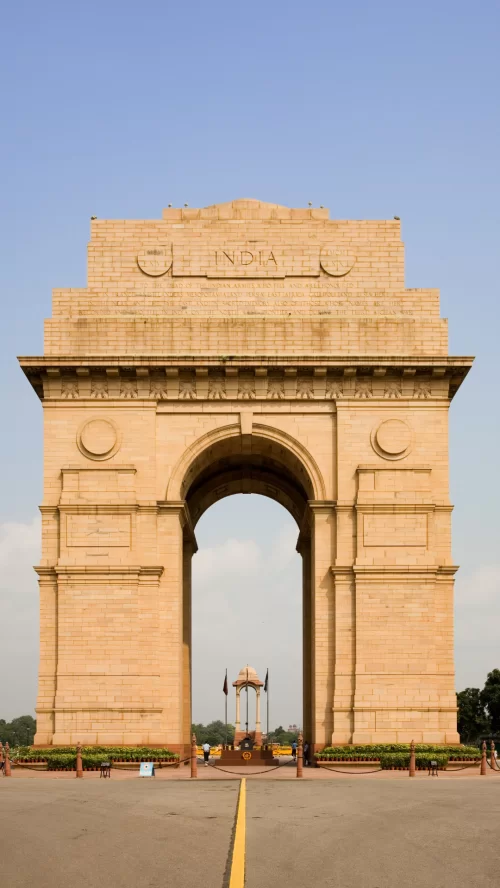
India Gate and Lotus Temple are located in different parts of Delhi but can be combined in a longer sightseeing itinerary.
Visitors can travel by taxi or use metro connections through the Violet Line.
Allow sufficient time for traffic and walking between metro stations and attractions.
Lotus Temple is accessible through major roads serving Kalkaji, Nehru Place and the surrounding South Delhi neighbourhoods.
Visitors should follow current navigation instructions towards the Bahá'í House of Worship in Bahapur.
Traffic can be heavy during weekday commuting hours.
A Delhi Development Authority parking facility is located opposite the main gate of Lotus Temple.
Visitors arriving by private vehicle can use this designated facility, subject to availability and current parking charges.
Parking may become crowded during weekends and public holidays.
Yes. Auto-rickshaws are available in many nearby areas, including Kalkaji and Nehru Place.
Visitors should confirm the fare and permitted drop-off location before travelling.
Delhi's public bus network serves the wider Kalkaji and Nehru Place area.
However, the most suitable route and bus stop depend on the visitor's starting location.
For tourists unfamiliar with local bus services, the metro is generally easier.
Families with young children and senior citizens may prefer a taxi or private vehicle for convenient access.
Metro travel is also practical for visitors comfortable with a short walk from the station.
Visitors with mobility limitations should enquire about wheelchair arrangements before travelling.
Transport recommendation: Kalkaji Mandir Metro Station and Okhla NSIC Metro Station are the most convenient public transport options. Both provide short walking routes to Lotus Temple, making metro travel suitable for most visitors.
Lotus Temple is situated near several important religious, cultural and recreational attractions in South Delhi. Its location around Kalkaji and Nehru Place makes it convenient for a short heritage and spiritual sightseeing itinerary.
Kalkaji Mandir is a well-known Hindu temple dedicated to Goddess Kali.
Located close to Lotus Temple, it is an important religious destination for devotees visiting South Delhi.
The temple can be crowded during Navratri and other religious occasions.
Visitors should follow the temple's dress code, security rules and darshan arrangements.
ISKCON Temple, also known as Sri Sri Radha Parthasarathi Mandir, is located in East of Kailash.
The temple is dedicated to Lord Krishna and Radha and is known for its devotional atmosphere, religious activities and cultural exhibits.
Visitors can combine ISKCON Temple with Lotus Temple for a spiritual sightseeing itinerary.
Nehru Place is a major commercial and shopping area near Lotus Temple.
It is known for its electronics market, office buildings, restaurants and cafés.
Visitors can stop here for shopping or dining after exploring the temple.
Astha Kunj is a large green area located near Lotus Temple and ISKCON Temple.
It can be considered for walking and outdoor recreation, subject to current access and maintenance conditions.
Visitors should use designated pathways and avoid isolated areas.
Humayun's Tomb is a UNESCO World Heritage Site and one of Delhi's most important Mughal monuments.
It is known for its grand architecture, landscaped gardens and historical significance.
Visitors interested in heritage sightseeing can combine it with Lotus Temple in a half-day or full-day itinerary.
Sunder Nursery is a landscaped heritage park near Humayun's Tomb.
It features gardens, historical structures and walking areas.
It is suitable for visitors who want a relaxed outdoor experience after exploring religious and historical landmarks.
Greater Kailash is a popular South Delhi neighbourhood known for shopping, restaurants and cafés.
Visitors can explore its commercial markets after visiting Lotus Temple.
It is particularly convenient for travellers interested in combining sightseeing with dining and shopping.
The National Science Centre near Pragati Maidan is an educational museum with interactive science exhibits.
It is suitable for families with children and students.
Visitors can combine it with Lotus Temple if they have sufficient time and are comfortable travelling between attractions.
These are suggested planning times rather than guaranteed operating schedules. Confirm individual attraction timings before travelling.
Yes. Lotus Temple and Akshardham can be visited on the same day, but they are located in different parts of Delhi.
Akshardham requires considerably more time if visitors want to attend the exhibitions and evening water show.
Because both temples are regularly closed on Monday, travellers should choose another day.
Nearby sightseeing recommendation: For a short visit, combine Lotus Temple with Kalkaji Mandir or ISKCON Temple. For a full-day outing, add Humayun's Tomb or Sunder Nursery, depending on your interests and the weather.
Lotus Temple is suitable for a short sightseeing stop or a longer visit focused on prayer, meditation and architecture. Most visitors can explore the principal areas within one to two hours, although queues and prayer service arrangements may affect the duration.
During weekends and public holidays, additional waiting time may be necessary.
This itinerary assumes relatively short queues.
Wheelchairs are available at the main gate on a first-come, first-served basis.
Visitors with mobility limitations should enquire about suitable routes and assistance when they arrive.
Availability may be limited during busy periods, so advance planning is recommended.
Yes. Lotus Temple can be suitable for senior citizens who enjoy peaceful environments and architecture.
However, the visit involves walking from the entrance through the grounds and waiting to enter the prayer hall.
Senior citizens with mobility limitations should ask about wheelchair availability and choose a quieter visiting period.
Lotus Temple can be an educational attraction for children because of its distinctive architecture and emphasis on religious unity.
Parents should explain that silence is required inside the prayer hall.
Very young children who may find it difficult to remain quiet can still appreciate the exterior architecture from permitted outdoor areas.
Yes. Washroom facilities are available for visitors.
Follow signs and staff instructions to locate the nearest facilities.
Drinking water facilities are available within the visitor premises.
However, food and drinks are not permitted in the prayer hall and other restricted areas.
Visitors should follow the posted instructions about where drinking water may be consumed.
Food and drinks are not permitted on the temple premises.
Visitors can find restaurants and cafés in surrounding areas such as Nehru Place and Kalkaji.
Families should plan meals before or after the temple visit.
Wear comfortable footwear for walking around the grounds and modest clothing that covers the shoulders and reaches the knees.
Footwear must be removed before entering the prayer hall.
During summer, lightweight clothing is useful, while winter visitors may need a light jacket.
Avoid carrying large luggage or unnecessary equipment.
Delhi can experience extreme heat during May and June.
Visitors should avoid prolonged exposure to direct sunlight, particularly while waiting in queues.
Arriving early and taking appropriate hydration breaks outside restricted areas can improve comfort.
Delhi may experience serious air pollution during late autumn and winter.
Visitors with respiratory or cardiovascular conditions should monitor current air-quality conditions and follow appropriate medical advice.
On heavily polluted days, avoid unnecessary prolonged outdoor exposure.
Lotus Temple is one of Delhi's most distinctive spiritual landmarks and an excellent destination for visitors interested in architecture, meditation and religious unity.
The temple is free to enter and generally open Tuesday to Sunday from 8:30 AM to 5:00 PM, with Monday as the regular closing day.
Visitors should wear modest clothing, remove footwear before entering the prayer hall and maintain complete silence during prayer and meditation.
For a comfortable first visit, allow approximately one hour, with additional time for the Information Centre or longer queues.
Final recommendation: Visit Lotus Temple on a weekday morning, use Kalkaji Mandir or Okhla NSIC Metro Station for convenient access and combine the visit with nearby ISKCON Temple or Kalkaji Mandir if you have extra time. Prioritise the peaceful prayer hall, lotus-shaped architecture and permitted garden viewpoints.


Get customized Delhi tour planning designed around traffic flow, seasonal weather comfort, heritage site exploration time, and realistic city pacing. Whether you are visiting for historical monuments, cultural experiences, food walks, shopping districts,
⚡ Quick Response | 💰 Free consultation | 🕒 24×7 expert support

