
Best Street Food in Chandni Chowk – What and Where to Eat
Discover Chandni Chowk's famous street food, from traditional parathas and chaat to sweets and savoury snacks, with guidance on food lanes, local specialities and hygiene.
+91 9910402252
admin@chalbanjare.com


Plan your visit to India Gate in Delhi with information on visiting hours, nearby landmarks, evening sightseeing, transport options and practical tips for exploring the area.
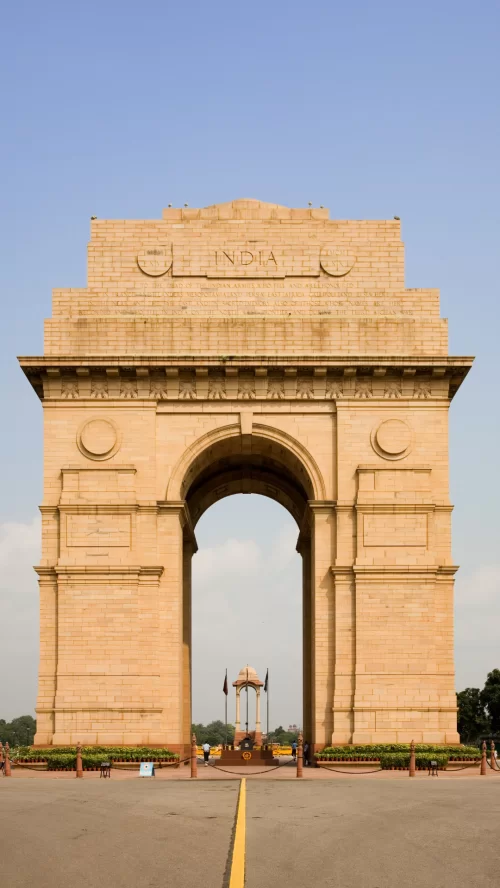
India Gate is a monumental war memorial located in the heart of New Delhi. Originally known as the All India War Memorial, it commemorates soldiers of the Indian Army who died during the First World War and the Third Anglo-Afghan War.
The monument is one of the most prominent landmarks of the national capital and forms an important part of the ceremonial landscape of New Delhi.
India Gate was designed by British architect Sir Edwin Lutyens, who played a major role in planning New Delhi during the British colonial period.
The foundation stone was laid in 1921, and the memorial was completed in 1931.
India Gate was constructed to honour soldiers of the Indian Army who died while serving during the First World War and related military campaigns, including the Third Anglo-Afghan War.
The memorial reflects the sacrifices of Indian soldiers who served in different parts of the world during the early twentieth century.
India Gate is approximately 42 metres tall and built mainly from sandstone.
Its monumental arch design reflects European commemorative architectural traditions, adapted to the formal layout of New Delhi.
The structure features a large central opening, prominent inscriptions and carefully proportioned architectural elements.
The memorial contains the names of more than 13,000 soldiers and officers inscribed on its surfaces.
These inscriptions form an important part of the monument's commemorative purpose.
Amar Jawan Jyoti was an eternal flame established beneath India Gate in 1972 to honour Indian soldiers who died during the 1971 war.
In January 2022, the flame was merged with the eternal flame at the National War Memorial nearby.
Visitors should therefore not expect to see the original Amar Jawan Jyoti flame burning beneath India Gate today.
The National War Memorial, inaugurated in 2019, is located close to India Gate and commemorates Indian armed forces personnel who died in service after independence.
Although the two memorials are closely connected geographically, they represent different periods and commemorative purposes.
India Gate is famous for its historical importance, imposing architecture and central location in New Delhi.
It is also associated with national ceremonies, public gatherings, photography and visits to the surrounding Kartavya Path precinct.
Historical significance: India Gate is both an architectural landmark and a memorial to military sacrifice. Visitors can gain a broader understanding of India's military history by exploring India Gate together with the nearby National War Memorial.
India Gate is a public war memorial rather than a conventional ticketed monument. The main landmark can generally be viewed throughout the day and night, although access to specific surrounding areas may be restricted for security, maintenance or official ceremonies.
India Gate is generally accessible 24 hours a day, seven days a week. There is no routine daily closing time for viewing the main memorial from permitted public areas.
However, individual lawns, pathways, parking areas and sections of Kartavya Path may operate under separate access arrangements. Some areas may not be accessible after dark.
Yes. India Gate does not have a regular Monday closing day.
Visitors can generally see the monument throughout the week, subject to temporary restrictions.
Entry to India Gate is free for Indian tourists. No standard sightseeing ticket is required to view the memorial from the designated public areas.
Foreign tourists can also visit India Gate without paying an entry fee. There is no separate foreign visitor ticket for the main monument.
Yes. Children can visit India Gate free of charge.
Parents should supervise young children because the surrounding area includes busy roads, large crowds and extensive walking spaces.
India Gate can generally be viewed after sunset and is especially popular when the monument is illuminated.
Visitors should remain within designated public areas and follow any instructions from security personnel.
Kartavya Path hosts India's Republic Day parade on 26 January. Security arrangements, rehearsals and preparations can restrict access to India Gate and nearby roads before and during the celebrations.
Visitors travelling in January should confirm the announced restrictions before planning their visit.
Temporary access restrictions may occur during national ceremonies, official visits, public events or maintenance activities.
Even though India Gate normally has no fixed closing day, tourists should not assume unrestricted access during major events.
Yes. Entry to the nearby National War Memorial is free, but its opening hours differ from the general public access arrangements at India Gate.
Visitor recommendation: India Gate itself is free to visit and generally accessible throughout the day and night. If you also want to explore the National War Memorial, plan according to its separate opening and last-admission times.
India Gate can be visited throughout the year, but the experience changes considerably with the time of day and season. Early mornings are usually quieter, while evenings attract visitors interested in the illuminated monument and the atmosphere around Kartavya Path.
Early morning is suitable for visitors who prefer a quieter atmosphere, walking and photography.
Temperatures are generally lower than in the afternoon, particularly during summer.
However, winter mornings may be affected by dense fog, cold weather and poor air quality.
Afternoon visits can be comfortable during cooler months, especially when the weather is clear.
During April, May and June, strong sunlight and extreme heat can make prolonged outdoor visits uncomfortable.
Tourists visiting in summer should avoid unnecessary exposure during the hottest hours.
Evening is one of the most popular times to visit India Gate. The monument is illuminated after sunset, creating an attractive setting for sightseeing and photography.
The surrounding pedestrian areas may be busy, particularly on weekends and public holidays.
Visitors should allow extra time for traffic, parking and crowd movement.
India Gate remains a prominent landmark after dark. Its illuminated arch can be viewed from permitted public spaces.
Visitors should avoid isolated areas, respect security barriers and arrange reliable return transport.
Summer temperatures in Delhi can become extremely high, especially during May and June.
Early morning or evening visits are generally preferable. Even after sunset, temperatures may remain warm during heatwaves.
Carry drinking water, wear breathable clothing and avoid strenuous outdoor activity during extreme heat.
Delhi's monsoon season generally occurs between July and September.
Rainfall may create pleasant changes in temperature, but heavy showers, thunderstorms and waterlogging can disrupt sightseeing.
Visitors should carry suitable rain protection and avoid open areas during lightning.
Winter afternoons can be comfortable for walking around India Gate and Kartavya Path.
However, December and January may bring cold mornings, fog and serious air-pollution episodes.
Visitors should monitor current air-quality conditions and reduce prolonged outdoor exposure when pollution is unhealthy.
February, March and parts of October are often comfortable for sightseeing because temperatures are generally milder than peak summer.
However, air pollution can be significant in October and November, while March temperatures gradually increase.
The most suitable date depends on actual weather and air-quality conditions rather than the calendar alone.
Early morning and the period around sunset are often suitable for photographing India Gate.
Morning light can provide clear architectural details, while evening illumination creates a different atmosphere.
Fog, haze, pollution and security arrangements may affect visibility and available viewpoints.
Families may prefer early morning or early evening visits when temperatures are comfortable and children are less likely to become tired.
During winter, late morning or afternoon may be preferable to cold and foggy early mornings.
Weekday mornings are generally quieter than weekend evenings.
Public holidays, school holidays and major national events can attract larger crowds or lead to access restrictions.
Timing recommendation: For photography and a quieter visit, choose a suitable weekday morning. For the illuminated monument, visit after sunset. During winter, check air quality and fog before spending extended periods outdoors.
India Gate is part of a larger ceremonial and memorial precinct in Central Delhi. Visitors can explore the National War Memorial, landscaped pathways, ceremonial avenues and nearby architectural landmarks during the same outing.
The National War Memorial is located close to India Gate and commemorates Indian armed forces personnel who lost their lives in service after independence.
Inaugurated in 2019, the memorial provides a dedicated space for remembrance and reflection.
Visitors should allow approximately 45 minutes to one hour to explore its main features.
Amar Chakra is the central ceremonial area of the National War Memorial.
It contains the memorial's eternal flame and represents the enduring remembrance of fallen service personnel.
Visitors should maintain respectful behaviour and follow the designated pathways.
Veerta Chakra features bronze murals illustrating significant military operations and acts of courage.
The area provides historical context for the service and sacrifices of India's armed forces.
Tyag Chakra contains walls bearing the names of fallen service personnel.
The arrangement allows visitors to reflect on the individuals commemorated at the memorial.
Touching or defacing the memorial walls is prohibited.
Rakshak Chakra is formed by rows of trees surrounding the memorial precinct.
Its design symbolises the protection provided by the armed forces.
Param Yodha Sthal honours recipients of the Param Vir Chakra, India's highest military decoration for gallantry.
The area features statues and information about decorated military personnel.
The National War Memorial hosts ceremonial activities, including the evening Retreat Drill, subject to operational arrangements.
Visitors interested in the ceremony should confirm the current schedule because timings can vary with sunset and official events.
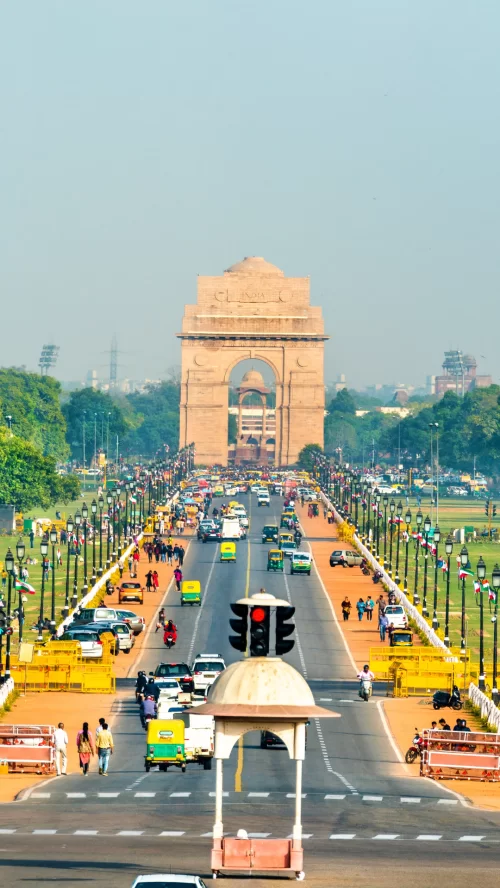
Kartavya Path, formerly known as Rajpath, is the ceremonial avenue extending between the Rashtrapati Bhavan precinct and India Gate.
It is one of New Delhi's most important planned urban spaces and is closely associated with the Republic Day parade.
The avenue is known for its landscaped surroundings, pedestrian pathways, water channels and formal views towards major government buildings.
Visitors can explore designated pedestrian areas along Kartavya Path and enjoy views of the surrounding ceremonial landscape.
The entire avenue is lengthy, so families and senior citizens may prefer shorter sections rather than walking the full distance.
Some lawns and pathways may be temporarily restricted.
Rashtrapati Bhavan is located towards the western end of Kartavya Path.
Visitors can appreciate the wider architectural setting from permitted public viewpoints.
Entry into Rashtrapati Bhavan itself is controlled and requires separate arrangements where public tours are available.
The historic North Block and South Block buildings form part of New Delhi's central administrative architecture.
They can be viewed from permitted public areas around the ceremonial precinct, subject to security restrictions.
Public use of lawns and landscaped spaces depends on current rules and designated access areas.
Visitors should not assume that sitting, picnicking or eating is allowed everywhere.
Picnicking and carrying eatables are specifically prohibited inside the National War Memorial.
Visitor recommendation: Combine India Gate with the National War Memorial and a short walk along Kartavya Path. This provides a balanced experience covering military history, national remembrance and the architecture of New Delhi.
India Gate is centrally located and surrounded by several important museums, historical monuments, gardens and cultural attractions. Tourists can combine it with nearby places to create a half-day or full-day sightseeing itinerary.
The National Gallery of Modern Art is one of the most convenient cultural attractions to combine with India Gate.
Located near Jaipur House, the gallery houses significant collections of modern and contemporary Indian art.
Visitors interested in painting, sculpture and artistic history should allow approximately one to two hours, depending on the exhibitions available.
Check current opening days, exhibition arrangements and admission charges before visiting.
The National War Memorial is situated immediately within the wider India Gate precinct.
It is an important destination for visitors interested in India's military history and national commemorative traditions.
Allow approximately 45 minutes to one hour for a respectful visit.
Purana Qila is a historic fort complex located a short road journey from India Gate.
It is associated with the development of Delhi during the sixteenth century and contains gateways, architectural remains and other historic features.
It is suitable for visitors interested in medieval history and archaeology.
The National Science Centre is an educational museum located near Pragati Maidan.
It features interactive science exhibits and learning experiences, making it a useful addition for families with children.
It is particularly convenient during hot summer afternoons when indoor activities are preferable.
The National Crafts Museum near Pragati Maidan showcases traditional Indian crafts, textiles and cultural heritage.
Visitors interested in handicrafts, design and regional artistic traditions may enjoy combining it with India Gate.
Confirm current gallery access and opening arrangements before travelling.
The National Museum has historically been an important cultural institution on Janpath, known for collections representing different periods of Indian history.
However, museum operations and access arrangements may change because of redevelopment and collection-related projects.
Visitors should confirm whether the relevant galleries are currently open before including the museum in their itinerary.
Jantar Mantar is an eighteenth-century astronomical observatory located near Connaught Place.
It was constructed during the reign of Maharaja Sawai Jai Singh II and contains large instruments designed for astronomical observations.
It is suitable for travellers interested in science, history and architecture.
Gurudwara Bangla Sahib is an important Sikh religious landmark near Connaught Place.
The complex is known for its sacred sarovar and community kitchen.
Visitors should cover their heads, remove footwear where required and follow the gurudwara's customs.
Connaught Place is a major shopping, dining and commercial area in Central Delhi.
It offers restaurants, cafés, shops and colonial-era architecture.
Tourists can visit Connaught Place after sightseeing at India Gate, especially when looking for dining options.
Lodhi Garden is a landscaped public garden containing historical tombs and architectural structures associated with the Sayyid and Lodi periods.
It is popular for walking, photography and relaxed sightseeing.
The garden is best visited during comfortable weather and acceptable air-quality conditions.
Humayun's Tomb is a UNESCO World Heritage Site and one of Delhi's most important Mughal monuments.
It is located a short road journey from India Gate and can be included in a longer heritage itinerary.
Visitors should allow approximately one to two hours for the main tomb and surrounding garden complex.
Nearby sightseeing recommendation: For a short visit, combine India Gate with the National War Memorial and the National Gallery of Modern Art. For a full-day heritage itinerary, add Purana Qila or Humayun's Tomb, allowing enough time for travel and sightseeing.
India Gate offers more than a quick monument photograph. Visitors can explore the surrounding ceremonial landscape, learn about military history, enjoy walking and spend time with family. Activities should be planned according to the weather, crowd levels and current access rules.
India Gate is one of Delhi's most photographed landmarks because of its impressive arch, sandstone architecture and prominent location.
Early morning and evening are popular for photography.
Visitors should remain within permitted areas and avoid blocking pathways or entering restricted zones.
The monument is illuminated after sunset, offering a different appearance from daytime sightseeing.
Evening visits can be particularly enjoyable when temperatures are comfortable.
However, visitors should expect larger crowds on weekends and holidays.
The pedestrian areas around Kartavya Path provide opportunities for walking and appreciating New Delhi's ceremonial architecture.
Visitors can enjoy views of landscaped areas, water channels and surrounding landmarks from designated public spaces.
Long walks should be avoided during extreme heat or unhealthy air-quality conditions.
Visiting the National War Memorial is one of the most meaningful activities near India Gate.
The memorial introduces visitors to the service and sacrifices of Indian armed forces personnel through its commemorative spaces, inscriptions and sculptures.
Maintain a respectful atmosphere and follow all visitor guidelines.
India Gate and the National War Memorial together provide an opportunity to understand different periods of India's military history.
Visitors can observe the names, inscriptions and architectural symbolism associated with the memorials.
Families may use the visit to introduce children to historical events and the importance of remembrance.
India Gate is suitable for a short family outing because the main monument has no entry fee and is surrounded by public walking areas.
Parents should supervise children closely, particularly near roads, water features and crowded spaces.
Choose comfortable weather and avoid overloading the outing with excessive walking.
Children may enjoy seeing the large arch, exploring permitted walking areas and learning about the monument's historical significance.
Families can combine India Gate with the National Science Centre or another suitable nearby attraction.
Carry water and weather-appropriate essentials.
Couples can enjoy a relaxed walk around the public areas of India Gate and Kartavya Path.
Evening illumination and suitable weather can make the visit particularly attractive for photography.
Visitors should respect public-space rules and avoid restricted or isolated areas.
Senior citizens can enjoy viewing India Gate without necessarily walking the entire Kartavya Path precinct.
Using a convenient drop-off point and limiting walking distances may improve comfort.
Visitors with mobility concerns should check accessible pathways and transport arrangements in advance.
Public access and permitted activities vary across the landscaped areas surrounding India Gate.
Visitors should follow posted instructions about sitting, eating and use of lawns.
Picnicking is not permitted inside the National War Memorial, which is a solemn commemorative site.
Cycling may be possible on designated public routes in the wider Central Delhi area, subject to traffic rules and temporary restrictions.
Visitors should not assume that bicycles are allowed on every pedestrian path or within memorial grounds.
India Gate is located within a sensitive ceremonial and security precinct.
Drone flying should not be attempted without all required aviation and security authorisations.
Visitors should follow the applicable restrictions on aerial photography and unmanned aircraft.
Food and refreshment options in the surrounding area depend on current vending permissions and designated commercial locations.
Visitors should not rely on finding food stalls directly beside the monument.
For a wider choice of restaurants, nearby Central Delhi neighbourhoods such as Connaught Place and Khan Market are useful alternatives.
Activity recommendation: Combine photography and a short walk at India Gate with a respectful visit to the National War Memorial. For families, choose comfortable weather and consider an additional indoor museum if more time is available.
India Gate is centrally located in New Delhi and can be reached by metro, taxi, auto-rickshaw, bus or private vehicle. The best transport option depends on the visitor's starting point, walking preferences and traffic conditions.
Khan Market Metro Station on the Violet Line is one of the closest practical metro options for reaching India Gate, with an approximate walking distance of 1–1.5 kilometres depending on the chosen entrance and route.
Visitors can walk or use suitable local transport for the final stretch.
Walking distances vary because the India Gate and Kartavya Path precinct covers a large area.
Connaught Place is located a short road journey from India Gate.
Visitors can take a taxi or auto-rickshaw, or use metro connections through Rajiv Chowk and Mandi House or Central Secretariat.
Allow additional time during peak traffic hours.
New Delhi Railway Station is approximately 4–6 kilometres from India Gate by road, depending on the route.
Visitors can use a taxi or auto-rickshaw, or travel by metro with a suitable interchange.
Those carrying heavy luggage may find a direct taxi more convenient.
Visitors arriving at Old Delhi Railway Station can use the metro or road transport to reach India Gate.
A practical metro option involves travelling from Chandni Chowk on the Yellow Line to Central Secretariat and then completing the journey on foot or by local transport.
Indira Gandhi International Airport is approximately 18–22 kilometres from India Gate by road, depending on the terminal and route.
Visitors can use a prepaid taxi, app-based cab or a suitable combination of Airport Express and other metro services.
Journey times vary considerably with traffic.
Kashmere Gate is connected to the Violet Line.
Visitors can travel towards Raja Nahar Singh and get off at Khan Market or another suitable station before completing the final journey.
Visitors travelling from Noida can use the Blue Line towards Central Delhi.
They may change at Mandi House to the Violet Line for Khan Market or use a convenient road transfer from another suitable station.
Direct taxi travel is also possible, but traffic conditions can affect the journey.
India Gate is connected to major roads in Central Delhi, including the wider Kartavya Path and C-Hexagon road network.
However, traffic restrictions and diversions can occur during national ceremonies, official events and periods of high visitor demand.
Designated parking facilities are available in the wider Kartavya Path area, subject to current traffic and site-management arrangements.
Visitors should follow official parking signs and use authorised facilities rather than stopping on restricted roads.
Parking availability, charges and walking distances may change during events.
Yes. Auto-rickshaws are available in many parts of Central Delhi.
However, drop-off points may be restricted near the memorial precinct.
Confirm the fare and permitted drop-off location before travelling.
Delhi's public bus network serves the wider Central Delhi area, including stops around Baroda House and nearby roads.
Visitors should check the current route and nearest permitted stop for their starting location.
Families with young children and senior citizens may prefer a taxi or private vehicle to reduce walking distances.
However, even with a vehicle, some walking may be required from the permitted drop-off point to India Gate.
Transport recommendation: Khan Market Metro Station on the Violet Line is a convenient option for India Gate, while Central Secretariat is useful for exploring Kartavya Path. Visitors travelling with children or senior citizens may prefer a direct taxi to an authorised drop-off point.
India Gate is a relatively straightforward attraction to visit, but planning ahead can improve the experience. Visitors should consider the time needed for sightseeing, the separate National War Memorial schedule, weather conditions, available facilities and security restrictions.
Most tourists can view India Gate, take photographs and enjoy a short walk in approximately 30–60 minutes.
Visitors combining India Gate with the National War Memorial should allow approximately 1.5–2 hours.
Exploring a longer section of Kartavya Path or adding nearby museums may require half a day or more.
Allow additional time for security screening, crowds and movement between the memorial areas.
The wider Kartavya Path precinct has pedestrian pathways, landscaped spaces and public amenities.
However, the availability and operating condition of toilets, drinking water points, seating and other facilities can vary by location and event arrangements.
Visitors should follow signs to designated public facilities rather than assuming amenities are available directly beside the monument.
Public toilet facilities are available in the wider Kartavya Path area.
The distance to the nearest facility depends on the visitor's exact location and which areas are accessible.
Visitors should carry an appropriate amount of drinking water, particularly during summer.
Water availability may differ across the public precinct, and food or drink restrictions apply inside the National War Memorial.
Food vending around India Gate is regulated, and visitors should not assume that refreshments will be available immediately beside the memorial.
For a wider selection of restaurants and cafés, consider nearby areas such as Khan Market or Connaught Place.
Parts of the wider public precinct have paved pedestrian routes, but accessibility can vary according to the entrance, distance and temporary barriers.
Visitors using wheelchairs or mobility aids should check current access arrangements and plan the shortest practical route.
Solo travellers should remain in well-used public areas, protect personal belongings and use reliable transport.
During late evening visits, avoid isolated routes and confirm return transport arrangements.
Ordinary personal photography is generally permitted from public areas around India Gate.
However, professional shoots, tripods, drones and specialised equipment may be restricted, particularly because the monument is located within a sensitive ceremonial precinct.
Follow instructions from security personnel and avoid photographing restricted installations.
The National War Memorial has stricter visitor rules than the surrounding public areas.
Comfortable footwear is recommended because visitors may walk considerable distances around the precinct.
During summer, wear lightweight clothing and use sun protection.
During winter, carry warm layers for cold mornings and evenings.
Delhi's summer heat can make prolonged outdoor visits uncomfortable and potentially unsafe during heatwaves.
During winter, fog and poor air quality may affect visibility and health.
Visitors should check current weather forecasts, air-quality conditions and public advisories before planning extended outdoor activities.
India Gate is one of Delhi's most accessible and historically important landmarks. Entry to the main monument is free, and it can generally be viewed throughout the day and night, subject to security restrictions.
For a short sightseeing stop, allow 30–60 minutes. For a more meaningful visit, combine India Gate with the National War Memorial and a walk along Kartavya Path, allowing approximately two hours.
Early morning is suitable for a quieter visit, while evening offers attractive illumination. Families, couples and first-time visitors should plan around seasonal weather, crowd levels and current access arrangements.
Final recommendation: Visit India Gate and the National War Memorial together to understand both the monument's historical significance and its connection to modern India's military remembrance. Add the National Gallery of Modern Art or another nearby attraction if you have additional sightseeing time.


Get customized Delhi tour planning designed around traffic flow, seasonal weather comfort, heritage site exploration time, and realistic city pacing. Whether you are visiting for historical monuments, cultural experiences, food walks, shopping districts,
⚡ Quick Response | 💰 Free consultation | 🕒 24×7 expert support

