How to Apply for an Inner Line Permit (ILP) for Arunachal Pradesh
Arunachal Pradesh requires an Inner Line Permit for most Indian tourists visiting the state, and understanding the application process helps ensure a smooth journey.
+91 9910402252
admin@chalbanjare.com
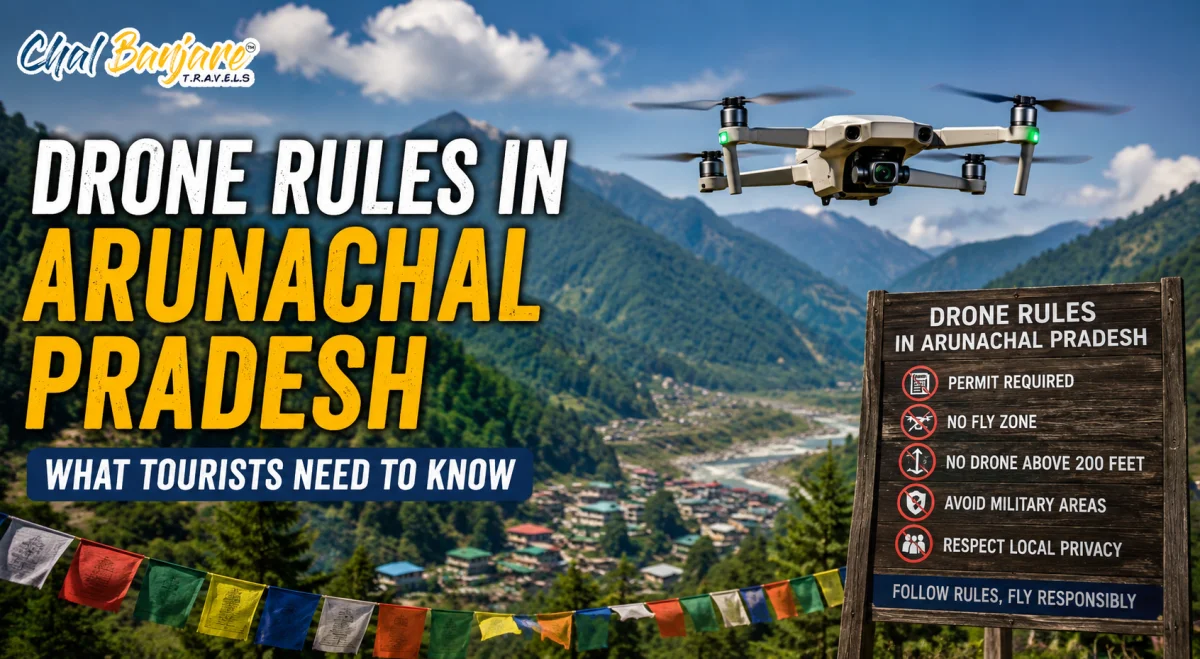
Arunachal Pradesh offers some of India's most spectacular mountain scenery, making it an attractive destination for aerial photography. Snow-covered Himalayan peaks, winding mountain roads, high-altitude lakes, dense forests, waterfalls, monasteries, and remote valleys create dramatic landscapes that many photographers wish to capture using drones. Aerial perspectives can showcase the scale and beauty of these natural environments in ways that are difficult to achieve from ground level.
While drone photography has become increasingly popular among travel enthusiasts, visitors should remember that Arunachal Pradesh contains several environmentally sensitive and strategically important regions. The state's unique geography means that not every scenic location is automatically suitable for drone operations. Responsible travellers should always prioritise safety, environmental protection, and legal compliance before planning any aerial photography.
Understanding where and how drones may be used helps visitors enjoy Himalayan photography while respecting the region's natural, cultural, and administrative sensitivities.
Drone photography can enhance travel experiences when visitors operate responsibly and fully understand the regulations that apply across Arunachal Pradesh.
Arunachal Pradesh shares an international border and contains several strategically sensitive areas where aerial activities receive greater attention than in many other tourist destinations. Drone regulations help protect national security, public safety, wildlife habitats, and sensitive infrastructure while ensuring that tourism activities do not interfere with official operations or restricted locations.
Many visitors assume that remote mountain scenery automatically permits unrestricted drone use. However, regulations may differ depending on the location, surrounding infrastructure, and local administrative requirements. Understanding these restrictions before travelling helps avoid inconvenience while promoting safe and responsible tourism throughout the state.
Awareness of drone regulations allows visitors to enjoy photography while respecting the strategic and environmental importance of Arunachal Pradesh.
Drone regulations exist to balance tourism with safety, conservation, and national security across Arunachal Pradesh's unique Himalayan landscapes.
Travellers carrying drones into Arunachal Pradesh should understand that owning a drone also brings important responsibilities. Visitors are expected to remain informed about applicable aviation regulations, respect local instructions, and ensure that flights are conducted only where permitted. Responsible drone use helps protect both visitors and the surrounding environment.
Tourists should avoid assuming that permission granted in one location automatically applies elsewhere. Before operating a drone, it is advisable to verify local conditions, understand airspace restrictions, and respect requests made by local authorities or property managers. Responsible travellers also avoid disturbing wildlife, local communities, and religious sites while capturing aerial images.
Responsible drone operation reflects good travel etiquette and contributes to preserving Arunachal Pradesh as a safe and enjoyable destination for everyone.
Understanding personal responsibility is an essential part of carrying drone equipment while exploring Arunachal Pradesh's remarkable mountain landscapes.
Drone operations in India are governed by aviation regulations that establish requirements for registration, operational categories, and permitted flight areas. Depending on the drone category and intended use, operators may need to comply with applicable regulatory requirements before flying. Travellers should familiarise themselves with these rules well before arriving at their destination to avoid unnecessary complications during their trip.
Recreational drone users should understand that aviation regulations apply even while travelling for tourism. Responsible planning includes verifying current operational requirements, checking permitted airspace, and ensuring that drone equipment complies with applicable Indian regulations before attempting any flight.
Understanding the general framework of Indian drone regulations forms the first step towards safe and responsible drone photography while travelling.
Knowledge of national drone regulations helps visitors prepare properly before carrying drone equipment into Arunachal Pradesh.
Although drone regulations apply throughout India, Arunachal Pradesh requires additional caution because many areas are located close to international borders or other strategically important locations. Some destinations that appear suitable for aerial photography may fall within areas where additional restrictions or permissions apply. Visitors should therefore avoid assuming that all scenic locations are automatically available for drone flights.
The state's mountainous geography also includes military installations, administrative facilities, protected forests, and environmentally sensitive regions that require greater awareness from travellers. Respecting these considerations helps ensure both personal compliance and the protection of important public interests while exploring the region.
Additional caution allows visitors to enjoy Arunachal Pradesh responsibly while recognising the unique significance of its border and conservation areas.
Awareness of Arunachal Pradesh's unique geographical and administrative considerations helps travellers avoid unintended violations during their journey.
Before operating a drone anywhere in Arunachal Pradesh, travellers should verify whether the location permits drone activity and whether any approvals are required. Rules may vary depending on the destination, nearby infrastructure, environmental protection measures, or temporary administrative restrictions. Checking applicable permissions before every planned flight is always the safest approach.
Visitors should also remain prepared to cancel planned drone operations if weather conditions, local instructions, wildlife activity, or public safety considerations make flying inappropriate. Responsible drone photography prioritises compliance and safety above capturing aerial footage. Flexibility allows travellers to enjoy the destination while respecting local regulations.
Verifying permissions before each flight helps create a safe, lawful, and enjoyable travel experience throughout Arunachal Pradesh.
Checking permissions before every flight is one of the most important responsibilities for tourists travelling with drones in Arunachal Pradesh.
Tourists travelling with drones should understand that operating an unmanned aircraft in India is regulated under national aviation rules. Depending on the type, category, weight, and intended purpose of the drone, certain registration or operational requirements may apply before it can be flown legally. Travellers should familiarise themselves with the applicable rules well before arriving in Arunachal Pradesh to avoid delays or compliance issues during their journey.
It is equally important to understand that drone ownership alone does not automatically permit unrestricted flying. Operators remain responsible for ensuring that every flight complies with applicable aviation requirements as well as any destination-specific restrictions. Keeping informed about current regulations allows visitors to enjoy aerial photography while maintaining safe and lawful operations throughout their trip.
Preparing in advance helps travellers avoid unnecessary inconvenience and supports responsible drone usage across Arunachal Pradesh's diverse landscapes.
Understanding applicable aviation requirements is the first step towards safe and responsible drone operations while travelling in Arunachal Pradesh.
Before planning any drone flight, travellers should check the current airspace classification and operational guidance available through the DigitalSky platform and other applicable official aviation resources. Airspace permissions and operational limitations may vary depending on the location, surrounding infrastructure, and regulatory updates. Reviewing the latest information before every planned flight helps minimise compliance issues.
Even if a destination appears open and remote, nearby restricted zones, airports, defence-related infrastructure, or temporary restrictions may influence whether drone operations are permitted. Responsible operators verify the applicable airspace status instead of relying solely on previous experiences or assumptions. Regularly checking official guidance promotes both aviation safety and responsible tourism.
Using official airspace information before every flight helps ensure safer drone operations throughout Arunachal Pradesh.
Checking official airspace guidance before each flight remains one of the most important safety practices for drone operators visiting Arunachal Pradesh.
Drone flights should only be conducted in locations where operations are permitted and where environmental and safety conditions remain suitable. Travellers should avoid flying during poor visibility, strong winds, heavy rainfall, or crowded situations that may increase operational risks. Safe flying conditions benefit both the drone operator and the surrounding environment.
Visitors should also maintain visual contact with their drone, operate within safe limits, avoid flying above people or moving vehicles, and discontinue operations whenever local authorities advise against flying. Responsible operators recognise that changing weather, public events, wildlife activity, or administrative instructions may require them to postpone planned aerial photography sessions.
Choosing appropriate locations and suitable operating conditions helps ensure safe, enjoyable, and legally compliant drone experiences throughout Arunachal Pradesh.
Responsible drone operations depend on selecting appropriate locations, suitable weather, and full compliance with local regulations.
Arunachal Pradesh contains several strategically important regions because of its international border and sensitive infrastructure. As a result, drone operations require significantly greater caution than in many other tourist destinations. Certain locations may be subject to additional operational restrictions or may not permit drone flights at all. Visitors should therefore avoid assuming that scenic mountain landscapes automatically allow aerial photography.
Understanding the sensitivity of these regions helps travellers appreciate why aviation authorities and local administrations maintain stricter controls over drone activities. These measures support national security, public safety, and responsible tourism while protecting areas of strategic importance. Responsible visitors respect these restrictions without attempting to bypass established regulations.
Awareness of sensitive locations helps ensure safe travel while preventing accidental violations during drone photography.
Understanding location-specific sensitivity is essential for every tourist carrying drone equipment into Arunachal Pradesh.
Visitors should never attempt to operate drones near military establishments, security checkpoints, border infrastructure, or any location where drone activity is restricted or prohibited. These areas require heightened caution because aerial operations may interfere with security measures or violate applicable regulations. Maintaining a safe distance from such locations is both a legal and responsible travel practice.
Even when travelling through scenic mountain roads, travellers should remain alert to security signage, restricted zones, and instructions provided by authorised personnel. If uncertainty exists regarding whether drone operations are permitted, the safest approach is to avoid flying until official clarification is obtained. Responsible behaviour protects both travellers and sensitive public infrastructure.
Respecting restrictions around defence-related areas contributes to safe tourism and responsible drone operation across Arunachal Pradesh.
Maintaining appropriate distance from sensitive locations remains one of the most important responsibilities for drone operators travelling in Arunachal Pradesh.
Local administrative authorities, security personnel, and authorised officials may issue location-specific guidance regarding drone operations based on current conditions. Travellers should always cooperate fully with such instructions and immediately discontinue drone activities whenever requested. Temporary restrictions may arise because of security considerations, weather conditions, public events, or other operational requirements.
Respectful communication with local authorities and tourism officials also helps visitors better understand applicable rules before planning aerial photography. Following official guidance demonstrates responsible travel behaviour while reducing the possibility of misunderstandings or unnecessary inconvenience during the journey. Flexibility and cooperation remain essential when travelling through sensitive Himalayan regions.
Following instructions from authorised personnel ensures that drone operations remain safe, respectful, and fully compliant throughout Arunachal Pradesh.
Respecting guidance from local authorities helps travellers enjoy Arunachal Pradesh responsibly while maintaining compliance with applicable regulations.
Tawang is one of Arunachal Pradesh's most visited destinations, attracting travellers with its Himalayan landscapes, monasteries, alpine lakes, and high mountain passes. While these dramatic surroundings are highly appealing for aerial photography, visitors should remember that the region also lies within a strategically sensitive part of the state. Drone operations therefore require significantly greater awareness than in many other tourist destinations across India.
Before planning aerial photography, travellers should carefully verify whether drone operations are permitted in the specific area they intend to visit. Local administrative instructions, aviation regulations, weather conditions, and security considerations may influence whether flying is appropriate. Responsible planning helps visitors avoid inconvenience while respecting both public safety and local regulations.
Understanding the unique characteristics of Tawang allows travellers to enjoy photography responsibly while respecting the area's environmental and strategic importance.
Responsible drone use in Tawang begins with careful planning, awareness of regulations, and respect for the region's unique Himalayan environment.
Many high-altitude destinations in western Arunachal Pradesh are located close to international border regions where aviation activities receive additional scrutiny. Because of their geographical significance, some locations may require greater caution or may have restrictions that differ from other tourist areas. Travellers should therefore avoid making assumptions based solely on the scenic appearance of a destination.
Additional permissions or operational limitations may apply depending on the exact location, prevailing administrative instructions, or applicable aviation regulations. Responsible drone operators verify current requirements through appropriate official sources before every planned flight rather than relying on previous experiences or unofficial information.
Understanding the sensitivity of high-altitude border destinations helps visitors plan aerial photography responsibly while avoiding unnecessary compliance issues.
Careful preparation and awareness of local requirements help create a safer and more enjoyable drone photography experience in high-altitude Himalayan regions.
Every drone flight should begin with confirming that the intended location permits aerial operations under current conditions. Regulations, weather, public safety requirements, or temporary restrictions may change over time, making it important to verify local rules immediately before flying. Travellers should remain flexible and be prepared to modify their photography plans whenever necessary.
Responsible drone operators understand that not every destination is suitable for aerial photography, even when conditions appear favourable. Respecting local regulations protects both the traveller and the surrounding environment while helping preserve positive relationships between tourism, local communities, and administrative authorities.
Planning every flight around verified local guidance ensures safer and more responsible drone operations throughout Arunachal Pradesh.
Verifying local rules before each flight allows visitors to enjoy aerial photography responsibly while respecting the unique conditions of Arunachal Pradesh.
Arunachal Pradesh is home to numerous monasteries, traditional villages, and culturally significant heritage sites that attract visitors from across the world. These places are valued not only for their architecture but also for their spiritual, historical, and community importance. Tourists carrying drones should recognise that peaceful cultural environments deserve the same level of respect as protected natural areas.
Even when drone operations appear technically possible, visitors should consider whether flying may disrupt religious ceremonies, meditation, local gatherings, or the overall atmosphere of the site. Responsible travel means balancing photography with respect for local traditions, ensuring that tourism does not interfere with the cultural significance of these important locations.
Respecting local customs enhances the travel experience while helping preserve Arunachal Pradesh's rich cultural heritage for future generations.
Responsible drone use near heritage locations begins with understanding and respecting the cultural values associated with every destination.
Before flying a drone near monasteries, temples, community spaces, or traditional settlements, visitors should seek permission whenever required by local authorities, site management, or community representatives. Permission requirements may differ between locations, and respecting these procedures demonstrates responsible tourism and cultural awareness.
Obtaining permission also helps visitors understand any local guidelines regarding photography, privacy, or restricted areas. If permission is not granted or uncertainty exists, travellers should avoid operating the drone and instead enjoy the destination through ground-based photography. Respectful behaviour strengthens positive relationships between visitors and local communities.
Seeking permission before aerial photography reflects responsible travel and helps preserve trust between tourists and the communities they visit.
Obtaining appropriate permission ensures that aerial photography remains respectful, responsible, and culturally appropriate throughout Arunachal Pradesh.
Many monasteries and cultural sites in Arunachal Pradesh are places of prayer, meditation, learning, and quiet reflection. The sound and movement of drones may interrupt these peaceful activities or affect the experience of other visitors. Responsible travellers should therefore carefully evaluate whether flying a drone is appropriate before preparing for take-off.
If drone operations are permitted, visitors should continue to minimise disturbance by selecting suitable timings, maintaining safe distances, and ending flights immediately if requested by site authorities. Respect for local customs should always take priority over obtaining aerial photographs. This approach allows tourism and cultural preservation to exist together harmoniously.
Protecting the peaceful atmosphere of Arunachal Pradesh's heritage sites helps preserve their spiritual and cultural significance for both local communities and future visitors.
Thoughtful drone use helps visitors appreciate Arunachal Pradesh's cultural heritage while ensuring that peaceful environments remain undisturbed.
Arunachal Pradesh is home to several national parks, wildlife sanctuaries, tiger reserves, and protected forest landscapes that support exceptional biodiversity. These protected areas safeguard rare mammals, birds, reptiles, and plant species while preserving fragile Himalayan ecosystems. Because of their ecological importance, drone operations within or around many protected areas are subject to strict restrictions or may not be permitted without appropriate authorisation.
Visitors planning nature photography should remember that conservation regulations often differ from general tourism guidelines. Before carrying out any aerial photography near protected forests or wildlife habitats, travellers should verify the applicable rules with the relevant authorities. Responsible planning helps prevent disturbance to wildlife while ensuring compliance with conservation regulations throughout Arunachal Pradesh.
Understanding protected area regulations allows visitors to appreciate Arunachal Pradesh's remarkable biodiversity while supporting long-term conservation efforts.
Awareness of protected area regulations helps ensure responsible travel while preserving Arunachal Pradesh's outstanding natural heritage.
Drones can create noise and movement that may disturb wildlife, particularly birds, nesting species, grazing animals, and other sensitive inhabitants of forest ecosystems. Even brief disturbances may alter feeding behaviour, breeding activities, or natural movement patterns. Responsible wildlife photography should therefore prioritise animal welfare above obtaining dramatic aerial footage.
Visitors should never intentionally fly drones close to wildlife, chase animals for photographs, or attempt to provoke movement for better images. Maintaining appropriate distance and respecting natural behaviour helps minimise stress on wildlife while protecting the ecological balance of protected habitats. Ethical photography always places conservation before visual content.
Protecting wildlife during drone photography contributes to the long-term preservation of Arunachal Pradesh's unique Himalayan ecosystems.
Responsible drone operators recognise that protecting wildlife is more important than capturing close aerial photographs of animals.
Conservation guidelines exist to protect Arunachal Pradesh's forests, wetlands, mountains, and wildlife from unnecessary disturbance. Visitors carrying drones should familiarise themselves with local conservation policies before entering protected areas and should fully cooperate with forest officials whenever guidance is provided. Respecting these guidelines supports sustainable tourism and environmental protection.
Travellers should also minimise their overall environmental impact by avoiding littering, remaining on designated routes, respecting quiet natural surroundings, and choosing responsible photography practices. Combining ethical travel with conservation awareness allows visitors to enjoy remarkable Himalayan landscapes while helping preserve them for future generations.
Following conservation guidelines ensures that tourism continues to support rather than negatively affect Arunachal Pradesh's valuable natural ecosystems.
Responsible travel practices help conserve Arunachal Pradesh's forests and wildlife while creating meaningful experiences for nature enthusiasts.
Before travelling with a drone, visitors should understand the applicable registration and operational requirements under Indian aviation regulations. These requirements may vary depending on the drone category, intended purpose, and other regulatory factors. Preparing the necessary documentation before departure helps ensure smoother travel and reduces the possibility of compliance-related difficulties during the trip.
Responsible operators should regularly review official aviation guidance because regulations may be updated over time. Remaining informed allows travellers to prepare appropriately while ensuring that every planned drone flight follows current requirements. Advance preparation is especially important when visiting destinations with additional operational considerations such as Arunachal Pradesh.
Understanding operational requirements before travelling creates a safer and more organised drone photography experience.
Preparing well before departure allows travellers to enjoy drone photography with greater confidence and legal compliance.
Travellers carrying drone equipment should keep all relevant travel and operational documents readily available throughout their journey. Depending on applicable regulations and travel circumstances, visitors may need to present identification, travel permits, drone-related documentation, or other records if requested by authorised officials. Organised documentation helps avoid unnecessary delays during travel.
Keeping both printed and digital copies of important documents provides additional convenience, particularly when travelling through remote Himalayan regions where internet connectivity may occasionally be limited. Proper organisation also allows visitors to respond quickly if verification becomes necessary during their journey.
Well-organised documentation contributes to a smoother and more efficient travel experience while carrying drone equipment across Arunachal Pradesh.
Keeping essential documents accessible helps travellers respond efficiently whenever official verification is required during their journey.
If approvals or permissions are required for a planned drone operation, travellers should ensure that all relevant documentation remains available throughout the visit. Maintaining organised records simplifies communication with local authorities and demonstrates responsible preparation when questions arise regarding planned aerial photography.
Visitors should also ensure that personal identification documents remain easily accessible while travelling between destinations. Proper documentation, combined with respectful cooperation and awareness of applicable regulations, helps create a positive travel experience while reducing the likelihood of misunderstandings during inspections or routine checks.
Prepared travellers can focus more on enjoying Arunachal Pradesh's spectacular landscapes while remaining ready to comply with any documentation requirements that may apply.
Organised documentation supports safe, lawful, and hassle-free drone travel throughout Arunachal Pradesh's diverse mountain destinations.
Weather conditions play a significant role in safe drone operations across Arunachal Pradesh. Mountain environments can experience sudden changes in wind speed, visibility, rainfall, fog, and temperature, particularly at higher elevations. Even when the weather appears favourable at the start of the day, conditions may change rapidly, making continuous monitoring essential before and during every flight.
Visitors should choose clear weather with good visibility and light winds whenever drone photography is planned. Flying during storms, dense fog, heavy rainfall, or strong mountain winds increases operational risks and may affect both safety and image quality. Responsible operators understand that postponing a flight is often the safest decision when weather conditions become uncertain.
Selecting favourable weather conditions helps create safer flights while allowing visitors to capture Arunachal Pradesh's spectacular landscapes with greater confidence and stability.
Careful weather planning improves both flight safety and aerial photography while reducing unnecessary risks in Arunachal Pradesh's mountainous terrain.
Responsible drone operators maintain adequate distance from people, buildings, vehicles, wildlife habitats, and environmentally sensitive locations throughout every flight. Safe separation reduces the possibility of accidents while protecting the privacy, comfort, and safety of both local communities and fellow travellers. Maintaining sufficient distance also minimises disturbance to wildlife and natural ecosystems.
Visitors should carefully evaluate their surroundings before take-off and continuously monitor the flight area for changing conditions. Crowded viewpoints, religious gatherings, roadside traffic, or wildlife activity may require postponing or relocating drone operations. Responsible flying demonstrates consideration for everyone sharing the destination.
Maintaining safe separation from people and sensitive environments creates a positive and respectful drone photography experience throughout Arunachal Pradesh.
Safe operating distances help protect visitors, communities, wildlife, and infrastructure while supporting responsible tourism across the state.
Drone photography should always respect the privacy and comfort of local residents as well as fellow travellers. Visitors should avoid recording individuals, homes, community gatherings, or private activities without appropriate consent. Respecting personal privacy helps maintain positive relationships between tourists and the communities that welcome visitors throughout Arunachal Pradesh.
Local customs, community expectations, and destination-specific guidance should also be considered before every flight. If residents or local authorities express concerns regarding drone operations, travellers should respond respectfully and discontinue flying when appropriate. Responsible tourism values community trust as highly as memorable aerial photography.
Respecting privacy and local guidelines strengthens responsible travel while preserving the welcoming atmosphere of Arunachal Pradesh's towns and villages.
Thoughtful drone photography enhances travel experiences while respecting the rights, privacy, and traditions of local communities.
One of the most frequent mistakes made by travellers is launching a drone without first confirming whether the location permits aerial operations. Airspace classifications, administrative restrictions, and operational requirements may vary between destinations, making it essential to verify official guidance before every planned flight. Assuming that previous experience applies everywhere can lead to avoidable compliance issues.
Responsible operators review the latest official information before travelling to each destination rather than relying solely on maps, social media posts, or information shared by other travellers. Taking a few moments to verify current restrictions helps prevent unnecessary inconvenience while supporting safe aviation practices.
Checking airspace information before every flight remains one of the simplest and most effective ways to ensure responsible drone operations.
Regularly checking official airspace information helps visitors avoid mistakes while promoting safe drone photography throughout Arunachal Pradesh.
Many travellers mistakenly believe that beautiful viewpoints, mountain passes, lakes, monasteries, or valleys automatically allow drone photography. In reality, scenic appearance does not determine whether drone operations are permitted. Certain destinations may fall within protected areas, environmentally sensitive zones, or locations where additional operational restrictions apply.
Visitors should therefore avoid making decisions based only on the attractiveness of a landscape. Verifying local regulations before every flight remains essential, regardless of how remote or open a destination appears. Responsible planning helps protect both travellers and the unique environments they visit.
Recognising that scenic beauty does not automatically permit drone use helps visitors avoid common travel mistakes.
Careful planning ensures that aerial photography remains both enjoyable and fully compliant throughout Arunachal Pradesh.
Ignoring guidance provided by authorised officials is another common mistake that can create unnecessary problems during travel. Local authorities may issue instructions because of weather conditions, public safety concerns, temporary restrictions, or other operational requirements. Visitors should always cooperate respectfully and adjust their plans whenever required.
Maintaining a courteous attitude and responding promptly to official requests reflects responsible tourism while helping create positive experiences for both travellers and local communities. Flexibility is especially valuable in mountain regions where changing conditions may require quick decisions regarding drone operations.
Following official instructions demonstrates responsible travel behaviour while supporting safe and lawful drone use across Arunachal Pradesh.
Listening to local authorities helps visitors enjoy Arunachal Pradesh safely while ensuring that drone activities remain respectful and compliant.
Road trips across Arunachal Pradesh often involve long hours of driving through remote mountain regions where photography opportunities appear unexpectedly. Travellers carrying drones should prepare their equipment before departure by packing sufficient batteries, memory cards, charging accessories, propeller guards, cleaning kits, and protective carrying cases. Good preparation helps avoid interruptions during scenic stops while protecting valuable equipment throughout the journey.
Mountain roads may expose equipment to dust, moisture, vibration, and sudden weather changes. A sturdy backpack or hard protective case helps reduce the risk of accidental damage while travelling between destinations. Carrying spare accessories also allows photographers to continue capturing landscapes even if minor equipment issues occur during the trip.
Proper equipment preparation allows travellers to focus on enjoying Arunachal Pradesh's remarkable scenery without worrying about avoidable technical problems.
Well-organised equipment improves both convenience and reliability during long road journeys through Arunachal Pradesh's mountainous terrain.
Many popular destinations in Arunachal Pradesh are located in remote mountain regions where charging facilities may be less convenient than in larger towns. Travellers planning extended road trips should therefore manage battery usage carefully and recharge equipment whenever suitable facilities become available. Good battery planning helps prevent missed photography opportunities during scenic sections of the journey.
Portable charging solutions, organised power management, and careful planning of daily photography sessions contribute to a smoother travel experience. Visitors should avoid relying on the assumption that charging points will always be available at every destination. Preparing for limited infrastructure ensures greater flexibility throughout the trip.
Effective battery management allows travellers to enjoy drone photography confidently while exploring Arunachal Pradesh's remote Himalayan landscapes.
Careful power planning helps visitors continue photographing Arunachal Pradesh's beautiful landscapes throughout extended mountain road trips.
Mountain weather influences every aspect of drone operations in Arunachal Pradesh. Before planning aerial photography during a road trip, travellers should review weather forecasts for each destination and remain prepared for sudden changes in wind, fog, rainfall, or visibility. Weather conditions can vary significantly between valleys and high-altitude passes even within the same day.
Monitoring forecasts throughout the journey allows visitors to identify suitable photography windows while avoiding unnecessary risks associated with unstable weather. Remaining flexible and adjusting the travel schedule when conditions become unsuitable helps protect both drone equipment and surrounding environments. Responsible operators always prioritise safety over completing a planned flight.
Regular weather checks improve flight safety while allowing photographers to capture Arunachal Pradesh's spectacular Himalayan scenery under favourable conditions.
Checking weather conditions before every flight creates safer drone operations and more enjoyable photography experiences across Arunachal Pradesh.
Successful drone travel in Arunachal Pradesh begins long before arriving at the destination. Visitors should review applicable aviation regulations, understand any operational requirements, verify current airspace guidance, and familiarise themselves with destination-specific restrictions that may apply throughout the state. Preparing in advance reduces uncertainty and helps travellers plan their photography responsibly.
Because Arunachal Pradesh includes environmentally sensitive landscapes, protected forests, cultural heritage sites, and strategically important border regions, regulations may differ between destinations. Responsible travellers therefore verify permissions before every planned flight rather than assuming the same rules apply everywhere. Careful preparation contributes to safe, lawful, and enjoyable travel.
Checking permissions before travelling allows visitors to enjoy aerial photography while respecting the unique characteristics of Arunachal Pradesh.
Advance planning forms the foundation of safe and responsible drone photography throughout Arunachal Pradesh's diverse Himalayan landscapes.
Every destination within Arunachal Pradesh offers unique scenery, but each location may also have different operational considerations for drone users. Travellers should adapt their photography plans according to the specific characteristics of each destination, including nearby protected areas, cultural sites, wildlife habitats, weather conditions, and administrative requirements. Flexible planning helps avoid unnecessary inconvenience during the journey.
Rather than focusing solely on obtaining aerial footage, visitors should combine responsible drone use with ground photography, sightseeing, and cultural exploration. This balanced approach ensures that travel remains rewarding even if drone operations are not possible at certain locations because of local restrictions or environmental considerations.
Planning each photography session individually helps visitors enjoy Arunachal Pradesh responsibly while respecting both regulations and local communities.
Destination-specific planning allows travellers to enjoy memorable photography while maintaining full respect for Arunachal Pradesh's unique landscapes and regulations.
Before every journey, visitors should ensure that drone equipment is in good condition, batteries are fully charged, memory cards are available, protective cases are packed, weather forecasts have been reviewed, and all necessary travel documents are organised. It is equally important to confirm the latest operational guidance before planning any drone activity during the trip.
Throughout the journey, travellers should respect local communities, avoid disturbing wildlife, follow official instructions, maintain safe operating practices, and remain prepared to cancel flights whenever regulations or environmental conditions require. Responsible drone use protects both visitors and the remarkable Himalayan environments that make Arunachal Pradesh one of India's most spectacular travel destinations.
Careful preparation, ethical photography, and respect for local regulations ensure that drone enthusiasts can enjoy Arunachal Pradesh responsibly while contributing to safe, sustainable, and environmentally conscious tourism.
Responsible planning and ethical drone operations allow visitors to capture Arunachal Pradesh's extraordinary landscapes while preserving the state's natural, cultural, and strategic heritage.

Get customized Arunachal Pradesh tour planning designed around mountain road distances, permit requirements, seasonal weather windows, and realistic travel pacing. Whether you are visiting for monasteries, high-altitude passes, river valleys, tribal cultu
⚡ Quick Response | 💰 Free consultation | 🕒 24×7 expert support