Homepage Banner

How to Choose the Right Water Activity in Andaman

Andaman offers diverse water activities including scuba diving, snorkeling, kayaking, and boating, allowing travellers to choose experiences based on interests, comfort level, and adventure preferences.

Travel Guide


25 Jun, 2026 By: Pravalika Iyer

Understanding Water Activities in Andaman

Explore different marine activities available across Andaman Islands

The Andaman Islands offer a wide range of water activities because their coastline includes coral reefs, sheltered lagoons, mangrove channels, shallow beaches, deeper diving zones and open-sea stretches. Travellers can choose from scuba diving, snorkeling, sea walking, kayaking, glass-bottom boat rides, jet skiing, parasailing and short speedboat experiences. However, every activity is not available on every island, and the quality of the experience depends heavily on the location, weather, water visibility and operational permissions.
Havelock Island, officially known as Swaraj Dweep, is one of the most popular bases for scuba diving, snorkeling and selected adventure activities. Neil Island, officially Shaheed Dweep, offers calmer surroundings, reef-based snorkeling and beginner-friendly marine experiences. North Bay is known for sea walking, snorkeling and glass-bottom boat rides, while Port Blair offers easier access to short-duration water activities for travellers with limited time. Mangrove kayaking is commonly associated with quieter creeks and coastal areas where guided paddling can be conducted safely.
  • Scuba diving is suitable for travellers who want deeper underwater exploration and guided interaction with coral reefs and marine life.
  • Snorkeling is generally conducted in shallow reef areas and is easier for beginners who are comfortable floating with basic safety support.
  • Sea walking allows travellers to observe fish and coral underwater while wearing a breathing helmet and walking on a designated seabed area.
  • Kayaking is ideal for exploring mangrove channels, calm coastal water and quieter natural surroundings rather than high-speed adventure.
  • Glass-bottom boat rides are useful for children, senior travellers and non-swimmers who want to view coral formations without entering the sea.
  • Jet skiing and parasailing are more suitable for travellers seeking short, high-energy activities rather than detailed marine observation.
  • Activity availability can change depending on sea conditions, government restrictions, tides and the operating status of local vendors.
Travellers should avoid selecting an activity only because it is popular. The right choice depends on whether the priority is marine life, coral viewing, adventure, photography, family comfort or peaceful nature exploration. A well-planned Andaman itinerary usually combines one major underwater activity with one lighter experience instead of repeating similar activities at several locations.

Understand how activities vary by location season and experience level

Water activities in Andaman vary significantly from one island to another. The same activity may feel very different depending on reef depth, visibility, currents, beach access and the number of tourists present. For example, snorkeling at a shallow beach is very different from boat-based snorkeling near a reef patch. Similarly, a shore dive designed for beginners is less demanding than a boat dive conducted at a deeper site for certified divers.
Season also affects the quality and availability of marine activities. Calm weather and clearer water usually create better conditions for diving, snorkeling and glass-bottom viewing. During periods of heavy rain, strong wind or rough sea, boat transfers may be delayed and activities may be suspended. Even during the favourable travel season, conditions can change within a day, so operators may shift activity timings or cancel a session for safety reasons.
  • Havelock Island generally offers a broader choice of professional dive centres, beginner sessions and certified diving options.
  • Neil Island is better suited to travellers who prefer a quieter island atmosphere and less rushed marine experiences.
  • North Bay is convenient for travellers staying in Port Blair and looking for sea walking, snorkeling or glass-bottom boat rides in one excursion.
  • Elephant Beach is popular for snorkeling and adventure activities, but access depends on boat operations and weather conditions.
  • Beginner activities normally include basic instructions, safety equipment and direct supervision from trained staff.
  • Certified divers can access more advanced sites only after showing valid certification and meeting the operator's health and experience requirements.
  • Children, elderly travellers and people with limited mobility should confirm age, health and access restrictions before reaching the activity point.
  • Morning sessions often provide calmer water and better operational certainty, although actual conditions depend on the day.
Experience level should be considered honestly while selecting an activity. A traveller who is nervous in deep water may enjoy snorkeling with a life jacket or a glass-bottom boat more than scuba diving. Someone comfortable underwater may prefer a guided dive. Matching the activity to confidence and physical comfort usually produces a safer and more enjoyable experience than choosing the most adventurous option.

Choose water activities according to comfort adventure and travel goals

The most suitable water activity depends on what the traveller wants to experience. Those interested in detailed underwater exploration should consider scuba diving, while travellers who want an easier introduction to coral reefs can choose snorkeling. Sea walking works well for many non-swimmers who want to enter the underwater environment without learning diving techniques. Kayaking is more suitable for travellers who prefer nature, silence and slow exploration.
Comfort should remain the first priority. Travellers with fear of deep water, breathing difficulty, recent surgery, heart-related concerns, ear problems or severe motion sickness should discuss suitability before booking. Adventure activities should never be selected under pressure from companions or vendors. It is better to choose a lower-intensity activity and enjoy it fully than to attempt something physically or mentally uncomfortable.
  • Choose scuba diving when the main goal is to experience coral reefs, fish and underwater landscapes at closer range.
  • Choose snorkeling when you want a simpler activity with less training and easier entry into shallow water.
  • Choose sea walking when you are comfortable entering the sea but do not want to manage scuba breathing equipment independently.
  • Choose kayaking when your priority is mangroves, coastal scenery, calm paddling and nature-based exploration.
  • Choose a glass-bottom boat when travelling with young children, elderly family members or non-swimmers.
  • Choose jet skiing or parasailing when the priority is speed, excitement and a short adventure experience.
  • Avoid booking multiple physically demanding activities on the same day, especially after long ferry journeys.
  • Keep extra time in the itinerary because weather-related postponements are common in island destinations.
A balanced plan should reflect the traveller's comfort, available time and island route. Families may combine a glass-bottom boat ride with light snorkeling, while couples may prefer scuba diving followed by kayaking. Solo travellers can join organised sessions with reputed operators. The final choice should support the overall holiday experience rather than making the itinerary unnecessarily exhausting.


Choosing Scuba Diving for Underwater Exploration

Explore coral reefs marine life and underwater landscapes

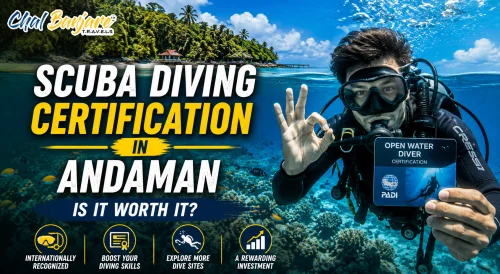
Scuba diving in Andaman allows travellers to move below the surface and observe coral formations, reef fish, sandy seabeds and changing underwater landscapes under direct supervision. The experience is more immersive than snorkeling because divers can remain underwater for a longer period and view marine life from different angles. Beginner sessions are usually conducted in controlled conditions, while experienced and certified divers may access deeper and more varied dive sites.
Havelock Island is one of the main scuba diving centres in Andaman and has several established dive operators. Neil Island also provides diving opportunities in a quieter setting, while selected sites near Port Blair and North Bay may suit travellers with shorter itineraries. The quality of a dive depends on visibility, currents, reef condition, depth and the number of participants entering the site at the same time.
  • Coral gardens can include hard coral structures, soft coral patches and reef surfaces supporting small marine species.
  • Common sightings may include butterflyfish, angelfish, parrotfish, damselfish, wrasse and other tropical reef fish.
  • Sandy seabeds and rocky reef edges create different underwater landscapes within the same diving region.
  • Visibility can change according to rainfall, tide movement, wind and suspended sand in the water.
  • Beginner dives are usually conducted at manageable depths with an instructor maintaining close physical control.
  • Certified divers may explore deeper reefs, sloping seabeds, wall formations and selected wreck or advanced sites where permitted.
  • Marine sightings are natural and cannot be guaranteed, even when the reef conditions are considered favourable.
  • Touching coral, feeding fish or collecting shells should be avoided because these actions can damage the marine ecosystem.
Scuba diving should be approached as an exploration experience rather than a guaranteed wildlife encounter. A good dive combines safe instruction, comfortable breathing, controlled movement and patient observation. Travellers who remain calm and follow the instructor's guidance are more likely to enjoy the reef and notice smaller marine details during the session.

Understand scuba diving requirements for beginners and experienced divers

Beginners do not always need prior certification for a basic introductory scuba session. Most recognised operators offer a supervised programme that includes registration, health screening, equipment fitting, safety instructions, breathing practice and a guided underwater dive. The participant remains with an instructor throughout the session and is not expected to manage the dive independently.
Certified divers must normally present a valid diving certification before joining deeper or advanced dives. Operators may also ask about the date of the last dive, total number of logged dives and previous experience in current or low-visibility conditions. A refresher session may be recommended when a certified diver has not dived for a long period or appears uncomfortable with equipment handling.
  • Participants are generally required to complete a medical declaration before entering the water.
  • People with serious heart, lung, ear, sinus or respiratory conditions should obtain proper medical advice before considering scuba diving.
  • Pregnant travellers are normally not accepted for scuba diving activities.
  • Age limits vary between operators, activity formats and local regulations, so families should confirm eligibility in advance.
  • Basic swimming ability may not always be compulsory for introductory dives, but comfort in water is extremely important.
  • Beginners are taught breathing through the regulator, mask adjustment and simple underwater hand signals before the dive.
  • Certified divers should carry their certification details and inform the dive centre honestly about recent diving experience.
  • Travellers should avoid alcohol before diving and should follow the operator's instructions regarding meals, hydration and rest.
  • Flying immediately after scuba diving should be avoided, and the required surface interval should be discussed with the dive professional.
The main requirement for beginners is not advanced skill but calmness, clear communication and willingness to follow instructions. Experienced divers should also avoid overestimating their ability, especially when diving in an unfamiliar location. Honest disclosure of health conditions and diving experience helps the operator select a safer and more suitable session.

Choose diving locations based on safety guidance and interests

Choosing a diving location should involve more than comparing prices. Travellers should consider the operator's safety practices, instructor-to-participant ratio, equipment condition, emergency readiness and the suitability of the site for their experience level. A well-managed shallow dive can provide a better experience than a deeper dive conducted in crowded or uncomfortable conditions.
Havelock Island is suitable for travellers who want a wider choice of dive operators and multiple diving formats. Neil Island can appeal to those seeking a quieter island stay with diving included as one part of the itinerary. Port Blair-based diving may be practical for short trips, but the site and experience should be checked carefully because not every nearby location offers the same reef quality or water clarity.
  • Beginners should prefer sites with manageable depth, mild current and easy entry under direct instructor supervision.
  • Certified divers can choose sites according to depth, coral type, underwater terrain and expected current conditions.
  • Travellers focused on marine life should ask about reef health and typical sightings rather than selecting only by popularity.
  • Those with limited time can choose a shore-based session, while boat dives usually require more preparation and travel time.
  • Morning dives are often preferred because weather and sea conditions may become less predictable later in the day.
  • Operators should provide properly fitting masks, fins, buoyancy equipment, regulators and exposure protection.
  • A safety briefing, breathing practice and clear cancellation policy should be confirmed before payment.
  • Travellers should avoid operators who rush instructions, ignore medical questions or guarantee specific marine sightings.
  • The cheapest package may not include the same level of supervision, underwater time, transport or equipment quality.
The most suitable diving location is one that matches the traveller's ability, interests and itinerary without compromising safety. Beginners should prioritise professional guidance and comfortable conditions, while certified divers can compare site depth and underwater features. Booking through a responsible operator and remaining flexible about weather changes are essential parts of planning scuba diving in Andaman.

Choosing Snorkeling for Easy Marine Experiences

Explore shallow waters colourful fish and coral surroundings

Snorkeling is one of the easiest and most enjoyable ways to experience Andaman’s underwater world without the need for scuba equipment or advanced training. Participants float on the water surface while wearing a mask, snorkel and fins, allowing them to observe coral reefs, tropical fish and marine habitats from above. Since snorkeling is generally conducted in shallow reef areas with good visibility, it is suitable for travellers who want to experience marine life without diving into deeper water.
Several locations across Andaman are known for snorkeling opportunities. Elephant Beach on Havelock Island is among the most popular because of its relatively shallow coral reefs and colourful marine environment. Bharatpur Beach on Neil Island offers calm waters that are often suitable for relaxed snorkeling sessions, while North Bay provides convenient snorkeling experiences for visitors staying in Port Blair. The actual snorkeling quality depends on weather, water clarity, tide movement and reef condition on the day of the visit.
  • Observe colourful reef fish swimming naturally around coral formations.
  • View coral gardens from the surface without requiring deep-water diving.
  • Experience shallow lagoons with relatively easy entry points at selected beaches.
  • Enjoy underwater visibility that changes according to weather and sea conditions.
  • Photographers can capture marine life using waterproof cameras during calm conditions.
  • Many snorkeling locations include designated areas that help protect both visitors and fragile coral ecosystems.
  • Guided snorkeling sessions are available for travellers who want additional supervision and local knowledge.
  • Morning hours often provide calmer seas and clearer underwater visibility.
Snorkeling offers a natural balance between adventure and relaxation. Travellers remain close to the water surface while still enjoying impressive coral reefs and marine life. It is an excellent choice for visitors who want meaningful underwater experiences without committing to a full scuba diving session.

Understand why snorkeling is suitable for beginners and families

One of the biggest advantages of snorkeling is its accessibility. Most travellers can participate after receiving a short safety briefing and basic equipment instructions. Unlike scuba diving, snorkeling does not require breathing through underwater regulators or carrying heavy diving equipment. Participants simply float on the surface while breathing through the snorkel tube, making the activity much less intimidating for first-time visitors.
Families frequently choose snorkeling because children, parents and older travellers can often enjoy the experience together when sea conditions are suitable. Life jackets are commonly provided for additional buoyancy, allowing even less confident swimmers to participate under supervision. Professional guides usually remain nearby to assist beginners, explain safety procedures and identify interesting marine species during the session.
  • Requires only basic equipment including mask, snorkel, fins and safety jacket where necessary.
  • Usually involves a short instruction session before entering the water.
  • Suitable for travellers who prefer floating instead of diving underwater.
  • Many guided sessions include assistance throughout the activity.
  • Families can often participate together depending on age restrictions and weather conditions.
  • Children should always remain under close supervision of instructors and accompanying adults.
  • Participants can return to shore easily if they become tired or uncomfortable.
  • Short session durations make snorkeling suitable for busy sightseeing itineraries.
  • Confidence in water improves gradually without requiring advanced swimming techniques.
Although snorkeling is considered beginner-friendly, participants should still respect safety guidelines. Following instructor directions, wearing properly fitted equipment and avoiding contact with coral reefs help create a comfortable experience while protecting the fragile marine environment. Choosing calm weather conditions further improves both safety and enjoyment.

Choose snorkeling locations based on water conditions and accessibility

Selecting the right snorkeling location is just as important as choosing the activity itself. Different beaches provide different underwater environments, entry methods and reef conditions. Travellers should consider water clarity, wave conditions, accessibility, travel time and the overall purpose of their visit before selecting a snorkeling destination.
Elephant Beach remains one of the preferred snorkeling destinations because of its coral diversity and marine visibility, although access depends on boat operations and weather conditions. Bharatpur Beach offers relatively calm waters that appeal to beginners and families. North Bay provides convenient snorkeling for travellers staying in Port Blair, while certain guided boat trips may take visitors to less crowded reef locations when sea conditions permit.
  • Elephant Beach is popular for coral reefs and colourful marine life.
  • Bharatpur Beach offers shallow areas suitable for relaxed snorkeling experiences.
  • North Bay provides easy day-trip access from Port Blair.
  • Morning sessions generally experience better visibility and calmer conditions.
  • Boat-based snorkeling may reach healthier reef areas away from busy shorelines.
  • Accessibility varies according to ferry schedules, boat availability and weather.
  • Strong waves, poor visibility or heavy rainfall may result in activity cancellations.
  • Travellers should confirm equipment quality and guide availability before booking.
Rather than choosing the nearest beach, travellers should select a snorkeling location that matches their comfort level, available time and marine interests. A well-organised snorkeling session at a calm reef often provides a far better experience than visiting a famous location during unsuitable weather conditions.

Choosing Sea Walking for First Time Ocean Experiences

Explore underwater views without advanced swimming skills

Sea walking is one of the most accessible underwater activities available in Andaman, particularly for travellers who want to experience marine life without learning scuba diving techniques. Participants wear a specially designed helmet connected to a continuous surface air supply while walking along a designated underwater pathway. Because breathing remains natural inside the helmet, many first-time visitors find sea walking less intimidating than scuba diving.
The activity is commonly offered at locations such as North Bay and selected areas around Havelock Island where operators have established underwater walking platforms. Participants descend gradually using ladders under direct supervision from trained instructors. Throughout the experience, instructors remain nearby to provide assistance, maintain safety and ensure participants remain comfortable underwater.
  • No scuba certification is normally required for introductory sea walking sessions.
  • Participants breathe naturally through the specially designed underwater helmet.
  • Guides accompany visitors throughout the entire experience.
  • Marine life can be observed from close range while remaining on the seabed pathway.
  • Sessions are generally conducted in controlled underwater areas.
  • Professional operators provide safety instructions before entering the water.
  • The activity usually lasts only a short duration, making it suitable for half-day excursions.
  • Underwater photographs and videos may be available through selected operators.
Sea walking allows travellers to enjoy the underwater environment with relatively little technical knowledge. For visitors who feel uncertain about scuba diving but still want an immersive marine experience, it serves as an excellent introduction to Andaman's coral ecosystems.

Understand how sea walking allows close marine observation

Unlike snorkeling, where participants remain on the surface, sea walking places visitors directly on the seabed within designated activity zones. This lower viewing angle provides a closer perspective of reef fish, coral formations and underwater surroundings. Since participants remain upright while walking slowly, they can observe marine life at a relaxed pace without needing to control buoyancy or underwater swimming techniques.
The underwater helmet continuously supplies fresh air from the surface, allowing participants to breathe normally throughout the experience. Instructors communicate using simple hand signals and remain close enough to assist whenever necessary. Although the activity is designed for beginners, participants should still remain calm and follow all instructions carefully for maximum comfort and safety.
  • Provides closer observation of reef fish than many surface-based activities.
  • Allows slow movement across designated underwater pathways.
  • Breathing remains natural without mouth regulators.
  • Professional supervision continues throughout the activity.
  • Simple hand signals help instructors communicate underwater.
  • Photography opportunities are often included by activity operators.
  • Participants should avoid touching coral or marine animals.
  • Visibility depends on weather, tides and underwater conditions.
Sea walking creates a unique opportunity to experience marine ecosystems from within rather than observing them only from above the surface. Remaining calm, walking slowly and respecting marine life allow participants to enjoy a memorable underwater experience while helping preserve Andaman's delicate coral environment.

Choose sea walking experiences based on comfort and availability

Choosing the right sea walking session involves more than selecting the lowest-priced package. Travellers should consider operator reputation, safety standards, instructor support, equipment quality and weather conditions before confirming a booking. Since the activity depends on sea clarity and calm underwater conditions, operators may adjust schedules or postpone sessions when conditions become unsuitable.
North Bay remains one of the most recognised locations for sea walking due to its accessibility from Port Blair. Selected operators around Havelock Island also conduct sea walking activities depending on seasonal operations and local permissions. Travellers should confirm the activity location, transfer arrangements and expected duration well before departure to avoid last-minute confusion.
  • Choose operators with experienced instructors and established safety procedures.
  • Confirm whether transportation to the activity site is included.
  • Ask about health restrictions before making advance bookings.
  • Morning sessions may provide calmer underwater conditions.
  • Verify equipment quality and helmet maintenance standards.
  • Allow flexibility in the itinerary in case weather causes postponements.
  • Wear comfortable clothing suitable for changing before and after the activity.
  • Follow all instructor guidance from briefing until completion of the session.
  • Select locations based on convenience, weather and overall travel schedule.
Sea walking is best enjoyed when travellers prioritise safety, comfort and realistic expectations instead of rushing through multiple adventure activities. Choosing a professional operator, allowing sufficient time for the experience and remaining flexible with weather-related changes contribute to a much smoother and more enjoyable introduction to Andaman's underwater world.

Choosing Kayaking for Nature and Mangrove Exploration

Explore peaceful waterways and coastal ecosystems through kayaking

Kayaking in Andaman offers a completely different experience from high-speed marine activities. Instead of focusing on underwater exploration or adventure sports, kayaking allows travellers to move quietly through calm waterways, coastal inlets and sheltered channels while observing the natural landscape at a relaxed pace. The activity is especially popular among visitors who want to spend time surrounded by nature rather than crowds, making it one of the most peaceful outdoor experiences available across the islands.
Many guided kayaking experiences take place in areas protected from strong sea currents, where mangrove forests, small creeks and coastal vegetation create an ideal environment for slow paddling. Depending on the location and weather conditions, travellers may paddle during sunrise, daytime or sunset. Morning sessions often provide calmer water, cooler temperatures and increased opportunities to observe birds and other wildlife before tourist activity increases.
  • Explore quiet coastal waterways away from crowded beaches.
  • Paddle through sheltered channels surrounded by tropical vegetation.
  • Enjoy peaceful outdoor experiences without high-speed adventure.
  • Experience sunrise or sunset kayaking depending on operator schedules.
  • Observe coastal landscapes from water level for unique photography opportunities.
  • Travel through natural ecosystems with minimal environmental disturbance.
  • Suitable for travellers seeking relaxation along with light physical activity.
  • Guided tours often include local information about the surrounding ecosystem.
Unlike activities that focus primarily on coral reefs, kayaking highlights Andaman's coastal environment itself. Travellers experience the sounds of nature, changing light across the water and the unique atmosphere of the islands while moving at a comfortable pace. Those looking for a slower and more immersive outdoor activity often find kayaking to be one of the most rewarding experiences during their visit.

Discover mangrove forests and natural landscapes

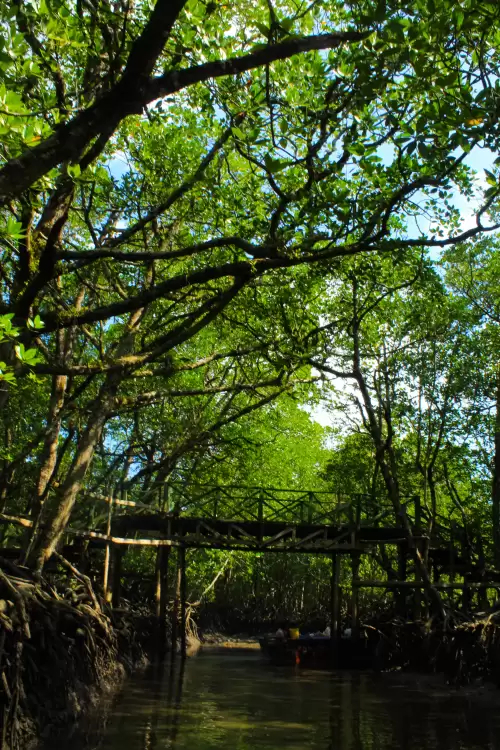
Mangrove forests are among the most important natural ecosystems in Andaman. These forests grow where land and sea meet, creating complex root systems that protect coastlines, support marine biodiversity and provide shelter for numerous species of fish, birds and small aquatic animals. Kayaking through mangrove channels allows travellers to enter areas that larger boats cannot access, creating a closer connection with the surrounding environment.
The calm water inside mangrove creeks creates favourable conditions for beginners as well as nature enthusiasts. Guides often explain how mangrove roots reduce coastal erosion, support fish breeding grounds and contribute to the health of coral reef ecosystems nearby. Depending on the location and season, travellers may observe kingfishers, herons, egrets and other coastal birds while paddling quietly through these natural waterways.
  • Navigate narrow mangrove channels inaccessible to larger boats.
  • Observe unique root systems adapted to tidal coastal environments.
  • Learn about the ecological importance of mangrove forests.
  • Watch coastal birds in their natural habitat during quieter hours.
  • Experience peaceful surroundings with minimal engine noise.
  • Photograph reflections, forest scenery and calm waterways.
  • Discover how mangroves support marine biodiversity across Andaman.
  • Explore ecosystems that remain relatively undisturbed by mass tourism.
Mangrove kayaking combines sightseeing with environmental awareness. Rather than simply travelling from one attraction to another, visitors spend time understanding one of Andaman's most valuable coastal habitats. Respecting wildlife, avoiding litter and following designated kayaking routes help preserve these fragile ecosystems for future travellers.

Understand why kayaking suits travellers seeking calm outdoor activities

Kayaking is particularly suitable for travellers who prefer gentle outdoor experiences instead of physically demanding adventure sports. Couples looking for peaceful time together, photographers searching for natural scenery and families with older children often appreciate the slower rhythm of kayaking. The activity encourages participants to enjoy the surroundings rather than rushing from one attraction to another.
Basic paddling techniques are usually explained before the tour begins, allowing beginners to participate confidently under guide supervision. Double kayaks are commonly available for couples or families, while solo kayaks suit independent travellers with greater confidence. Since kayaking depends on tides, weather and water conditions, departure times may vary slightly according to local conditions.
  • Suitable for beginners after a short safety and paddling briefing.
  • Requires only moderate physical effort for most participants.
  • Double kayaks provide greater stability for first-time paddlers.
  • Ideal for couples seeking peaceful nature experiences.
  • Supports photography without the distractions of crowded beaches.
  • Morning sessions usually offer cooler temperatures and calmer water.
  • Professional guides assist throughout the route whenever required.
  • Weather conditions may influence departure timing and route selection.
  • Comfortable clothing, drinking water and sun protection improve the experience.
Travellers who value tranquillity, natural scenery and slow exploration often consider kayaking one of the most memorable activities in Andaman. Instead of adrenaline, the experience focuses on observation, relaxation and appreciation of the islands' unique coastal environment, making it an excellent addition to a balanced travel itinerary.

Choosing Glass Bottom Boat Rides for Family Experiences

Explore coral reefs and marine life without entering water

Glass bottom boat rides provide one of the easiest ways to experience Andaman's underwater world without getting into the sea. Special viewing panels fitted into the floor of the boat allow passengers to observe coral reefs, reef fish and underwater landscapes while remaining comfortably seated. This makes the activity particularly attractive for travellers who wish to enjoy marine scenery without swimming or participating in water sports.
Popular locations for glass bottom boat rides include North Bay, Bharatpur Beach on Neil Island and selected areas around Havelock Island where coral reefs are located close enough to the surface for clear viewing. The experience depends greatly on water clarity, sunlight and sea conditions. During calm weather, visibility improves significantly, allowing passengers to observe marine life in greater detail.
  • View coral reefs without entering the water.
  • Observe colourful reef fish through underwater viewing panels.
  • Suitable for travellers who prefer dry sightseeing experiences.
  • Enjoy marine landscapes without special swimming skills.
  • Photography opportunities remain available from inside the boat.
  • Short ride durations fit easily into island sightseeing schedules.
  • Guides often explain coral formations and marine species during the ride.
  • Weather and water clarity directly influence underwater visibility.
Glass bottom boat rides provide an excellent introduction to Andaman's marine ecosystem before deciding whether to try snorkeling or scuba diving later in the trip. Even experienced travellers often appreciate the opportunity to observe coral reefs from a comfortable and family-friendly setting.

Understand why glass bottom boats suit children and non-swimmers

One of the greatest advantages of glass bottom boats is their accessibility. Travellers do not need swimming ability, special equipment or prior experience to participate. Young children, elderly visitors and those uncomfortable entering the sea can still enjoy underwater scenery without facing the challenges associated with water-based adventure activities.
The ride is generally conducted under normal boating safety procedures, making it one of the most relaxed marine experiences available in Andaman. Families often choose glass bottom boats when travelling with members who have different comfort levels. While adventurous travellers may later participate in scuba diving or snorkeling, everyone can enjoy the boat ride together regardless of age or swimming confidence.
  • Suitable for non-swimmers and visitors uncomfortable in open water.
  • Ideal for families travelling with children or senior citizens.
  • No special training or physical preparation is required.
  • Life jackets are generally provided during the boat ride.
  • Comfortable seating allows relaxed viewing throughout the trip.
  • Children can observe marine life safely without entering the sea.
  • Short duration makes the activity convenient for all age groups.
  • Minimal physical effort allows wider participation.
  • Professional boat operators provide safety instructions before departure.
Although the experience is simple, travellers should remember that marine visibility depends on natural conditions. Calm weather, bright daylight and clear water create the most enjoyable viewing experience. Selecting a reputable operator further improves comfort and overall safety throughout the excursion.

Choose boat experiences based on location and viewing conditions

Not every glass bottom boat experience provides identical underwater views. Reef quality, coral health, water depth and sunlight all influence what passengers can observe through the viewing panels. Choosing the right location therefore becomes an important part of planning the activity rather than simply selecting the closest departure point.
North Bay remains one of the most accessible choices for travellers staying in Port Blair, while Bharatpur Beach offers calm conditions that often support enjoyable reef viewing. Selected operators around Havelock Island may combine boat rides with nearby beach visits, allowing travellers to include multiple sightseeing experiences during the same excursion. Morning departures generally provide better viewing conditions because sunlight penetrates the water more effectively before afternoon weather changes.
  • North Bay provides convenient access from Port Blair.
  • Bharatpur Beach is known for relatively calm viewing conditions.
  • Some Havelock operators combine boat rides with nearby sightseeing.
  • Morning sunlight usually improves underwater visibility.
  • Water clarity varies with rainfall, tides and seasonal weather.
  • Avoid expecting identical coral visibility every day.
  • Confirm ride duration before booking.
  • Select operators maintaining clean viewing panels and safe boats.
  • Allow flexibility for weather-related schedule adjustments.
Glass bottom boat rides are most rewarding when travellers understand that they depend on natural sea conditions rather than guaranteed wildlife sightings. Choosing a suitable location, travelling during favourable weather and allowing enough time for possible schedule changes help create a relaxed and enjoyable family-friendly marine experience in Andaman.

Choosing Water Activities Based on Traveller Type

Select activities suitable for families couples and solo travellers

Choosing the right water activity in Andaman becomes much easier when the decision is based on the type of traveller rather than simply selecting the most popular experience. Families usually prioritise safety, convenience and activities that allow members of different ages to participate together. Couples often look for memorable experiences that combine adventure with scenic surroundings, while solo travellers frequently seek guided activities that provide both safety and opportunities to meet other travellers with similar interests.
The Andaman Islands offer activities suitable for almost every travel style. Families may enjoy glass bottom boat rides, beginner snorkeling and calm beach experiences, whereas couples often combine scuba diving, kayaking and sunset cruises for a balanced itinerary. Solo travellers commonly join guided scuba dives, snorkeling groups or kayaking tours, making it easy to explore the islands while remaining under professional supervision.
  • Families with young children often prefer glass bottom boat rides and shallow-water snorkeling.
  • Couples frequently combine scuba diving with kayaking or peaceful beach visits.
  • Solo travellers benefit from organised group activities with experienced guides.
  • Multi-generational families should choose activities suitable for all age groups.
  • Travellers with elderly family members should include activities requiring minimal physical effort.
  • Short island stays are better suited for one or two carefully selected experiences instead of multiple rushed bookings.
  • Professional operators provide additional confidence for first-time participants travelling alone.
  • Flexible itineraries help accommodate weather-related changes without affecting the overall holiday.
Selecting activities according to traveller type creates a more enjoyable itinerary and reduces unnecessary stress. Instead of forcing everyone into the same adventure, each member can participate in experiences that match their interests and comfort while still enjoying the islands together.

Understand options for adventure seekers and relaxed travellers

Not every visitor comes to Andaman looking for the same level of adventure. Some travellers want thrilling underwater experiences, while others simply wish to admire the islands' natural beauty at a slower pace. Understanding these differences helps create a balanced itinerary that reflects personal preferences instead of following general travel trends.
Adventure seekers generally prefer scuba diving, sea walking, parasailing or jet skiing because these activities provide excitement and closer interaction with the marine environment. Relaxed travellers often enjoy kayaking through mangrove forests, snorkeling in calm waters, glass bottom boat rides or spending time at peaceful beaches between sightseeing excursions. Choosing the appropriate activity helps avoid physical fatigue while improving the overall holiday experience.
  • Scuba diving offers one of the most immersive underwater experiences.
  • Sea walking combines marine exploration with relatively simple participation.
  • Jet skiing provides short-duration high-speed excitement.
  • Parasailing offers panoramic coastal views combined with adventure.
  • Kayaking focuses on peaceful nature exploration rather than adrenaline.
  • Glass bottom boat rides allow comfortable marine viewing without entering the sea.
  • Snorkeling offers a balanced combination of relaxation and underwater observation.
  • Travellers can mix adventurous and relaxed activities across different days.
The most enjoyable itinerary usually combines both adventure and relaxation rather than scheduling physically demanding activities every day. Alternating underwater adventures with quieter experiences such as kayaking or beach exploration helps travellers enjoy Andaman without becoming exhausted during the trip.

Plan activities according to fitness level and comfort preferences

Physical fitness and personal comfort should always influence activity selection. While many Andaman water activities are beginner-friendly, participants should honestly assess their confidence in water, general health and willingness to participate in physically active experiences. Selecting an activity that matches individual ability often leads to greater enjoyment than attempting something beyond personal comfort.
Travellers with limited swimming confidence may feel more comfortable beginning with glass bottom boats or sea walking before considering snorkeling or scuba diving. Those who enjoy outdoor exercise may appreciate kayaking or multiple snorkeling sessions, while experienced adventure enthusiasts often include scuba diving as a major highlight of their Andaman itinerary. Operators may also apply health restrictions depending on the nature of the activity.
  • Consider swimming confidence before selecting underwater activities.
  • Discuss any medical conditions honestly during activity registration.
  • Choose beginner sessions when trying an activity for the first time.
  • Do not book multiple physically demanding adventures on the same day.
  • Allow recovery time between scuba diving and other excursions.
  • Wear suitable clothing and remain well hydrated throughout the day.
  • Follow instructor guidance regardless of previous experience.
  • Select activities based on enjoyment rather than social pressure.
The right activity is the one that allows travellers to feel comfortable, confident and safe throughout the experience. Careful planning based on fitness, confidence and realistic expectations creates a more rewarding Andaman holiday while reducing unnecessary risks or disappointment.

Best Water Activities Based on Andaman Islands

Explore activity options around Havelock Island and Neil Island

Havelock Island and Neil Island are the two most popular destinations for marine activities in Andaman, but each offers a different experience. Havelock has a wider variety of organised adventure activities, professional dive centres and larger tourism infrastructure. Neil Island offers a slower pace, quieter beaches and marine experiences suited to travellers who prefer less crowded surroundings while still enjoying coral reefs and coastal beauty.
Travellers with longer itineraries often visit both islands because they complement each other well. Havelock is usually selected for scuba diving, Elephant Beach adventures and larger activity choices, whereas Neil Island is preferred for relaxed snorkeling, scenic beaches and peaceful coastal exploration. The choice depends on travel style, available time and the activities that visitors wish to prioritise.
  • Havelock Island offers extensive scuba diving opportunities with multiple certified operators.
  • Elephant Beach is popular for snorkeling and selected adventure activities.
  • Radhanagar Beach is known more for swimming, relaxation and scenic beauty than water sports.
  • Neil Island offers calm beaches suitable for leisurely marine experiences.
  • Bharatpur Beach is among the preferred snorkeling locations on Neil Island.
  • Neil Island provides a quieter atmosphere compared to Havelock.
  • Both islands require ferry transfers from Port Blair according to scheduled services.
  • Activity availability depends on weather, tides and operational conditions.
Rather than choosing one island as universally better, travellers should match their destination with their priorities. Adventure enthusiasts often spend more time on Havelock, while visitors seeking peaceful island experiences frequently appreciate the relaxed atmosphere of Neil Island.

Understand which islands offer better marine experiences

Different islands across Andaman specialise in different types of marine experiences. Havelock is recognised for scuba diving because of its established dive centres and access to diverse underwater sites. Neil Island offers beginner-friendly reef experiences, while North Bay remains convenient for day visitors staying in Port Blair who wish to enjoy snorkeling, sea walking or glass bottom boat rides without overnight island transfers.
The quality of marine experiences depends not only on the island itself but also on seasonal weather, reef health, water clarity and responsible tourism practices. Travellers should therefore avoid assuming that every beach offers identical underwater conditions. Local guides and experienced operators usually recommend the most suitable sites based on daily sea conditions rather than fixed schedules.
Island Suitable Activities Ideal Traveller
Havelock Island Scuba diving Snorkeling Selected adventure sports Adventure seekers and underwater enthusiasts
Neil Island Snorkeling Beach exploration Relaxed marine experiences Families Couples Leisure travellers
North Bay Sea walking Glass bottom boats Snorkeling Day visitors staying in Port Blair
Port Blair Short marine excursions Boat activities Travellers with limited time
Each island contributes differently to an Andaman itinerary. Understanding these differences allows travellers to allocate sufficient time at locations that best match their interests rather than trying to experience every activity at every destination.

Choose locations based on travel duration and interests

Travel duration plays a major role when deciding where to participate in water activities. Visitors staying only two or three days often focus on Port Blair and a single nearby island, while longer itineraries allow travellers to experience multiple islands without feeling rushed. Ferry schedules, accommodation locations and transfer times should all be considered before planning daily activities.
Travellers interested primarily in scuba diving may dedicate several days to Havelock Island, whereas those interested in relaxed sightseeing can divide their stay between Havelock and Neil Island. Families travelling with children may reduce unnecessary island transfers by selecting activities close to their accommodation instead of travelling long distances each day.
  • Short trips benefit from activities near Port Blair or one nearby island.
  • Longer itineraries allow exploration of both Havelock and Neil Island.
  • Adventure-focused travellers should allocate extra time for scuba diving.
  • Families should minimise unnecessary ferry transfers.
  • Morning activity sessions fit well with afternoon sightseeing.
  • Keep buffer time for ferry delays caused by sea conditions.
  • Book popular activities in advance during peak tourist seasons.
  • Select accommodation close to planned activity locations whenever possible.
  • Remain flexible because weather conditions may alter daily schedules.
Planning activities according to travel duration prevents unnecessary rushing and allows travellers to enjoy each island properly. A balanced itinerary that considers ferry schedules, weather and personal interests creates a smoother and far more rewarding Andaman experience than attempting to cover every activity within a limited timeframe.

Best Time for Water Activities in Andaman

Understand seasonal weather conditions affecting marine activities

The success of water activities in Andaman depends greatly on seasonal weather conditions. Calm seas, good underwater visibility and stable weather create ideal conditions for scuba diving, snorkeling, sea walking, kayaking and glass bottom boat rides. Although marine activities operate for a large part of the year, the overall experience can vary depending on rainfall, wind strength, sea currents and tidal movement. Travellers should therefore plan activities according to seasonal conditions rather than simply choosing available dates.
The period from around October to May is generally considered the most favourable for marine tourism because the sea remains comparatively calmer and underwater visibility is often better. During the southwest monsoon, usually from late May through September, heavy rainfall, rough seas and strong winds may affect ferry services as well as the operation of adventure activities. Even within the favourable season, sudden weather changes can occur, and operators may delay or cancel sessions to maintain safety standards.
  • Calm sea conditions improve overall safety and underwater visibility.
  • Scuba diving experiences are generally more enjoyable when visibility remains high.
  • Snorkeling becomes easier when waves and currents remain gentle.
  • Glass bottom boat rides provide clearer reef views during calm weather.
  • Kayaking routes are more comfortable when strong winds are absent.
  • Heavy rainfall can reduce underwater visibility because of suspended particles.
  • Strong winds may interrupt boat operations and island transfers.
  • Weather forecasts should always be checked before confirming activity schedules.
  • Safety decisions made by operators should always be respected.
Travellers should remain flexible while planning marine activities because weather conditions in island destinations can change quickly. Keeping alternative sightseeing options available on the itinerary helps reduce disappointment if activities need to be rescheduled due to sea conditions.

Explore months suitable for diving snorkeling and boating

Different water activities benefit from similar weather conditions, but some require better visibility than others. Scuba diving and snorkeling depend heavily on underwater clarity, while glass bottom boat rides require both calm water and sufficient sunlight for reef viewing. Kayaking and recreational boating are also more enjoyable when waves remain gentle and wind speeds are lower.
Travellers planning scuba diving often prefer the months between October and May because underwater visibility is generally more favourable for observing coral reefs and marine life. Snorkeling experiences also benefit from these conditions, while kayaking through mangrove forests becomes more comfortable when waterways remain calm. Ferry schedules between islands also tend to operate more consistently during favourable weather, although delays may still occur occasionally.
Activity Generally Suitable Period Main Weather Requirement
Scuba Diving October to May Good visibility and calm sea
Snorkeling October to May Clear shallow water with low waves
Sea Walking October to May Stable underwater conditions
Kayaking October to May Calm waterways and light wind
Glass Bottom Boat October to May Clear water and bright daylight
Although these periods are generally considered favourable, travellers should understand that natural conditions vary every year. Daily weather forecasts, tide conditions and operational updates from activity providers remain more reliable than relying only on seasonal expectations.

Plan activities according to sea conditions and availability

Proper planning involves more than selecting suitable months. Travellers should also consider the time of day, ferry schedules, transfer duration and possible weather-related adjustments. Many operators schedule water activities during morning hours because the sea is often calmer and underwater visibility may be better before afternoon weather changes develop.
Booking activities early in the trip provides additional flexibility if poor weather forces rescheduling. Travellers visiting multiple islands should also avoid planning important marine activities immediately after long ferry transfers, as delays can affect arrival times. Allowing buffer time between transfers and activities creates a more relaxed itinerary and reduces unnecessary stress during the holiday.
  • Schedule major underwater activities early in the itinerary whenever possible.
  • Choose morning sessions for potentially calmer sea conditions.
  • Leave buffer time between ferry arrivals and booked activities.
  • Confirm activity timing one day before departure.
  • Remain flexible if operators postpone activities due to weather.
  • Carry sun protection, drinking water and suitable clothing.
  • Avoid overloading a single day with multiple marine adventures.
  • Monitor local weather forecasts throughout the trip.
  • Respect operator safety decisions regarding cancellations.
A well-planned schedule allows travellers to enjoy Andaman's marine experiences without unnecessary pressure. Prioritising favourable weather, realistic timings and flexible planning greatly improves the overall quality of water activities while ensuring that safety always remains the highest priority.

Common Mistakes While Choosing Water Activities

Avoid selecting activities without checking safety requirements

One of the most common mistakes made by visitors is choosing water activities based only on price or popularity without understanding the associated safety requirements. Every activity has different eligibility conditions, equipment standards and health considerations. Travellers who ignore these factors may experience unnecessary discomfort or even place themselves at risk during the activity.
Professional operators conduct safety briefings, provide certified equipment and explain emergency procedures before starting the activity. Travellers should pay close attention during these briefings instead of treating them as routine formalities. Reading medical declarations carefully and honestly reporting existing health conditions helps instructors determine whether a particular activity is suitable for the participant.
  • Choose licensed and experienced operators whenever possible.
  • Read health declarations honestly before participating.
  • Check age and fitness requirements for each activity.
  • Inspect safety equipment before entering the water.
  • Listen carefully to instructor demonstrations and briefings.
  • Do not ignore medical advice regarding participation.
  • Avoid rushing through equipment fitting procedures.
  • Follow all underwater communication instructions.
  • Never participate under the influence of alcohol.
Safety should always take priority over adventure. Selecting a well-managed operator and following professional guidance significantly increases the chances of having a safe and enjoyable marine experience while reducing avoidable risks.

Understand weather conditions before booking marine experiences

Many travellers make the mistake of assuming that marine activities operate exactly as scheduled regardless of weather conditions. In reality, sea conditions can change rapidly around the Andaman Islands. Strong winds, heavy rainfall, rough waves or poor underwater visibility may force operators to postpone or cancel activities even after bookings have been confirmed.
Rather than becoming frustrated by weather-related changes, travellers should recognise that these decisions are made primarily for safety. Flexible itineraries allow operators to move activities to another suitable day if necessary. Keeping alternative sightseeing options available also prevents disappointment when unexpected weather affects marine plans.
  • Check local weather forecasts daily during the trip.
  • Avoid fixing every activity on the final travel day.
  • Understand that visibility changes after heavy rainfall.
  • Expect occasional ferry delays during rough sea conditions.
  • Keep one flexible day for possible rescheduling.
  • Confirm activity status before travelling to departure points.
  • Accept operator decisions regarding unsafe conditions.
  • Carry rain protection during changing weather periods.
Travellers who plan with flexibility usually enjoy a smoother holiday than those attempting to follow a rigid schedule. Weather remains one of the few factors beyond anyone's control, making adaptable planning an important part of every Andaman itinerary.

Avoid planning too many activities without enough relaxation time

Andaman is known not only for adventure sports but also for peaceful beaches, scenic sunsets and relaxed island life. Some visitors attempt to include every available activity within a few days, leaving little time to actually enjoy the destinations. Constant transfers between islands and multiple adventure sessions can quickly become physically tiring.
Instead of scheduling several demanding activities back-to-back, travellers should balance adventure with relaxation. A morning scuba dive can be followed by an afternoon at the beach, while kayaking can be combined with sightseeing rather than another physically demanding activity. This approach creates a more enjoyable and less exhausting travel experience.
  • Limit physically demanding activities to one major session per day.
  • Include beach relaxation between adventure experiences.
  • Allow recovery time after scuba diving.
  • Avoid unnecessary same-day island transfers.
  • Keep meals and hydration in mind before activities.
  • Leave free time for photography and local exploration.
  • Maintain realistic daily schedules.
  • Prioritise quality experiences over completing every activity.
  • Finish each day without unnecessary physical exhaustion.
The most memorable Andaman holidays combine marine adventure with enough time to appreciate the islands' natural beauty. A balanced itinerary helps travellers enjoy each activity fully while avoiding fatigue, rushed sightseeing and unnecessary travel stress.

Final Andaman Water Activity Planning Guide

Choose activities based on your interests experience and comfort level

Selecting the right water activities in Andaman begins with understanding your own travel expectations rather than following the most popular choices. Some travellers visit the islands specifically to explore coral reefs through scuba diving, while others prefer peaceful experiences such as kayaking through mangrove forests or observing marine life from a glass bottom boat. There is no single activity that suits everyone because every traveller has different levels of confidence, physical ability and interest in adventure. Planning around these personal preferences results in a much more enjoyable holiday than trying to fit every available activity into one itinerary.
First-time visitors who are slightly nervous in the water may find snorkeling or sea walking to be comfortable introductions to Andaman's marine environment before considering scuba diving on a future visit. Families travelling with children or senior citizens often enjoy glass bottom boat rides combined with relaxed beach visits, while adventure enthusiasts may spend multiple days exploring different dive sites around Havelock Island. Couples frequently combine underwater experiences with kayaking or sunset cruises to create a balanced itinerary that includes both adventure and relaxation. Matching activities with comfort levels also reduces unnecessary stress and helps travellers enjoy each experience more confidently.
  • Identify whether your priority is marine life, adventure, photography or relaxation before choosing activities.
  • Select beginner-friendly experiences if you have little or no previous water activity experience.
  • Choose scuba diving for detailed underwater exploration and coral reef experiences.
  • Select snorkeling when looking for an easier way to observe colourful marine life.
  • Choose sea walking if you prefer underwater exploration without learning scuba techniques.
  • Consider kayaking for peaceful nature experiences through mangrove ecosystems.
  • Glass bottom boat rides remain suitable for children, elderly travellers and non-swimmers.
  • Balance adventure activities with sightseeing and beach relaxation.
  • Discuss health conditions honestly with activity operators before booking.
Travellers who select activities according to their own interests instead of social trends usually enjoy a more satisfying Andaman holiday. Every experience offers something unique, and careful planning ensures that the activities complement the overall journey rather than becoming physically exhausting or unnecessarily stressful.

Plan locations timings and bookings before visiting Andaman

Advance planning plays an important role in enjoying water activities without unnecessary complications. Since Andaman consists of multiple islands connected by ferry services, travellers should consider transfer schedules, accommodation locations and travel duration before making bookings. Popular activities such as scuba diving, sea walking and snorkeling often have limited daily slots during the peak tourist season, making advance reservations a practical choice. At the same time, visitors should remain flexible because weather conditions may require operators to modify activity timings.
The location of accommodation can significantly influence daily planning. Travellers staying on Havelock Island can participate in early morning diving sessions more comfortably than visitors travelling from Port Blair. Similarly, visitors planning activities on Neil Island should avoid scheduling multiple ferry transfers on the same day. Allowing enough travel time between islands creates a more relaxed itinerary and reduces the possibility of missing activity reporting times because of transportation delays.
  • Book popular activities in advance during busy tourist months.
  • Confirm ferry schedules before planning island-based activities.
  • Select accommodation close to major activity locations whenever possible.
  • Keep morning hours available for scuba diving and snorkeling sessions.
  • Allow buffer time for weather-related changes and ferry delays.
  • Verify what is included in activity packages before payment.
  • Carry valid identification where required during registration.
  • Arrive early for equipment fitting and safety briefings.
  • Monitor local weather forecasts throughout the trip.
  • Keep one flexible day in the itinerary for possible rescheduling.
Good planning improves both convenience and safety throughout the holiday. Travellers who organise ferry timings, accommodation, activity schedules and backup plans before arrival usually spend more time enjoying the islands and less time dealing with unexpected logistical issues.

Final checklist for selecting the right water activities

A simple planning checklist helps travellers avoid common mistakes while ensuring that every activity matches their travel goals. Instead of selecting experiences randomly, visitors should compare their comfort level, available time, physical fitness, weather conditions and island itinerary before making final decisions. This practical approach creates a smoother travel experience while allowing enough flexibility to adapt if sea conditions change unexpectedly.
Responsible travel should remain an important part of every marine activity. Coral reefs and coastal ecosystems are extremely delicate, and protecting them ensures that future visitors can continue enjoying the same natural beauty. Following instructor guidance, respecting marine life and choosing responsible operators contribute not only to personal safety but also to long-term conservation of Andaman's underwater environment.
  • Choose activities that match your swimming confidence and fitness level.
  • Prioritise safety over price when selecting operators.
  • Confirm weather and sea conditions before departure.
  • Avoid touching coral reefs or disturbing marine wildlife.
  • Wear properly fitted safety equipment throughout every activity.
  • Carry reef-safe sun protection, drinking water and suitable clothing.
  • Keep emergency contact information accessible during travel.
  • Allow sufficient rest between physically demanding activities.
  • Respect all instructions provided by guides and instructors.
  • Leave enough time to simply relax and enjoy Andaman's beaches and natural scenery.
The right combination of planning, realistic expectations and responsible travel allows visitors to experience the very best of Andaman's marine attractions. Whether the itinerary includes scuba diving, snorkeling, kayaking, sea walking or peaceful glass bottom boat rides, selecting activities thoughtfully creates lasting memories while ensuring a safe, comfortable and environmentally responsible island adventure.

Frequently Asked Questions About How to Choose the Right Water Activity in Andaman

Choosing the right water activity in Andaman depends on comfort level travel goals swimming ability and interest in adventure or relaxation. Travellers can select scuba diving snorkeling sea walking kayaking or boat rides according to experience and preferred marine exploration style.
Beginners in Andaman can choose snorkeling sea walking or glass bottom boat rides because these activities require less experience and provide easy ways to explore marine life. These options are suitable for travellers who want comfortable and enjoyable ocean experiences.
Scuba diving is suitable for first time visitors in Andaman when conducted with trained instructors and proper safety guidance. Introductory sessions include equipment instructions and underwater support making it possible for beginners to experience coral reefs and marine life safely.
Selecting between scuba diving and snorkeling depends on the desired underwater experience. Scuba diving allows deeper exploration of reefs while snorkeling provides surface level viewing of fish and corals. Beginners and families often prefer snorkeling for a simpler marine experience.
Glass bottom boat rides snorkeling and sea walking are popular choices for families visiting Andaman. These activities allow children senior travellers and non swimmers to enjoy marine views without requiring advanced skills or intense physical effort during the experience.
Andaman offers various water activities including scuba diving snorkeling sea walking kayaking glass bottom boat rides jet skiing and parasailing. Each activity provides a different experience based on adventure level comfort requirements location availability and weather conditions.
Swimming ability plays an important role when selecting water activities in Andaman. Non swimmers may prefer glass bottom boats or sea walking while confident swimmers can enjoy snorkeling and diving experiences with proper safety equipment and professional guidance.
Kayaking is a good water activity in Andaman for travellers who enjoy peaceful nature exploration. It allows visitors to explore mangroves coastal areas and calm waterways while enjoying scenery wildlife observation and a slower outdoor experience away from crowded locations.
Tourists can enjoy water activities across destinations like Havelock Island Neil Island North Bay and Port Blair. Different locations offer different experiences including diving snorkeling sea walking kayaking and boat rides depending on marine conditions and activity availability.
The best season for water activities in Andaman is generally when sea conditions are calm and visibility is good. Clear weather supports activities like diving snorkeling and boating while rough seas or heavy rainfall can affect operations and schedules.
Adventure water activities in Andaman should be selected according to confidence comfort and physical ability. Activities like parasailing jet skiing and scuba diving suit travellers seeking excitement while beginners may prefer lighter experiences with professional supervision.
Scuba diving is considered one of the best activities for underwater exploration in Andaman because it allows closer views of coral reefs fish and marine landscapes. It provides a deeper experience compared with surface based activities like snorkeling.
Children can enjoy selected water activities in Andaman when age requirements safety rules and weather conditions are suitable. Glass bottom boats and supervised snorkeling are often preferred options because they provide marine experiences with greater comfort and safety.
Choosing safe water activities in Andaman requires checking operator reputation equipment quality safety instructions and weather conditions. Travellers should follow instructor guidance disclose health concerns and avoid selecting activities only because they appear more adventurous or popular.
Travellers without swimming skills can enjoy sea walking glass bottom boat rides and some guided activities in Andaman. These experiences allow visitors to observe marine life without requiring strong swimming ability or advanced underwater techniques.
Havelock Island is popular for water activities because it offers excellent locations for scuba diving snorkeling and other marine experiences. The island provides beautiful beaches coral areas and access to professional operators offering activities for different experience levels.
Weather strongly affects water activities in Andaman because sea conditions visibility and boat operations depend on climate. Strong winds rainfall and rough seas may delay or cancel activities while calm conditions usually provide better experiences for visitors.
Before booking water activities in Andaman tourists should consider budget duration physical comfort experience level safety standards and location. Checking activity requirements and allowing flexibility for weather changes helps create a smoother travel experience.
Some water activities in Andaman are suitable for elderly travellers depending on health and comfort level. Glass bottom boat rides and relaxed coastal experiences are usually easier choices while physically demanding activities should be considered carefully with proper guidance.
Planning multiple water activities in Andaman requires balancing adventure with rest and travel time. Travellers should avoid scheduling too many demanding activities together and should consider island transfers weather conditions and activity availability while creating their itinerary.

Explore Andaman and Nicobar Islands Tour Packages

Explore All Packages

Latest Travel Blogs

View all Blogs β†’

Loved this place ? Let’s Plan Your Andaman and Nicobar Islands Trip

Get customized Andaman and Nicobar Islands tour planning designed around ferry schedules, island connectivity, seasonal sea conditions, and realistic travel flow between islands. Whether you are visiting for beach relaxation, water sports, snorkeling, scu

⚑ Quick Response | πŸ’° Free consultation | πŸ•’ 24Γ—7 expert support

×

Plan Your Trip