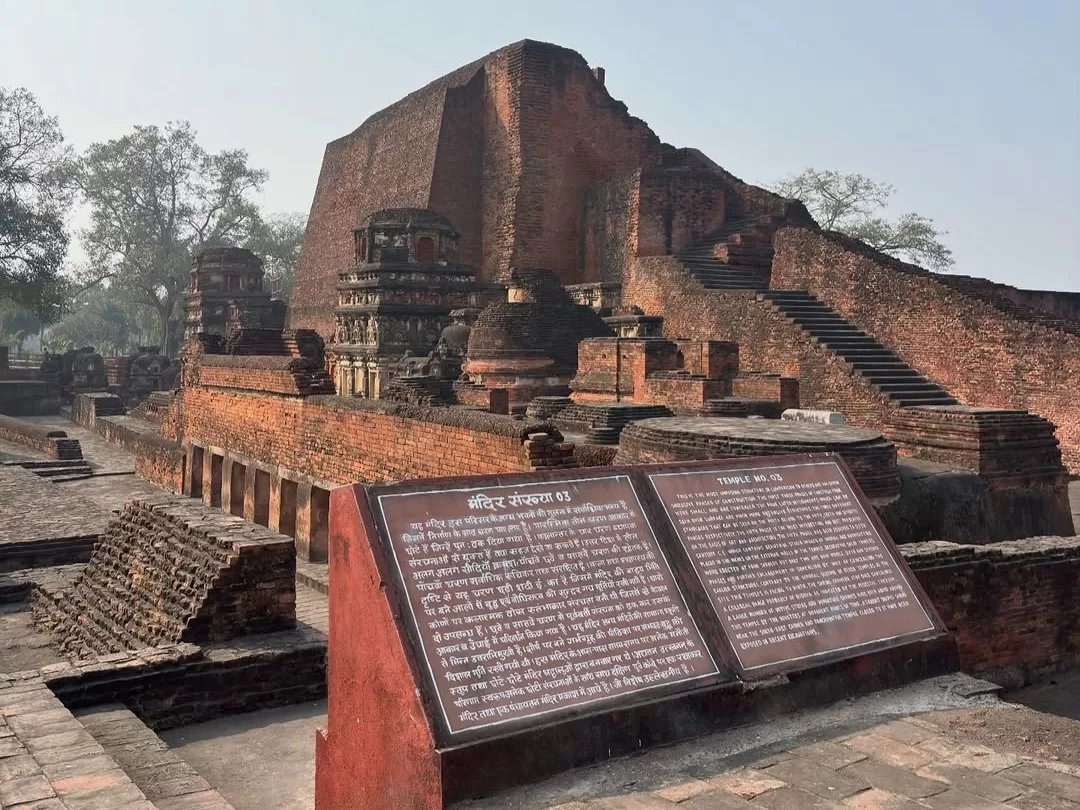
Nalanda University Ruins – Ancient Seat of Learning

Nalanda University Ruins , Nalanda
Nalanda University, established in the 5th century CE, was a renowned Buddhist monastic university attracting students and scholars from across Asia. The ruins showcase the remains of monasteries, temples, lecture halls, and libraries, reflecting the advanced architecture, educational system, and cultural richness of ancient India. Today, Nalanda is a UNESCO World Heritage Site and a major historical and archaeological attraction, offering visitors insight into India’s scholarly and spiritual heritage.

Quick Facts About Nalanda University Ruins

Quick Facts About Nalanda University Ruins

Entry Fee 25 per adult, 15 per child; Foreign tourists 200 per person
Timings 6:00 AM – 6:00 PM daily
Altitude (m) 52 m above sea level
Ideal Visit Duration 2–3 hours (enough to explore the main ruins, museum, and pathways comfortably)
Best Time of Day Morning (6:00 AM – 9:00 AM) or late afternoon (4:00 PM – 6:00 PM) for cooler weather and photography
Crowd Level Moderate on weekdays; High during weekends, holidays, and school trips
Distance from City Centre (km) Approx. 95 km from Patna city centre
Walking Difficulty Moderate; uneven stone pathways and open ruins require careful walking
Parking Available Yes; parking available near the main entrance for cars and buses
Last Mile Access Auto-rickshaws, taxis, and local buses available from Nalanda town to the site
Suitable for Kids Yes; open spaces allow children to explore safely under supervision
Suitable for Seniors Yes; seating areas and shaded spots are available, but some walking is required
Wheelchair Friendly Partially; main pathways accessible, but some uneven terrain may be challenging

Why Visit Nalanda University Ruins

Nalanda University Ruins are a remarkable testament to India’s ancient scholarly and spiritual heritage. Visitors come here to explore the remains of one of the world’s earliest residential universities, gaining insight into the advanced educational and cultural systems of ancient India.

The atmosphere at Nalanda is serene and reflective, with sprawling open ruins, brick structures, and quiet pathways that allow visitors to wander through history. The peaceful environment, combined with the surrounding greenery and distant hills, offers a tranquil setting for learning, contemplation, and photography.

What makes Nalanda University Ruins special is their historical significance and architectural marvel. The site includes monasteries, temples, lecture halls, and libraries, showcasing sophisticated ancient design. It is not only a UNESCO World Heritage Site but also a cultural and educational landmark, attracting scholars, history enthusiasts, and tourists from around the world.

History of Nalanda University Ruins

Nalanda University, established in the 5th century CE during the Gupta period, was one of the earliest residential universities in the world. It attracted scholars from across Asia, including China, Korea, Japan, Tibet, and Central Asia, and became a renowned center for Buddhist learning, philosophy, astronomy, medicine, and literature.

The university complex included monasteries, lecture halls, temples, and libraries, with an extensive collection of manuscripts and texts. It thrived for several centuries until the 12th century when it was destroyed by invaders, leaving behind ruins that reveal the scale and sophistication of the ancient educational system.

Today, the Nalanda University Ruins are a UNESCO World Heritage Site, preserved as a significant archaeological and historical landmark. The site provides valuable insights into ancient India’s academic and spiritual traditions, drawing historians, scholars, and tourists interested in exploring India’s rich intellectual heritage.

Best Time to Visit Nalanda University Ruins

The ideal time to visit Nalanda University Ruins is during the cooler months and early mornings or late afternoons when the weather is comfortable for walking and exploring the extensive ruins. Avoid the peak summer heat to make the most of your visit.

  • October to March: Best months with mild temperatures, clear skies, and pleasant weather for sightseeing and photography.
  • Morning (6:00 AM – 9:00 AM): Cooler hours ideal for exploring the ruins and capturing early morning light in photographs.
  • Late Afternoon (4:00 PM – 6:00 PM): Perfect for leisurely walks and enjoying the serene environment of the site during sunset.
  • Avoid peak summer months (April to June): Temperatures can be high and make walking around the open ruins uncomfortable.
  • Weekdays: Generally less crowded, offering a peaceful experience compared to weekends and public holidays.

How to Reach Nalanda University Ruins

  • By Air: The nearest airport is Jay Prakash Narayan International Airport, Patna, approximately 95 km away. Taxis and app-based cabs are available for a direct ride to the site.
  • By Train: Rajgir Railway Station is the closest major station, about 11 km from the ruins. From there, taxis and auto-rickshaws provide easy last-mile connectivity.
  • By Road: Nalanda is well connected via NH20 and NH33 from Patna and other nearby cities. Private taxis, buses, and rental vehicles are commonly used to reach the site.
  • Local Transport: Auto-rickshaws and cycle rickshaws are available from Nalanda town and Rajgir for easy access to the ruins.
  • Parking: Parking facilities are available near the main entrance for cars and buses.

What to Expect When You Visit Nalanda University Ruins

  • Explore the extensive ruins of ancient monasteries, lecture halls, temples, and libraries spread across the archaeological site.
  • Informative signage and displays provide insights into the history, architecture, and scholarly activities of Nalanda University.
  • Peaceful pathways surrounded by greenery and open spaces create a reflective and contemplative atmosphere for visitors.
  • Opportunities for photography with striking brick ruins, well-preserved foundations, and scenic landscapes.
  • A visit includes a small on-site museum displaying artifacts, inscriptions, and ancient manuscripts from the university.
  • Walking through uneven stone pathways requires moderate effort, so comfortable footwear is recommended.
  • Ideal for history enthusiasts, students, researchers, and tourists interested in ancient Indian education and culture.

Important Visitor Information

  • Crowd & Weather Notes: The site is moderately crowded on weekdays and can be busy during weekends, public holidays, and school trips. The best time to visit is during October to March when temperatures are cooler and more comfortable for walking.
  • Peak / Quiet Hours: Peak hours are usually late morning to early afternoon. Early morning (6:00 AM – 9:00 AM) and late afternoon (4:00 PM – 6:00 PM) are quieter and ideal for photography and leisurely exploration.
  • Dress Code: Comfortable casual attire and walking shoes are recommended. Modest clothing is advised when visiting spiritual or historical areas.
  • Safety Notes: The ruins have uneven stone pathways, so visitors should walk carefully. Supervise children, carry water, and follow signboards and guidelines to ensure safety.

Photography and Viewpoint

  • The ruins provide excellent photography opportunities with ancient brick structures, monasteries, temples, and open courtyards set against a backdrop of green landscapes.
  • Early morning and late afternoon are the best times for capturing soft natural light, highlighting the textures and architectural details of the ruins.
  • Wide pathways and open spaces allow visitors to frame panoramic shots, group photos, and close-up details of carvings and foundations.
  • The small on-site museum offers additional photography opportunities with artifacts, inscriptions, and ancient manuscripts.
  • Visitors can capture cultural events, educational programs, or guided tours happening at the site, adding context to the photographs.
  • Drone photography is not permitted inside the site; standard cameras and smartphones are recommended for capturing high-quality images.

Near By Attraction

Frequently Asked Questions About Nalanda University Ruins

Loved this place ? Let’s Plan Your Bihar Trip

Get customized Bihar tour planning designed around spiritual circuits, seasonal weather comfort, road travel flow, and realistic pacing between heritage regions. Whether you are visiting for Buddhist sites, Jain pilgrimage journeys, historical landmarks,

⚡ Quick Response | 💰 Free consultation | 🕒 24×7 expert support

×

Plan Your Trip