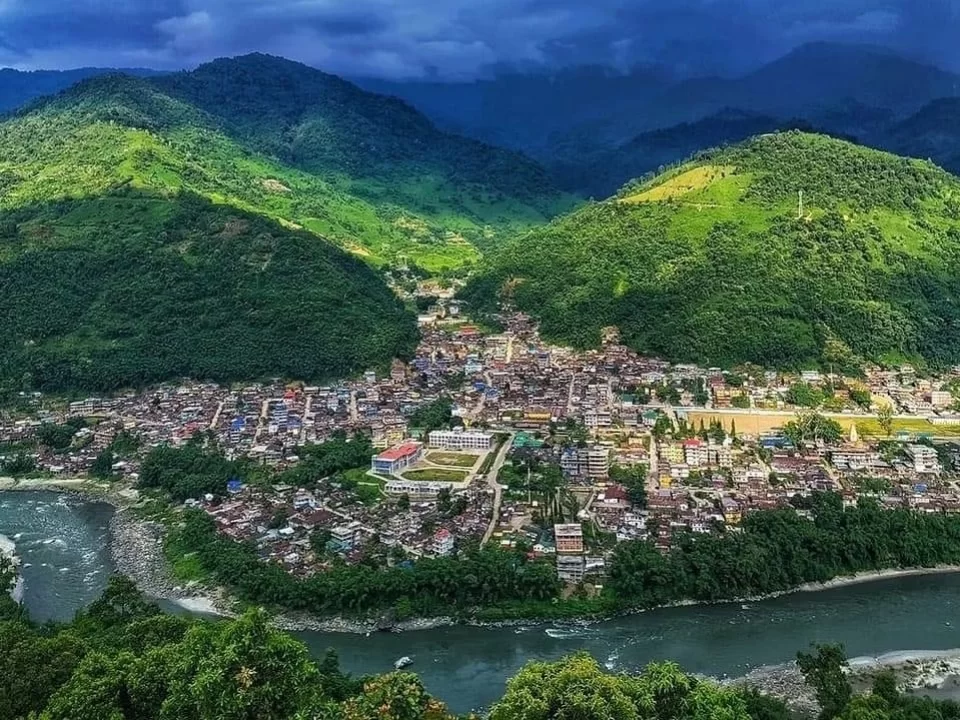
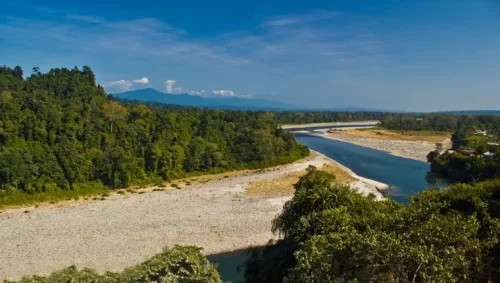
Kameng River in Bhalukpong, West Kameng, Arunachal Pradesh, India

Kameng River , Bhalukpong
Tourists visit the river at Bhalukpong for adventure activities including Class III and IV white-water rafting, kayaking, and specialized angling for Golden Mahseer. The riverbanks also serve as a boundary for the Pakke Tiger Reserve and Eaglenest Wildlife Sanctuary, offering opportunities for river-based birdwatching and camping on pristine sandy beaches.

Quick Facts About Kameng River

Entry Fee Free
Timings 06:00 - 17:30
Altitude (m) 210
Ideal Visit Duration (hrs) 4
Best Time of Day Morning
Crowd Level Moderate
Distance from City Centre (km) 2
Walking Difficulty Moderate
Parking Available Yes
Last Mile Access Road
Suitable for Kids Yes
Suitable for Seniors No
Wheelchair Friendly No

Why Visit the Kameng River in Bhalukpong: An Angler’s and Rafter’s Paradise

The Kameng River in Bhalukpong is the primary draw for adventure travelers seeking some of the most technical whitewater and rewarding sport fishing in Northeast India. Visitors come specifically to challenge the river’s Class III and IV rapids or to track the legendary Golden Mahseer, a prize catch for catch-and-release anglers that thrives in these cold, oxygenated Himalayan waters before they merge with the Brahmaputra.

The on-ground atmosphere is defined by the stark contrast between the roaring emerald currents and the vast, silent shingle beaches that line the riverbanks. The environment feels distinctly wild and primordial, characterized by the sight of traditional Aka fishermen navigating the rocky shores and the sound of the water echoing against the high, jungle-clad cliffs of the Pakhui Tiger Reserve that form the river's western boundary.

What makes this stretch of the Kameng distinct is its role as a natural border and a biodiversity corridor. Unlike other Himalayan rivers that are often inaccessible due to steep gorges, the riverfront at Bhalukpong offers wide, accessible spans that allow for multi-day rafting expeditions to conclude on sandy beaches, providing travelers a rare opportunity to see hornbills and other tropical wildlife directly from the water's edge.

Hydrological and Cultural Significance of the Kameng River in Bhalukpong

The Kameng River, which originates from the glacial lakes below Mount Kangto, serves as the defining geographical feature of Bhalukpong and the natural border between the East and West Kameng districts. Historically known as the Bhareli River in the plains of Assam, it has functioned for centuries as a vital lifeline for the indigenous Aka (Hrusso) and Nyishi tribes. The river’s high-volume discharge and rugged canyon topography at Bhalukpong mark the dramatic transition where the Himalayan waters exit the steep mountain gorges and enter the Brahmaputra valley.

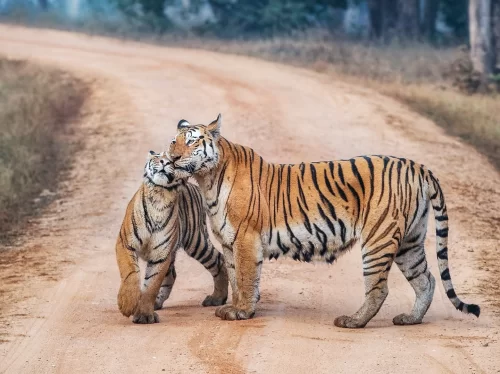
The riverfront is ecologically inseparable from the Pakhui (Pakke) Tiger Reserve, acting as a critical water source for the region's diverse megafauna and rare avian species like the Great Hornbill. Culturally, the Kameng is respected as a powerful natural entity in local folklore, influencing the settlement patterns and traditional fishing practices of the riverside communities. For visitors, the river provides a primary site for adventure-based tourism, specifically white-water rafting and angling, while offering a direct perspective on the untamed hydraulic forces that have shaped the landscape of the Arunachal foothills.

Best Time to Visit Kameng River Bhalukpong: A Seasonal Guide for River Expeditions

The Kameng River at Bhalukpong is a premier destination for white-water rafting and angling, but its character changes dramatically with the Himalayan snowmelt and monsoon cycles. To experience the river's famous emerald-clear waters and stable banks, visitors must time their trip to avoid the high-silt periods when the current becomes dangerously unpredictable and the surrounding foothills become prone to instability.

  • Ideal Months: November to March is the definitive window for river-based activities, offering the best water clarity for Mahseer angling and optimal rapids for rafting.
  • Weather Conditions: Expect temperate, dry days with temperatures ranging from 14°C to 24°C; the lack of humidity ensures excellent visibility for spotting migratory birds along the river corridor and allows for comfortable riverside camping.
  • Periods to Avoid: June through September must be avoided, as the South Asian monsoon transforms the Kameng into a chocolate-brown torrent with high debris volume, making water sports impossible and causing frequent landslides on the access roads from Tezpur.

How to Reach Bhalukpong: Essential Access & Logistics Guide

Bhalukpong, situated on the border of Assam and Arunachal Pradesh, is the primary entry point for the Tawang circuit. Accessing this town involves traveling through the plains of Upper Assam before entering the Himalayan foothills via a regulated check post.
  • Nearest Airport: Tezpur Airport (TEZ) is the closest, located approximately 50 km away. However, for better flight frequency and connectivity, Guwahati International Airport (GAU) (approx. 240 km) is the preferred gateway, with a drive time of about 5–6 hours.
  • Nearest Railway Station: Bhalukpong Railway Station (VNE) receives limited local services. Most travelers use Rangapara North Junction (approx. 45 km away), which is well-connected to Guwahati and other major Indian cities by express trains.
  • Road Access & Connectivity: Bhalukpong is accessible via NH-15. Daily Arunachal Pradesh State Transport (APSTS) buses and shared "Line Sumos" operate regularly from Tezpur and Guwahati. Private taxis are also available for more flexible travel through the scenic Chariduar forest stretch.
  • Permit Checkpoint: Being a border town, all non-residents must present an Inner Line Permit (ILP) or Protected Area Permit (PAP) at the Bhalukpong Gate. These must be obtained in advance online or at designated Resident Commissioner offices.
  • Travel Conditions: While roads are generally paved, the stretch between Tezpur and Bhalukpong can experience congestion. During the monsoon (June–September), expect occasional delays due to heavy rainfall in the foothills, which can make the river-adjacent roads slippery.

What to Expect When You Visit Kameng River Bhalukpong

  • http://googleusercontent.com/map_location_reference/1
  • Environment and Surroundings: The [Kameng River](http://googleusercontent.com/map_location_reference/0) at Bhalukpong is a powerful glacial waterway that transitions from the steep Himalayan gorges into the plains of Assam. The shoreline is characterized by vast stretches of white sand and massive boulders. During the winter (November to February), the water is a clear, striking turquoise, while the monsoon season (June to September) transforms it into a high-volume, turbulent brown torrent that often erodes parts of the riverbank.
  • http://googleusercontent.com/map_location_reference/3
  • Facilities and Amenities: Commercial infrastructure directly on the riverfront is extremely limited. There are no permanent public restrooms, changing rooms, or structured embankments. Most activity is centered around the government-run rafting point and a few basic riverside camps. Visitors must carry their own food and water, as vendors are located in the main market area of [Bhalukpong](http://googleusercontent.com/map_location_reference/2), approximately 2 kilometers away.
  • Accessibility and Movement: Accessing the riverbed usually requires descending steep, unpaved dirt tracks from the main highway. These paths can be muddy and difficult to navigate after rain. While the riverside is popular for strolling, the terrain is composed of loose sand and uneven rocks, making it unsuitable for those with mobility impairments. During high-water periods, access to specific sandbars is completely restricted for safety.
  • Typical Visitor Behavior and Conditions: The riverfront is primarily a site for adventure tourism, specifically white-water rafting and angling (which requires a special permit). It is also a popular spot for local picnics, particularly during the winter months. Visitors are expected to strictly adhere to "Pack In, Pack Out" waste principles, as there is no formal trash collection on the banks. Swimming is generally discouraged due to strong undercurrents and sudden depth changes, even in sections that appear calm.

Essential Visitor Information for the Kameng River in Bhalukpong: Expert Insights

  • Weather & Water Conditions: The river is best for activities from November to March when the water is crystal clear and stable. During the monsoon (June to September), the Kameng swells dramatically with heavy silt and debris, making rafting, angling, and riverside picnicking extremely dangerous and strictly prohibited.
  • Peak & Quiet Hours: Early morning (06:30–08:30) is the quietest time for birdwatching and enjoying the river mist. The riverfront becomes crowded with transit tourists and day-trippers from Assam on weekends and during the Bhalukpong Winter Festival (usually in January).
  • Dress Code & Gear: Wear quick-drying clothing and secure water shoes with lugged soles for navigating the jagged, often slippery rocks along the bank. If angling, high-SPF sunscreen and polarized sunglasses are essential due to the intense water reflection in the gorge.
  • Safety & Practical Cautions: The Kameng is a powerful Himalayan river with sudden depth changes and strong undercurrents; do not wade deep into the water. Anglers must obtain a mandatory permit from the Divisional Forest Officer (DFO). Always stay alert for wild elephants that frequently visit the riverbanks within the neighboring Pakhui (Pakke) Tiger Reserve boundaries.

Capturing the Kameng River in Bhalukpong: Prime Perspectives and Technical Insights

  • The Riverside Bed Composition: The expansive riverbed near the Bhalukpong entrance offers the best low-angle perspective for capturing the Kameng's emerald waters against the backdrop of the Himalayan foothills. For the most vivid color saturation of the water, shoot during the dry season (November to February) when the sediment settles and the river takes on its characteristic turquoise hue.
  • High-Angle Bridge Vistas: The main bridge connecting Assam and Arunachal Pradesh provides a panoramic view of the river's entry into the plains. Use a wide-angle lens to capture the braided river channels. However, be aware that photography on or of the bridge itself is frequently restricted by security personnel; always check for "No Photography" signage or ask the local guards before deploying gear.
  • Golden Hour at the Pakhui Foothills: The river valley is flanked by the Pakhui (Pakke) Tiger Reserve hills, which create a deep shadow early in the evening. To capture the Golden Hour, you must be in position by 15:00 to 15:45, as the sun dips behind the high ridges significantly earlier than the official sunset time, casting the river into flat, blue light shortly after.
  • Long-Exposure River Dynamics: The Kameng features several sections of moderate rapids and large boulders near Bhalukpong. Utilize a tripod and a 6-stop or 10-stop ND filter during the overcast midday hours to create a motion-blur effect on the water. The best spots for this are found by following the small trails leading north from the town center towards the Tipi Orchidarium.
  • Photography Restrictions and Border Security: Because Bhalukpong is a sensitive border checkpoint, photography of military installations, personnel, and convoys along the river road is strictly prohibited. Avoid using drones in this corridor without prior written permission from the District Magistrate, as the area is a restricted flight zone due to its proximity to the interstate border and military zones.
  • Atmospheric Conditions and Gear Care: The riverfront is prone to high humidity and sudden morning fog. If shooting at Dawn (05:30 – 06:30) for atmospheric mist shots, allow your camera equipment to acclimate to the outdoor temperature to prevent internal lens fogging. Carry a waterproof dry bag, as sudden rain showers are common even during the dry season.

Near By Attraction

Kevin Waterfall in Arunachal Pradesh cascading through lush green forest and rocky terrain Waterfall

Kevin Waterfall

Kevin Waterfall is a small natural waterfall located along the Bhalukpong–Bomdila road near the town of Bhalukpong.

Sessa Orchid Sanctuary scenic entrance surrounded by lush greenery and rare orchid habitat in Arunachal Pradesh Tour Package. Tourist Attraction

Sessa Orchid Sanctuary

Sessa Orchid Sanctuary is a protected forest area near Bhalukpong known for conserving native orchid species of the Eastern Himalayas.

Nichiphula Waterfall in Arunachal Pradesh cascading through lush greenery near Bomdila in West Kameng Waterfall

Nichiphula waterfall

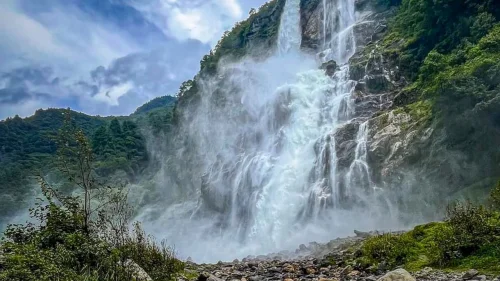
Nichiphula Waterfall is a natural roadside waterfall located near Bhalukpong on the Assam–Arunachal Pradesh border.

Frequently Asked Questions About Kameng River

Kameng River flows through West Kameng district of Arunachal Pradesh and enters Assam near Bhalukpong. It is a major river in the region known for its clear water and mountain backdrop.
Kameng River can be accessed easily from Bhalukpong town within a short drive or walk depending on the chosen riverbank spot. Local taxis and private vehicles are commonly used for access.
The best time to visit Kameng River is between October and April when the weather remains pleasant and river conditions are more stable. Monsoon months bring heavy rainfall and stronger currents.
Kameng River is popular for scenic river views angling and river rafting activities depending on season and permissions. Many travelers stop here while exploring Bhalukpong and nearby areas.
Kameng River is suitable for family visits during daytime provided visitors remain cautious near the water. Rocky and uneven riverbanks require careful movement.
There are hotels and guesthouses available in Bhalukpong near Kameng River. Many travelers also stay in nearby towns along the highway route.
Kameng River has no permanent tourist facilities along most natural stretches. Basic amenities such as restaurants and shops are available in Bhalukpong town.
Most travelers spend one to two hours at Kameng River enjoying the scenery and short riverside walks. It is often included as a stop during a road trip through the region.
Kameng River may be difficult to access safely during peak monsoon season due to high water levels and strong currents. Checking weather conditions before visiting is advisable.
Travelers visiting Kameng River should carry drinking water comfortable footwear and light sun protection. Staying at a safe distance from strong currents is important for safety.

Loved this place ? Let’s Plan Your Arunachal Pradesh Trip

Get customized Arunachal Pradesh tour planning designed around mountain road distances, permit requirements, seasonal weather windows, and realistic travel pacing. Whether you are visiting for monasteries, high-altitude passes, river valleys, tribal cultu

⚡ Quick Response | 💰 Free consultation | 🕒 24×7 expert support

×

Plan Your Trip