Quick Facts About Giant Buddha Statue & Temple
| Entry Fee | Free |
| Timings | 08:00 - 18:00 |
| Altitude (m) | 3050 |
| Ideal Visit Duration (hrs) | 1 |
| Best Time of Day | 08:00 - 10:00 |
| Crowd Level | Moderate |
| Distance from City Centre (km) | 3 |
| Walking Difficulty | Easy |
| Parking Available | Yes |
| Last Mile Access | Road |
| Suitable for Kids | Yes |
| Suitable for Seniors | Yes |
| Wheelchair Friendly | Partial |
Why Visit
The Giant Buddha Statue and Temple is worth visiting because it offers a quieter and less crowded alternative to Tawang Monastery while still providing a strong spiritual setting. It is easy to reach from town and does not require much walking, making it suitable for short stops. Travelers who want a peaceful place to sit, observe prayer activity, and look out over the valley often find this site more relaxed than larger religious complexes.
Atmosphere
The atmosphere is calm and open due to its hilltop location. Wind is almost constant, and temperatures feel colder than in the town below. The area is usually quiet, with a few monks and local residents visiting for prayer. Tourist groups arrive occasionally but do not stay long, so the site rarely feels crowded. The setting feels more like a viewpoint combined with a place of worship rather than a busy religious campus.
What Makes It Special
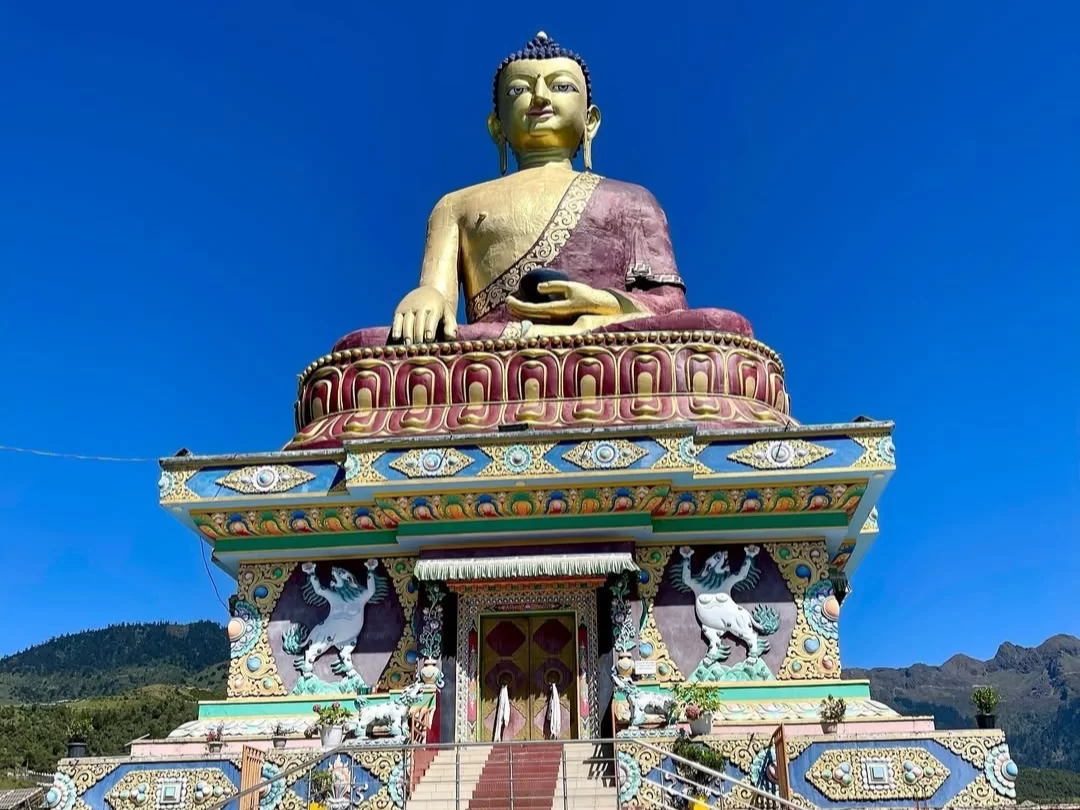
What makes this place special is the scale of the seated Buddha statue and its elevated position overlooking Tawang town. The statue is visible from several parts of the valley and has become a modern landmark of the area. Unlike older monasteries, this site represents a newer religious structure built mainly for worship and meditation rather than monastic training. Its open terraces provide clear views of surrounding hills, making it both a spiritual stop and a scenic point for visitors.
History
The Giant Buddha Statue and Temple in Tawang is a relatively recent religious structure compared to the centuries old monasteries in the region. It was built to provide a dedicated space for prayer and meditation and to serve as a visible symbol of peace and Buddhist faith overlooking the town. The statue was installed on a hilltop site chosen for its open surroundings and clear view of the valley, making it accessible to both local residents and visitors.
The site holds religious importance as a place of daily worship rather than as a monastic institution. Local monks and residents visit the temple for prayers and small ceremonies, especially during Buddhist festivals. Unlike Tawang Monastery, it does not function as a training center for monks or a repository of ancient texts. Its role is mainly devotional, offering a modern spiritual landmark that complements the older religious institutions of Tawang.
Best Time to Visit
The best time to visit the Giant Buddha Statue and Temple in Tawang is from April to October, when road access to Tawang is more reliable and weather conditions are comparatively stable. During this period, daytime temperatures allow comfortable walking around the open terraces and temple platforms. From November to March, heavy snowfall and freezing temperatures often affect visibility and make roads over Sela Pass unpredictable, which can delay or prevent travel to the site.
- April to June offers clearer skies and better views of Tawang town and surrounding hills from the temple platforms.
- July to September is the monsoon season, with fog and rain reducing visibility and occasional landslides affecting access roads.
- October provides cold but dry conditions with fewer tourists compared to summer months.
- November to March brings snow, strong winds, and very low temperatures, limiting outdoor time at the site.
- Early morning is usually the best time of day due to softer light, calmer winds, and fewer visitors.
How to Reach
- By air, the nearest functional airport is Tezpur Airport in Assam, about 320 km from Tawang. From Tezpur, travel continues by road via Bomdila and Dirang. Helicopter services to Tawang from Guwahati or Naharlagun operate occasionally but depend on weather conditions.
- By train, the closest major railway station is Rangapara North in Assam, around 300 km away. From the station, shared sumos and private taxis are available for the road journey to Tawang, usually completed over two days with a halt at Bomdila or Dirang.
- By road, Tawang is connected to Assam through mountain highways passing Bomdila, Dirang, and Sela Pass. The drive from Tezpur takes about 12 to 14 hours in good conditions and crosses high altitude terrain with sharp bends.
- From Tawang town, the Giant Buddha Statue and Temple is about 3 km from the main market area. It can be reached by local taxi or private vehicle in 10 to 15 minutes.
- The approach road is fully motorable up to the entrance area. From the parking point, a short walk is required to reach the main statue and temple platform.
- An Inner Line Permit is mandatory for Indian citizens and a Protected Area Permit is required for foreign nationals to enter Arunachal Pradesh. These permits are checked at multiple points on the route to Tawang.
- Road access can be affected by snowfall in winter and landslides during monsoon months, especially around Sela Pass, so buffer travel days are recommended.
What to Expect When You Visit
- You will arrive at an open hilltop complex rather than an enclosed temple building. The main focus is the large seated Buddha statue placed on a raised platform with surrounding walkways.
- The area is exposed to wind and cold temperatures, even on sunny days. Warm clothing is necessary as there is little shelter from weather.
- Walking effort is minimal, but short staircases connect different levels of the platform. At high altitude, even these short climbs can feel tiring for some visitors.
- The site is generally quiet, with occasional local worshippers and small tour groups stopping briefly for prayer and photos.
- Views of Tawang town and nearby hills are visible from the open edges of the platform when weather is clear.
- There are no shops, cafes, or restrooms at the main statue platform. Basic facilities are available only back in town.
- Visitors are expected to behave respectfully, keep noise low, and avoid climbing on structures or prayer features.
- Time spent here is usually short, as the visit mainly involves walking around the statue, observing the surroundings, and spending a few minutes in quiet reflection.
Important Visitor Information
- Crowd and Weather Notes: The site usually has low crowd levels, with brief spikes when local taxis or tour vehicles arrive. Weather is cold and windy throughout the year due to its exposed hilltop location. Fog and cloud cover can reduce visibility, especially during monsoon months.
- Peak and Quiet Hours: Peak visiting hours are typically between 10:00 AM and 2:00 PM. Quieter hours are early morning from 8:00 AM to 9:30 AM and late afternoon when fewer vehicles stop at the site.
- Dress Code: Modest clothing is recommended as it is a place of worship. Shoulders and knees should be covered. Warm layers are necessary even in summer due to wind and low temperatures.
- Safety Notes: Open platforms and short staircases can become slippery in rain or snow. There are limited railings near edges, so visitors should walk carefully, especially with children and seniors. Due to high altitude, slow movement and rest breaks are advised for those not acclimatized.
Photography and Viewpoint
- The main viewpoint is from the open platform surrounding the Buddha statue, which overlooks Tawang town and the surrounding hills. On clear days, rooftops, roads, and distant ridgelines are visible below.
- Morning light between 8:00 AM and 10:00 AM gives softer shadows on the statue and better visibility across the valley. By afternoon, clouds and fog often move in and reduce viewing range.
- Strong winds are common at the site and can make handheld photography difficult. Tripods can be used, but they need to be stabilized due to uneven stone flooring.
- Photography is allowed in the outdoor areas around the statue and on the platforms. Taking photos inside the small prayer halls is usually restricted, especially during prayer times.
- Visitors should avoid photographing monks or local worshippers without permission, as this is an active religious site and not only a scenic stop.
- There are no marked photo zones or safety barriers at the edges of the platform. Most shots are taken from walking paths, so caution is needed near drop-offs, particularly in wet or icy conditions.
- Winter conditions may provide snow covered views of the statue and surrounding hills, but fog and road closures often limit access and usable photography time.