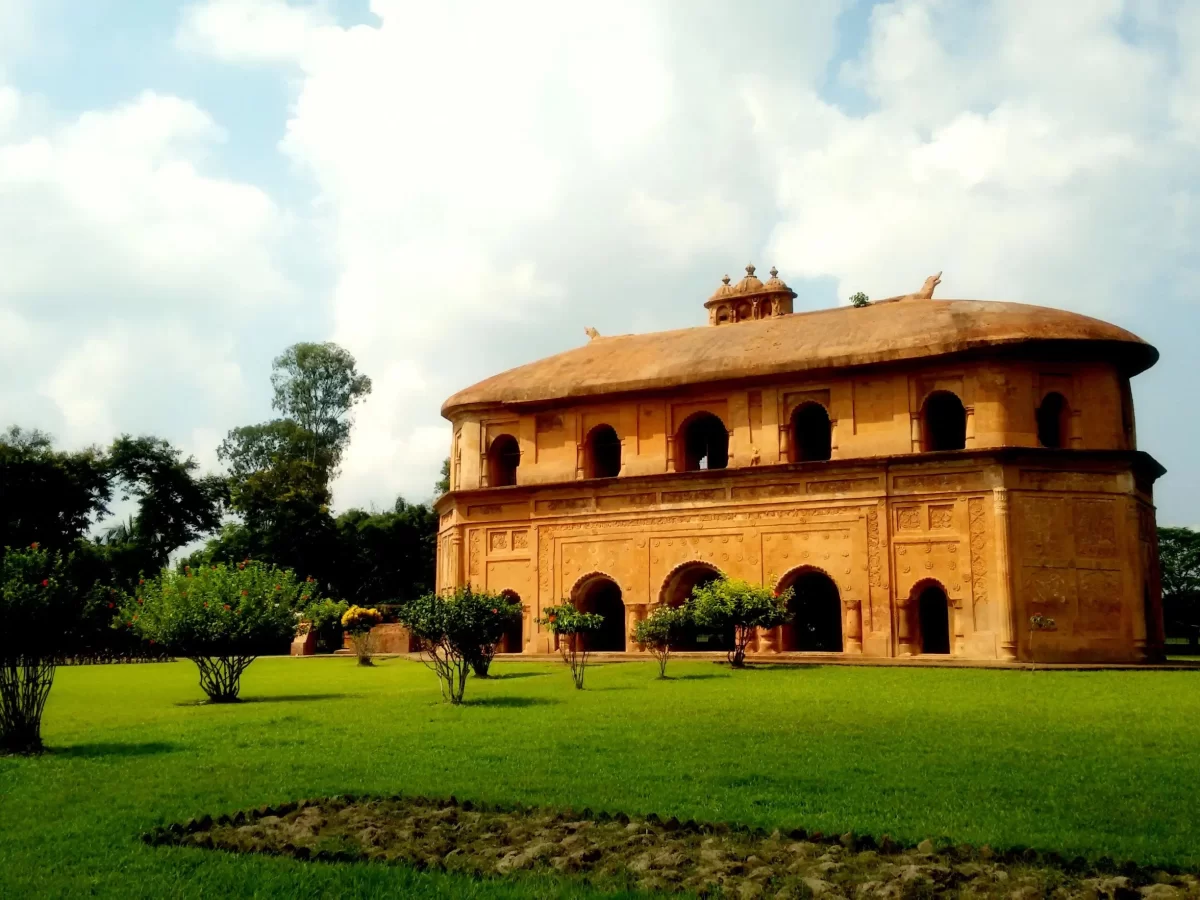
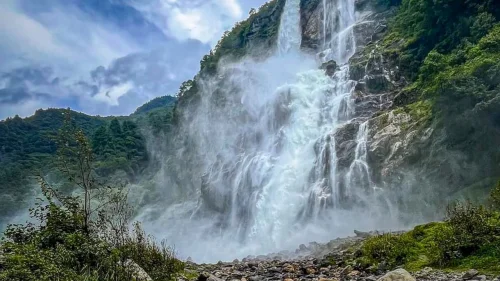
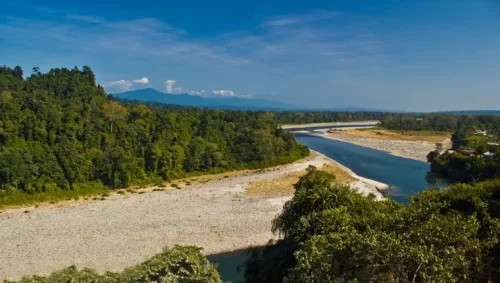
Bhalukpong Fort in Bhalukpong, West Kameng, Arunachal Pradesh, India

Bhalukpong Fort , Bhalukpong
Visitors come to view the remnants of the stone walls and brick structures believed to have been constructed by King Bhaluka, a grandson of King Bana. The site offers historical context regarding the ancient architectural heritage of the region and provides a viewpoint of the surrounding valley and river.

Quick Facts About Bhalukpong Fort

Entry Fee Free
Timings 08:00 - 16:00
Altitude (m) 213
Ideal Visit Duration (hrs) 1
Best Time of Day Morning
Crowd Level Low
Distance from City Centre (km) 2
Walking Difficulty Moderate
Parking Available Yes
Last Mile Access Walk
Suitable for Kids Yes
Suitable for Seniors No
Wheelchair Friendly No

Why Visit Bhalukpong Fort: The Ancient Gateway to the Hills

Visitors come to Bhalukpong Fort to explore the archaeological remnants of a 10th-century fortification that once guarded the strategic mountain pass between the Brahmaputra valley and the Himalayan interior. It serves as a significant site for those interested in the regional power dynamics of ancient Kamarupa, offering a tangible link to the legend of King Bhaluka and the historical fortifications that protected the foothills of Arunachal Pradesh.

The on-ground atmosphere is one of reclaimed wilderness, where stone ruins and ancient brickwork are integrated into the encroaching subtropical greenery. Situated on a bluff overlooking the Kameng River, the site offers a quiet, contemplative environment far removed from the transit noise of Bhalukpong town, allowing travelers to walk through the weathered foundations while listening to the distant roar of the river below.

What makes Bhalukpong Fort distinct is its position as the southernmost archaeological landmark of the state, representing a rare intersection of plains-style masonry and rugged hill terrain. Unlike the more famous monasteries of the north, these ruins provide a unique glimpse into the secular and military history of the region, offering travelers an evocative vantage point that connects the geological transition of the Assam plains to the soaring peaks of the Eastern Himalayas.

Archaeological and Ancestral Heritage of Bhalukpong Fort

Bhalukpong Fort represents one of the few remaining archaeological links to the medieval history of the Arunachal foothills, situated strategically near the banks of the Kameng River. Traditionally attributed to the 10th-century King Bhaluka, the grandson of King Bana, the site marks a historical transition zone between the political spheres of the Assam plains and the tribal territories of the Himalayas. The remnants of the fortification, characterized by weathered brickwork and earthen mounds, indicate a past of sophisticated defensive planning aimed at controlling the vital trade routes that passed through this riverine gorge.

The site holds profound cultural significance for the local Aka (Hrusso) community, who view the ruins as a testament to their ancestral lineage and historical sovereignty over the region. While natural erosion and the passage of time have reclaimed much of the original structure, the area remains a focal point for understanding the socio-political dynamics of pre-colonial Arunachal Pradesh. For travelers, the fort serves as a silent witness to the intersection of mythology and history, offering an experience defined by its atmospheric location overlooking the Kameng valley and its role as the namesake of the modern town.

Best Time to Visit Bhalukpong Fort: A Seasonal Guide for History and Heritage

The ruins of Bhalukpong Fort, perched on the banks of the Kameng River, are best explored when the surrounding dense vegetation is manageable and the trails are dry. Because the site consists of ancient stone remains that can be obscured by rapid tropical growth, timing your visit is essential to ensure visibility of the structures and to avoid the leech-heavy undergrowth common during the humid months.

  • Ideal Months: October to March, providing the clearest access to the ruins and the best lighting for photography of the stone fortifications.
  • Weather Conditions: Expect crisp, dry weather with daytime temperatures between 15°C and 23°C; the lack of rain prevents the forest floor from becoming muddy and keeps the ancient stone surfaces from being dangerously slippery.
  • Periods to Avoid: June to September is highly discouraged, as the torrential monsoon rain causes aggressive jungle overgrowth that can completely hide the ruins, while the high humidity leads to an influx of leeches and mosquitoes in the forested site.

How to Reach Bhalukpong Fort: Essential Access Guide

The ruins of Bhalukpong Fort, associated with the legendary King Bhaluka, are located on the banks of the Kameng River in the West Kameng district of Arunachal Pradesh. Accessing this historical site requires navigating to the border town of Bhalukpong via Assam.

  • Nearest Airport: Tezpur Airport (TEZ) in Assam is the closest domestic airport, situated approximately 52 km away. For a wider range of flight options, Guwahati International Airport (GAU) is the primary hub, located about 240 km from the site (a 5–6 hour drive).
  • Nearest Railway Station: Bhalukpong Railway Station (VNE) is the local railhead, though it has limited train frequency. Most travelers arrive at Rangapara North Junction (approx. 45 km away), which offers better connectivity to Guwahati and Kolkata.
  • Road Access & Last-Mile Connectivity: The fort ruins are located near the Bhalukpong town center. From the town, the site is accessible via local auto-rickshaws or a short walk. Bhalukpong itself is well-connected to Tezpur and Guwahati via NH-13. Shared taxis (Sumos) and APSTS buses are the most common modes of transport.
  • Permit Requirements: Since the fort is located within Arunachal Pradesh, an Inner Line Permit (ILP) for Indian citizens or a Protected Area Permit (PAP) for foreign nationals is mandatory. These are verified at the Bhalukpong entry gate nearby.
  • Realistic Travel Conditions: The "fort" primarily consists of ancient stone ruins and mounds rather than a standing structure. The site can become overgrown during the monsoon (June–September), making the stone steps slippery. It is best visited during the dry months from October to April.

What to Expect When You Visit Bhalukpong Fort

  • http://googleusercontent.com/map_location_reference/1
  • Environment and Surroundings: The ruins of Bhalukpong Fort are located on a hillock overlooking the [Kameng River](http://googleusercontent.com/map_location_reference/0). The site is heavily reclaimed by nature, with ancient stone structures often covered in moss and surrounded by dense subtropical jungle. Expect high humidity and a quiet, secluded atmosphere away from the main transit noise of [Bhalukpong](http://googleusercontent.com/map_location_reference/2) town.
  • Facilities and Amenities: This is a non-commercialized archaeological site with minimal modern infrastructure. There are no restrooms, visitor centers, or drinking water facilities at the ruins. A few basic stone benches may be available, but visitors must carry all necessary supplies from the town center. There is no lighting on-site, making it essential to finish your visit well before sunset.
  • Accessibility and Movement: Reaching the fort involves a short but steep uphill climb from the road. The pathways are unpaved and can be narrow, consisting of earthen tracks and weathered stone steps that become very slippery during the rainy season. It is not accessible for wheelchairs or those with significant mobility challenges. Sturdy footwear with good grip is highly recommended for navigating the uneven terrain.
  • Typical Visitor Behavior and Conditions: The site is primarily visited by history enthusiasts and those seeking a viewpoint of the river valley. Unlike major tourist monuments, it is rarely crowded. Visitors are expected to respect the historical integrity of the ruins; climbing on the fragile ancient walls or removing any stones is strictly prohibited. As it is a quiet spot, maintaining a low noise level is the local norm to preserve the site's tranquil environment.

Essential Visitor Information for Bhalukpong Fort: Expert Insights

  • Crowd & Weather Realities: As a site featuring ancient ruins rather than standing structures, it remains very quiet and rarely crowded. The best time to visit is from October to March; during the monsoon (June to September), the site becomes heavily overgrown with dense jungle vegetation, making the ruins difficult to locate and access.
  • Peak & Quiet Hours: Visit during mid-morning (09:00–11:00) for the best visibility through the forest canopy. Avoid visiting near dusk, as the site is located in a forested area where daylight fades rapidly, and there is no artificial lighting to navigate the uneven terrain.
  • Dress Code & Practical Gear: Wear long trousers, long-sleeved shirts, and sturdy hiking boots. The site is reclaimed by nature, and protective clothing is essential to guard against leeches, stinging nettles, and thorny undergrowth prevalent around the stone remains.
  • Safety & Practical Cautions: The "fort" consists of scattered stone foundations and mounds that can be tripping hazards; watch your footing carefully. Be aware that the ruins are situated near the fringe of the Pakhui Tiger Reserve; avoid wandering deep into the thickets alone and stay alert for local wildlife, including elephants, which are known to move through this corridor.

Capturing the Heritage of Bhalukpong Fort: Photography and Viewpoints

  • Structural Detail and Texture: The remaining mounds and stone foundations of this 10th-century fortification offer excellent opportunities for textural photography. Use a macro or 35mm lens during the mid-morning to capture the contrast between the ancient masonry and the encroaching moss and jungle vegetation.
  • Elevated Valley Perspectives: The fort is situated on a hillock that provides a strategic vantage point overlooking the Kameng River valley. For the best landscape shots, position yourself on the western edge of the ruins during the Golden Hour (15:30 – 16:30) to capture the river winding through the Himalayan foothills in soft, directional light.
  • Atmospheric Morning Shoots: To capture the "lost city" aesthetic, visit at Dawn (05:45 – 07:00). The heavy river mist often rises from the Kameng and clings to the ruins, providing a natural diffusion that simplifies busy backgrounds and emphasizes the silhouette of the ancient structures.
  • Photography Rules and Etiquette: While there are currently no formal fees or permits required for amateur handheld photography at the ruins, the site is of great historical and cultural significance. Avoid climbing on the fragile stone remnants for "action" shots, as this is both a safety risk and a violation of local heritage preservation efforts.
  • Lighting Challenges: The site is heavily shaded by a dense canopy of tropical trees. This creates high-contrast "dappled light" during midday, which can overexpose highlights. Use a Circular Polarizer (CPL) to manage reflections from the foliage and consider shooting in RAW format to recover shadow details in the darker corners of the ruins.
  • Access and Crowd Factors: Bhalukpong Fort is rarely crowded, allowing for unobstructed wide-angle shots. However, the path to the ruins can be slippery and overgrown during and after the monsoon. Wear sturdy footwear to safely reach the best angles, and be mindful that tripod setups are easier here than at the bustling riverfront.

Near By Attraction

Kevin Waterfall in Arunachal Pradesh cascading through lush green forest and rocky terrain Waterfall

Kevin Waterfall

Kevin Waterfall is a small natural waterfall located along the Bhalukpong–Bomdila road near the town of Bhalukpong.

Sessa Orchid Sanctuary scenic entrance surrounded by lush greenery and rare orchid habitat in Arunachal Pradesh Tour Package. Tourist Attraction

Sessa Orchid Sanctuary

Sessa Orchid Sanctuary is a protected forest area near Bhalukpong known for conserving native orchid species of the Eastern Himalayas.

Nichiphula Waterfall in Arunachal Pradesh cascading through lush greenery near Bomdila in West Kameng Waterfall

Nichiphula waterfall

Nichiphula Waterfall is a natural roadside waterfall located near Bhalukpong on the Assam–Arunachal Pradesh border.

Frequently Asked Questions About Bhalukpong Fort

Bhalukpong Fort is located in Bhalukpong in West Kameng district of Arunachal Pradesh near the Assam border. The fort ruins stand on a hill overlooking the Kameng River.
Bhalukpong Fort can be reached within 10 to 15 minutes by road from the main Bhalukpong market area followed by a short walk uphill. Local taxis and private vehicles are commonly used.
The best time to visit Bhalukpong Fort is between October and April when the weather remains pleasant for outdoor exploration. Monsoon months may bring heavy rainfall and slippery paths.
Bhalukpong Fort is important for travelers interested in historical ruins and elevated river views. It serves as a short sightseeing stop while exploring Bhalukpong.
Bhalukpong Fort is suitable for family visits during daytime though the uphill path requires basic walking ability. Visitors should move carefully on uneven stone surfaces.
There are hotels and guesthouses available in Bhalukpong near Bhalukpong Fort. Many travelers also choose to stay in nearby towns along the highway.
Bhalukpong Fort has no developed tourist facilities such as restrooms or food stalls. Visitors should plan essentials in advance before heading to the site.
Most travelers spend 30 to 60 minutes at Bhalukpong Fort exploring the ruins and enjoying the river view. It is usually included as a short stop in a Bhalukpong itinerary.
Bhalukpong Fort remains accessible during monsoon season but heavy rainfall may make the trail slippery. Checking local weather conditions before visiting is advisable.
Travelers visiting Bhalukpong Fort should carry comfortable walking shoes drinking water and light sun protection. Since facilities are limited basic preparation ensures a smooth visit.

Loved this place ? Let’s Plan Your Arunachal Pradesh Trip

Get customized Arunachal Pradesh tour planning designed around mountain road distances, permit requirements, seasonal weather windows, and realistic travel pacing. Whether you are visiting for monasteries, high-altitude passes, river valleys, tribal cultu

⚡ Quick Response | 💰 Free consultation | 🕒 24×7 expert support

×

Plan Your Trip