INS Kursura Submarine Museum in Visakhapatnam, Andhra Pradesh, India

INS Kurusura Submarine Museum , Visakhapatnam
Visitors enter the vessel to observe the confined living quarters, engine rooms, and torpedo compartments used by submariners during its 31 years of service. It is the first submarine museum in South Asia, offering a technical look at maritime warfare and the historical role the vessel played in the 1971 Indo-Pakistani War.

Quick Facts About INS Kurusura Submarine Museum

Quick Facts for Visiting INS Kurusura Submarine Museum

Entry Fee Adults: ?70; Children: ?40. (Still Photography: ?50; Video Camera: ?200).
Timings Mon–Sat: 14:00 – 21:00; Sun: 10:00 – 12:30, 14:00 – 21:00. (Monday is usually the maintenance day, hours may vary).
Altitude (m) 0 m
Ideal Visit Duration 30 – 45 minutes
Best Time of Day 16:00 – 18:00 (To avoid peak afternoon heat and coordinate with the nearby Aircraft Museum).
Crowd Level High (Expect queues for entry, especially on weekends and public holidays).
Distance from City Centre (km) 4 km
Walking Difficulty Easy to Moderate (Exterior is easy; interior involves narrow corridors and very steep, small circular ladders).
Parking Available Yes (Public roadside parking and designated lots along Beach Road).
Last Mile Access Directly accessible via Beach Road by taxi, auto-rickshaw, or private vehicle.
Suitable for Kids Yes (Highly educational, though small children may find the cramped interior intimidating).
Suitable for Seniors Limited (Navigating the internal steep stairs and narrow hatches is physically demanding).
Wheelchair Friendly No (The museum is a decommissioned submarine; the interior is not accessible due to stairs and narrow hatches).

Why Visit INS Kursura Submarine Museum: India’s Maritime Time Capsule

Visitors come to the INS Kursura Submarine Museum for the rare opportunity to walk through a decommissioned Kalvari-class diesel-electric submarine, one of the first and most vital vessels of the Indian Navy. This museum provides a firsthand look at the engineering and strategic significance of a vessel that served the nation for 31 years, including its critical role during the 1971 Indo-Pak war, making it a primary site for those interested in naval warfare and defense history.

The on-ground atmosphere inside the hull is one of intense realism, where the original controls, sonar equipment, and torpedo tubes have been meticulously preserved to reflect life at sea. Stepping inside, travelers experience the cramped, windowless reality of submariners, moving through narrow gangways and observing the tight living quarters that highlight the discipline and psychological resilience required for underwater service.

What makes INS Kursura distinct is its status as Asia’s first submarine museum and its unique permanent position on the sands of RK Beach. Unlike most maritime exhibits that are housed in separate buildings, the entire 91-meter vessel has been hauled out of the sea and mounted on concrete foundations, allowing visitors to appreciate the massive scale of the outer casing before exploring the intricate inner workings that remain largely intact.

Naval Engineering and Strategic Legacy of the INS Kursura Submarine Museum

The INS Kursura Submarine Museum is a decommissioned Kalvari-class diesel-electric submarine situated on the sands of RK Beach, serving as a landmark of maritime engineering. Commissioned in 1969 and decommissioned in 2001, the vessel played a pivotal role in the 1971 Indo-Pakistani War, patrolling the Arabian Sea during hostilities. Its transition from a deep-sea combatant to a land-based museum in 2002 made it the first of its kind in South Asia, preserving the hull and internal systems in their original operational configuration.

The museum offers a factual look at the claustrophobic and highly technical environment of submarine warfare, featuring original torpedo tubes, sonar equipment, and the control room. It serves as a tribute to the "Silent Arm" of the Indian Navy, emphasizing the endurance and discipline required of submariners. For visitors, the experience is defined by the authentic preservation of the living quarters and machinery, providing a direct insight into the naval history and strategic defense capabilities that have protected the Indian coastline for decades.

Best Time to Visit Visakhapatnam: A Seasonal Guide for the Port City

Visakhapatnam, or Vizag, is a tropical coastal city where the "best" time to visit is strictly defined by the balance between the Bay of Bengal's extreme humidity and the cooling influence of the Eastern Ghats. While the city’s beaches and hills are accessible year-round, the transition from scorching summer heat to heavy monsoon rains makes the winter months the only period truly suitable for extensive outdoor sightseeing.

  • Ideal Months: October to March is the peak window, with December being particularly popular for the Visakha Utsav cultural festival and Navy Day celebrations.
  • Weather Conditions: Expect pleasantly cool and dry days with temperatures ranging from 18°C to 28°C. The lack of humidity during this period provides clear views from Kailasagiri Hill and stable sea conditions for visiting the coastal museums.
  • Periods to Avoid: April to June is discouraged due to "scorching" summer temperatures that can exceed 40°C, coupled with stifling humidity that makes afternoon sightseeing physically exhausting. Additionally, the peak monsoon months of July to September bring heavy, unpredictable downpours and high sea surges that frequently disrupt beach access and boat excursions.

How to Reach INS Kursura Submarine Museum: Essential Transit Guide

The INS Kursura Submarine Museum is a premier landmark located on the RK Beach Road in Visakhapatnam. As one of the city's most visited sites, it is well-connected to major transport hubs and is centrally positioned within the main tourist district.
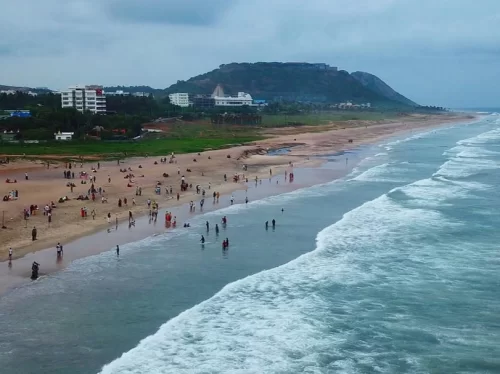
  • Nearest Airport: Visakhapatnam International Airport (VTZ) is approximately 14–16 km away. The journey takes about 40–50 minutes via the NH16. Travelers can easily hire prepaid taxis or use app-based aggregators (Uber/Ola) for a direct transfer to the museum.
  • Nearest Railway Station: Visakhapatnam Junction (VSKP) is the closest major railhead, located roughly 5 km from the museum. A taxi or auto-rickshaw from the station can reach the site in approximately 15–20 minutes. The station is a major stop with direct connectivity to cities like Hyderabad, Kolkata, and Chennai.
  • Road Access & Public Transit: The museum is situated directly on the RK Beach Road. The Dwaraka Bus Station (RTC Complex) is about 4 km away, and frequent city buses (Route 10K and others) drop passengers near the museum entrance. Auto-rickshaws are available throughout the city for easy last-mile connectivity.
  • Pedestrian Access: For those staying in the beach-side hotels in areas like Pandurangapuram or Kirlampudi Layout, the museum is easily reachable on foot via the wide Beach Road promenade.
  • Realistic Travel Conditions: While the roads are in excellent condition, Beach Road is often closed to motorized vehicles during early morning hours (5:00 AM – 7:30 AM) for joggers. Additionally, the area can become highly congested during weekend evenings and public holidays, which may lead to limited parking availability in the immediate vicinity.

What to Expect When You Visit INS Kurusura Submarine Museum

  • Environment and Surroundings: This 91-meter-long Kalvari-class (Soviet Foxtrot-class) submarine is permanently stationed on a concrete foundation on the sands of RK Beach. While the exterior is exposed to the humid, salty sea air of the Bay of Bengal, the interior is a preserved, windowless military environment. Expect a stark contrast between the bright, open promenade outside and the dim, authentic lighting and metallic atmosphere within the vessel's seven compartments.
  • Facilities and Amenities: The museum is staffed by retired naval personnel who serve as guides to explain the technical exhibits. While there is a ticket counter and a small waiting area at the entrance, there are no restrooms or water facilities inside the submarine itself. Visitors must use the public amenities along the Beach Road. Specialized "Dolphin" artifacts and military weaponry are on display throughout the interior walkthrough.
  • Accessibility and Movement: Entry and exit are facilitated through original, modified hatches which involve steep, ladder-like stairs. The interior passageway is extremely narrow (less than 1 meter wide in many sections) with very low overhead clearance. It is not accessible for wheelchair users or individuals with significant mobility issues. Movement is strictly one-way and requires a fair amount of bending and physical agility to navigate between the watertight bulkheads.
  • Typical Visitor Behavior and Conditions: As one of South Asia's first submarine museums, it is a high-traffic destination that remains closed on Mondays for maintenance. On weekends and public holidays, expect long queues and crowded conditions inside the cramped fuselage. Photography is permitted for an additional fee, but flash is often discouraged to preserve the interior's condition. Visitors are expected to keep moving to prevent bottlenecks and must strictly follow the instructions of the naval guides.

Essential Visitor Information for the INS Kursura Submarine Museum: Expert Insights

  • Crowd & Weather Realities: This is a major landmark with high visitor density, particularly from October to March. Because the museum is inside a decommissioned steel hull, the interior can become significantly more humid and warmer than the outdoor sea breeze.
  • Peak & Quiet Hours: The museum typically opens at 14:00 on weekdays and has a split session on Sundays starting at 10:00. The quietest window is immediately upon the 14:00 opening; avoid the 17:00 to 19:00 peak when evening crowds on Beach Road are at their highest.
  • Dress Code & Practical Gear: No official dress code is enforced, but practical footwear is critical. You must step over high door sills and navigate narrow hatches; avoid high heels, loose sandals, or long, flowing attire that could get caught on the submarine's internal machinery.
  • Safety & Practical Cautions: The tour follows a one-way path through extremely confined spaces; it is not recommended for those with severe claustrophobia or significant mobility limitations. Watch your head for low-hanging pipes and valves throughout the walkthrough. Note that the museum is closed on Mondays for maintenance.

Capturing the INS Kursura Submarine Museum: Strategic Photography and Viewpoints

  • The Full-Length Profile View: For a comprehensive shot of the 91.3-meter Kalvari-class submarine, position yourself at the southern end of the museum plaza. The best time for this perspective is Blue Hour (18:15 – 18:45), when the exterior floodlights illuminate the black hull, providing a sharp contrast against the darkening sky and the rhythmic movement of the Bay of Bengal in the background.
  • Low-Angle Bow Perspective: To emphasize the submarine's massive scale and intimidating presence, shoot from a low angle near the bow (front). Use a wide-angle lens (16mm – 24mm) to capture the curvature of the hull extending toward the horizon. This is particularly effective during mid-morning (09:00 – 10:30) when the sun is positioned to highlight the metallic textures without casting long, obscuring shadows.
  • Interior Narrow-Corridor Shots: The interior of the submarine is exceptionally cramped and features vintage Soviet-era instrumentation. Use an ultra-wide-angle lens with a fast aperture (f/1.8 or f/2.8) to capture the torpedo tubes and control rooms. Because the interior lighting is low and fixed, and tripods are strictly prohibited inside, rely on high ISO settings and image stabilization for sharp handheld captures.
  • The "Submarine and Sea" Composition: Utilize the stone promenade located between the museum and the beach. From here, you can frame the submarine with the crashing waves of the Bay of Bengal as a dynamic background. Use a Circular Polarizer (CPL) during the daytime to manage the intense sea glare and to enrich the deep blue of the ocean and the dark tones of the hull.
  • Photography Fees and Equipment Rules: Accessing the museum with a camera requires a mandatory photography permit, which is purchased at the entrance gate separately from the entry ticket. While DSLRs and mirrorless cameras are allowed with this permit, tripods, monopods, and selfie sticks are strictly prohibited inside the submarine and on the main display deck to maintain visitor safety and traffic flow.
  • Security and Drone Restrictions: Due to the museum's location within a high-security naval corridor near the Eastern Naval Command, drone photography is strictly prohibited. Additionally, while the submarine itself is a public exhibit, photography of any active naval vessels or coast guard assets visible in the distance toward the horizon or the harbor is illegal and monitored by security personnel.

Near By Attraction

Sagar Nagar Beach Visakhapatnam. Peaceful coastal stretch known for scenic views, clean shoreline, and relaxing seaside atmosphere. Beach

Sagar Nagar Beach

A coastal beach located north of Visakhapatnam city along the Bay of Bengal.
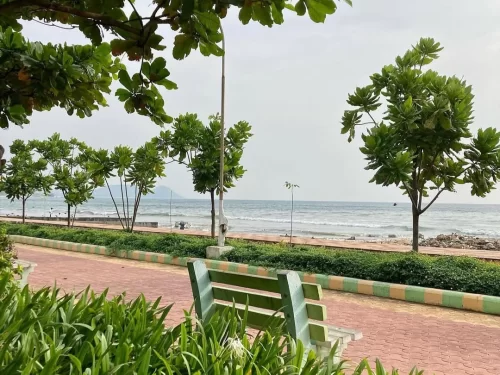
Lawsons Bay Beach Visakhapatnam. Peaceful sandy beach with scenic promenade and Bay of Bengal views in Andhra Pradesh. Beach

Lawsons Bay Beach

A small urban beach located along the Visakhapatnam coastline, known for its calm waters.
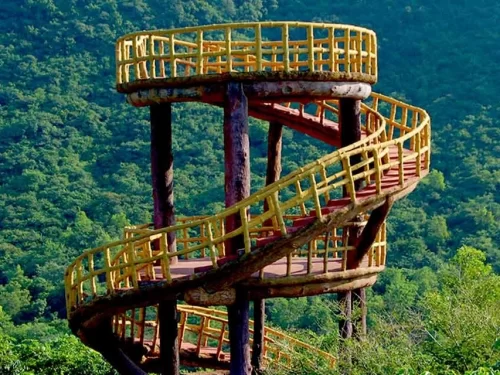
Kambalakonda Wildlife Sanctuary, Visakhapatnam – scenic forest reserve with elevated viewpoint and lush green hills Wildlife Sanctuary

Kambalakonda Wildlife Sanctuary

A protected forest reserve situated on the outskirts of Visakhapatnam, part of the Eastern Ghats.

Frequently Asked Questions About INS Kurusura Submarine Museum

The best time to visit INS Kurusura Submarine Museum is from October to March when the weather is pleasant for coastal sightseeing. Morning and late afternoon hours are usually comfortable for exploring.
INS Kurusura Submarine Museum is generally open during standard daytime hours and remains closed on certain weekly holidays. Visitors should confirm timings before planning.
INS Kurusura Submarine Museum charges a nominal entry fee for visitors. Ticket prices may vary for adults children and camera usage.
INS Kurusura Submarine Museum can be reached easily by taxi auto bus or private vehicle as it is located along a major beachfront road. The entrance is accessible from main city routes.
Most travelers spend 45 to 90 minutes at INS Kurusura Submarine Museum. The visit includes walking through the submarine interior and viewing informational displays.
INS Kurusura Submarine Museum features a decommissioned naval submarine with access to control rooms sleeping quarters and operational sections. Informational panels explain submarine technology and naval history.
INS Kurusura Submarine Museum is suitable for families and students interested in defense and maritime history. Narrow passageways inside require careful movement.
Photography inside INS Kurusura Submarine Museum is usually allowed for personal use. Visitors should follow displayed guidelines and staff instructions.
INS Kurusura Submarine Museum can be visited during monsoon as most sections are enclosed. Rain may affect overall travel comfort along the beachfront area.
INS Kurusura Submarine Museum can be combined with nearby beaches parks aircraft museum and coastal memorials. These attractions are usually accessible within short travel distance.

Loved this place ? Let’s Plan Your Andhra Pradesh Trip

Get customized Andhra Pradesh tour planning designed around coastal weather patterns, temple visit flow, road travel distances, and realistic pacing across regions. Whether you are visiting for spiritual journeys, heritage sites, beach experiences, hill r

⚡ Quick Response | 💰 Free consultation | 🕒 24×7 expert support

×

Plan Your Trip