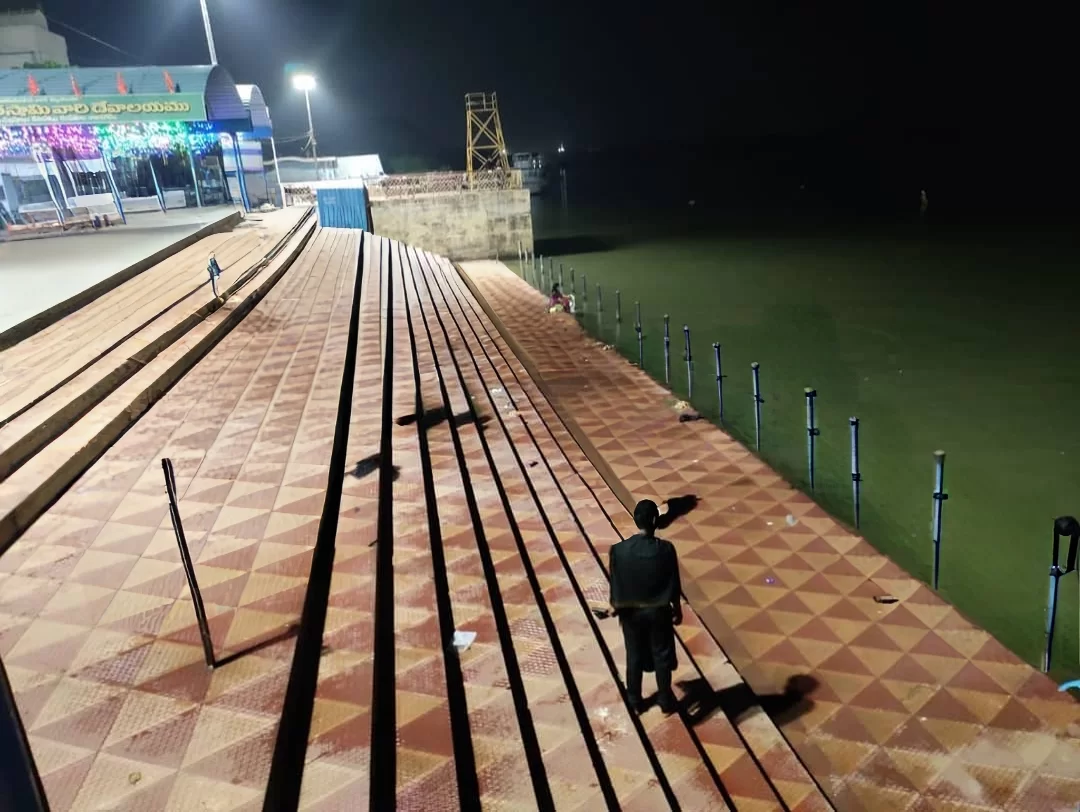
Gowthami Ghat in Rajamahendravaram (Rajahmundry), Andhra Pradesh, India

Gowthami Ghat , Rajamahendravaram
Tourists visit for quiet river views, especially in the early morning and evening, and to see daily life along the Godavari waterfront. It is also used as an access point for short boat rides during local festivals and peak season.

Quick Facts About Gowthami Ghat

Quick Facts for Gowthami Ghat, Rajamahendravaram

Entry Fee Free (boat rides, if taken, are charged separately and vary by operator)
Timings Open 24 hours (most active from early morning to evening)
Altitude (m) Approx. 14 m above sea level (river level varies seasonally)
Ideal Visit Duration 30 minutes to 1 hour
Best Time of Day Early morning for rituals; sunset for river views
Crowd Level Low to moderate; significantly higher during festivals and Pushkaralu
Distance from City Centre (km) Approx. 2 km from Rajamahendravaram city centre
Walking Difficulty Easy to moderate (broad steps leading to the river)
Parking Available Limited (nearby roadside/public parking)
Last Mile Access Accessible by car/auto up to nearby roads; short walk to ghat steps
Suitable for Kids Yes (with close supervision near water)
Suitable for Seniors Partially (multiple steps to reach river level)
Wheelchair Friendly No (stepped access to river; limited ramp availability)

Why Visit Gowthami Ghat Rajamahendravaram

Visitors come to Gowthami Ghat in Rajamahendravaram to experience a quieter stretch of the Godavari River compared to the city’s larger ceremonial ghats. It serves as a regular bathing and prayer spot for locals, offering a more everyday view of river-based ritual life. Travelers often stop here for a calm riverside pause while exploring the Godavari banks.

The on-ground atmosphere is simple and community-driven, with devotees performing small pujas, families sitting along the steps, and priests conducting occasional rituals. The wide river view and open sky create a relaxed setting, especially during early morning when activity is gentle and unhurried. It feels functional rather than heavily structured for tourism.

What makes Gowthami Ghat distinct for travelers is its understated, local character along one of India’s major rivers. Unlike larger festival-focused ghats, this stretch offers a more personal and less crowded interaction with the Godavari. It provides a grounded perspective on daily river devotion in Rajamahendravaram.

History of Gowthami Ghat Rajamahendravaram

Gowthami Ghat, located along the banks of the Godavari River in Rajamahendravaram (Rajahmundry), is one of the city’s prominent riverfront ghats used for ritual bathing and religious ceremonies. The name “Gowthami” refers to a traditional name of the Godavari River, which is also known as the Gautami Godavari in sacred texts and regional tradition.

The ghat developed as part of the city’s historic riverbank infrastructure, where stone steps were constructed to provide organized access to the water for pilgrims and local residents. Over time, it became closely associated with ceremonial practices such as ancestral rites, daily prayers, and large gatherings during major festivals linked to the Godavari.

Today, Gowthami Ghat remains an active spiritual and cultural space, especially during events like Godavari Pushkaralu. For visitors, it offers a direct experience of Rajamahendravaram’s river-based traditions and the enduring religious significance of the Godavari in Andhra Pradesh.

Best Time to Visit Gowthami Ghat, Rajamahendravaram

The best time to visit Gowthami Ghat in Rajamahendravaram is from November to February, when the weather is cooler and more comfortable for riverside walks, evening aarti viewing, and spending time along the Godavari without peak humidity.

  • Ideal months: November to February, especially December and January for pleasant mornings and sunset views over the river.
  • Weather conditions during the best season: Expect daytime temperatures typically between 20°C and 30°C with comparatively lower humidity and mostly dry skies, ideal for sitting on the ghat steps and exploring the riverfront area.
  • Periods to avoid: April to June due to hot and humid coastal conditions that can make daytime visits uncomfortable; July to September during the monsoon, when higher river levels and heavy rain may limit safe access to lower steps of the ghat.

How to Reach Gowthami Ghat, Rajamahendravaram

  • Nearest Airport: Rajahmundry Airport (RJA) is the nearest airport, located approximately 15–18 km from Gowthami Ghat. It operates domestic flights to Hyderabad, Chennai, and Bengaluru. From the airport, taxis and app-based cabs are available, and the drive to the riverfront typically takes 30–45 minutes depending on city traffic.
  • Nearest Railway Station: Rajahmundry Railway Station (RJY) is about 3–5 km from Gowthami Ghat and is a major stop on the Howrah–Chennai main line. It has frequent express and superfast trains connecting Visakhapatnam, Vijayawada, Hyderabad, Chennai, and Kolkata. Auto-rickshaws and taxis are easily available outside the station.
  • Road Access: Gowthami Ghat is located on the Godavari riverfront within Rajamahendravaram city. The city is well connected via NH 16, and the ghat can be reached through city roads from the main bus complex, railway station, and central market areas. Traffic is typically heavier in the evening along riverfront stretches.
  • Last-Mile Connectivity: Auto-rickshaws, taxis, and local buses provide direct access close to the ghat entrance. Parking is limited near the riverfront, so on weekends and festival days, vehicles may need to be parked a short walk away. During monsoon months, access to the lower steps may be restricted due to high water levels.

What to Expect When You Visit Gowthami Ghat Rajamahendravaram

Gowthami Ghat in Rajamahendravaram is a riverside access point along the Godavari River, used primarily for ritual bathing, local gatherings, and river viewing. It functions as a working ghat rather than a landscaped promenade or structured tourist attraction.

  • Environment and surroundings: The ghat consists of stepped access leading down to the Godavari River, with open sky exposure and wide river views. The setting is practical and functional, with visible concrete structures and nearby urban development. Water levels change seasonally—during monsoon, the lower steps may be submerged, while in summer, more of the riverbank may be visible.
  • Facilities and amenities: Facilities are basic and depend on the specific section of the ghat. You may find small stalls selling flowers and puja items, along with limited public washroom access in surrounding areas. There are no dedicated cafés, landscaped seating zones, or structured visitor centers directly on the steps. Carrying drinking water is advisable, especially in warmer months.
  • Accessibility and movement: Gowthami Ghat is accessible by road within Rajamahendravaram, and autos or taxis can drop visitors near the entrance area. Access to the water requires descending multiple stone or concrete steps, which can be slippery due to algae or water splash. Visitors with mobility challenges may find the lower levels difficult to reach.
  • Typical visitor behavior and conditions: Most visitors come for religious rituals, river bathing, or quiet river viewing. Early mornings tend to be more active with devotees, while afternoons are usually quieter except during festival periods. On major religious events, crowd density increases significantly, and movement along the steps may slow. The atmosphere is active but respectful, centered on ritual use rather than leisure activities.

Important Visitor Information for Gowthami Ghat Rajamahendravaram

  • Crowd and Weather Notes: Gowthami Ghat in Rajamahendravaram is a busy riverfront ghat on the Godavari, with the highest local footfall in the evenings and on auspicious bathing or ritual days. Crowds increase sharply during festival periods, especially when nearby ghats host special pujas and gatherings. The climate is hot and humid for much of the year. During monsoon season, the Godavari rises quickly, and the ghat steps can stay wet for long periods.
  • Peak and Quiet Visiting Hours: The ghat is busiest around sunset and early evening, when families gather for river views, prayer, and aarti. Early morning is active for ritual bathing, but outside festival periods it is generally less crowded than evenings. Midday hours are typically quieter due to heat.
  • Dress Code: There is no enforced dress code, but modest clothing is recommended because the ghat is used for religious rituals. If you plan to take a holy dip, carry a change of clothes and a towel, and avoid wearing valuables into the water.
  • Safety Notes and Practical Cautions: The Godavari current can be strong, especially during monsoon and dam release periods, so avoid entering deeper water. The stone steps can be slippery due to algae and constant moisture, particularly near the waterline. Keep a close watch on children and elderly visitors near the edge, and secure your belongings during crowded evening hours.

Photography and Viewpoints in Gowthami Ghat Rajamahendravaram

Gowthami Ghat in Rajamahendravaram sits along a distributary of the Godavari River (Gautami Godavari) and offers a quieter alternative to the busier central ghats. With broad steps, temple structures, moored boats, and open river views, it is well suited for sunrise river photography and documentary-style images of daily life along the water.
  • Best Viewpoints for Photography: The strongest wide compositions come from the upper steps looking diagonally across the ghat, where the tiered stone steps lead toward the river. From near the waterline, you can frame anchored country boats against the calm stretch of the Gautami channel. Slightly elevated corners of the ghat allow balanced shots that include small shrines, lamp posts, and the river horizon in one frame.
  • Lighting Conditions and Time-of-Day Considerations: Sunrise is the most photogenic time, with soft golden light reflecting on the water and minimal glare. Late afternoon provides warmer tones but can introduce side shadows along the steps. Midday sunlight is harsh and reflects strongly off the pale stone surfaces, reducing detail and contrast in wide shots.
  • Rules and Restrictions: Photography is generally allowed in public areas of the ghat. However, avoid photographing individuals during bathing or rituals without permission. Flash photography is inappropriate during prayer activities. Drone use may be restricted, particularly during large gatherings or near adjacent river infrastructure.
  • Crowd and Access Factors: Gowthami Ghat is usually quieter than major festival ghats, but footfall increases in the evenings and during religious observances. For cleaner, uninterrupted compositions and smoother river reflections, visit early on a weekday morning. During monsoon or high water levels, access to the lower steps may be restricted for safety.

Near By Attraction

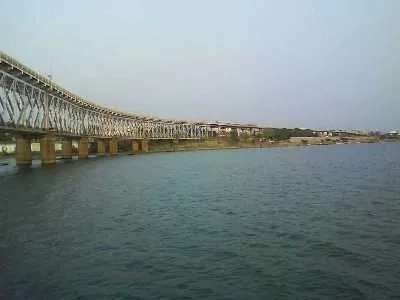
Pattiseema, Godavari River bridge and scenic water views near Pattiseema Temple in Andhra Pradesh. Lake

Pattiseema

Pattiseema is a river island village on the Godavari, known for the Sri Veerabhadra Swamy Temple.
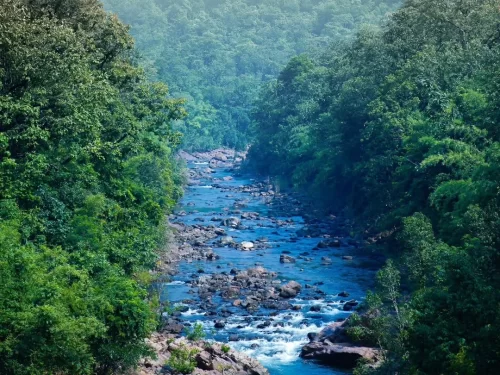
Maredumilli lush forest landscape with flowing river in Andhra Pradesh tour packages. Adventure Park

Maredumilli

Maredumilli is a forested hill area in the Eastern Ghats commonly visited as a day trip or overnight trip from Rajamahendravaram.
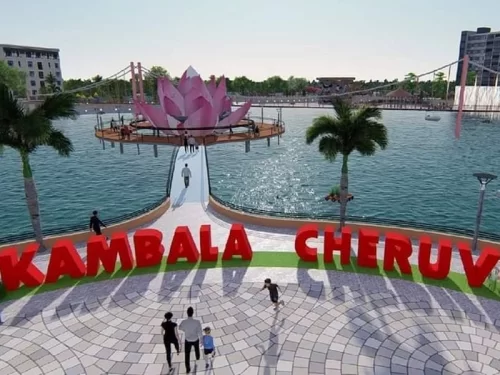
Kambala Cheruvu Park Rajahmundry scenic lake view and lotus structure in Andhra Pradesh tour packages. Adventure Park

Kambala Cheruvu Park

Kambala Cheruvu Park is an urban lakefront park developed around Kambala Cheruvu in the city center.

Frequently Asked Questions About Gowthami Ghat

Gowthami Ghat is located on the banks of the Godavari River in Rajahmundry city of Andhra Pradesh.
Gowthami Ghat is known for its scenic river views, spiritual atmosphere, and its role during local religious ceremonies and festivals.
Gowthami Ghat can be reached easily from any part of Rajahmundry by local transport as it is situated within the main city area.
Gowthami Ghat is generally open throughout the day, with early mornings and evenings being the most visited times.
There is no entry fee to visit Gowthami Ghat as it is a public riverfront area maintained by local authorities.
The best time to visit Gowthami Ghat is between October and February when the weather in Andhra Pradesh is pleasant for riverside visits.
Visitors typically spend 30 minutes to 1 hour at Gowthami Ghat enjoying the river view and peaceful surroundings.
Parking facilities are available near Gowthami Ghat in designated public parking areas around the riverfront.
Boating activities may be available near Gowthami Ghat depending on river conditions and seasonal tourism operations.
Nearby attractions from Gowthami Ghat include ISKCON Temple Rajahmundry, Kambala Cheruvu Park, and other Godavari River viewpoints.

Loved this place ? Let’s Plan Your Andhra Pradesh Trip

Get customized Andhra Pradesh tour planning designed around coastal weather patterns, temple visit flow, road travel distances, and realistic pacing across regions. Whether you are visiting for spiritual journeys, heritage sites, beach experiences, hill r

⚑ Quick Response | πŸ’° Free consultation | πŸ•’ 24Γ—7 expert support

×

Plan Your Trip