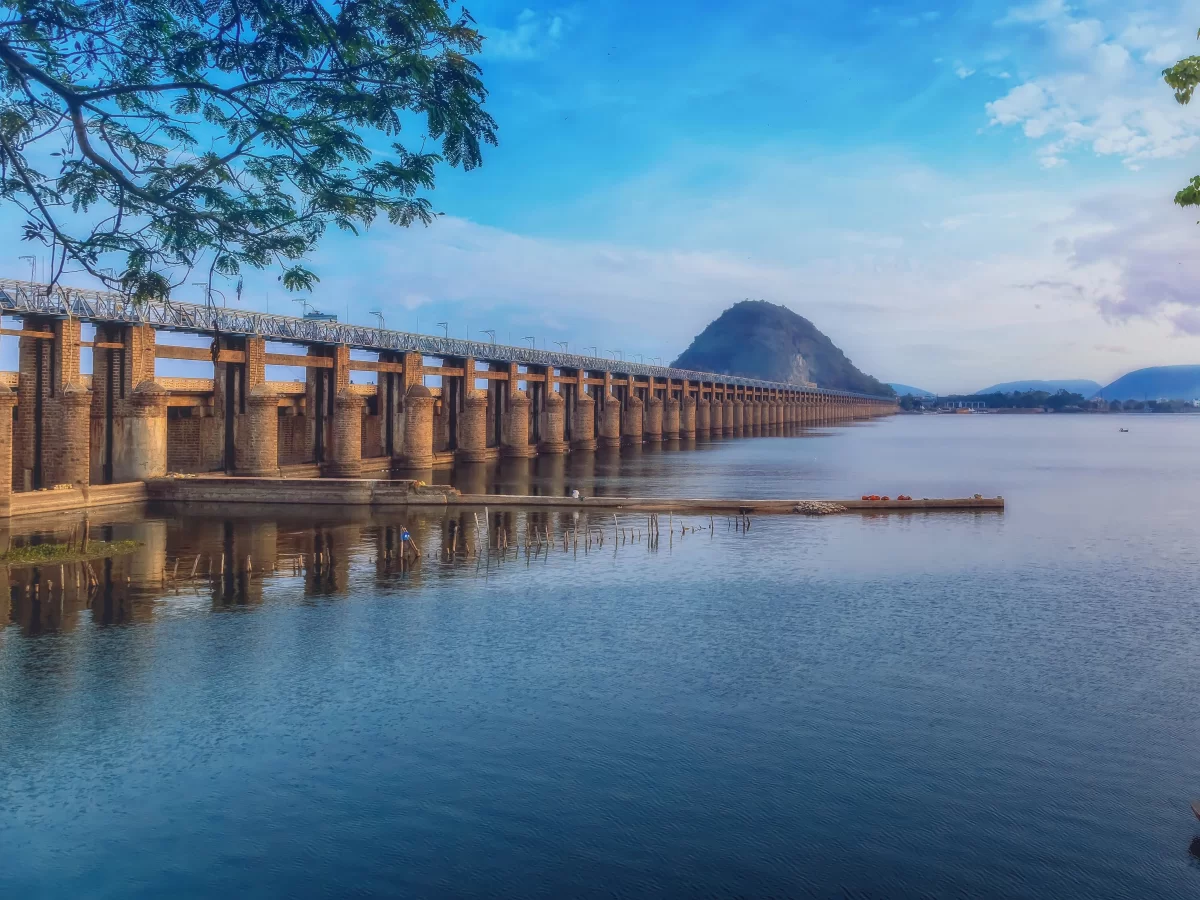
Dowleswaram Barrage in Dowleswaram, Rajamahendravaram (Rajahmundry), Andhra Pradesh, India

Dowleswaram Barrage , Rajamahendravaram
Tourists visit to understand its role in the Godavari delta canal system and to see the wide river spread near Rajamahendravaram. The site is typically a short stop for river views rather than a full sightseeing destination.

Quick Facts About Dowleswaram Barrage

Quick Facts for Dowleswaram Barrage (Sir Arthur Cotton Barrage), Rajamahendravaram

Entry Fee Free (public access limited to designated viewing areas)
Timings Accessible during daylight hours; vehicle movement may be regulated
Altitude (m) Approx. 10 m above sea level (river level varies seasonally)
Ideal Visit Duration 30 minutes to 1 hour
Best Time of Day Morning or late afternoon (pleasant weather and better light)
Crowd Level Low to moderate; higher during monsoon when water discharge is strong
Distance from City Centre (km) Approx. 8 km from Rajamahendravaram city centre
Walking Difficulty Easy (flat surface along designated viewing stretches)
Parking Available Limited (roadside parking near viewing points)
Last Mile Access Accessible by car/auto up to permitted sections; short walk for viewing
Suitable for Kids Yes (with supervision near railings and water flow areas)
Suitable for Seniors Yes
Wheelchair Friendly Partially (flat surface, but access points may lack dedicated ramps)

Why Visit Dowleswaram Barrage

Visitors come to Dowleswaram Barrage near Rajamahendravaram to see the expansive structure that regulates the Godavari River and supports irrigation across coastal Andhra Pradesh. The barrage stretches wide across the river, offering clear views of the flowing water and surrounding landscape, especially during monsoon when the gates release large volumes downstream.

The on-ground atmosphere is open and breezy, with steady river views and locals stopping along the approach roads to watch the water movement. It’s not a conventional tourist attraction, but rather a functional landmark where visitors pause for photographs and riverfront views. Early mornings and evenings are the most comfortable times to visit due to heat and open exposure.

What makes Dowleswaram Barrage distinct for travelers is its scale and its direct role in shaping the agricultural life of the Godavari delta. Unlike decorative riverfronts, this is an active water-control structure that demonstrates the engineering side of the region’s river culture. It adds a practical, landscape-focused dimension to a visit centered on the Godavari.

History of Dowleswaram Barrage

Dowleswaram Barrage, located across the Godavari River near Rajamahendravaram in Andhra Pradesh, was originally constructed in the mid-19th century under the supervision of British engineer Sir Arthur Cotton. Completed in 1852, the structure was built to control flooding and to provide a reliable irrigation system for the fertile Godavari delta, transforming agriculture in the region.

The original anicut (weir) played a crucial role in converting vast tracts of dry land into productive farmland, significantly boosting rice cultivation and stabilizing the local economy. Its success made it one of the earliest and most influential irrigation engineering projects in colonial India.

In the 20th century, the old structure was replaced and modernized into the present-day Dowleswaram Barrage to handle increased water flow and irrigation demands. Today, it remains a vital water management system for the Godavari delta and a historically important landmark associated with the region’s agricultural development.

Best Time to Visit Dowleswaram Barrage, Rajamahendravaram

The best time to visit Dowleswaram Barrage (Sir Arthur Cotton Barrage) near Rajamahendravaram is from November to February, when cooler weather and clearer skies make it comfortable to spend time at the viewpoints and enjoy wide Godavari river views without monsoon rain or peak summer humidity.

  • Ideal months: November to February, especially December and January for comfortable evenings and clearer visibility over the river.
  • Weather conditions during the best season: Expect temperatures typically between 20°C and 30°C with lower humidity and mostly dry days, ideal for walking along the barrage area and photographing the river flow.
  • Periods to avoid: April to June due to hot, humid coastal conditions that make open outdoor stops uncomfortable; July to September during the monsoon, when heavy rain and strong winds can reduce visibility and limit time spent at the barrage.

How to Reach Dowleswaram Barrage (Sir Arthur Cotton Barrage), Rajamahendravaram

  • Nearest Airport: Rajahmundry Airport (RJA) is the nearest airport, located approximately 20 km from Dowleswaram Barrage. It operates regular domestic flights to Hyderabad, Chennai, and Bengaluru. Taxis are available at the airport, and the drive to the barrage typically takes 40–50 minutes depending on traffic.
  • Nearest Railway Station: Rajahmundry Railway Station (RJY) is about 8–10 km from the barrage and is a major stop on the Howrah–Chennai main line. It has frequent express and superfast trains connecting Visakhapatnam, Vijayawada, Hyderabad, Chennai, and Kolkata. Auto-rickshaws and taxis are readily available outside the station.
  • Road Access: Dowleswaram Barrage is located across the Godavari River near Dowleswaram, on the outskirts of Rajamahendravaram. The city is well connected via NH 16. Visitors can approach the barrage through Dowleswaram town roads, which are paved but can get busy during evenings and weekends.
  • Last-Mile Connectivity: Local autos, taxis, and private vehicles can reach the designated parking areas near the barrage. Walking is required to access certain viewpoints. During monsoon season, river discharge levels may restrict access to some sections, and security regulations may limit movement on the structure itself.

What to Expect When You Visit Dowleswaram Barrage Rajamahendravaram

Dowleswaram Barrage, also known as Sir Arthur Cotton Barrage, is a major irrigation structure built across the Godavari River near Rajamahendravaram. It is primarily an operational water-control project, and the experience is centered around river views rather than structured tourism facilities.

  • Environment and surroundings: The barrage stretches across a wide section of the Godavari, offering expansive river views on both sides. During monsoon, the water flow can be forceful and dramatic when gates are open. In drier months, the river may appear calmer and more spread out. The setting feels open and breezy, but midday heat can be intense due to limited shade.
  • Facilities and amenities: There are no dedicated tourist complexes on the barrage itself. Basic amenities such as small tea stalls or snack vendors may be found near access points, but structured facilities like cafés, interpretation centers, or landscaped seating areas are limited. Restroom availability varies and is not guaranteed at all viewing points.
  • Accessibility and movement: The barrage is accessible by road, and vehicles can drive across it, depending on local traffic regulations at the time of visit. There may be pedestrian access along certain sections, but movement can be restricted for safety reasons. Visitors should be cautious near railings and avoid restricted operational areas, especially during high discharge periods.
  • Typical visitor behavior and conditions: Visitors usually stop briefly to view the river, take photographs, or watch water release during high-flow periods. The site does not function as a long-stay attraction, and most people combine it with other visits in Rajamahendravaram. Evenings are generally more comfortable due to cooler temperatures. Safety awareness is important, particularly near the water and traffic lanes.

Important Visitor Information for Dowleswaram Barrage (Rajamahendravaram)

  • Crowd and Weather Notes: Dowleswaram Barrage (Sir Arthur Cotton Barrage) near Rajamahendravaram is a popular river-view stop, especially for locals in the evenings and on weekends. Crowds increase during monsoon and post-monsoon months when the Godavari carries higher flow and the barrage looks most dramatic. The region remains hot and humid for much of the year, while monsoon season brings heavy rain and strong winds around the river.
  • Peak and Quiet Visiting Hours: The busiest time is late afternoon to evening, particularly around sunset when visitors gather for views and photos. Early morning is typically quieter and better for a relaxed walk along the barrage approach areas with less traffic and fewer crowds.
  • Dress Code: There is no dress code for visiting the barrage. Light, breathable clothing is practical, especially in summer. Comfortable footwear is recommended as visitors often walk on long stretches of road and embankment surfaces.
  • Safety Notes and Practical Cautions: The barrage is an active infrastructure site with fast-moving water and strong currents, especially during monsoon. Do not attempt to climb barriers or get close to the water edge. Traffic can be an issue in the evening, so stay alert when walking near the roadway. Surfaces may be slippery after rain, and wind gusts can be strong along the open river span.

Photography and Viewpoints in Dowleswaram Barrage (Rajamahendravaram)

Dowleswaram Barrage (Sir Arthur Cotton Barrage) near Rajamahendravaram is one of the most visually distinctive engineering landmarks on the Godavari River. The long line of gates, wide river spread, and the constant movement of water create strong frames, especially when the barrage is releasing flow and the river surface becomes textured and dramatic.
  • Best Viewpoints for Photography: The best wide shots come from the road-level viewpoint along the barrage, where the repeating gate structure creates a strong horizontal composition across the Godavari. From the side embankment near the river edge, you can frame the barrage diagonally so the gates recede into the distance. During high flow, the downstream side offers the most dynamic water patterns, while the upstream side provides calmer river surfaces and broader landscape context.
  • Lighting Conditions and Time-of-Day Considerations: Early morning is ideal for clearer air and softer reflections on the river. Late afternoon provides warm side-lighting that adds depth to the barrage’s repeating pillars and metalwork. Midday light can be harsh, especially with bright glare off the water, which reduces contrast and detail in wide shots.
  • Rules and Restrictions: Photography from public access points is generally allowed, but certain operational zones may be restricted for safety. Tripods may attract attention in high-traffic areas, and drone use around critical infrastructure is often sensitive and may be restricted. Avoid crossing barriers or photographing from restricted gate-control areas.
  • Crowd and Access Factors: The barrage is a popular local viewpoint, especially in the evenings and on weekends, when pedestrian traffic increases. For cleaner compositions and easier positioning, visit early in the morning. During monsoon season or periods of heavy release, access to some edge viewpoints may be limited due to safety barriers and spray.

Near By Attraction

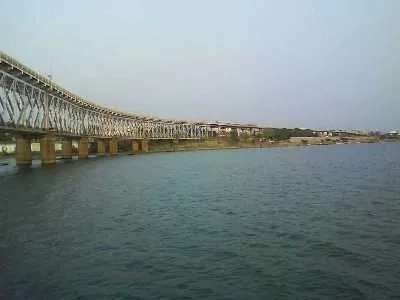
Pattiseema, Godavari River bridge and scenic water views near Pattiseema Temple in Andhra Pradesh. Lake

Pattiseema

Pattiseema is a river island village on the Godavari, known for the Sri Veerabhadra Swamy Temple.
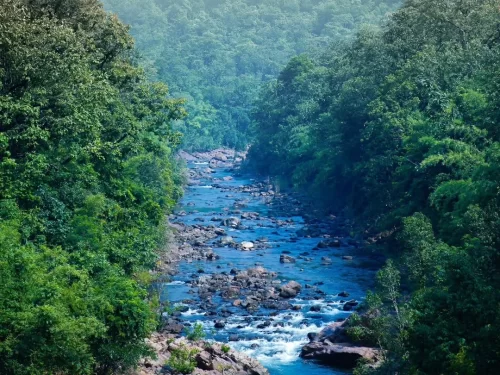
Maredumilli lush forest landscape with flowing river in Andhra Pradesh tour packages. Adventure Park

Maredumilli

Maredumilli is a forested hill area in the Eastern Ghats commonly visited as a day trip or overnight trip from Rajamahendravaram.
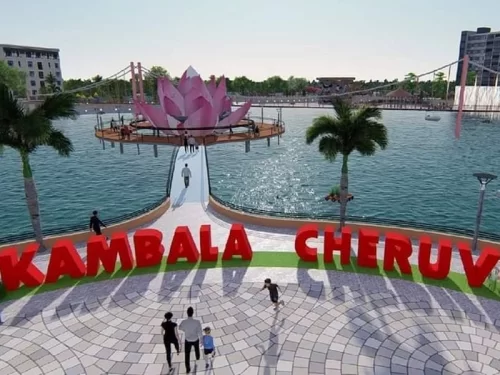
Kambala Cheruvu Park Rajahmundry scenic lake view and lotus structure in Andhra Pradesh tour packages. Adventure Park

Kambala Cheruvu Park

Kambala Cheruvu Park is an urban lakefront park developed around Kambala Cheruvu in the city center.

Frequently Asked Questions About Dowleswaram Barrage

Dowleswaram Barrage is located across the Godavari River near Rajamahendravaram in East Godavari district of Andhra Pradesh. It is an important irrigation structure close to Dowleswaram town.
Dowleswaram Barrage can be reached by road from Rajamahendravaram in about 15 to 20 minutes. The city in Andhra Pradesh has good road connectivity to the barrage area.
Dowleswaram Barrage is generally accessible throughout the day from public viewpoints. Entry to restricted operational zones in Andhra Pradesh may be controlled by authorities.
There is no standard entry fee to view Dowleswaram Barrage from public areas. Parking or access to certain sections in Andhra Pradesh may involve nominal charges.
The best time to visit Dowleswaram Barrage is during the monsoon and post monsoon months when water levels in the Godavari River are high. Winter months in Andhra Pradesh also offer comfortable weather.
Dowleswaram Barrage is suitable for families and senior citizens at designated viewing points. Visitors in Andhra Pradesh should follow safety barriers and avoid restricted edges.
Visitors usually spend 30 minutes to one hour at Dowleswaram Barrage. Many combine the visit with nearby attractions in Rajamahendravaram, Andhra Pradesh.
Parking facilities are available near Dowleswaram Barrage in designated areas. Visitors traveling from Rajamahendravaram in Andhra Pradesh can access parking close to viewing spots.
Boating is not typically conducted directly at Dowleswaram Barrage due to operational safety. However, boating options may be available at nearby ghats in Rajamahendravaram, Andhra Pradesh.
Tourists visiting Dowleswaram Barrage usually stay in Rajamahendravaram city. The city in Andhra Pradesh offers multiple hotels across different budget categories.

Loved this place ? Let’s Plan Your Andhra Pradesh Trip

Get customized Andhra Pradesh tour planning designed around coastal weather patterns, temple visit flow, road travel distances, and realistic pacing across regions. Whether you are visiting for spiritual journeys, heritage sites, beach experiences, hill r

⚡ Quick Response | 💰 Free consultation | 🕒 24×7 expert support

×

Plan Your Trip