


Best Winter Experiences in Sikkim
Explore memorable winter experiences in Sikkim, from snowy landscapes and frozen lakes to monastery visits, mountain views, local culture, photography, and scenic journeys.
+91 9910402252
admin@chalbanjare.com


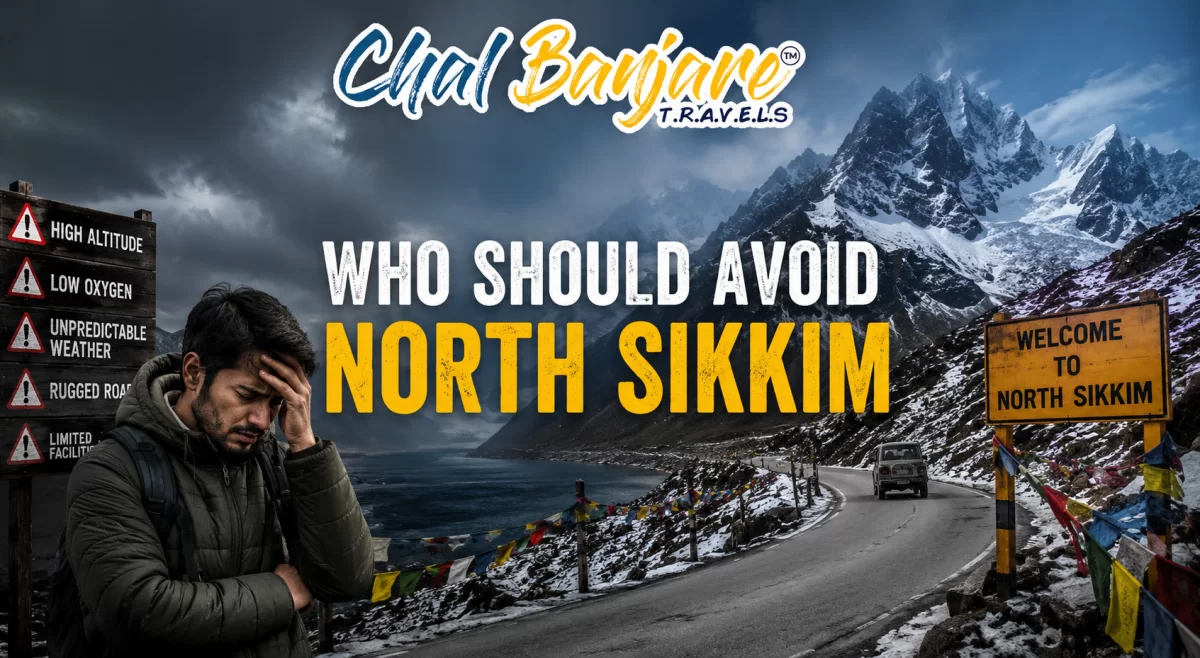
North Sikkim offers stunning Himalayan landscapes, waterfalls, valleys, and high-altitude lakes, but long road journeys, challenging weather, and altitude conditions can make the region unsuitable for certain travelers.
North Sikkim is one of the highest and most remote travel regions in Sikkim, with destinations such as Lachen, Lachung, Yumthang Valley, Zero Point, and Gurudongmar Lake located at significant elevations. As altitude increases, oxygen levels gradually decrease, making breathing more difficult for some travelers. While healthy visitors usually adapt without major problems, people with existing heart conditions, asthma, chronic respiratory illnesses, or other serious medical concerns may experience greater discomfort during the journey.
High-altitude destinations can place additional pressure on the cardiovascular and respiratory systems. Even simple activities such as walking uphill, climbing stairs, or carrying luggage may feel more exhausting than usual. Travelers with pre-existing health conditions should understand that North Sikkim is not a typical hill station vacation and involves exposure to challenging mountain environments where altitude plays an important role in overall travel comfort.
A trip to North Sikkim involves long road journeys through winding Himalayan terrain. Travelers often spend several hours inside vehicles while moving between Gangtok, Lachung, Lachen, Yumthang Valley, and Gurudongmar Lake. These extended drives can become physically tiring even for healthy travelers, while people with heart or breathing conditions may find the journey considerably more demanding.
Continuous travel on mountain roads, combined with changing elevations and limited opportunities for rest, can increase fatigue levels throughout the trip. Remote locations also mean fewer medical facilities compared to larger towns. Travelers should realistically evaluate whether they are comfortable with long travel durations and physically demanding mountain conditions before choosing a North Sikkim itinerary.
Anyone with serious heart disease, respiratory disorders, recent surgeries, or chronic medical conditions should consult a qualified doctor before planning a North Sikkim vacation. Medical professionals can provide guidance regarding altitude suitability, required medications, travel precautions, and any potential risks associated with visiting higher Himalayan regions.
It is also advisable to carry all prescribed medicines, medical records, emergency contact information, and any health-related equipment required during the trip. Proper preparation helps travelers make informed decisions about whether North Sikkim is suitable for their condition and allows them to travel more safely if the journey is approved by their healthcare provider.
North Sikkim requires travelers to spend long hours on mountain roads while moving between Gangtok, Lachung, Lachen, Yumthang Valley, Zero Point, and Gurudongmar Lake. These journeys often involve winding roads, changing elevations, and extended travel durations. Elderly travelers with limited stamina may find continuous road travel physically exhausting, especially when multiple destinations are covered within a short period.
The combination of high altitude, lengthy drives, and limited opportunities for rest can increase overall fatigue. Travelers who prefer relaxed vacations with shorter travel times may find North Sikkim more demanding than regular hill station destinations. Proper trip pacing and comfortable accommodation choices become particularly important for senior travelers.
Several sightseeing locations in North Sikkim involve uneven surfaces, mountain viewpoints, and areas where walking may require extra effort. Senior travelers with joint problems, mobility limitations, or balance concerns may find certain locations challenging, especially in higher-altitude regions where physical exertion feels more demanding.
Cold weather is another factor that can affect travel comfort. Temperatures often drop significantly during mornings and evenings, while winter months can bring freezing conditions. Proper winter clothing, comfortable footwear, and realistic sightseeing plans are essential to ensure a safer and more enjoyable experience.
Not every senior traveler will enjoy the demanding conditions associated with North Sikkim. Those seeking comfortable mountain vacations may find lower-altitude destinations such as Gangtok, Pelling, Ravangla, or other parts of Sikkim more suitable. These destinations provide beautiful Himalayan scenery while requiring less physical effort and shorter travel durations.
Travelers should honestly assess their stamina, health condition, and comfort level before selecting a North Sikkim itinerary. Choosing destinations that match physical capabilities often leads to a more enjoyable and stress-free mountain vacation.
Families traveling with infants and toddlers should understand that North Sikkim involves long road journeys through mountainous terrain. Children may become restless or uncomfortable during extended drives, particularly on winding roads where travel speeds remain slow. Frequent stops are often necessary, which can increase overall travel time.
Unlike urban destinations where facilities are easily available, many parts of North Sikkim are remote. Parents should carefully consider whether young children are comfortable spending several hours in vehicles over multiple days before planning the trip.
High-altitude regions such as Lachen, Gurudongmar Lake, and Zero Point may affect children differently than adults. Lower oxygen levels, colder temperatures, and changing weather conditions can create additional challenges for infants and very young travelers.
Since young children may not always communicate discomfort clearly, parents need to monitor their health closely throughout the journey. Extra caution is necessary when traveling to destinations located at significant elevations where altitude-related discomfort can occur unexpectedly.
Families with small children should avoid overloading their schedules with too many destinations. Slower itineraries with additional rest periods help create a more comfortable travel experience for both parents and children. Selecting accommodations that provide basic comfort and flexibility can also improve the overall journey.
Realistic expectations are important when visiting North Sikkim. The region rewards travelers with spectacular scenery, but the journey itself can be physically demanding. Families should prioritize comfort and safety over trying to cover every attraction in a limited timeframe.
One of the biggest challenges in North Sikkim is the rapid gain in elevation experienced during the journey. Destinations such as Lachen, Zero Point, and Gurudongmar Lake are located at significant heights where oxygen levels become noticeably lower. Travelers sensitive to altitude may experience symptoms such as headaches, nausea, dizziness, fatigue, or shortness of breath.
Altitude affects individuals differently, and even physically fit travelers can experience discomfort. Understanding these risks before travel helps visitors make informed decisions about whether high-altitude destinations are suitable for them.
Acclimatization plays a major role in reducing altitude-related discomfort. Travelers should avoid rushing through their itinerary and allow the body time to adapt gradually to changing elevations. Proper hydration is equally important, as dehydration can worsen altitude symptoms.
Maintaining a slow pace, avoiding excessive physical exertion, and getting sufficient rest can help travelers adjust more comfortably. Those who have experienced altitude sickness previously should be particularly cautious when planning a North Sikkim journey.
North Sikkim is not a typical sightseeing destination where travelers simply arrive and explore comfortably. The region involves significant altitude exposure that requires preparation and awareness. Visitors should understand that weather, elevation, and physical condition can all influence how they feel during the trip.
Those who are highly sensitive to altitude or have experienced severe altitude sickness in the past may wish to consider lower-elevation destinations instead. Making the right decision beforehand can help avoid health complications during travel.
North Sikkim is known for its spectacular scenery, but reaching these destinations requires spending long hours on mountain roads. Travel between Gangtok, Lachung, Lachen, Yumthang Valley, Zero Point, and Gurudongmar Lake often involves full-day driving through remote Himalayan terrain. Travelers who dislike extended road journeys may find the overall experience tiring despite the beautiful surroundings.
Unlike regular hill station vacations where attractions are located close together, North Sikkim requires significant travel time between major sightseeing points. Visitors should be prepared for long days on the road before planning their itinerary.
The mountain roads of North Sikkim include numerous sharp turns, steep climbs, and occasional rough stretches. Road conditions can vary depending on weather and seasonal maintenance work. Continuous winding roads may become physically tiring for travelers who are not used to mountain driving.
Those who prefer smooth highways and short transfers between destinations may find the travel conditions more challenging than expected. Understanding the nature of Himalayan road travel helps visitors prepare realistically for the journey.
North Sikkim is more about the journey than simply reaching attractions. Travelers spend considerable time driving through valleys, forests, riversides, and mountain landscapes. While many visitors enjoy this experience, others may find the long travel hours exhausting.
People who prefer quick sightseeing, urban comforts, and shorter travel durations should carefully evaluate whether North Sikkim matches their travel preferences before booking the trip.
Travelers who frequently experience motion sickness should understand that North Sikkim involves continuous driving on winding mountain roads. Frequent turns, elevation changes, and long travel durations can increase the likelihood of dizziness and nausea during the journey.
Since sightseeing locations are spread across remote mountain regions, avoiding extended vehicle travel is difficult. Travelers who are highly sensitive to motion may find certain routes physically uncomfortable.
Roads leading toward Lachung, Lachen, Yumthang Valley, Zero Point, and Gurudongmar Lake involve numerous curves and mountain sections. These conditions may create difficulties for travelers prone to severe motion sickness, especially during full-day journeys.
Cold weather, altitude changes, and long hours inside vehicles can further increase discomfort. Planning realistic travel schedules becomes particularly important for sensitive travelers.
Travelers who know they are susceptible to motion sickness should carry prescribed medicines and personal travel essentials. Regular breaks, adequate hydration, and lighter meals can also help reduce discomfort during road travel.
Proper preparation allows many visitors to enjoy North Sikkim safely, but individuals with severe motion sickness should carefully consider whether long Himalayan road journeys suit their comfort level.
North Sikkim remains one of the more remote tourism regions in the Eastern Himalayas. While accommodation options are available, many areas focus on practical mountain stays rather than luxury tourism experiences. Travelers expecting premium facilities similar to major urban destinations may find services more basic.
The region prioritizes natural beauty and mountain exploration rather than luxury hospitality. Understanding this difference helps visitors set realistic expectations before arrival.
Unlike larger tourist destinations, North Sikkim offers limited nightlife, shopping districts, entertainment venues, and modern urban conveniences. Most evenings are spent enjoying mountain views, local hospitality, and peaceful surroundings.
Travelers looking for vibrant nightlife, extensive dining choices, and luxury leisure experiences may find the region quieter than expected.
The main attraction of North Sikkim is its untouched natural beauty. Visitors come to experience rivers, waterfalls, valleys, mountains, and remote Himalayan landscapes rather than luxury tourism facilities.
Those who appreciate nature, photography, and mountain exploration often enjoy the destination greatly, while travelers seeking luxury-focused vacations may prefer other destinations with more developed tourism infrastructure.
North Sikkim experiences significant temperature variations, particularly in higher-altitude locations. Even during relatively warm seasons, mornings and evenings can feel cold. Winter months bring much lower temperatures, especially around Lachen and nearby high-altitude regions.
Travelers who dislike cold weather may find these conditions uncomfortable during outdoor sightseeing and road journeys.
Weather conditions can change rapidly across the mountains. Clear skies may quickly give way to clouds, rain, fog, or snowfall depending on the season. Such changes can affect visibility, sightseeing opportunities, and overall travel comfort.
Visitors should remain flexible and prepared for unexpected weather conditions throughout the journey.
Layered clothing, warm jackets, gloves, comfortable footwear, and rain protection are important throughout much of the year. Travelers who are highly sensitive to cold weather should carefully choose their travel season and accommodation options.
Being properly prepared greatly improves comfort and helps travelers enjoy North Sikkim's mountain landscapes despite changing weather conditions.
North Sikkim is very different from conventional hill station destinations. Travelers visiting mountain regions for the first time often underestimate the challenges associated with altitude, weather, and long road journeys. Destinations such as Lachen, Gurudongmar Lake, and Zero Point involve higher elevations where preparation becomes important for a comfortable experience.
Unlike city vacations, travelers need to consider physical readiness, seasonal conditions, and travel logistics before entering remote Himalayan regions. Proper planning significantly improves safety and overall travel enjoyment.
Many areas of North Sikkim are located far from major towns and medical facilities. Transportation options may also be limited compared to more developed tourist destinations. First time mountain travelers may not always expect these realities and can face difficulties if they encounter health or travel-related issues during the journey.
Understanding the remote nature of the region helps visitors prepare properly and avoid unnecessary travel complications.
Weather conditions, road closures, altitude discomfort, and changing mountain conditions can influence travel plans at any time. Travelers who are unfamiliar with mountain tourism should spend time understanding these factors before visiting North Sikkim.
Preparation, flexibility, and realistic expectations allow first time visitors to enjoy the destination more safely while reducing stress during the journey.
North Sikkim includes several remote valleys and mountain settlements where mobile network connectivity may be limited or inconsistent. Travelers who rely heavily on internet access, continuous communication, or digital services may find these conditions inconvenient during their trip.
Network availability often varies by location, weather conditions, and service provider. Visitors should prepare for occasional connectivity challenges while exploring remote Himalayan regions.
Compared to larger tourist destinations, emergency services and support facilities are less accessible in some parts of North Sikkim. While assistance is available when needed, response times may be slower due to the remote nature of the region and challenging mountain terrain.
Travelers who prefer destinations with extensive urban infrastructure may find North Sikkim less comfortable from a logistical perspective.
Visitors should carry essential medicines, important documents, adequate cash, warm clothing, and other travel necessities before entering remote mountain areas. Being self-sufficient helps reduce difficulties caused by limited facilities and services.
Travelers who appreciate remote wilderness and peaceful mountain environments generally enjoy these conditions, while those uncomfortable with isolation may prefer more accessible destinations.
North Sikkim is not suitable for every traveler. The region combines long mountain drives, remote destinations, high-altitude conditions, and unpredictable weather. While these factors create extraordinary travel experiences, they can also make the journey physically demanding for some visitors.
Assessing your health, travel preferences, and comfort level before planning the trip helps ensure a safer and more enjoyable experience.
Travelers should choose itineraries that match their physical condition and mountain travel experience. Families with children, senior citizens, and first time mountain travelers may benefit from slower schedules with additional rest days and fewer high-altitude destinations.
Proper planning reduces travel fatigue and allows visitors to experience North Sikkim more comfortably.
Before traveling, confirm weather conditions, carry identification documents, pack suitable clothing, arrange permits through authorized channels, and prepare for long road journeys. Travelers should also carry medicines, maintain realistic expectations, and allow sufficient time for acclimatization where necessary.
With proper preparation and responsible travel planning, North Sikkim can offer unforgettable Himalayan landscapes, unique cultural experiences, and some of the most scenic mountain journeys in the region.


Get customized Sikkim tour planning based on season, altitude comfort, travel permits, and realistic road travel time. Whether you are visiting for scenic landscapes, monastery circuits, mountain views, or peaceful hill stays, our experts design practical
⚡ Quick Response | 💰 Free consultation | 🕒 24×7 expert support