


Best Winter Experiences in Sikkim
Explore memorable winter experiences in Sikkim, from snowy landscapes and frozen lakes to monastery visits, mountain views, local culture, photography, and scenic journeys.
+91 9910402252
admin@chalbanjare.com


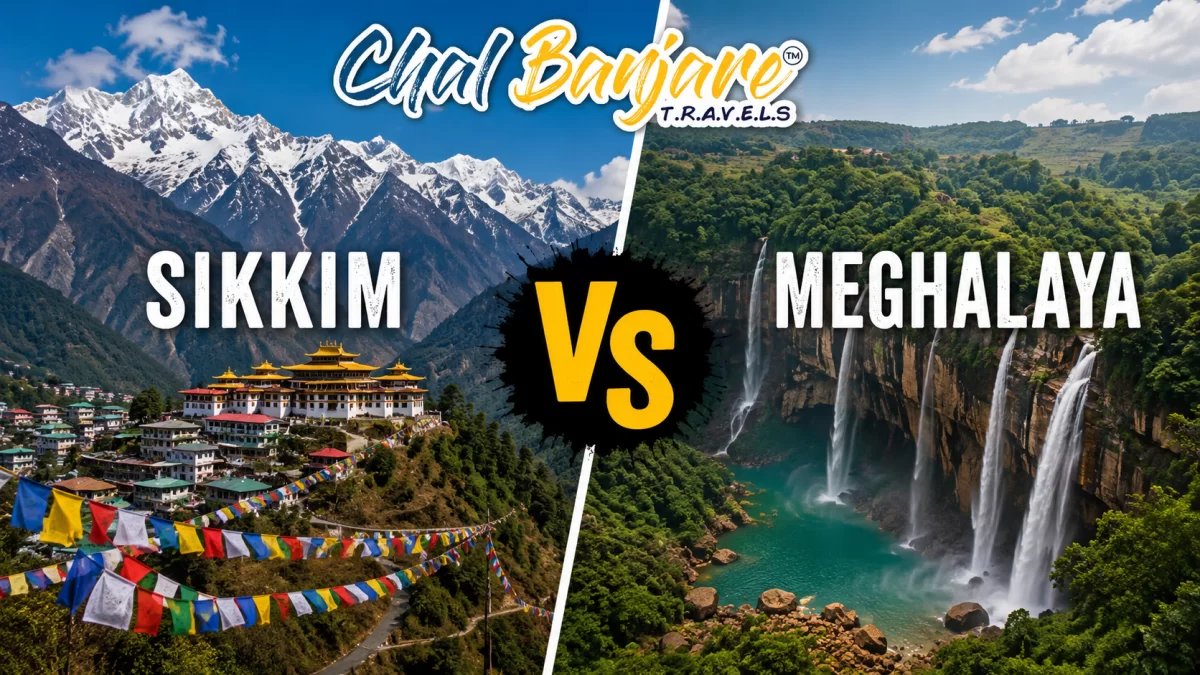
Sikkim and Meghalaya are two of Northeast India’s most popular travel destinations, offering completely different experiences through mountains waterfalls monasteries forests valleys and unique local cultures.
Sikkim and Meghalaya are among the most popular destinations in Northeast India, but they offer very different travel experiences. Sikkim is defined by snow-covered Himalayan mountains, monasteries, alpine valleys, high-altitude lakes, and scenic mountain roads. The state attracts travelers seeking dramatic Himalayan scenery, cultural experiences, and mountain adventures.
Meghalaya presents a completely different landscape dominated by waterfalls, forests, caves, rivers, and cloud-covered hills. The atmosphere is greener, softer, and more nature focused. While Sikkim feels like a classic Himalayan mountain destination, Meghalaya offers a lush countryside experience where nature remains the central attraction throughout the journey.
Travelers choose Sikkim because it combines spectacular mountain scenery with Buddhist culture, monasteries, traditional villages, and diverse landscapes. The state offers opportunities to experience snow peaks, alpine lakes, mountain roads, and cultural attractions within a single itinerary.
Meghalaya attracts travelers who enjoy waterfalls, caves, forests, rivers, and indigenous cultural experiences. The region is famous for its natural beauty and unique local traditions. Visitors often come to experience living root bridges, scenic valleys, village life, and some of the greenest landscapes found anywhere in India.
Sikkim is ideal for travelers whose primary goal is experiencing the Himalayas. Snow-covered peaks, mountain passes, monasteries, and alpine scenery dominate the travel experience. The state offers dramatic views and a strong sense of mountain adventure.
Meghalaya is better suited to travelers who prefer greenery, waterfalls, caves, rivers, and relaxed countryside exploration. Rather than focusing on high-altitude mountains, the destination emphasizes natural beauty and scenic landscapes that remain lush throughout much of the year.
Sikkim offers one of the most diverse mountain landscapes in India. Travelers encounter snow-covered Himalayan peaks, alpine lakes, deep valleys, monasteries, forests, and scenic mountain roads throughout the state. The variety of landscapes ensures that every region feels unique and offers different sightseeing opportunities.
Destinations such as Gangtok, Pelling, Lachung, and Tsomgo Lake showcase different aspects of the state's beauty. Travelers can experience mountain views, cultural attractions, spiritual sites, and natural scenery within relatively short travel distances, making Sikkim an exceptionally rewarding destination for nature lovers.
Road trips form an important part of the Sikkim travel experience. The state's mountain roads pass through forests, valleys, villages, rivers, and high-altitude landscapes. Every route offers changing scenery, making travel between destinations as enjoyable as the attractions themselves.
Whether traveling toward North Sikkim, East Sikkim, or West Sikkim, visitors experience different mountain environments and cultural influences. These road journeys provide opportunities for photography, sightseeing, and appreciating the scale of the Himalayan landscape.
Gangtok serves as the tourism hub of Sikkim and provides access to many of the state's most famous attractions. Pelling is known for panoramic mountain views, while Lachung offers access to valleys and high-altitude landscapes in North Sikkim. Zuluk provides scenic road journeys and sunrise viewpoints along the historic Silk Route.
Together, these destinations create a highly diverse travel experience. Visitors can combine cultural attractions, mountain scenery, village life, road trips, and adventure travel within a single itinerary, making Sikkim one of the most versatile destinations in Northeast India.
Meghalaya is renowned for its lush landscapes and natural attractions. Waterfalls, caves, forests, rivers, and mist-covered hills dominate the scenery throughout the state. The region's high rainfall supports dense vegetation and creates some of the most dramatic waterfall landscapes in the country.
Travelers frequently encounter scenic viewpoints overlooking valleys filled with clouds and greenery. The combination of forests, waterfalls, and rolling hills gives Meghalaya a distinctive appearance that differs significantly from the rugged mountain terrain of the Himalayas.
The primary appeal of Meghalaya lies in its natural beauty. Rivers with clear water, forest trails, caves, waterfalls, and green valleys create a travel experience centered around outdoor exploration. Nature remains the highlight regardless of which part of the state visitors choose to explore.
The scenery changes throughout the year, with monsoon and post-monsoon periods creating particularly vibrant landscapes. The region appeals strongly to travelers who enjoy greenery, peaceful environments, and unique natural formations.
Shillong serves as the cultural and tourism center of Meghalaya and acts as the gateway to many attractions. Cherrapunji is famous for waterfalls, caves, and dramatic landscapes, while Dawki attracts visitors with its remarkably clear river. Mawlynnong is known for its village atmosphere and scenic surroundings.
These destinations offer a combination of natural attractions, local culture, and outdoor experiences. Together they create a travel circuit that highlights the unique identity of Meghalaya and showcases some of the most beautiful landscapes in Northeast India.
Sikkim offers some of the most dramatic mountain scenery in India. Snow-covered Himalayan peaks, alpine valleys, glacial lakes, monasteries perched on hillsides, and winding mountain roads create a landscape that constantly changes throughout the journey. The presence of towering mountain ranges gives the state a grand and adventurous atmosphere that appeals strongly to travelers seeking classic Himalayan experiences.
Destinations such as North Sikkim, Tsomgo Lake, Pelling, and the Silk Route showcase different forms of mountain beauty. Travelers can move from forest-covered valleys to rugged high-altitude terrain within a single trip. This diversity makes Sikkim particularly attractive for those who want to experience the full range of Himalayan landscapes.
Meghalaya presents a greener and softer form of natural beauty. The state is known for its waterfalls, rivers, forests, caves, and rolling hills covered in mist and clouds. Unlike the towering peaks of Sikkim, Meghalaya's scenery focuses on lush landscapes and dramatic monsoon-fed natural attractions.
The abundance of waterfalls and dense greenery creates a visually rich environment throughout the year. Travelers often find themselves surrounded by forests, cloud-filled valleys, and flowing rivers that contribute to a peaceful and refreshing travel experience. Meghalaya is especially appealing to nature lovers who enjoy greenery and water-based landscapes.
Choose Sikkim if your priority is experiencing snow mountains, alpine valleys, high-altitude lakes, and iconic Himalayan scenery. The state offers a more adventurous and dramatic visual experience centered around mountain landscapes and elevated viewpoints.
Choose Meghalaya if you prefer waterfalls, forests, rivers, caves, and lush countryside scenery. The destination offers a calmer and greener environment where nature feels closer and more accessible. The better choice depends entirely on whether you are drawn to mountain grandeur or vibrant natural landscapes.
Sikkim is a paradise for landscape and travel photographers. Snow-covered Himalayan peaks, colorful monasteries, mountain roads, and dramatic viewpoints provide endless opportunities for photography. Many destinations offer elevated viewpoints where photographers can capture vast mountain ranges stretching across the horizon.
Monasteries add cultural depth to landscape photography. Traditional architecture set against Himalayan backdrops creates striking visual compositions that combine spirituality and natural beauty. Throughout the state, mountain roads and changing weather conditions contribute to dynamic photography opportunities.
Sikkim offers some of the most impressive sunrise photography locations in Northeast India. Early morning light illuminating snow-covered mountains creates spectacular scenes that attract photographers throughout the year. Lakes, valleys, and ridgelines provide ideal foreground elements for dramatic mountain images.
Destinations such as Tsomgo Lake, North Sikkim, and the Silk Route provide excellent opportunities to capture reflections, changing weather conditions, and panoramic Himalayan views. Sunrise and sunset often transform the landscape, creating unique photography conditions every day.
Photography opportunities in Sikkim vary significantly with the seasons. Spring introduces flowers and greenery, summer brings vibrant valleys, autumn delivers exceptional mountain visibility, and winter creates snow-covered landscapes. Each season offers a distinct visual character that attracts photographers with different interests.
North and East Sikkim are particularly popular because of their diverse scenery and changing weather conditions. Photographers can capture everything from alpine landscapes and lakes to village life and mountain roads within a relatively compact geographical area.
Meghalaya is one of the most photogenic destinations in India for travelers interested in nature photography. Waterfalls cascading from cliffs, crystal-clear rivers, dramatic cave formations, and living root bridges provide unique photographic subjects that are rarely found together elsewhere. The state offers a remarkable variety of natural attractions for photographers.
Waterfalls remain among the most photographed features of Meghalaya. During monsoon and post-monsoon periods, these waterfalls become particularly dramatic, creating spectacular opportunities for landscape and long-exposure photography. Living root bridges add a cultural and ecological dimension to photography experiences.
The mist-covered hills and cloud-filled valleys of Meghalaya create an atmosphere that is highly attractive to photographers. Rolling green landscapes, dramatic weather patterns, and changing visibility conditions allow photographers to capture mood and atmosphere in ways that differ from traditional mountain photography.
Cloud formations often move quickly across the landscape, creating constantly changing scenes. These conditions provide opportunities for creative photography focused on light, weather, and natural textures throughout the region.
Monsoon is one of the most rewarding times for photography in Meghalaya because the state's natural attractions reach their peak visual impact. Waterfalls become more powerful, forests appear greener, and rivers flow more dramatically through valleys and countryside landscapes.
Nature photographers often find Meghalaya especially rewarding because of its biodiversity and constantly changing scenery. The combination of rainfall, clouds, forests, and dramatic terrain ensures that every journey presents fresh photographic opportunities.
Sikkim offers a rich cultural experience shaped by Buddhist traditions, Himalayan communities, and centuries-old mountain heritage. Monasteries are among the most important cultural attractions across the state and often serve as both spiritual centers and architectural landmarks. Travelers can experience prayer halls, colorful murals, traditional ceremonies, and peaceful surroundings while exploring different regions.
Beyond monasteries, Sikkim's culture is reflected in local villages, traditional festivals, handicrafts, cuisine, and daily mountain life. The blend of spirituality and natural beauty creates a unique atmosphere that appeals to travelers interested in both cultural exploration and scenic landscapes. Cultural experiences often feel closely connected to the Himalayan environment.
Meghalaya offers a completely different cultural identity centered around indigenous communities, particularly Khasi traditions. Village life, local customs, music, storytelling, and community-based lifestyles form an important part of the visitor experience. Travelers often encounter strong cultural preservation across many towns and rural regions.
Traditional markets, local cuisine, cultural festivals, and community interactions provide insight into everyday life in Meghalaya. Unlike Sikkim's monastery-focused heritage, Meghalaya's culture feels more closely tied to village traditions, natural surroundings, and community practices that have been maintained for generations.
Sikkim's cultural experience revolves around Buddhist heritage, monasteries, mountain traditions, and spiritual influences visible throughout the state. Travelers interested in monasteries, Himalayan culture, and religious heritage often find Sikkim especially rewarding.
Meghalaya focuses more on indigenous culture, community traditions, village life, and local customs. Travelers seeking cultural diversity, traditional lifestyles, and authentic local experiences may find Meghalaya particularly interesting. Both states offer rich cultural experiences, but their identities are distinctly different and equally memorable.
Adventure in Sikkim is largely connected to mountains, altitude, and exploration of remote Himalayan regions. Travelers can enjoy scenic road trips through North Sikkim, East Sikkim, and West Sikkim while experiencing changing landscapes, mountain passes, and dramatic viewpoints. The journey itself often feels adventurous because of the terrain and elevation.
High-altitude destinations, trekking routes, mountain viewpoints, and remote valleys add to the sense of exploration. Travelers who enjoy rugged landscapes, long road journeys, and Himalayan environments often find Sikkim one of the most exciting adventure destinations in Northeast India.
Meghalaya offers a different style of adventure focused on nature and outdoor exploration. The state is famous for caves, waterfalls, rivers, forest trails, and natural attractions that encourage active sightseeing. Travelers often spend time exploring landscapes on foot while discovering hidden waterfalls and scenic viewpoints.
Adventure activities in Meghalaya are generally less dependent on altitude and more focused on natural exploration. The combination of caves, forests, valleys, and rivers creates an engaging environment for travelers who enjoy outdoor activities without the challenges of high-altitude mountain travel.
Choose Sikkim if your idea of adventure involves mountain roads, alpine landscapes, high-altitude travel, and dramatic Himalayan scenery. The destination provides a stronger sense of expedition and mountain exploration.
Choose Meghalaya if you prefer exploring waterfalls, caves, forests, and natural landscapes at lower elevations. The state offers adventure through nature discovery rather than altitude challenges. The better choice depends on whether you prefer mountain exploration or nature-based outdoor experiences.
Sikkim is well suited for family vacations because it offers established tourism circuits, organized sightseeing routes, and a wide variety of attractions. Families can combine cultural sites, mountain viewpoints, monasteries, lakes, villages, and scenic road trips within a single itinerary. This diversity helps accommodate travelers of different ages and interests.
Popular destinations such as Gangtok and Pelling provide comfortable tourism infrastructure, making travel planning relatively straightforward. Families can choose between relaxed sightseeing and more adventurous mountain exploration depending on comfort levels and available travel time.
Meghalaya is often considered an easier destination for family travel because many attractions involve comfortable road journeys and accessible natural landscapes. Waterfalls, viewpoints, villages, and rivers can be explored without the altitude-related concerns often associated with Himalayan destinations.
The relaxed pace of travel allows families to enjoy sightseeing without extensive acclimatization or long mountain drives. Children and elderly travelers frequently find Meghalaya more comfortable because of its moderate elevation and generally easier travel conditions.
Families seeking mountain scenery, monasteries, and classic Himalayan experiences often prefer Sikkim. The state provides a wider variety of attractions and landscapes, although some regions require longer travel times and adaptation to altitude.
Families looking for waterfalls, greenery, comfortable road trips, and slower-paced exploration may find Meghalaya more suitable. Both destinations are excellent for family travel, and the final choice depends on whether your family prefers mountain adventures or nature-focused relaxation.
Sikkim has a well-developed tourism infrastructure that caters to a wide range of travelers. Visitors can choose from luxury resorts, boutique hotels, family-friendly properties, budget accommodations, and traditional homestays. Major destinations such as Gangtok and Pelling offer extensive accommodation options and tourism services.
The state's tourism industry is well organized, making it easier for travelers to arrange transportation, sightseeing, accommodations, and permits. This convenience is particularly valuable for first-time visitors and families planning multi-destination itineraries across different regions of Sikkim.
Meghalaya provides a growing range of accommodations including resorts, cottages, guesthouses, and homestays located in scenic natural settings. Many properties emphasize proximity to waterfalls, forests, rivers, and countryside landscapes rather than urban tourism facilities.
The accommodation experience often feels more nature-oriented and relaxed. Travelers seeking peaceful surroundings and immersive local experiences frequently appreciate the atmosphere offered by Meghalaya's resorts and village-based stays. Tourism infrastructure continues to improve while maintaining the region's natural appeal.
Sikkim generally offers stronger tourism infrastructure, broader accommodation choices, and more established travel services. This makes trip planning easier and provides greater flexibility for travelers with different budgets and preferences.
Meghalaya offers comfortable accommodations and growing tourism facilities but remains more focused on nature experiences than large-scale tourism development. Travelers seeking convenience and a wider range of services may prefer Sikkim, while those prioritizing peaceful surroundings may appreciate Meghalaya's more relaxed atmosphere.
Sikkim and Meghalaya are both exceptional destinations, but they cater to different travel preferences. Sikkim is ideal for travelers seeking Himalayan landscapes, mountain adventures, monasteries, high-altitude lakes, and dramatic scenery. The destination offers greater geographical diversity and appeals strongly to travelers who enjoy mountain exploration.
Meghalaya is better suited to travelers who prefer waterfalls, forests, caves, rivers, and lush green landscapes. The state provides a slower and more nature-focused travel experience where outdoor exploration and scenic beauty remain the primary attractions. Both destinations deliver memorable experiences, but their appeal lies in different types of landscapes and travel atmospheres.
Choose Sikkim if you dream of mountain roads, snow-covered peaks, monasteries, alpine valleys, and iconic Himalayan viewpoints. The destination is particularly suitable for adventure travelers, photographers, couples, and visitors seeking dramatic mountain scenery.
Choose Meghalaya if you enjoy waterfalls, forests, cave exploration, rivers, and peaceful countryside travel. The destination is ideal for nature lovers, families, and travelers looking for relaxed exploration without the physical demands of high-altitude mountain regions. Your choice should reflect the type of landscape and travel experience you enjoy most.
Before planning your trip, consider your preferred scenery, travel pace, health considerations, available vacation days, and weather preferences. Check seasonal conditions, book accommodations in advance during peak travel periods, and create realistic itineraries that allow sufficient time for sightseeing and relaxation.
Travelers choosing Sikkim should prepare for mountain roads, altitude variations, and changing weather conditions. Those visiting Meghalaya should be aware of seasonal rainfall patterns and road conditions during monsoon months. Both destinations offer outstanding experiences, and the final choice depends on whether you are drawn more toward Himalayan adventures or lush green natural landscapes.


Get customized Sikkim tour planning based on season, altitude comfort, travel permits, and realistic road travel time. Whether you are visiting for scenic landscapes, monastery circuits, mountain views, or peaceful hill stays, our experts design practical
⚡ Quick Response | 💰 Free consultation | 🕒 24×7 expert support

