


Best Winter Experiences in Sikkim
Explore memorable winter experiences in Sikkim, from snowy landscapes and frozen lakes to monastery visits, mountain views, local culture, photography, and scenic journeys.
+91 9910402252
admin@chalbanjare.com


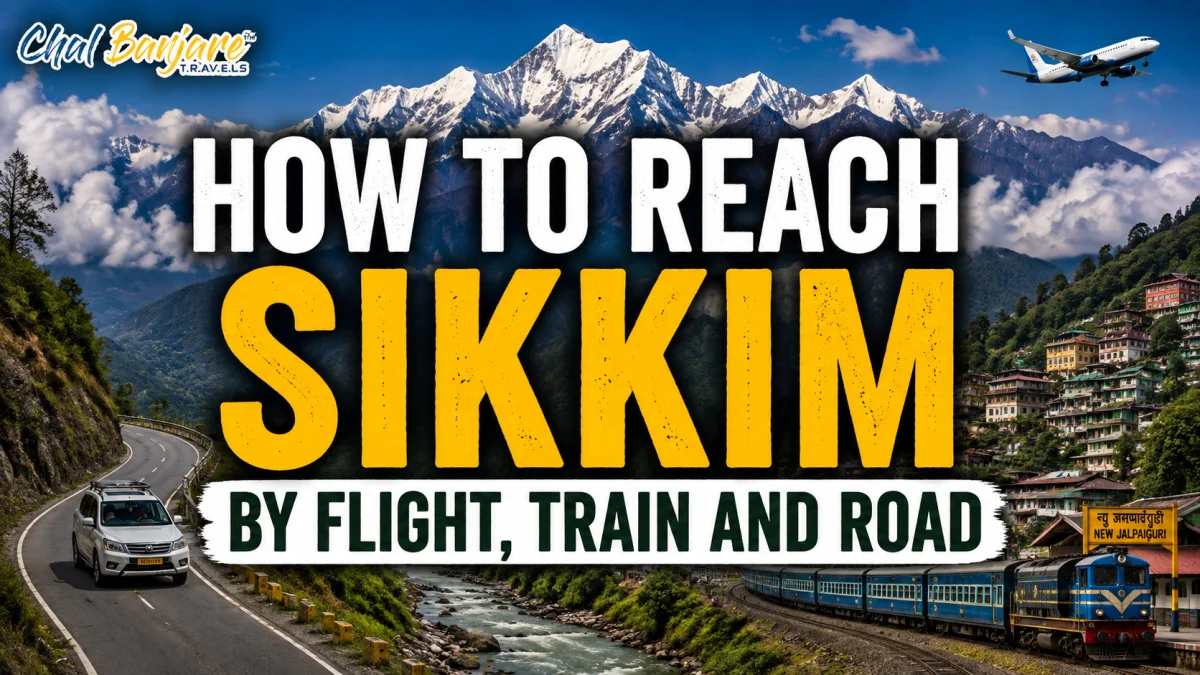
Sikkim can be reached by flight, train, and road through nearby gateways like Bagdogra Airport and New Jalpaiguri Railway Station, with travel options depending on budget, comfort, and destination.
Sikkim is well connected with the rest of India through a combination of air, rail, and road transportation. Since the state lies entirely within the Himalayan mountain range, visitors usually complete the final part of their journey by road after arriving at a nearby airport or railway station. Travellers coming from metropolitan cities such as Delhi, Mumbai, Bengaluru, Chennai, Hyderabad, Kolkata, Ahmedabad, Pune, Guwahati, Jaipur, and Lucknow can easily plan their journey using domestic flights, long-distance trains, or private road travel depending on their preferred budget and comfort level.
Although Sikkim itself has limited aviation and railway infrastructure compared to larger states, its surrounding transport network is highly developed. Bagdogra Airport in West Bengal and New Jalpaiguri Railway Station serve as the primary gateways for most tourists, while Pakyong Airport provides an additional air connectivity option within Sikkim itself. Once visitors arrive at these entry points, they can continue towards Gangtok, Pelling, Ravangla, Namchi, Lachung, Lachen, Yuksom, Zuluk, and other destinations through taxis, shared vehicles, buses, or organised tour transportation. This integrated transport system allows travellers to access almost every major tourist destination across the state.
The flexibility of Sikkim's transport network allows every traveller to choose a route matching their travel style. Whether prioritising speed, affordability, comfort, or scenic experiences, visitors can design an efficient journey by selecting the most suitable combination of flight, train, and road transportation before beginning their Himalayan holiday.
The best route to Sikkim depends not only on where you are travelling from but also on which destinations you intend to visit after arrival. Travellers planning to explore Gangtok, Tsomgo Lake, Nathula Pass, and North Sikkim generally begin their journey through Gangtok because it serves as the administrative and transport hub for permits and organised regional tours. Visitors interested in West Sikkim may choose direct transfers towards Pelling after reaching the gateway, while those visiting Ravangla, Namchi, or South Sikkim may organise road transport without spending additional nights in Gangtok if their itinerary allows.
Travel preferences also influence route selection. Families with children often prefer shorter transfers and private taxis for greater comfort. Couples may prioritise scenic road journeys and flexible sightseeing stops, while solo travellers frequently combine trains with shared vehicles to reduce overall expenses. Adventure travellers planning trekking expeditions or high-altitude excursions should schedule additional buffer days because mountain weather and permit processing occasionally influence departure timings.
| Travel Preference | Suggested Route | Main Benefit |
|---|---|---|
| East and North Sikkim | Gateway to Gangtok followed by organised regional travel | Easy permit and transport arrangements |
| West Sikkim | Direct transfer towards Pelling when practical | Reduced backtracking |
| South Sikkim | Road transfer towards Ravangla or Namchi | Efficient regional travel |
| Budget Travel | Train with shared vehicles | Lower transportation expenses |
| Comfort Travel | Flight with private taxi | Greater convenience and flexibility |
Choosing routes according to destinations instead of simply following the most popular option creates a smoother journey. Logical planning reduces unnecessary driving while allowing visitors to spend more time exploring Sikkim's mountains, monasteries, villages, lakes, and scenic landscapes.
Every transport option offers different advantages depending on the traveller's priorities. Flights minimise travel time and are ideal for visitors coming from distant cities, while trains provide economical long-distance transportation with multiple accommodation classes. Road journeys appeal to travellers who enjoy scenic Himalayan landscapes and prefer complete flexibility during their trip. Choosing the right combination depends on available vacation days, luggage, group size, and overall travel budget.
Travellers should also account for the final mountain road transfer while calculating total journey duration. Even after reaching the nearest airport or railway station, several hours of road travel remain before arriving at many destinations within Sikkim. Therefore, it is advisable to avoid scheduling important activities immediately after arrival. Allowing time for rest before continuing towards high-altitude destinations makes the journey safer, more comfortable, and considerably more enjoyable.
Planning connectivity according to comfort, travel time, and budget creates a more enjoyable beginning to every Sikkim holiday. A realistic schedule allows travellers to arrive refreshed and ready to experience the state's spectacular mountain scenery without unnecessary travel fatigue.
Air travel is the fastest and most convenient way to reach Sikkim, especially for visitors travelling from distant parts of India. Although Sikkim has limited commercial flight operations within the state, nearby airports provide excellent domestic connectivity with major metropolitan cities throughout the country. Travellers can easily reach the Himalayan region through regular flights before completing the remaining journey by road. This combination of air and road travel is the preferred option for families, honeymoon couples, senior travellers, business visitors, and tourists with limited vacation time.
Most domestic airlines operate frequent services connecting cities such as Delhi, Mumbai, Kolkata, Bengaluru, Chennai, Hyderabad, Ahmedabad, Pune, Jaipur, Lucknow, Guwahati, and several other locations with airports serving Sikkim travellers. Depending on seasonal schedules and airline operations, visitors can choose direct or connecting flights that best suit their departure city. Booking flights well in advance, especially during spring, summer holidays, autumn, and festive seasons, generally provides better availability and greater flexibility while planning the overall itinerary.
Flying significantly reduces the time required to reach the Himalayan region and allows travellers to spend more of their holiday exploring Sikkim rather than travelling. Proper flight selection combined with organised road transfers creates one of the most comfortable ways to begin the journey.
Travellers reaching Sikkim by air generally arrive through either Pakyong Airport within Sikkim or Bagdogra Airport in neighbouring West Bengal. Bagdogra remains the busiest and most widely connected aviation gateway because it offers frequent flights from numerous Indian cities throughout the year. Pakyong Airport provides a valuable alternative for selected routes but may have more limited flight schedules depending on weather conditions, operational requirements, and airline availability.
After landing, travellers continue towards their chosen destinations using private taxis, shared vehicles, organised tour transportation, or pre-booked hotel transfers. Gangtok is the most common first destination because it provides accommodation, restaurants, transport facilities, and permit arrangements for North and East Sikkim. Visitors heading towards Pelling, Ravangla, Namchi, or other regions may also organise direct transfers depending on their itinerary, helping reduce unnecessary backtracking during the trip.
| Airport Option | Main Advantage | Suitable For |
|---|---|---|
| Bagdogra Airport | Extensive domestic flight connectivity | Most travellers visiting Sikkim |
| Pakyong Airport | Airport located within Sikkim | Travellers with suitable flight availability |
| Private Taxi Transfer | Direct comfortable transportation | Families and groups |
| Shared Vehicle Transfer | Economical road transportation | Budget and solo travellers |
Selecting the appropriate airport and arranging onward transportation before arrival creates a much smoother travel experience. Well-organised transfers reduce waiting time while allowing visitors to begin their Himalayan journey comfortably.
Air travel should always be planned alongside the complete itinerary rather than simply selecting the nearest airport. Travellers visiting Gangtok, Tsomgo Lake, Nathula Pass, and North Sikkim often stay in Gangtok before continuing further, while visitors exploring West or South Sikkim may arrange direct road transfers if this better suits their planned route. Considering the complete travel sequence helps reduce repeated driving while improving overall journey efficiency.
Travellers should also avoid booking very late arrivals when possible because mountain transfers are generally more comfortable during daylight hours. Keeping flexible schedules, monitoring flight updates, and allowing additional travel time during changing weather conditions help minimise disruptions. Coordinating hotel check-in, airport pickup, and road transportation before departure ensures a relaxed start to the holiday.
Carefully planned air travel allows visitors to reach Sikkim comfortably while making efficient use of their holiday. Coordinating flights with transfers, accommodation, and sightseeing creates a relaxed beginning to an unforgettable Himalayan adventure.
Pakyong Airport is the closest airport to Gangtok and the only commercial airport located within Sikkim. Its location in East Sikkim makes it a convenient arrival point for travellers whose itineraries begin in Gangtok, Pakyong, Rongli, Aritar, or other parts of eastern Sikkim. Compared with arriving through Bagdogra, landing at Pakyong can reduce the length of the initial road transfer and allow visitors to reach their accommodation without spending several additional hours travelling through the plains and lower Himalayan roads.
The airport is surrounded by steep hills and scenic mountain landscapes, giving travellers an impressive introduction to Sikkim immediately after arrival. However, Pakyong is a smaller regional airport with fewer passenger facilities and limited flight operations compared with larger aviation gateways. Travellers should therefore treat it as a convenient option when a suitable flight is available rather than assuming it will always provide the widest selection of routes, timings, or fares.
Pakyong Airport can provide the most direct air arrival experience for Sikkim when flight schedules align with the itinerary. Its proximity to Gangtok makes it especially useful for short holidays, senior travellers, families, and visitors who want to reduce road travel on their arrival day.
Flight availability at Pakyong Airport is generally more limited than at Bagdogra because the airport handles a smaller number of routes and operates within challenging mountain terrain. Travellers may find fewer direct connections from major Indian cities, limited daily frequencies, and less flexibility when selecting arrival or departure times. Depending on airline schedules, some visitors may need to use connecting flights instead of receiving a convenient direct service from their home city.
Mountain weather can also affect operations more noticeably because visibility, cloud cover, wind, and rainfall may influence flight movement around the airport. During periods of unstable weather, travellers should remain prepared for schedule changes and should avoid arranging tightly timed hotel transfers, permit submissions, or onward high-altitude departures immediately after landing. Return flights should also be planned with sufficient flexibility, especially when connecting to another flight from a different airport.
| Connectivity Factor | Pakyong Airport Travel Reality | Planning Recommendation |
|---|---|---|
| Flight Frequency | Fewer services than major regional airports | Book suitable flights well in advance |
| Direct Routes | Limited connections from selected cities | Check whether a connecting flight is required |
| Mountain Weather | Visibility and wind may influence operations | Keep arrival and departure plans flexible |
| Alternative Gateway | Bagdogra provides broader connectivity | Keep a backup route in mind |
| Onward Sightseeing | Unexpected flight changes may affect the schedule | Avoid important excursions on arrival day |
Understanding Pakyong Airport's limitations helps travellers use it effectively without building unrealistic expectations. When flights operate according to schedule, it offers excellent convenience, but a flexible itinerary and awareness of Bagdogra as an alternative gateway provide valuable travel security.
After reaching Pakyong, travellers usually continue by private taxi or pre-arranged transfer because shared transport may not provide the same frequency or convenience as services available from larger transport hubs. Gangtok is the most common onward destination and serves as the practical base for East Sikkim sightseeing, North Sikkim tours, permit arrangements, accommodation, shopping, and local transportation. Visitors should confirm the airport pickup location, driver contact details, vehicle category, fare, and hotel address before departure from their home city.
Travellers heading towards Aritar, Rongli, Zuluk, or other East Sikkim destinations may arrange direct road transfers when permits, road access, and itinerary timing allow. Visitors continuing towards Pelling, Ravangla, Namchi, or West Sikkim should consider whether a direct transfer is comfortable after the flight or whether an overnight stop in Gangtok or a nearby town would provide a more relaxed schedule. Families, senior travellers, and visitors arriving later in the day should avoid unnecessarily long mountain journeys immediately after landing.
Pakyong works most effectively when the onward transfer is planned as part of the complete Sikkim itinerary. Matching the airport arrival with the first hotel, permit schedule, regional route, and traveller comfort helps visitors benefit from its convenient location while avoiding unnecessary mountain travel on the first day.
Bagdogra Airport is the most commonly used aviation gateway for Sikkim because it provides broader flight availability, more frequent services, and easier connections with major Indian cities. Located near Siliguri in West Bengal, the airport serves travellers visiting Sikkim as well as neighbouring Himalayan destinations. Its established transport network makes it practical for families, couples, solo travellers, organised groups, and visitors carrying substantial luggage who need dependable onward road transportation.
After arriving at Bagdogra, travellers can continue towards Gangtok, Namchi, Ravangla, Pelling, or other Sikkim destinations using private taxis, shared vehicles from nearby transport points, hotel transfers, or organised tour vehicles. Gangtok remains the most popular first stop because it provides the widest range of accommodation, restaurants, permit services, and regional transport. However, travellers following South or West Sikkim itineraries may arrange direct transfers when doing so prevents unnecessary backtracking through the capital.
Bagdogra remains the most dependable air gateway for most Sikkim holidays because it combines extensive connectivity with an established road transfer network. Although the onward mountain journey is longer than from Pakyong, travellers benefit from greater choice, scheduling flexibility, and easier access from across India.
Bagdogra receives domestic flights from several important Indian aviation hubs, allowing travellers from different regions to reach the gateway through direct or connecting services. Visitors from Delhi, Kolkata, Mumbai, Bengaluru, Hyderabad, Chennai, Ahmedabad, Pune, Guwahati, and other cities can generally find practical routes depending on airline schedules and seasonal availability. Kolkata and Delhi often function as useful connecting hubs for travellers departing from cities without convenient direct services.
Flight demand rises during spring, summer holidays, autumn, festival periods, and popular snow-travel months. During these periods, airfares may increase and preferred departure times can fill quickly. Early booking allows travellers to coordinate flight arrival with daylight road transfers and hotel check-in. Morning or early afternoon arrivals are generally more practical because they provide sufficient time to begin the mountain journey without reaching Sikkim late at night.
| Flight Planning Factor | Practical Consideration | Recommended Approach |
|---|---|---|
| Direct Connectivity | Available from several major aviation hubs | Compare direct and connecting routes |
| Peak Season Demand | Fares and seat demand may rise | Book flights in advance |
| Arrival Timing | Late arrivals complicate mountain transfers | Prefer morning or early afternoon flights |
| Connecting Flights | Delays may affect onward road travel | Keep sufficient connection and transfer buffers |
| Return Journey | Mountain roads can delay airport arrival | Leave Sikkim with generous travel time |
Bagdogra's connectivity makes Sikkim accessible from most parts of India, but selecting the right flight involves more than comparing airfare. Arrival timing, baggage requirements, transfer duration, season, and the first destination should all be considered together when making the reservation.
The road journey from Bagdogra towards Sikkim passes through Siliguri and gradually enters the Himalayan foothills, following scenic stretches near the Teesta River before climbing towards different destinations. Private taxis offer the most convenient transfer because they provide airport pickup, direct hotel drop, luggage space, and flexibility for meal or comfort breaks. Shared vehicles can reduce costs, but travellers may need to reach designated departure stands and wait until the vehicle is ready to leave.
Gangtok-bound travellers should allow a substantial part of the day for the transfer because mountain traffic, weather, road work, and seasonal congestion can influence journey duration. Visitors heading directly to Pelling, Ravangla, Namchi, or other regions should prepare for longer road travel and should confirm whether the route is practical after their flight. Late arrivals may require an overnight stay near Siliguri or another convenient stop instead of beginning a tiring mountain journey after dark.
A well-planned Bagdogra transfer creates a comfortable transition from air travel to the Himalayan road journey. Confirming the vehicle, route, fare, first hotel, arrival timing, and suitable rest stops in advance allows travellers to reach Gangtok or other Sikkim destinations without confusion, excessive waiting, or unnecessary travel fatigue.
Sikkim does not currently have a major operational railway network connecting its principal tourist destinations, so travellers arriving by train use nearby railway stations in West Bengal before completing the final journey by road. New Jalpaiguri Railway Station is the most important and widely used rail gateway because it is connected with numerous long-distance routes from northern, eastern, western, central, and southern India. Travellers may also use other nearby stations depending on the train selected, but New Jalpaiguri generally provides the widest combination of services and onward transport facilities.
Train travel is especially suitable for budget-conscious travellers, families comfortable with overnight journeys, students, larger groups, and visitors carrying more luggage than would be convenient on a flight. Different classes allow passengers to choose according to privacy, comfort, and budget. After reaching the railway gateway, travellers can continue towards Gangtok, Namchi, Ravangla, Pelling, or other Sikkim destinations using private taxis, shared vehicles, or pre-arranged tour transport.
Rail travel offers a practical balance between affordability and comfort for reaching the Sikkim region. When the train reservation and onward road transfer are planned together, visitors can complete the journey smoothly while avoiding last-minute transport difficulties at the railway station.
New Jalpaiguri is important because it serves as a major railway junction for travellers heading towards Sikkim, Darjeeling, Kalimpong, and other parts of the eastern Himalayas. Its extensive long-distance connectivity allows passengers from cities such as Delhi, Kolkata, Mumbai, Guwahati, Chennai, Bengaluru, Hyderabad, Patna, Lucknow, Jaipur, and several other locations to reach the region through direct or connecting trains. The surrounding Siliguri transport network provides access to taxi services, shared vehicles, hotels, restaurants, and other facilities needed before entering the mountains.
The station is particularly convenient for Gangtok-bound travellers because shared and private transport can be arranged towards the capital. Direct vehicles may also be booked for Pelling, Ravangla, Namchi, or nearby regions when the itinerary follows South or West Sikkim. Travellers arriving very early or late should confirm whether their chosen onward transport operates at that time. Shared services may be less convenient outside regular daytime hours, making a private taxi or short hotel stay more practical.
| Gateway Feature | Traveller Benefit | Planning Requirement |
|---|---|---|
| Long-Distance Rail Connections | Access from many major Indian cities | Reserve preferred class early |
| Nearby Siliguri Transport Network | Multiple road transfer options | Confirm the correct pickup location |
| Gangtok Connectivity | Regular demand for shared and private vehicles | Allow sufficient road travel time |
| Direct Regional Transfers | Possible access towards Pelling Ravangla and Namchi | Check route comfort after the train journey |
| Nearby Accommodation | Useful for inconvenient arrival or departure timing | Book in advance during busy periods |
New Jalpaiguri functions as more than a railway station because it connects long-distance rail travel with the road network leading into Sikkim. Its transport services and nearby facilities make it the most practical rail arrival point for visitors following almost every major Sikkim itinerary.
Train selection should consider both railway arrival timing and the first destination in Sikkim. A morning arrival generally provides enough daylight to continue towards Gangtok or another major town, while a late-evening arrival may require a private transfer or overnight stay near Siliguri. Travellers should avoid reaching the railway station after a long journey and immediately beginning an exhausting mountain transfer without rest, particularly when travelling with children, senior citizens, or passengers affected by motion sickness.
Passengers heading towards North or East Sikkim usually travel first to Gangtok because permits and authorised excursions are commonly arranged from there. Those visiting Namchi, Ravangla, or Pelling may choose a direct route if the arrival time and traveller comfort make it practical. Return train reservations should include a large road-travel buffer because mountain weather, traffic, and road conditions may delay the journey from Sikkim to the plains.
A carefully selected train schedule can make reaching Sikkim comfortable and economical. Coordinating arrival time, vehicle choice, first hotel, traveller health, luggage, and the final destination ensures the railway journey connects smoothly with the mountain portion of the holiday.
New Jalpaiguri Railway Station, commonly known as NJP, is the most important railway gateway for travellers heading towards Sikkim. It connects the eastern Himalayan region with many major Indian cities through long-distance express, superfast, and overnight train services. Travellers from Delhi, Kolkata, Mumbai, Guwahati, Patna, Lucknow, Jaipur, Chennai, Bengaluru, Hyderabad, Ahmedabad, and several other cities can reach NJP either through direct trains or by using a convenient connecting route. This broad rail network makes the station especially useful for families, students, budget travellers, large groups, and visitors who prefer overnight journeys over air travel.
Train availability varies according to route, travel date, demand, and seasonal schedules, so advance reservation is advisable during school holidays, festival periods, spring, summer, and other popular Sikkim travel seasons. Passengers can choose between different classes depending on their budget and desired comfort level. Travellers arriving after a long journey should also consider the timing of their train because the final road transfer into Sikkim may require several additional hours through the plains, foothills, and mountain roads.
New Jalpaiguri provides one of the most practical and economical ways to begin a Sikkim journey. Its extensive rail connectivity allows travellers from different parts of India to reach the region comfortably before continuing towards Gangtok, Pelling, Ravangla, Namchi, or other destinations by road.
After arriving at New Jalpaiguri, travellers can continue towards Sikkim using private taxis, shared vehicles, pre-booked tour transport, or hotel-arranged transfers. Private taxis offer direct pickup, luggage convenience, flexible meal breaks, and hotel drop-off, making them suitable for families, couples, senior travellers, and groups. Shared vehicles provide a more economical option, especially for solo visitors and budget travellers, but they usually operate from designated stands, follow fixed routes, and depart after sufficient passengers are available.
Gangtok is the most common onward destination because it serves as the main base for East and North Sikkim permits, accommodation, sightseeing, and regional transport. Travellers following South or West Sikkim routes may arrange direct transfers towards Namchi, Ravangla, or Pelling when the journey is practical after their train arrival. Late-night or very early arrivals may require additional planning because regular shared services may be limited, making a private taxi or short stay near Siliguri more convenient.
| Transfer Option | Main Advantage | Best Suited For |
|---|---|---|
| Private Taxi | Direct hotel transfer with flexible stops | Families couples groups and senior travellers |
| Shared Vehicle | Lower transportation cost | Solo and budget travellers |
| Hotel Transfer | Coordinated pickup and accommodation arrival | Travellers wanting organised service |
| Tour Package Vehicle | Transport linked with complete itinerary | Visitors using organised Sikkim packages |
| Overnight Stay Near Siliguri | Rest before beginning mountain travel | Late arrivals and families with children |
Selecting the right transfer depends on group size, luggage, arrival time, first destination, and budget. Confirming the pickup point, fare, vehicle category, driver details, and hotel location before reaching NJP reduces waiting and confusion after a long train journey.
The railway gateway should be treated as the beginning of the complete Sikkim route rather than a separate travel stage. Travellers planning East or North Sikkim generally continue first to Gangtok, while those prioritising Pelling, Ravangla, Namchi, or South Sikkim may follow a direct regional route where practical. The chosen sequence should minimise backtracking and provide enough rest before long mountain journeys or high-altitude sightseeing.
Passengers should keep drinking water, snacks, personal medicines, warm layers, charging equipment, hotel details, and offline maps accessible during the road transfer. Return planning is equally important because mountain weather, traffic, roadwork, and seasonal congestion may extend the journey from Sikkim to NJP. Travellers should leave a generous buffer before the train departure instead of relying on the shortest possible road estimate.
Careful planning from New Jalpaiguri creates a smooth transition from rail travel to Sikkim's mountain roads. When the train schedule, transfer vehicle, destination sequence, accommodation, and return timing are organised together, travellers can begin and end their journey with greater comfort and confidence.
Travellers from many major Indian cities can reach the Sikkim region by booking trains to New Jalpaiguri or nearby railway gateways. Kolkata generally offers some of the most convenient rail connectivity because of its proximity to North Bengal and the availability of multiple long-distance services. Delhi also has several practical train routes towards New Jalpaiguri, making rail travel a popular choice for families, students, and budget-conscious visitors from northern India. Travellers from Mumbai, Ahmedabad, Jaipur, Lucknow, Patna, Guwahati, Chennai, Bengaluru, and Hyderabad may find direct services on selected routes or may use connecting trains depending on schedule and availability.
Train choice should be based on departure timing, total journey duration, arrival time at NJP, class availability, and the convenience of onward road transport. Overnight trains can help reduce daytime travel loss, while longer routes from western or southern India require careful planning because the journey may extend across more than one day. During popular Sikkim travel seasons, preferred trains and comfortable classes may fill quickly, so early reservation becomes important.
Train connectivity from major cities makes Sikkim accessible to travellers who prioritise affordability and flexible luggage arrangements. Selecting a train with a convenient arrival time often matters as much as the total rail duration because the mountain road journey begins only after reaching the gateway.
Long-distance train travel can be economical, but comfort depends greatly on the selected class and total journey duration. Air-conditioned classes generally provide better temperature control, reserved berths, and a more comfortable environment for overnight or multi-day journeys. Sleeper class offers lower fares but may feel less comfortable during long routes, especially for families with young children, senior travellers, or visitors carrying valuable equipment and substantial luggage.
Travellers should carry drinking water, light food, personal medicines, hygiene items, charging support, warm layers, and identification documents within easy reach. Long journeys also require enough rest before beginning the road transfer into Sikkim. Passengers arriving after one or two nights on a train may prefer a private taxi, a lighter first day, or an overnight stop near the gateway rather than immediately continuing towards a distant mountain destination.
| Travel Class | Comfort Level | Suitable Traveller |
|---|---|---|
| Air-Conditioned First Class | Highest privacy and comfort | Families and travellers prioritising convenience |
| Air-Conditioned Two Tier | Comfortable for long overnight journeys | Couples families and senior travellers |
| Air-Conditioned Three Tier | Balanced comfort and cost | Budget-conscious travellers wanting reserved berths |
| Sleeper Class | Basic long-distance travel | Budget travellers comfortable with simpler conditions |
| Chair Car | Suitable for shorter daytime sectors | Travellers using connecting rail routes |
Choosing the correct class improves the overall journey and reduces fatigue before entering Sikkim. Travellers should consider the combined train and road duration rather than judging comfort only by the railway segment, especially when the itinerary continues directly towards Gangtok, Pelling, or another mountain town.
Train travel is ideal for visitors with enough holiday time to accommodate a longer journey and who want to reduce transportation expenses. Budget travellers may combine sleeper or air-conditioned rail travel with shared vehicles from NJP, while families may choose comfortable train classes followed by a private taxi. Visitors with limited vacation days should compare the total rail and road duration against flight travel because saving money may not be worthwhile if several sightseeing days are lost in transit.
The return journey should also be planned realistically. Travellers should avoid booking a train too close to the estimated road arrival from Sikkim because mountain delays can occur without warning. Spending the final night near the railway gateway may be practical for very early departures, especially when returning from North, West, or remote parts of Sikkim. Keeping sufficient buffer time protects the reservation and creates a calmer end to the holiday.
Rail travel can be an excellent way to reach Sikkim when it matches the traveller's budget, schedule, and comfort expectations. Coordinating train class, arrival timing, road transfer, first hotel, and return buffer ensures the longer journey remains practical rather than exhausting.
Road travel is the final and most essential part of every journey to Sikkim because all visitors must enter the state through its well-developed mountain highway network. Whether travellers arrive by flight or train, they continue towards Gangtok, Pelling, Ravangla, Namchi, Lachung, Lachen, Yuksom, Zuluk, Aritar, or other destinations using road transportation. The journey offers spectacular Himalayan scenery with river valleys, forests, tea gardens, suspension bridges, waterfalls, and mountain viewpoints, making the transfer itself one of the highlights of the trip.
Travellers can choose between private taxis, shared vehicles, government and private buses, organised tour vehicles, or self-drive cars where suitable. Private taxis provide the highest level of comfort and flexibility, allowing customised departure times, sightseeing stops, and direct hotel drop-offs. Shared vehicles remain popular among solo travellers and budget visitors because they significantly reduce transportation costs while still providing access to major tourist destinations. Self-drive journeys appeal to experienced mountain drivers who enjoy independent travel, although visitors should understand road conditions and local driving requirements before selecting this option.
Road transportation is much more than a transfer between destinations. It introduces travellers to Sikkim's changing landscapes, river valleys, mountain villages, and forests while providing access to regions that cannot be reached through any other mode of transport.
Unlike highways across the plains, mountain roads in Sikkim require careful planning because travel time depends more on terrain and weather than on distance alone. Roads climb through steep valleys, winding bends, forest sections, and hill settlements where driving speeds remain naturally lower. Rainfall, fog, occasional landslides, road maintenance, tourist traffic, and seasonal conditions may further influence travel duration, especially during the monsoon and winter months.
Travellers should avoid comparing mountain journeys only by kilometres because relatively short distances may still require several hours of driving. It is also advisable to keep realistic expectations regarding arrival times, particularly when travelling towards remote destinations such as Lachung, Lachen, Yumthang Valley, Gurudongmar Lake, or Zuluk. Comfortable clothing, regular hydration, meal breaks, and motion sickness preparation help make long mountain journeys considerably more enjoyable.
| Road Condition | Traveller Consideration | Planning Tip |
|---|---|---|
| Mountain Curves | Slower driving speeds | Allow generous travel time |
| Seasonal Rain | Possible delays and slippery roads | Monitor weather forecasts |
| High Altitude Routes | Longer travel duration | Start journeys early |
| Tourist Season Traffic | Busy highways near popular destinations | Avoid overly tight schedules |
| Remote Regions | Limited roadside facilities | Carry refreshments and essentials |
Understanding mountain road conditions allows travellers to plan realistic itineraries while reducing unnecessary stress. Accepting slower travel as part of the Himalayan experience makes the journey safer, more comfortable, and considerably more enjoyable.
Road travel planning should always reflect the destination, season, and overall itinerary. Visitors heading towards Gangtok, Namchi, or Ravangla generally experience easier access throughout much of the year, while North Sikkim and other high-altitude regions may require additional preparation because of weather, permits, and changing road conditions. Travellers should organise accommodation, fuel stops where applicable, meals, and sightseeing according to realistic travel durations rather than attempting to cover multiple distant destinations in a single day.
During spring and autumn, road journeys often provide excellent mountain views and pleasant weather. The monsoon brings lush greenery and powerful waterfalls but may also increase travel time because of heavy rainfall. Winter introduces cold temperatures and occasional snowfall in higher regions, making flexible planning especially valuable. Starting journeys early in the morning usually provides better daylight, improved visibility, and a more relaxed travel experience.
Well-planned road travel allows visitors to appreciate Sikkim's mountain scenery without feeling rushed. Matching the route with weather, destination, and personal comfort creates a safer and more rewarding journey throughout the Himalayan region.
The journey from Siliguri to Sikkim is one of the most popular Himalayan road trips in eastern India. Nearly every traveller arriving through Bagdogra Airport or New Jalpaiguri Railway Station passes through Siliguri before entering the mountain highways leading towards Gangtok and other destinations. The route gradually leaves the plains behind and follows the scenic Teesta River, offering changing landscapes that transition from urban areas to forests, valleys, mountain villages, and winding hill roads.
As the road climbs higher, travellers begin experiencing cooler temperatures, panoramic viewpoints, suspension bridges, river gorges, and dense greenery that characterise the eastern Himalayas. The drive itself is considered an enjoyable part of the holiday because it introduces visitors to the natural beauty of the region long before reaching their accommodation. Travellers using private taxis often have the flexibility to stop briefly at safe viewpoints, restaurants, or refreshment areas while continuing towards their destination.
The Siliguri to Sikkim drive offers much more than transportation. It provides the first real experience of Himalayan landscapes, making the transition from city life to mountain travel both gradual and memorable.
The road between Siliguri and Sikkim passes through beautiful natural scenery that changes continuously as altitude increases. Travellers enjoy river valleys, forested hillsides, mountain streams, roadside cafés, tea gardens near the plains, suspension bridges, and dramatic viewpoints overlooking the Teesta River. During clear weather, the drive becomes particularly rewarding because the surrounding mountains remain visible for long stretches of the journey.
Several refreshment stops, restaurants, fuel stations, and rest areas are available before reaching higher mountain sections. Travellers should use these opportunities for meals, washroom breaks, and stretching before continuing further into Sikkim. Photography should always be undertaken from safe designated areas rather than stopping at unsuitable roadside locations. Respecting local traffic rules and avoiding unnecessary delays helps maintain a comfortable travel schedule throughout the journey.
| Roadside Experience | What Travellers Can Enjoy | Useful Advice |
|---|---|---|
| Teesta River | Scenic river views and photography | Stop only at safe viewpoints |
| Mountain Villages | Traditional Himalayan surroundings | Respect local communities |
| Roadside Restaurants | Meals and refreshments | Take regular comfort breaks |
| Forest Landscapes | Changing Himalayan scenery | Travel during daylight for better views |
| Viewpoints | Panoramic mountain photography | Follow safety instructions |
The scenic drive between Siliguri and Sikkim rewards travellers throughout the journey. Planning enough time for safe rest stops and photography allows visitors to fully appreciate one of the region's most beautiful mountain approaches.
Proper preparation makes long Himalayan road journeys far more comfortable. Travellers should carry drinking water, snacks, personal medicines, warm clothing, charging equipment, identification documents, and motion sickness medication if required. Starting the journey early allows drivers to complete most of the mountain section during daylight while reducing the likelihood of encountering heavy traffic near major tourist destinations.
Families travelling with children or senior citizens should include additional comfort breaks throughout the drive. Travellers should avoid rushing to reach the destination because mountain roads naturally require slower driving. Keeping flexible schedules, confirming hotel arrival timing, monitoring weather conditions, and maintaining regular communication with the driver contribute to a smoother travel experience. The road trip should be treated as part of the holiday rather than simply transportation between two locations.
A well-prepared road trip from Siliguri to Sikkim sets a positive tone for the entire holiday. Comfortable planning, realistic travel expectations, and appreciation of the spectacular Himalayan scenery ensure that the journey becomes one of the most memorable parts of visiting Sikkim.
Bus travel offers one of the most economical ways to reach Sikkim from nearby transport hubs in West Bengal and surrounding regions. Government-operated and private buses generally connect Siliguri with Gangtok and selected towns across Sikkim, making them useful for budget travellers, students, solo visitors, and passengers carrying limited luggage. These services usually operate from designated bus terminals and follow fixed routes, departure timings, and scheduled stops rather than providing direct hotel pickup.
Government buses are commonly preferred by travellers seeking dependable fares and established routes, while private buses may provide additional departure options depending on the season and passenger demand. Availability can vary between routes, and services towards smaller towns may be less frequent than those operating to Gangtok. Travellers should verify the departure terminal, ticket process, luggage rules, expected journey duration, and final drop-off point before travelling because different operators may use separate stands within the Siliguri area.
Bus services make Sikkim accessible to travellers who prioritise affordability over personalised comfort. They work particularly well for straightforward journeys towards Gangtok when passengers are comfortable following fixed timings and arranging separate local transportation after reaching the destination.
The Siliguri to Gangtok route is the most important bus connection for Sikkim travellers because Gangtok serves as the state's main tourism and transportation hub. Buses generally leave the plains, follow the Teesta River valley, and climb through mountain settlements before reaching the capital. The journey takes longer than an ordinary plains route because of winding roads, traffic, weather, and scheduled stops, so travellers should avoid planning immediate sightseeing or permit-dependent departures after arrival.
Connections beyond Gangtok may require travellers to change to shared taxis, local buses, or private vehicles. Destinations such as Pelling, Ravangla, Namchi, and other regional towns may have selected bus or shared transport links, but frequency and convenience vary. High-altitude destinations including Lachung, Lachen, Tsomgo Lake, and Nathula Pass are not normally approached through ordinary long-distance bus planning because these routes generally involve permits and authorised vehicles.
| Route | Typical Transport Situation | Planning Consideration |
|---|---|---|
| Siliguri to Gangtok | Main bus corridor used by budget travellers | Allow sufficient time for mountain travel |
| Gangtok to Regional Towns | Local buses and shared vehicles may operate | Confirm frequency before departure |
| Siliguri to South Sikkim | Selected direct or connecting services may be available | Check the final drop-off location carefully |
| West Sikkim Routes | Connections may require vehicle changes | Avoid late arrivals in unfamiliar towns |
| Protected High-Altitude Areas | Ordinary buses are generally unsuitable | Use permitted authorised transport |
Understanding the limits of bus connectivity prevents unrealistic itinerary planning. Buses are most practical for reaching major towns, while remote, protected, or sightseeing-focused destinations usually require shared taxis, private cabs, or organised regional vehicles after the main transfer.
Travellers can reduce Sikkim transport expenses by combining buses with shared taxis instead of using private vehicles for every journey. A practical budget itinerary may involve reaching Gangtok by bus, exploring nearby city attractions using local taxis, and joining shared or organised vehicles for permitted excursions. Travellers continuing to Pelling, Ravangla, or Namchi can compare available bus connections with shared taxi fares before choosing the most convenient option.
Affordable travel still requires careful scheduling because fixed services may not operate late in the evening or at the frequency travellers expect. Reaching the departure point early, keeping luggage manageable, carrying cash for smaller transport counters, and confirming the final stop help prevent confusion. Visitors should also keep a backup transport budget in case a missed connection, weather delay, or route change makes a taxi necessary.
Bus travel can significantly reduce the cost of reaching and moving between major Sikkim towns. When fixed schedules, transfer points, luggage needs, and backup options are planned in advance, travellers can enjoy an economical journey without creating unnecessary inconvenience during the holiday.
One of the most common mistakes first-time visitors make is assuming that reaching Bagdogra Airport, Pakyong Airport, or New Jalpaiguri Railway Station means they have almost reached Sikkim. In reality, these transport gateways are only the beginning of the Himalayan journey. Every destination within Sikkim requires additional road travel, and the duration depends on the terrain, weather, road conditions, and the exact location of the destination. Travellers who ignore this often underestimate total travel time and create unrealistic itineraries that become tiring from the very first day.
Another frequent mistake is choosing accommodation or sightseeing destinations without understanding their geographical position. Gangtok, Pelling, Ravangla, Namchi, Lachung, Lachen, Yuksom, and Zuluk are located in different parts of the state and cannot always be combined comfortably within a short holiday. Visitors should study a route map, understand travel sequences, and estimate road duration before confirming hotels or transportation. This helps reduce repeated driving while allowing more time for sightseeing and relaxation.
Understanding the true distance between gateways and destinations creates a much more comfortable itinerary. Travellers who plan according to actual mountain travel rather than straight-line distance enjoy more sightseeing, less fatigue, and a smoother overall holiday.
Mountain travel cannot be planned with the same expectations as journeys across plains or cities. Winding roads, changing weather, sightseeing breaks, local traffic, road maintenance, and seasonal conditions all influence travel time. Visitors who schedule several transfers, sightseeing activities, and hotel check-ins within a single day often find themselves rushing through destinations instead of enjoying them. Proper planning includes realistic departure times, meal breaks, rest periods, and flexibility for unexpected delays.
Travellers should also consider arrival fatigue after flights or overnight trains. Beginning a long mountain drive immediately after a tiring journey may reduce comfort, particularly for families with children, senior citizens, or travellers unfamiliar with Himalayan roads. Keeping the first day relatively light allows everyone to recover before beginning longer regional exploration.
| Planning Mistake | Possible Result | Better Alternative |
|---|---|---|
| Overloaded first day | Fatigue and missed sightseeing | Keep arrival day relaxed |
| Ignoring road duration | Late hotel arrival | Plan realistic travel hours |
| No weather buffer | Disrupted itinerary | Allow flexible schedules |
| Too many destinations | Continuous road travel | Reduce daily transfers |
| Late departures | Reduced daylight travel | Start journeys early |
Proper time management improves every aspect of a Sikkim holiday. Realistic schedules create opportunities to enjoy scenic drives, local food, monasteries, waterfalls, viewpoints, and village experiences without feeling pressured by the clock.
Tight schedules are one of the biggest reasons travellers experience unnecessary stress in the Himalayas. Planning back-to-back transfers, immediate sightseeing after arrival, or short connections between flights, trains, and road transport leaves little room for changing mountain conditions. Weather, traffic, road repairs, permit processing, and photography stops can all extend travel time. Visitors should therefore keep comfortable gaps between important transport arrangements and avoid booking non-refundable onward travel immediately after long road journeys.
Flexible itineraries allow travellers to enjoy scenic viewpoints, local cafés, monasteries, and waterfalls encountered along the route instead of treating every road transfer as a race against time. Keeping additional buffer time before flights and trains during the return journey is equally important because delays on mountain roads cannot always be predicted. A relaxed schedule creates a safer, more enjoyable, and more memorable travel experience throughout Sikkim.
A relaxed travel schedule is one of the most valuable parts of successful Himalayan planning. By allowing enough time for changing road conditions, scenic breaks, and comfortable transfers, visitors can experience Sikkim's landscapes with far less stress and much greater enjoyment.
The most suitable way to reach Sikkim depends on your departure city, available travel days, budget, group size, and the destinations included in your itinerary. Travellers from distant metropolitan cities generally benefit from flights to Bagdogra or Pakyong followed by organised road transfers. Visitors who prefer economical travel often choose trains to New Jalpaiguri before continuing by taxi, shared vehicle, or bus. Travellers already within nearby regions may complete the entire journey comfortably by road.
Rather than choosing transport based only on ticket cost, visitors should evaluate the complete journey from home to their first hotel. This includes airport or railway transfers, mountain road duration, luggage handling, weather conditions, permit requirements, and comfort during long journeys. Matching transport with the actual route allows travellers to minimise unnecessary travel while making the best use of their holiday.
Every transport option offers unique advantages when matched with the correct itinerary. Careful planning helps travellers reach Sikkim comfortably while maximising time available for exploring its mountains, monasteries, villages, lakes, and cultural attractions.
Transportation planning should continue beyond booking flights or train tickets. Travellers should confirm airport or railway pickups, hotel transfers, private taxis, shared vehicles, permit arrangements, accommodation locations, and expected road duration before leaving home. Having every stage organised reduces uncertainty after arrival and allows visitors to begin their Himalayan holiday smoothly without searching for transport at unfamiliar locations.
Return journeys require the same level of preparation. Flights and trains should never be booked too close to the estimated arrival time from mountain destinations because road conditions can change without warning. Keeping sufficient travel buffers and confirming return transfers several days before departure helps avoid unnecessary stress while protecting onward travel arrangements.
| Planning Stage | What to Confirm | Benefit |
|---|---|---|
| Before Departure | Flights trains hotels and transfers | Smooth arrival experience |
| Arrival Day | Driver details and accommodation | Reduced waiting time |
| Regional Travel | Permits sightseeing vehicles and routes | Better itinerary management |
| Return Journey | Transfer timing and transport buffers | Safer departure planning |
| Throughout Trip | Weather and road updates | Flexible travel decisions |
Good transfer planning creates a seamless journey from the moment travellers leave home until they complete their return trip. Every confirmed transport arrangement reduces travel uncertainty while making the overall experience more comfortable and organised.
Before beginning the journey, travellers should review every booking, transport connection, permit requirement, accommodation reservation, and weather forecast. Carrying original identification, printed booking confirmations, offline maps, emergency contact numbers, sufficient cash, personal medicines, charging equipment, warm clothing, and rain protection ensures better preparation for changing mountain conditions. Visitors should also keep snacks and drinking water accessible during long road journeys.
Flexibility remains one of the most valuable travel habits in the Himalayas. Weather, road maintenance, traffic, and seasonal demand may occasionally influence travel schedules despite careful planning. Travellers who maintain realistic expectations, generous travel buffers, organised documentation, and comfortable daily itineraries are far more likely to enjoy a smooth arrival and a memorable Sikkim holiday from beginning to end.
A successful journey to Sikkim begins with thoughtful planning and realistic expectations. By selecting the right transport, organising transfers, preparing for mountain conditions, and maintaining flexibility throughout the trip, travellers can reach every destination comfortably while making the most of their time in one of India's most spectacular Himalayan states.


Get customized Sikkim tour planning based on season, altitude comfort, travel permits, and realistic road travel time. Whether you are visiting for scenic landscapes, monastery circuits, mountain views, or peaceful hill stays, our experts design practical
⚡ Quick Response | 💰 Free consultation | 🕒 24×7 expert support

