


How to Reach Ladakh in Winter
Learn how to reach Ladakh during winter, including flight options, seasonal road closures, local transport and important travel considerations.
+91 9910402252
admin@chalbanjare.com


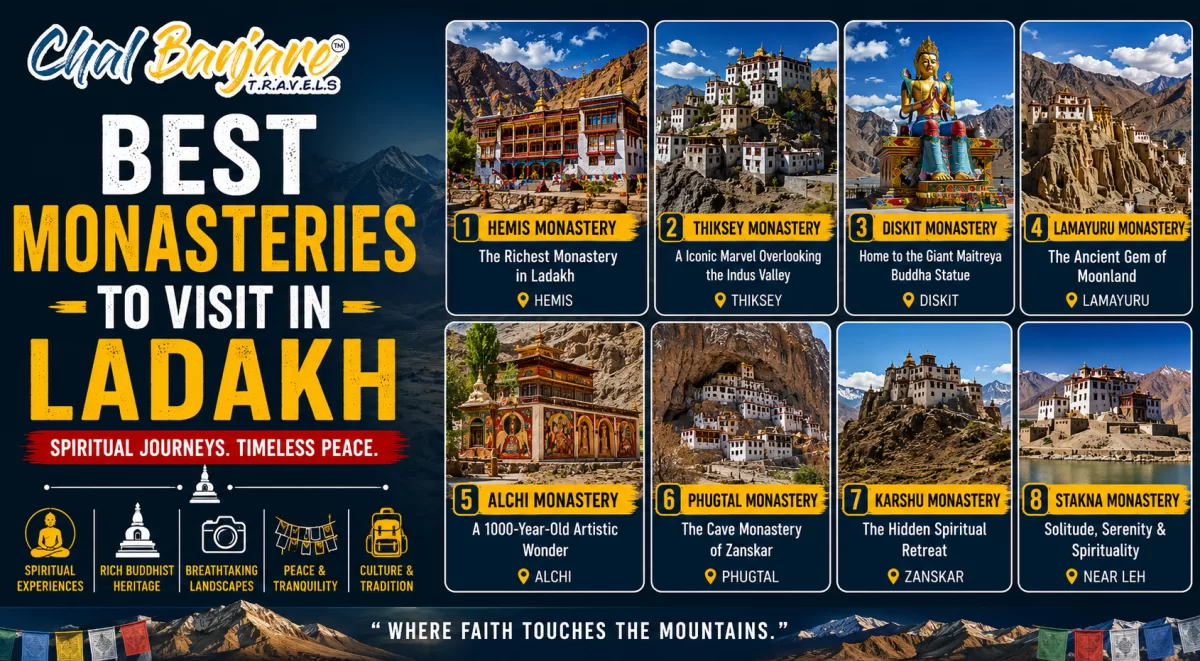
Ladakh monasteries offer a mix of Buddhist heritage, mountain landscapes, ancient murals, festivals, and spiritual experiences across different Himalayan regions.
Thiksey Monastery is one of the most famous and visually striking monasteries near Leh because of its multi-level hilltop architecture, giant Buddha statue, and panoramic views across the Indus Valley. Located around 20 kilometers from Leh city, the monastery resembles a traditional Tibetan monastic complex rising dramatically above the barren Himalayan landscape.
The monastery is especially popular during early morning hours when prayer ceremonies create a peaceful spiritual atmosphere filled with chanting, traditional instruments, and incense rituals. Travelers visiting Thiksey often combine cultural exploration with scenic photography because the elevated monastery offers expansive valley viewpoints.
Travelers visiting Thiksey should arrive early in the morning because the monastery atmosphere becomes especially peaceful during prayer rituals and sunrise lighting conditions.
Hemis Monastery is the largest and one of the most important monasteries in Ladakh because of its deep Buddhist heritage, annual festivals, ancient relics, and isolated mountain valley setting. Located southeast of Leh, the monastery belongs to the Drukpa lineage of Tibetan Buddhism and remains a major spiritual center in the region.
The monastery is famous for the Hemis Festival, where masked Cham dances, traditional music, and religious ceremonies attract monks, locals, and travelers from across the Himalayas. Hemis also houses a museum displaying ancient Buddhist artifacts, scriptures, thangkas, and ceremonial objects.
| Attraction or Feature | Main Highlight | Travel Experience |
|---|---|---|
| Hemis Monastery | Largest monastery in Ladakh | Major Buddhist spiritual center |
| Hemis Festival | Traditional masked Cham dance ceremonies | Colorful cultural and religious celebration |
| Monastery Museum | Ancient Buddhist artifacts and relics | Historical and spiritual exploration |
| Mountain Valley Setting | Remote Himalayan monastery atmosphere | Peaceful scenic surroundings |
| Traditional Prayer Rituals | Monastic chanting and spiritual practices | Authentic Ladakhi Buddhist experience |
| Historic Buddhist Architecture | Ancient monastery structures and courtyards | Cultural heritage appreciation |
| Photography Opportunities | Monasteries against rugged mountain backdrops | Scenic cultural road trip exploration |
Travelers visiting Hemis during festival periods should maintain respectful behavior because the ceremonies carry deep religious importance for local Buddhist communities.
The Alchi, Likir, and Basgo monastery circuit is one of the best cultural road trips from Leh because it combines ancient Buddhist heritage, scenic Sham Valley landscapes, historic forts, and traditional Himalayan villages across western Ladakh. This route offers a quieter and more historically rich experience compared to busier eastern Ladakh circuits.
Each monastery along the route preserves unique artistic and spiritual significance. Alchi is famous for ancient murals and Indo-Tibetan artwork, Likir is known for its giant Buddha statue and hilltop monastery setting, while Basgo combines historical fort ruins with Buddhist heritage.
Travelers exploring the Sham Valley monastery circuit should move slowly and spend time inside the monasteries because the artistic details and spiritual atmosphere are best appreciated through relaxed cultural exploration.
Diskit Monastery is the largest and most important monastery in Nubra Valley and is famous for its giant Maitreya Buddha statue overlooking the cold desert landscapes of the Shyok Valley. Located above Diskit village, the monastery combines ancient Buddhist heritage with some of the most dramatic panoramic views in northern Ladakh.
The monastery complex is known for its peaceful spiritual atmosphere, traditional prayer halls, colorful murals, and elevated viewpoints across the sand dunes, rivers, and mountain valleys of Nubra. Travelers often visit Diskit together with Hunder and nearby villages during Nubra Valley road trips.
Travelers visiting Diskit Monastery should spend time around the Buddha viewpoint because it offers some of the best panoramic landscapes across the entire Nubra Valley region.
Samstanling Monastery is one of the most peaceful monasteries in Nubra Valley and is located near Sumur village surrounded by green agricultural fields, barren mountains, and quiet Himalayan village landscapes. Compared to Diskit, the monastery receives fewer tourists and offers a more relaxed cultural atmosphere.
The monastery is known for its traditional Buddhist architecture, colorful prayer halls, and calm spiritual environment that reflects the slower pace of life in the Sumur region. Travelers often combine monastery visits with village walks and homestay experiences in Nubra Valley.
| Attraction or Feature | Main Highlight | Travel Experience |
|---|---|---|
| Samstanling Monastery | Peaceful Buddhist monastery in Sumur | Quiet spiritual exploration |
| Sumur Village | Traditional Nubra settlement | Village culture and local interaction |
| Prayer Halls and Murals | Colorful Buddhist artistic details | Cultural and spiritual appreciation |
| Green Valley Landscapes | Agricultural scenery and riverside atmosphere | Relaxed Himalayan environment |
| Traditional Monk Lifestyle | Daily Buddhist prayer rituals | Authentic monastic experience |
| Less Crowded Exploration | Peaceful travel atmosphere | Slow cultural travel experience |
| Photography Opportunities | Monasteries against mountain backdrops | Scenic village exploration |
Travelers exploring Samstanling and Sumur should move slowly and spend time within the village because the peaceful environment and local culture are best experienced through relaxed interaction.
Ensa Monastery is one of the hidden spiritual destinations in Nubra Valley because of its remote hilltop location and isolated mountain surroundings above the valley floor. The monastery offers a quieter and more rugged experience compared to the larger and more frequently visited gompas in Ladakh.
Reaching Ensa Monastery involves traveling through remote mountain roads and scenic valley landscapes that highlight the raw beauty of Nubra’s high-altitude terrain. The isolated setting creates a peaceful atmosphere ideal for travelers seeking lesser-known monastery experiences.
Travelers visiting Ensa Monastery should prepare for basic facilities and slower travel conditions because the monastery lies in a remote part of Nubra Valley with limited infrastructure support.
Karsha Monastery is the largest and most important monastery in Zanskar Valley and serves as the main spiritual center of the region. Located on a hillside overlooking the Padum Valley, the monastery dominates the surrounding landscape with whitewashed structures, prayer halls, and traditional Buddhist architecture spread across the mountain slope.
The monastery belongs to the Gelugpa order of Tibetan Buddhism and remains deeply connected to the cultural and spiritual life of Zanskar. Travelers visiting Karsha experience a peaceful Himalayan atmosphere shaped by monastery rituals, isolated mountain scenery, and traditional village life.
Travelers exploring Karsha Monastery should move slowly and respectfully because the monastery remains an active spiritual center central to everyday life in Zanskar Valley.
Stongdey Monastery is one of the most visually striking monasteries in Zanskar Valley because of its dramatic hilltop setting overlooking wide mountain valleys and barren Himalayan terrain. Located near Padum, the monastery is known for its peaceful atmosphere, traditional monk life, and scenic elevated surroundings.
The monastery complex contains prayer halls, murals, statues, and living quarters for monks while offering panoramic views across remote valleys and river landscapes. Compared to larger monasteries near Leh, Stongdey feels far more isolated and connected to traditional Himalayan monastic culture.
| Attraction or Feature | Main Highlight | Travel Experience |
|---|---|---|
| Stongdey Monastery | Hilltop Buddhist monastery complex | Peaceful spiritual exploration |
| Panoramic Valley Views | Wide mountain and river landscapes | Excellent photography opportunities |
| Traditional Monk Lifestyle | Daily Buddhist rituals and monastery life | Authentic Himalayan spiritual atmosphere |
| Prayer Halls and Murals | Historic Buddhist artistic details | Cultural and spiritual appreciation |
| Remote Himalayan Setting | Quiet mountain isolation | Slow travel and cultural immersion |
| Cold Desert Valley Environment | Barren landscapes surrounding the monastery | Distinct Zanskar scenery |
| Accessible Padum Circuit | Important monastery stop near Padum | Balanced scenic and spiritual exploration |
Travelers visiting Stongdey should spend time observing monastery life and valley landscapes because the peaceful surroundings create one of the most relaxing spiritual experiences in Zanskar Valley.
Phugtal Monastery is one of the most extraordinary monasteries in the Himalayas because it is built dramatically into a cliffside cave deep inside a remote Zanskar canyon. The isolated location, rugged access route, and cave-based monastery setting make Phugtal one of Ladakh’s most iconic hidden spiritual destinations.
Reaching the monastery traditionally involved trekking through narrow valleys, hanging trails, and isolated villages surrounded by towering Himalayan cliffs. Even today, the journey remains adventurous and physically demanding, adding to the monastery’s mystical and remote atmosphere.
Travelers planning to visit Phugtal Monastery should prepare carefully with proper trekking gear, medicines, and flexible schedules because weather, altitude, and remote terrain can significantly affect accessibility.
Lamayuru Monastery is one of the oldest and most historically important monasteries in western Ladakh and is famous for its dramatic Moonland landscapes, ancient Buddhist heritage, and remote mountain setting along the Leh–Kargil highway. The monastery rises above unusual eroded hills that resemble lunar terrain, creating one of Ladakh’s most iconic visual landscapes.
The monastery has deep spiritual significance within Tibetan Buddhism and preserves centuries-old prayer halls, murals, statues, and monastic traditions. The peaceful atmosphere and rugged mountain surroundings make Lamayuru one of the most memorable monastery experiences in western Ladakh.
Travelers visiting Lamayuru should spend time exploring both the monastery and surrounding Moonland terrain because the combination of landscape and spirituality defines the unique character of the region.
Mulbekh Monastery is one of the most distinctive spiritual sites on the Srinagar–Leh highway because of its giant rock-carved Maitreya Buddha statue positioned beside the mountain road in western Ladakh. The monastery and carving reflect centuries of Buddhist influence along ancient Himalayan trade and pilgrimage routes.
The towering Buddha figure carved directly into rock cliffs remains one of the oldest and most recognizable Buddhist landmarks in the Kargil region. Travelers often stop at Mulbekh while traveling between Kargil and Leh because of its historical importance and scenic mountain surroundings.
| Attraction or Feature | Main Highlight | Travel Experience |
|---|---|---|
| Mulbekh Monastery | Historic Buddhist spiritual site | Western Ladakh cultural exploration |
| Maitreya Buddha Rock Carving | Ancient giant rock-cut Buddha statue | Important Buddhist heritage landmark |
| Srinagar–Leh Highway Setting | Scenic mountain road surroundings | Popular road trip stopover |
| Traditional Prayer Spaces | Buddhist monastic atmosphere | Peaceful spiritual environment |
| Mountain Valley Landscapes | Barren Himalayan scenery | Photography opportunities |
| Ancient Trade Route Influence | Historic cultural significance | Insight into trans-Himalayan history |
| Western Ladakh Heritage Experience | Combination of history and spirituality | Relaxed mountain exploration |
Travelers stopping at Mulbekh should observe the intricate rock carving carefully because it represents one of the oldest surviving Buddhist artistic landmarks in western Ladakh.
Rizong Monastery is known as one of the quietest and most isolated monasteries in Ladakh because of its strong meditation traditions, strict monastic discipline, and remote mountain valley location away from crowded tourist routes. Hidden within rugged western Ladakh landscapes, the monastery offers a deeply peaceful spiritual atmosphere.
Unlike larger monasteries near Leh, Rizong is more focused on meditation practices and simple monastic living. The isolated surroundings, barren cliffs, and minimal tourist presence create a calm Himalayan environment ideal for travelers seeking quieter spiritual experiences.
Travelers visiting Rizong Monastery should maintain silence and respectful behavior because the monastery remains strongly connected to meditation practices and traditional monastic discipline.
Hanle Monastery is one of the most remote and spiritually peaceful monasteries in eastern Ladakh because of its isolated location within the Changthang plateau surrounded by vast barren valleys, nomadic settlements, and high-altitude mountain landscapes. The monastery overlooks Hanle village and forms an important cultural landmark in one of Ladakh’s least populated regions.
The nearby Indian Astronomical Observatory adds a unique scientific dimension to the region, creating a rare combination of Buddhist spirituality and world-class dark sky landscapes. Hanle offers travelers a calm Himalayan atmosphere far removed from mainstream tourism circuits.
Travelers visiting Hanle should prepare for extreme altitude and cold temperatures because the region remains highly isolated with limited infrastructure support.
Chemrey Monastery is one of the most beautiful lesser-explored monasteries near Leh because of its dramatic hilltop setting, annual masked dance festival, and panoramic mountain valley views. The monastery rises above a quiet Himalayan village surrounded by barren ridges and scenic cold desert landscapes.
The annual Chemrey Festival attracts monks and local communities who perform traditional Cham masked dances, religious rituals, and cultural ceremonies linked to Ladakhi Buddhist heritage. Outside festival season, the monastery offers a peaceful atmosphere ideal for slower cultural exploration.
| Attraction or Feature | Main Highlight | Travel Experience |
|---|---|---|
| Chemrey Monastery | Hilltop Buddhist monastery complex | Peaceful spiritual exploration |
| Chemrey Festival | Traditional Cham masked dance rituals | Cultural and religious celebration |
| Panoramic Mountain Views | Wide valley and barren landscape scenery | Photography opportunities |
| Traditional Prayer Halls | Ancient Buddhist murals and statues | Spiritual and artistic heritage |
| Quiet Himalayan Setting | Less crowded monastery environment | Relaxed mountain travel experience |
| Village and Monastic Culture | Traditional Ladakhi lifestyle | Authentic cultural interaction |
| Scenic Road Trip Route | Accessible monastery circuit from Leh | Balanced cultural exploration |
Travelers visiting Chemrey during festival season should maintain respectful behavior because the ceremonies remain spiritually important for local Buddhist communities.
Takthok Monastery is one of Ladakh’s most unique spiritual destinations because it is associated with cave meditation traditions and contains a natural rock cave temple integrated into the monastery structure. Located in eastern Ladakh amidst barren mountain landscapes, Takthok preserves a strong atmosphere of Himalayan spirituality and isolation.
The monastery belongs to the Nyingma school of Tibetan Buddhism and is deeply connected to meditation practices and spiritual legends linked to Guru Padmasambhava. The cave setting and remote location create a distinctive spiritual experience different from larger monasteries near Leh.
Travelers visiting Takthok should spend time inside the cave temple because the monastery’s spiritual atmosphere is closely connected to its ancient meditation traditions and isolated Himalayan setting.
The Hemis Festival is one of the most famous Buddhist celebrations in Ladakh and is organized annually at Hemis Monastery to honor Guru Padmasambhava, an important spiritual figure in Tibetan Buddhism. The festival attracts monks, local communities, and travelers from across the Himalayas because of its colorful masked dances, monastery rituals, and spiritual atmosphere.
During the festival, monks perform traditional Cham dances wearing elaborate masks and ceremonial costumes while religious music, prayers, and rituals continue throughout the monastery complex. The celebration offers deep insight into Ladakhi Buddhist culture and spiritual traditions.
Travelers attending the Hemis Festival should maintain respectful behavior during ceremonies because the dances and rituals carry deep spiritual meaning for local Buddhist communities.
Dosmoche is one of Ladakh’s major winter Buddhist festivals and is celebrated mainly in Leh and monastery regions during the cold season to symbolize protection against negativity and misfortune. The festival combines spiritual rituals, masked dances, prayer ceremonies, and traditional winter gatherings within a vibrant Himalayan cultural atmosphere.
The celebration takes place during harsh winter conditions when much of Ladakh remains covered in snow, creating a distinctive festive environment shaped by local traditions, monastery culture, and community participation.
| Festival Feature | Main Highlight | Travel Experience |
|---|---|---|
| Dosmoche Festival | Traditional winter Buddhist celebration | Unique cold-season cultural experience |
| Masked Cham Dances | Religious ceremonial performances | Spiritual and artistic exploration |
| Monastic Prayer Rituals | Buddhist ceremonies for protection and blessings | Authentic spiritual atmosphere |
| Winter Himalayan Setting | Snow-covered monastery landscapes | Distinct seasonal travel experience |
| Traditional Community Participation | Local cultural gatherings and celebrations | Insight into Ladakhi winter traditions |
| Historic Monastery Locations | Leh and nearby monastery complexes | Cultural sightseeing opportunities |
| Photography Opportunities | Winter festivals and mountain scenery | Unique visual exploration |
Travelers attending winter festivals in Ladakh should prepare for freezing temperatures and snowfall because winter monastery celebrations often take place under harsh Himalayan weather conditions.
Daily prayer ceremonies and monastery rituals form an essential part of life in Ladakh because monasteries remain active spiritual centers connected deeply with local communities, traditions, and Himalayan Buddhist practices. Travelers visiting monasteries often experience chanting sessions, prayer wheel rituals, incense ceremonies, and monk gatherings throughout the day.
These spiritual experiences provide insight into Ladakh’s cultural identity beyond sightseeing and road trips. Quiet observation of monastery life allows travelers to understand the peaceful rhythm of Buddhist traditions practiced across villages and mountain valleys.
Travelers observing monastery rituals should maintain silence and respectful behavior because these ceremonies remain sacred spiritual practices central to daily life in Ladakh.
Summer is considered the best season to visit monasteries in Ladakh because most mountain roads remain accessible, weather conditions are comparatively stable, and major Buddhist festivals take place during this period. From May to September, travelers can comfortably explore monastery circuits around Leh, Nubra Valley, Sham Valley, Pangong, and western Ladakh without facing severe winter road closures.
Many famous monastery festivals such as the Hemis Festival are celebrated during summer when local communities, monks, and travelers gather for masked dances, spiritual rituals, and cultural celebrations amidst dramatic Himalayan landscapes.
Travelers visiting monasteries during summer should still carry warm layers because temperatures can drop quickly in high-altitude regions, especially during mornings and evenings.
Winter creates a completely different monastery experience in Ladakh because snow-covered mountains, frozen valleys, and minimal tourist crowds transform the monasteries into deeply peaceful and isolated spiritual spaces. The months between November and February bring harsh cold conditions but also reveal the quietest and most authentic side of Himalayan monastic life.
Monasteries near Leh such as Thiksey, Hemis, Shey, and Spituk remain accessible during winter, while remote monastery routes in Nubra, Zanskar, and Changthang may become difficult because of snowfall and highway closures.
| Winter Travel Aspect | Main Highlight | Ground Reality |
|---|---|---|
| Snow-Covered Monasteries | Beautiful winter Himalayan scenery | Unique peaceful atmosphere |
| Minimal Tourist Crowds | Quiet spiritual exploration | More authentic monastery experience |
| Frozen Valley Landscapes | Dramatic mountain photography conditions | Extreme cold temperatures common |
| Winter Festivals | Dosmoche and seasonal monastery rituals | Cultural winter celebrations |
| Road Accessibility | Limited in remote regions | Snowfall may block mountain routes |
| High Altitude Weather | Freezing mornings and nights | Heavy winter clothing essential |
| Leh Monastery Circuits | Comparatively easier winter access | Suitable for shorter cultural trips |
Travelers visiting monasteries during winter should prepare carefully for freezing temperatures and possible road disruptions because weather conditions can change rapidly across high-altitude Himalayan regions.
Monastery travel conditions in Ladakh change significantly throughout the year because of snowfall, road accessibility, altitude, and seasonal weather variations. Understanding month-wise conditions helps travelers plan better monastery circuits and festival experiences across different Himalayan regions.
Summer months remain the most practical for large monastery circuits and road trips, while winter provides quieter spiritual experiences with fewer crowds but greater weather challenges.
Travelers planning monastery-focused Ladakh trips should choose travel months based on road accessibility, weather comfort, festival timing, and their ability to handle high-altitude Himalayan conditions.
The Sham Valley monastery circuit is one of the best cultural road trips in Ladakh because it combines ancient monasteries, traditional villages, historic forts, and scenic Indus Valley landscapes within an easily accessible route from Leh city. This circuit is especially suitable for acclimatization days because the travel conditions remain comparatively comfortable while still offering deep cultural exploration.
Travelers usually cover monasteries such as Alchi, Likir, Basgo, Rizong, and Lamayuru along with attractions like Magnetic Hill and Sangam during a full-day or overnight road journey through western Ladakh.
Travelers exploring the Sham Valley circuit should start early from Leh because monastery visits, photography stops, and mountain driving distances require relaxed pacing throughout the day.
The Nubra and Pangong monastery circuit combines some of Ladakh’s most scenic valleys, high mountain passes, and spiritual landmarks through a multi-day Himalayan road trip. Travelers can combine monasteries such as Diskit, Samstanling, Thiksey, Hemis, and Chemrey while exploring Nubra Valley and Pangong Lake routes together.
This route offers a balanced experience of cold desert landscapes, Buddhist culture, monasteries, lakes, and village life while crossing famous mountain passes such as Khardung La and Chang La.
| Region or Route | Main Monasteries | Travel Experience |
|---|---|---|
| Leh Region | Thiksey and Hemis Monasteries | Acclimatization and Buddhist heritage exploration |
| Nubra Valley | Diskit and Samstanling Monasteries | Cold desert and valley monastery experience |
| Pangong Route | Chemrey and Takthok Monasteries | Scenic eastern Ladakh monastery circuit |
| Khardung La Route | Mountain pass and valley landscapes | Adventure Himalayan road trip |
| Chang La Highway | High-altitude monastery access route | Scenic lake and monastery exploration |
| Village and Cultural Stops | Traditional Himalayan settlements | Authentic local interaction opportunities |
| Balanced Scenic Circuit | Lakes, monasteries, and valleys | Classic Ladakh exploration route |
Travelers combining Nubra and Pangong monastery circuits should include proper acclimatization and buffer time because altitude and long mountain drives can become physically demanding.
The Zanskar monastery route is one of the most remote and spiritually immersive journeys in Ladakh because it passes through isolated valleys, rugged mountain roads, ancient monasteries, and traditional Himalayan villages far from mainstream tourism circuits. This route is ideal for travelers seeking deeper cultural exploration and raw mountain landscapes.
Travelers exploring Zanskar generally combine monasteries such as Karsha, Stongdey, Sani, and Phugtal while using Padum as the main travel base. The route often includes glacier valleys, mountain passes, and remote village roads across one of Ladakh’s least commercialized regions.
Travelers planning monastery exploration in Zanskar should carry sufficient supplies, medicines, and extra travel days because weather conditions, roadblocks, and remote terrain frequently affect accessibility across the region.
Visiting monasteries in Ladakh requires respectful behavior because these monasteries are active spiritual centers deeply connected to local Buddhist traditions, daily rituals, and community life. Travelers should maintain calm and disciplined conduct while exploring prayer halls, monastery courtyards, meditation spaces, and festival grounds.
Simple clothing, quiet behavior, and respectful interaction with monks and local visitors help preserve the peaceful spiritual atmosphere inside the monasteries. Photography rules may vary between monasteries, especially inside prayer halls and during religious ceremonies.
Travelers visiting monasteries should behave patiently and respectfully because preserving the spiritual atmosphere is more important than hurried sightseeing or aggressive photography.
Prayer wheels, chanting rituals, incense ceremonies, and meditation practices form an important part of daily Buddhist life in Ladakh’s monasteries. Understanding these customs helps travelers appreciate the spiritual depth of Himalayan Buddhist culture beyond architecture and scenic landscapes.
Prayer wheels are traditionally rotated in a clockwise direction as part of devotional practices, while monks often gather for chanting sessions accompanied by ceremonial instruments such as horns, drums, and cymbals. These rituals are considered sacred and should be observed quietly.
| Monastery Custom | Main Meaning | Visitor Guidance |
|---|---|---|
| Prayer Wheels | Symbolic Buddhist devotional practice | Rotate clockwise respectfully |
| Monastic Chanting | Prayer and meditation rituals | Observe quietly without interruption |
| Butter Lamps | Offerings symbolizing wisdom and light | Do not disturb ceremonial arrangements |
| Prayer Flags | Spiritual blessings carried by wind | Avoid touching or damaging them |
| Incense Rituals | Purification and spiritual atmosphere | Maintain calm respectful behavior |
| Monk Gatherings | Daily spiritual and educational routines | Avoid loud conversations nearby |
| Festival Ceremonies | Religious community celebrations | Watch respectfully from designated areas |
Travelers observing monastery customs should focus on understanding the spiritual atmosphere rather than treating rituals only as tourist performances or photography opportunities.
Many monasteries in Ladakh contain private prayer rooms, meditation chambers, monk residences, and restricted religious spaces that are not open to unrestricted tourist movement. Travelers should always follow monastery instructions and avoid entering areas marked for monks or religious use only.
During ceremonies and prayer sessions, monks often engage in spiritual practices that require silence and concentration. Respectful observation from appropriate visitor areas helps preserve the sanctity of these ceremonies and maintains positive interaction between travelers and local Buddhist communities.
Travelers respecting monastery etiquette usually experience a much deeper cultural connection because Ladakh’s monasteries are best understood through patience, observation, and genuine respect for Himalayan Buddhist traditions.
First-time travelers visiting monasteries in Ladakh should begin with easily accessible monastery circuits around Leh, Sham Valley, Nubra Valley, and nearby Indus Valley regions because these routes combine spiritual experiences, scenic landscapes, and comfortable travel logistics without extremely difficult road conditions.
Monasteries such as Thiksey, Hemis, Alchi, Diskit, and Lamayuru provide an ideal introduction to Ladakh’s Buddhist culture, Himalayan architecture, prayer rituals, and mountain landscapes while remaining well connected to major travel circuits.
First-time travelers should focus on fewer monastery circuits with slower pacing because Ladakh’s high altitude and mountain roads can become physically tiring during rushed travel schedules.
Choosing between popular and remote monastery circuits in Ladakh depends mainly on acclimatization ability, available travel days, road trip experience, and the type of cultural atmosphere travelers want to experience. Popular monastery circuits near Leh and Nubra Valley provide easier accessibility and better infrastructure, while remote regions such as Zanskar, Hanle, and Changthang offer deeper spiritual isolation and raw Himalayan landscapes.
Remote monasteries often require longer travel durations, rougher roads, and greater preparation because of extreme altitude and limited facilities. Travelers should choose routes according to comfort level rather than attempting maximum destination coverage.
| Monastery Circuit Type | Main Advantage | Travel Experience |
|---|---|---|
| Leh and Sham Valley Circuit | Easier accessibility and comfortable travel | Ideal for first-time visitors |
| Nubra Valley Monasteries | Balanced culture and scenic landscapes | Popular Himalayan road trip experience |
| Pangong and Eastern Ladakh | Monasteries with lake and mountain scenery | Adventure and cultural exploration |
| Hanle and Changthang Monasteries | Extreme remote spiritual atmosphere | High-altitude wilderness experience |
| Zanskar Monastery Circuit | Ancient monasteries and isolated valleys | Deep cultural immersion and rugged terrain |
| Western Ladakh Monasteries | Historic Buddhist heritage and Moonland landscapes | Balanced scenic and historical exploration |
| Remote Gompa Exploration | Peaceful and less commercialized atmosphere | Slow Himalayan travel experience |
Travelers exploring remote monastery circuits should maintain flexible itineraries because weather conditions, altitude, and rough mountain roads frequently affect travel timing across Ladakh.
Proper preparation is important before exploring monasteries in Ladakh because high altitude, weather changes, cultural sensitivity, and remote travel conditions can significantly affect the overall experience. Careful planning allows travelers to enjoy monastery circuits comfortably while respecting local Buddhist traditions and spiritual environments.
Travelers should prioritize acclimatization, respectful behavior, weather preparation, and realistic route planning before entering monastery regions across Leh, Nubra, Changthang, Zanskar, and western Ladakh.
Travelers visiting monasteries in Ladakh should approach the journey with patience and respect because the true experience lies not only in sightseeing but also in understanding the spiritual and cultural rhythm of the Himalayan Buddhist world.


Get customized Ladakh tour planning designed around altitude comfort, acclimatization time, weather windows, and real Himalayan road conditions. Whether you are visiting for high mountain passes, monasteries, lakes, or remote valley experiences, our exper
⚡ Quick Response | 💰 Free consultation | 🕒 24×7 expert support

